



Rain did not always mean drought would end. Water level increase did not always mean threats for people living in the downstream areas. Between these two conditions, there was precious time to be prepared. People in a number of areas learned to use the time by reading the signs of nature and to give each other situational updates. They observed the plants, looked at the water sources, noted the water surface level, paid attention to the upstream areas, and built communication through WhatsApp groups.
For them, early warning was not simply a message about possible flood or drought. It had to answer a simpler question that related closely to daily needs. When did people have to be prepared, what had to be evacuated, who had the priority, and where they had to go.
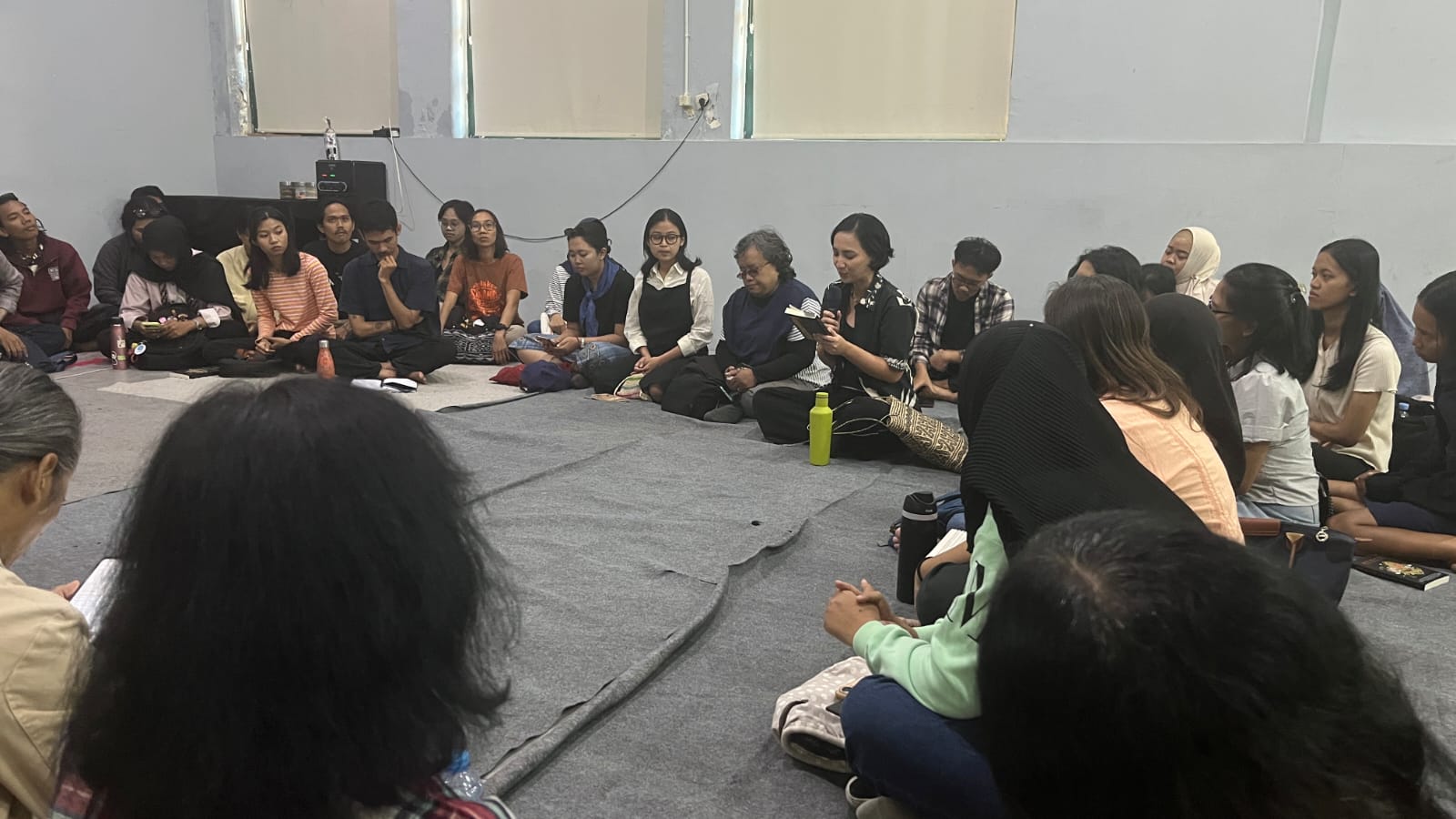
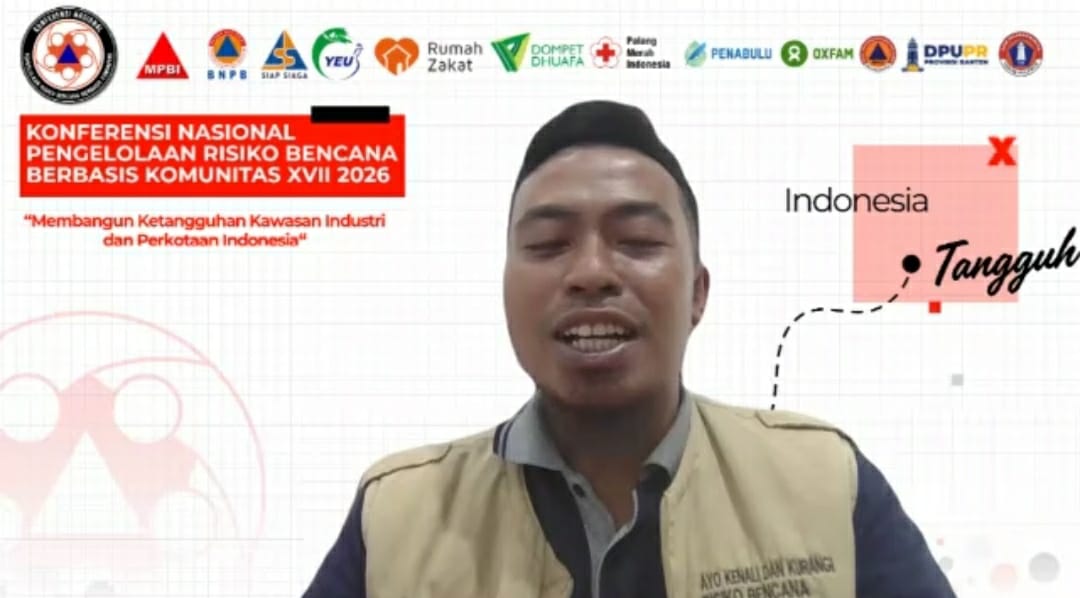
That issue was in the discussion about the early warning system and actions to anticipate disaster during the Thematic Session No-6 of the National Conference on Community-based Disaster Risk Management or Konferensi Nasional Pengelolaan Risiko Bencana Berbasis Komunitas (KN PRBBK) XVII on Wednesday of 2026 (16/9). Experiences of many communities showed that official information had to be combined with community knowledge so that it could be used correctly.
Petrus Tanmenu Naibobe from Yayasan Mitra Tani Mandiri (YMTM) brought experiences from a number of areas in East Nusa Tenggara, including South-Central Timor, North-Central Timor, and Malaka. The program developed there reached out to 2,009 direct beneficiaries. In those areas, communities faced two inter-related threats. Droughts were mainly affecting upstream areas. When rain with high intensity fell, downstream areas faced flood risks.
Petrus said that information from the Meteorological and Geophysics Agency was important. That information had to be translated into local experience of the people who lived with the condition. “Official information from the Meteorological and Geophysics Agency was the base guideline, and we combined that with local knowledge,” said Petrus.
Drought was one example of how local knowledge worked. Communities not only counted the rainy days. They also saw the plants withering, water sources became scarce, soil condition, and other changes in their environment.
Calculation of Days Without Rain had its own issue. Brief shower in the dry period could make calculation of Days Without Rain to return to the starting point again. For communities, the field condition might not return to the initial condition. One rain might not fill a well with full of water. Plants under intense pressure due to lack of water needed time to recover.
For that reason, Sulistyono saw drought had to be assessed from different angles. There were meteorological, hydrological, agroeconomic, and socio-economic droughts. In West Nusa Tenggara, almost nine of the ten districts and city faced exposures to drought annually. More than half a million people could be affected. The issue was not simply about water needs for households.
Drought could lead to harvest failure, disturb livestock, straining household economy, and affecting children’s education. Women’s burden could increase because they had to provide water for the family. “Local knowledge was critical because meteorological information did not always describe the condition in the village or sub-village levels,” said Sulistyono.
People’s experience reading drought could also apply for floods. The difference was that floods often gave shorter time to prepare.
Bayu from Disaster Preparedness Group or Kelompok Siaga Bencana (KSB) recounted community experience in Tambang Village. Floods were recurrent. In one year, people could face multiple floods. Information from the meteorological and Geophysics Agency helped. He predicted the information speed in his area at around 75 – 80%. The challenge was to prepare information that people could easily understand. The KSB then sent the information through WhatsApp and social media. Communication also proceeded directly through village office, youth organisation, and community organisations.
With more structured protocol in place, changes happened in the way people responded to flood. Communities went on evacuation on their own. Important things were quickly evacuated to safer place. Vehicles were moved. Evacuation paths were understood. People started to have their own indicator of circumstances needing quick actions. That experience showed that early warning needed consent. It was not sufficient just to have information on rain. People needed to know certain limit as signs to move.
A volunteer with KSB Tuakan in Kupang, Melki Fomeni explained how the warning chain was established in the village. The village received information from the Meteorological and Geophysics Authority (BMKG), then monitored the condition on mutually agreed points. The It then sent the information to the head of the Alert Group, village chief, Preparedness Team, and community. Communication channels were available in different formats. Wooden bamboo percussion drum, hand-crank siren, loud speakers, and flags were in use for warning.
The media selection was critical because not all people had the same ability and access to technology. The system was also necessary to reach out to people with hearing impairment. In evacuation process, groups who needed far more assistance would be the top priority. People with disability, the elderly, pregnant women, lactating women, women in general, and children were parts of the groups that had to be considered in the planning.
A respondent, Riswan reminded that receiving information did not mean that a person was able to act. There were people who had vehicles to take things to safety. There were those who did not have such vehicles. There were people who could react quickly. There were those who needed assistance/accompaniment. Economic condition, mobility, information access, and social positions could influence a person’s ability to respond to disasters. For that reason, early warning system had to allow all groups to act as necessary.
The health perspective was also part of the discussion. Febi Putri from Masyarakat Penanggulangan Bencana Indonesia (MPBI) reminded that health was often viewed as the effect of a disaster. Community health condition had to be included in considering or analysing risks. Community groups could experience different impacts of floods or droughts. Understanding of such condition helped prepare the right actions.
Another equally important issue was financing. The early warning system needed equipment, communication, training, monitoring, and maintenance. KP2C experience as recounted by Puarman showed how community could build a system on their own. Information about the water level and weather condition could be monitored daily at 07.00 a.m., 17.00 p.m., and 21.00 p.m.
When the threat status rose, information dissemination became more frequent. At Alert 2, information update could happen every 30 minutes. At Alert 1, information update happened every 15 minutes. Community had simple procedure for the villagers. Six hours prior to the flood, people moved things to higher and safer position, vehicles moved, and people were ready to go to higher grounds. The system operation required around Rp 12 million to Rp 15 million monthly. The funds came from community contribution. Those who managed the system did not receive any salary.
For one of the participants, Puarman, the experience showed that mutual awareness could grow for financing. Communities were willing to contribute because they felt the benefits of the system.
Edi saw financing from a broader view. Community resources were part of preparedness financing - volunteers’ time, people’s knowledge, communication networks, and capacity to help each other in dealing with disasters. The next challenge would be to ensure that the system did not stop when people who built it were no longer active.
Early warning system Sistem had to be part of the village planning and had an institutional basis. Village government also needed to have space to give budget support and to ensure program sustainability. Sulistyono argued that it was important for the system to have legal standing so that mechanism built by the community did not depend on certain figures. Changes in village head did not need to force the system to shut down. (Ast)