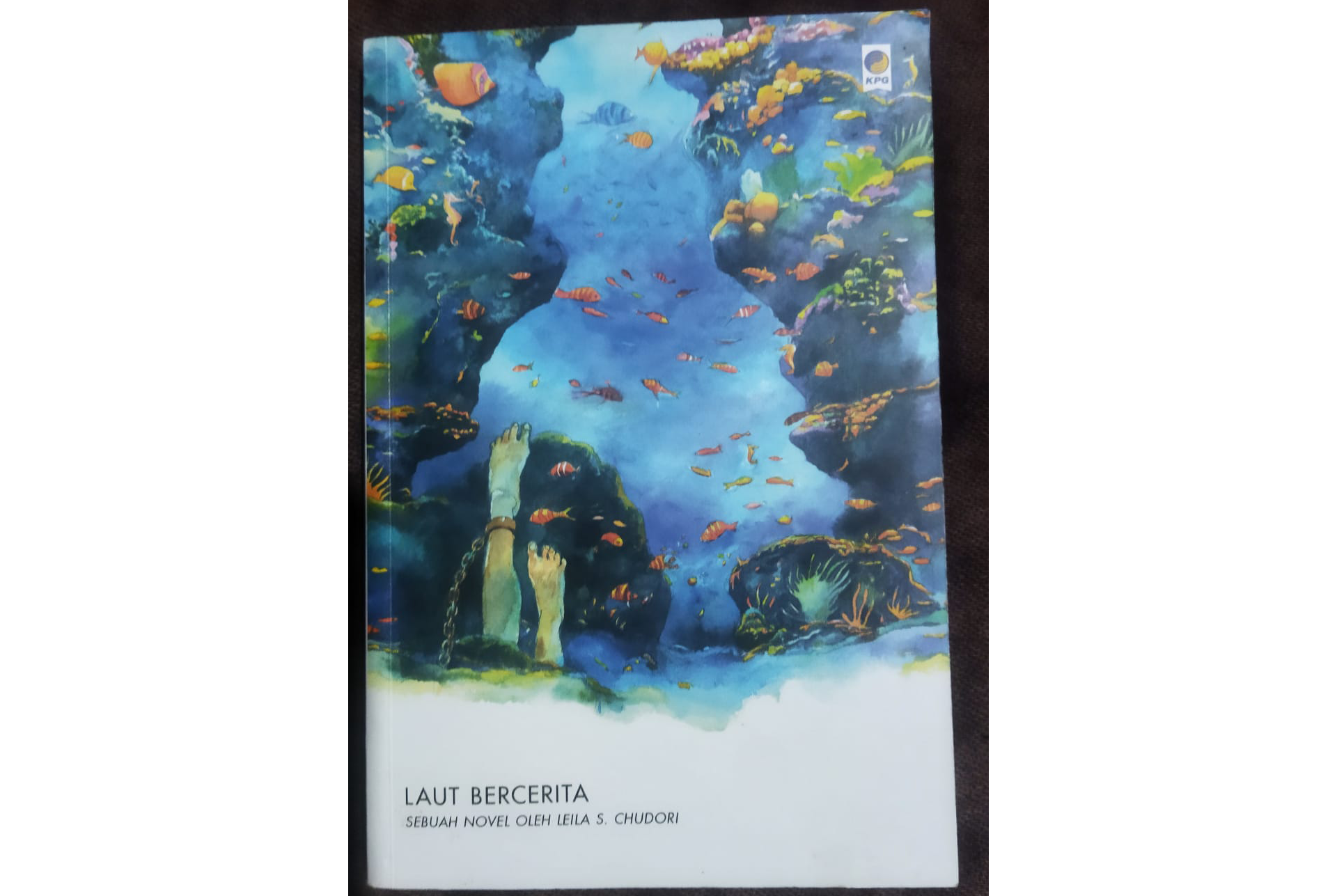




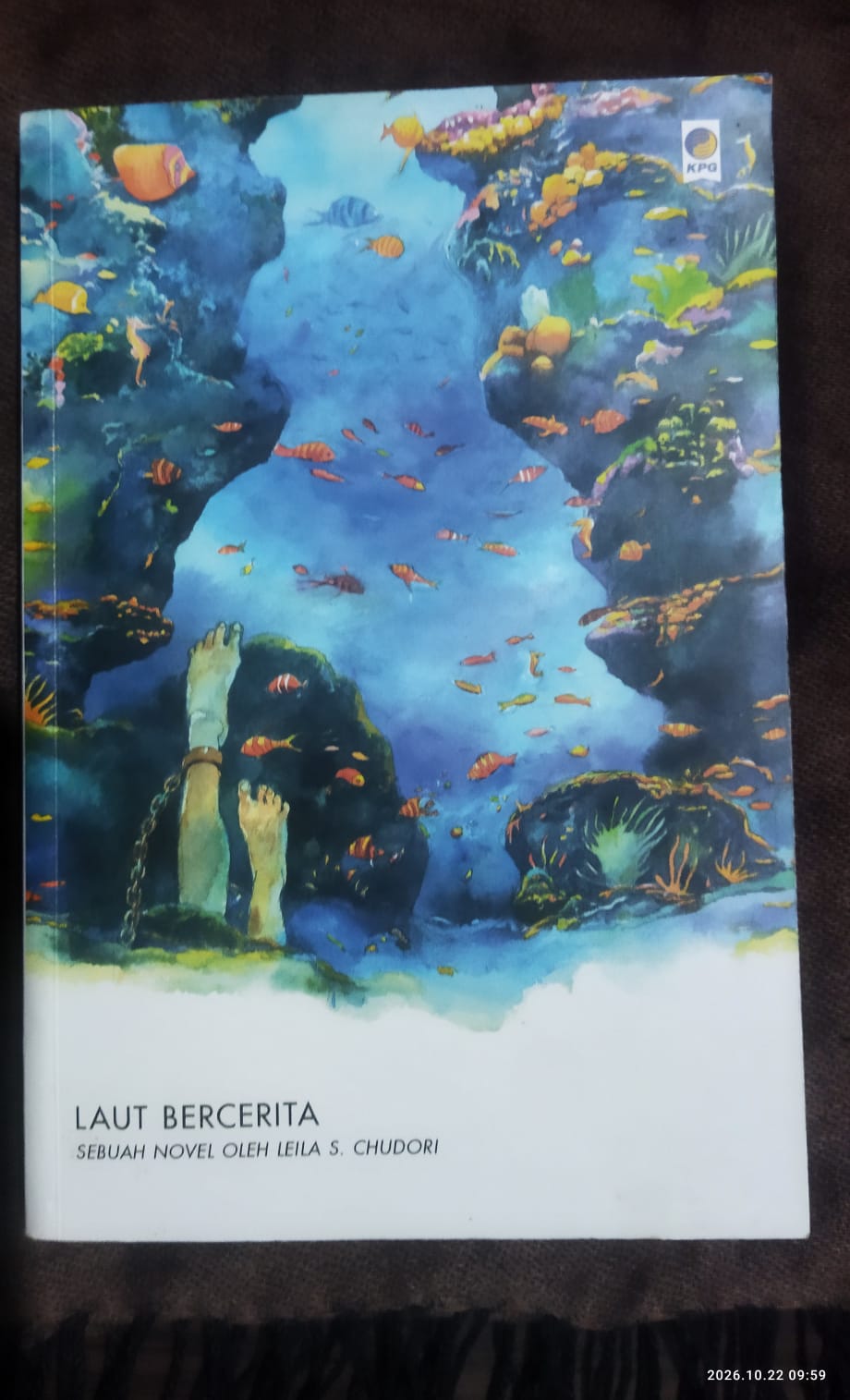
Book Title: The Sea Tells a Story (Laut Bercerita)
Author: Leila S. Chudori
Edition: 2017
Publisher: KPG (Kepustakaan Populer Gramedia)
Pages: x + 379
Size: 13.5 × 20 cm
ISBN: 978-602-424-694-5
Introduction, Loss, and Separation
In life, each person would experience introduction and separation. Both left different impressions, and brought happiness and sadness. There were sudden and not easily-controlled emotions, that took time to understand. Yet despite difficulties in understanding what happened in life, we could learn to manage our feelings and to decide the next steps to continue our journey.
The issue about loss/grief, separation, and struggle to survive was evident in Leila S. Chudori’s novel “Laut Bercerita” or The Sea Tells a Story. Indonesia during the period between 1991 and 2007 was the background to the novel, which brought readers to the life journey of a student activist fighting for justice and democracy during the New Order Regime, and a family life in the face of uncertainty after loved ones disappeared.
The Novel presented two different viewpoints. The first part was narrated through the character Biru Laut (Blue Sea), a student and activist fighting against injustices with friends. The second part explored the viewpoint Asmara Jati, the younger sibling of Laut, who searched for the brother’s whereabout and who demanded clarity about the fates of victims of forced disappearance.
The different viewpoints forced readers to understand loss/grief from two perspectives. On one hand, there were people who were fighting and who were willing to face risks for their faith. On the other hand, there were families left behind who lived a day-to-day life not knowing whether their loved ones were alive or not.
Through such fiction, Leila not only build a story about friendship and love, but also presented memories of a dark time in Indonesian history. The Novel reminded readers that behind political events, there were people whose body were harmed, whose lives were confiscated, and whose families had to endure a lifelong loss/grief.
The Fight
Reading Laut Bercerita led readers into the lives of its main characters. Their fight seemed so close – their confidence to rise, the failure that forced them rearrange their steps, and the decisions they made when they faced threats and betrayal.
Activists in the novel were ordinary humans who had their anxieties, fear, and doubts. They were not always strong. There were times when their spirit rose, but there were also times when pressures and fear made them almost lose their way. Yet, faith about what they fought for persisted and motivated them to continue fighting.
Readers also got a taste of how power was used to muzzle critical voices. Activists were threats to the interests of those in power and they experienced arrests, torture, and forced disappearance. Such violence not only took away the victims’ freedom, but also left long-term wounds for the people around them.
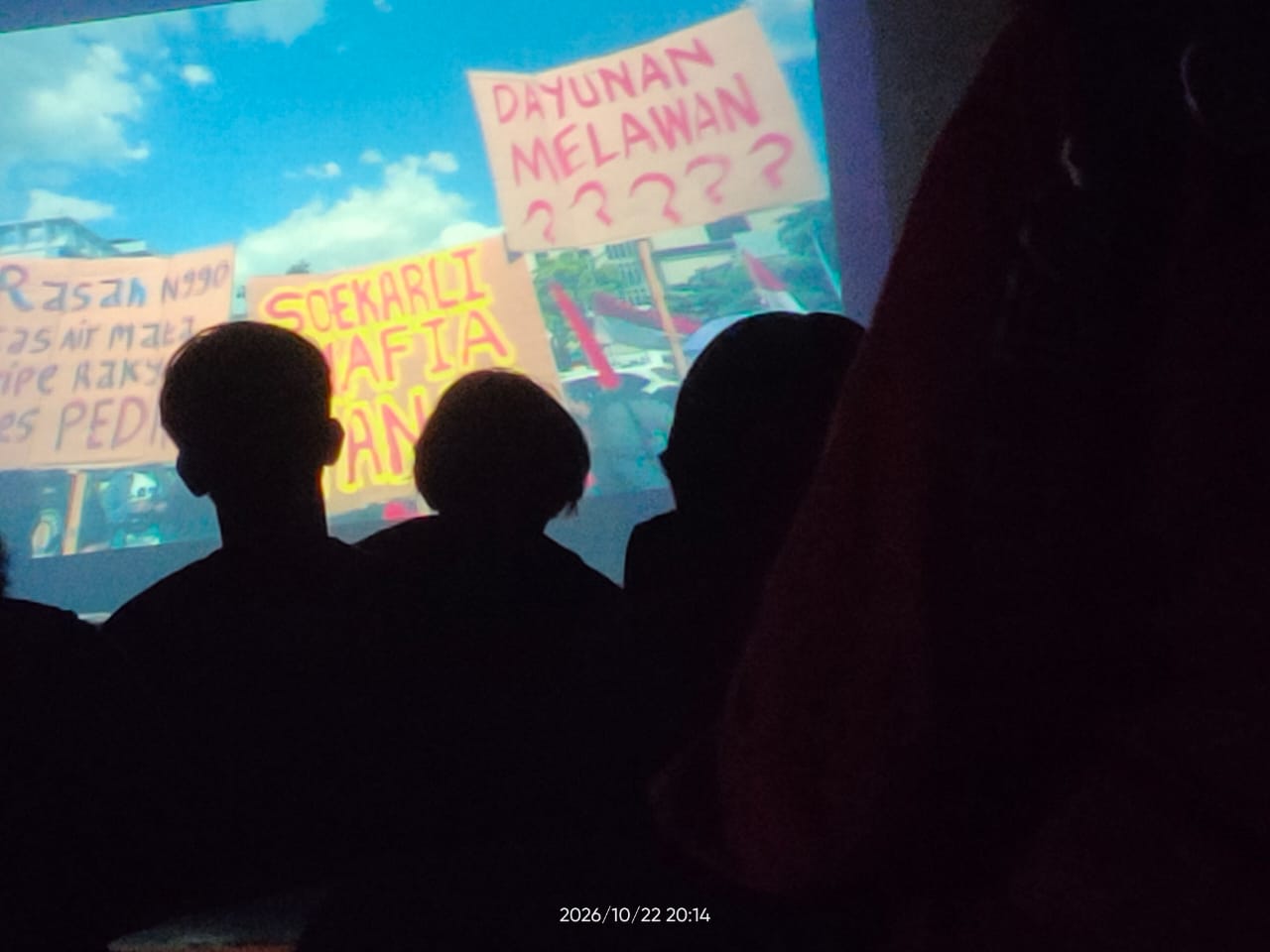
That picture illustrated the historical account about kidnapping and forced disappearance of pro-democracy activists between 1997 and 1998. The Commission for Missing Persons and Victims of Violence or Komisi untuk Orang Hilang dan Korban Tindak Kekerasan (KontraS) documented such cases, including the fate of activists who never returned home. Amnesty International Indonesia also documented that 13 people’s whereabouts remained unknown and their families still waited for news to this day.
Historical facts showed that loss/grief in the novel was not simply a plot device. It reflected real-life experience of people in Indonesia. Although the main characters in Laut Bercerita were parts of fictional story, their experience helped readers understand the humanitarian impacts of political violence.
Equally touching, the novel took readers to the struggles of victims’ families. They searched for answers to the questions that kept haunting them – where were their loved ones? Were they still alive? If they were dead, where were their bodies put to rest?
Every clue, no matter how small, gave them hope. The families tried to gather information, followed news, and searched for explanations about the whereabouts of their loved ones. In the uncertainty, the struggle was no longer against the people in power, but also about keeping the memories and demanding recognition of the loss they experienced.
This part was a key point of the novel. Leila showed that forced disappearance did not merely end with the loss of a person’s body from family’s hope. Something changed in life, habits were no longer the same, and questions continued because there were no answers.
Love
Love was one of the greatest strengths that made the fight meaningful. Love of the Motherland, friendship, partners, and family were present in various forms, yet all offered reasons for the main characters to keep going.
For the activists, they showed their love of the Motherland not only through their pride of the nation. That love was present in their desire to see that people lived in a more just society, had freedom to express their views, and were free of oppression. That faith gave them confidence to take the risks, despite being aware that their fight could bring serious consequences for themselves and the people they loved.
The Novel also showed that the fight did not always proceed through protests or political debates. The fight could emerge out of human relations, out of willingness to listen, to accompany, and to lend supports when someone was in a dire situation.
The relationship between Laut and Anjani, and the close bond between Asmara and Alex, showed personal lives of the main characters. They were not only activists with ideas and courage, but also humans who loved and were loved. They had relationship that brought happiness and at the same time showed vulnerabilities when threats and loss/grief were striking.
The love story made the main characters more humane. The novel helped readers to understand that the people fighting for change also had personal life, expectations, and future plans. They wanted to live with the people they loved, be together with family, and enjoyed their days that others thought were ordinary days.
Love of family was most evident when loss/grief started to change their lives. Laut’s family reserved a place for him, keep the memory of him alive, and continued to search for his whereabouts. Their wait showed that love may not always save somebody from violence, but could make people left behind continue to live.
Grief, anxiety, and despair might wear someone down. Yet, love empowered the family to persevere. They tried to find answers, not only to end uncertainty, but also to get a recognition about what happened.
Through such stories, Laut Bercerita showed that love not simply a feeling that grew between two people. Love could also be courage to care, to refuse to forget, and to fight for justice for those who could no longer express themselves.
Hopes that Empowered
The second part of the novel focused on Asmara Jati’s viewpoint. Through her character, readers witnessed the life of a family who lost loved one through forced disappearance and who tried hard to know the whereabout of their loved one.
Unlike the first part that showed the fight from the view point of the person experiencing oppression, the second part featured the hurt that the loved ones felt. Loss/grief was not just a part event, but a long-lasting experience evident in day-to-day life.

Victim’s family faced difficult circumstances. The family had no certainty to grieve, and the family could not continue their life in peace. When a person died, family at least could try to accept the reality and to send the deceased off. In the case of forced disappearance, lack of information made such process much more complicated.
The expectation to find the missing family member remained, and as time passed, the possibility of meeting that person faded. Family tried to survive between two realities – accepting uncertainty and refusing to stop trying.
The return of a number of kidnapped activists gave victim family the strength. Their experience showed that a person who disappeared did not necessarily death. Yet, that expectation also left a painful question, why some people returned, while others never returned?
In the novel, expectation did not come easy. It emerged in the middle of grief, frustration, and fatigue. Expectation did not always mean confidence that not everything would happen as expected. Often, expectation meant decisions to continue searching despite the uncertainty.
The victim’s family attitude showed that demanding clarity was not only a personal problem. When someone was forced to disappear, the family had the right to know what happened, while communities had the responsibility to not let the incident(s) to be forgotten. The search for truth and justice were critical parts of respect of human dignity.
Here, the title Laut Bercerita (The Sea Tells a Story) had wider significance. Laut could be read as a character whose voice went through the story, but the story also reminded that the voices of those who disappeared did not have to disappear with their bodies. Family memories, testimonies, and struggle kept the story alive.
The expectation which Leila presented did not offer easy closure. On the contrary, the novel led readers to understand that justice needed the courage to remember, the willingness to listen, and the resolution to continue seeking the truth.
Keeping the Memories, Continuing the Fight
Overall, Laut
Bercerita was a novel about human struggle against oppression and loss/grief, that showed how love and expectation helped them to persevere. Through two viewpoints, Leila S. Chudori offered complimentary experiences. Readers saw the activist struggle from up close, and then learned the grief that the family had to endure amidst uncertainty.
One of the novel’s strengths was the ability to connect historical issue with day-to-day human experience. Political events did not come as a series of dates and events. They materialised into stories about friendship, family relation, love, fear, and longing for someone who never returned.
The use of two viewpoints also helped the story become whole. The first part showed risks activists faced, while the second part showed the impacts of losing a family member. Readers not only learned to understand violence that victims experienced, but also witnessed how such events changed the lives of people around them.
From the point of expression, the language used was easy-to-understand. The plot moved through time and changed viewpoints helped readers understand the experiences of the main characters. Despite the seriousness of the political events and the history, the novel presented personal relationship that made the story so familiar in our day-to-day life.
Yet, readers had to distinguish between incidents depicted in the novel and historical records as a context. As a fiction, the novel had main characters, dialogues, and a series of events built through the author’s creative mind. To understand historical facts in more detail, readers could complement with human rights organisations’ reports and documents about activists’ forced disappearance between 1997 and 1998.
Laut Bercerita was not simply about someone who lost his life, but also about ideas, memories, and courage to persevere after someone was taken away from the loved ones. The body might disappear, but the values of the struggle lived on.
The novel reminded us that loss/grief did not have to be the reason to stop searching for truth. Love empowered those who were left behind, while expectation kept people move forward. As long as justice was not achieved and families still waited for certainty, the story about the disappeared had to be told.
The point was, remembering was not simply about looking at the past. Remembering was also a way to ensure that similar uncertainty never repeated itself. (Damar Nugroho/Ast)