



In a village, disaster did not start with the sound of siren. Often, it started with community’s memory of which route would the water flow. It was about whose houses would be at the lowest altitude. It was about who had to have the priority assistance. It was about where people would meet when the soil shook or when the sea water came surging.
That knowledge grew from experience. It lived in people’s discussion, regular meetings, prayer, evacuation exercises, and risk maps plastered in visible places. There was another determining factor - resources.
Villages needed money to buy equipment. They needed finance for training. They needed support for risk mapping. They needed people able to prepare contingency plan. The problem was money was not always available in sufficient amount. Village funds were limited. Government budget had its own priorities. Aid from private sectors came with their own respective mechanism. Philanthropic organisations had their own rules. Civil society organisations had to face the reality that funding did not come on a regular basis.
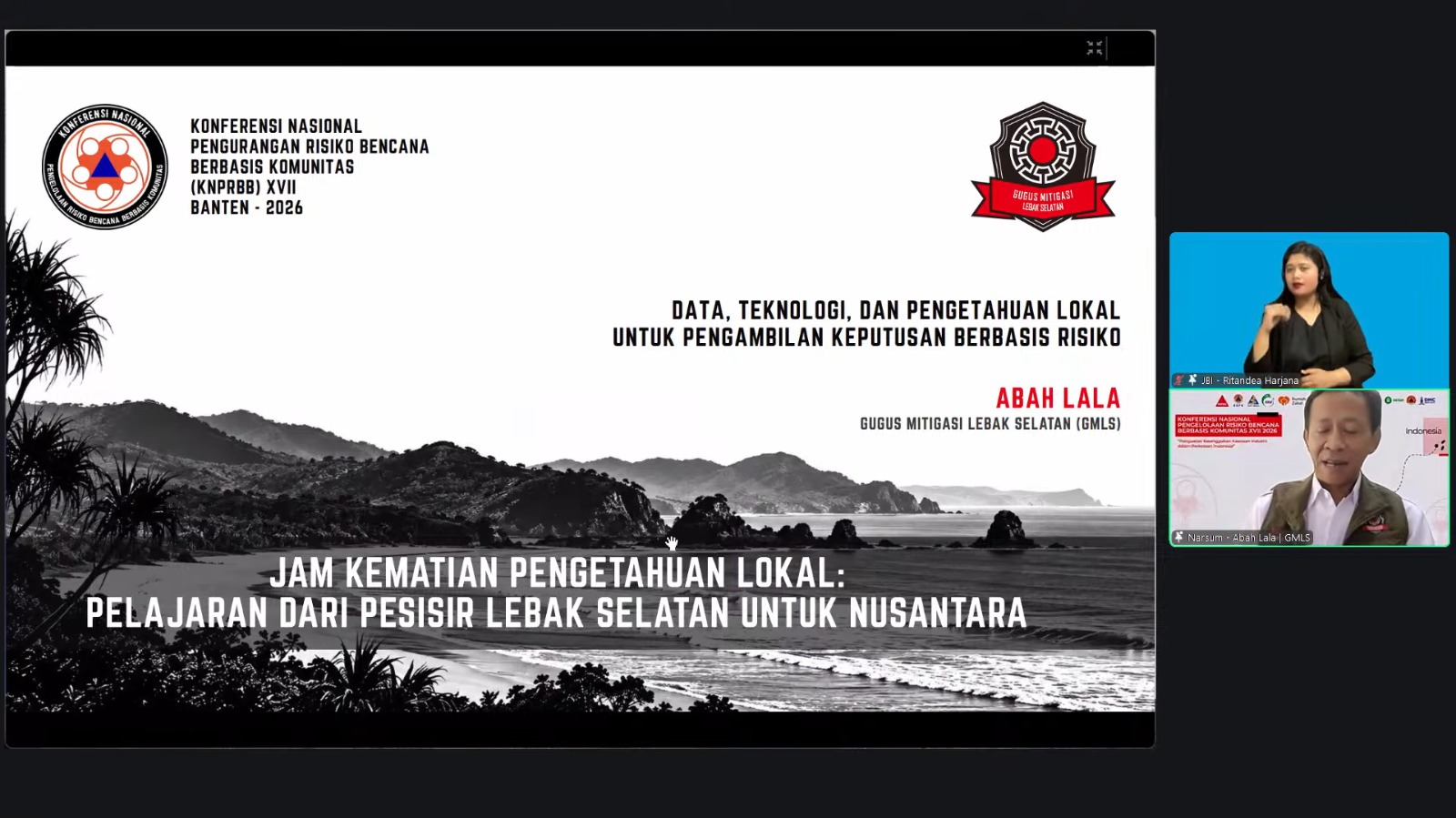
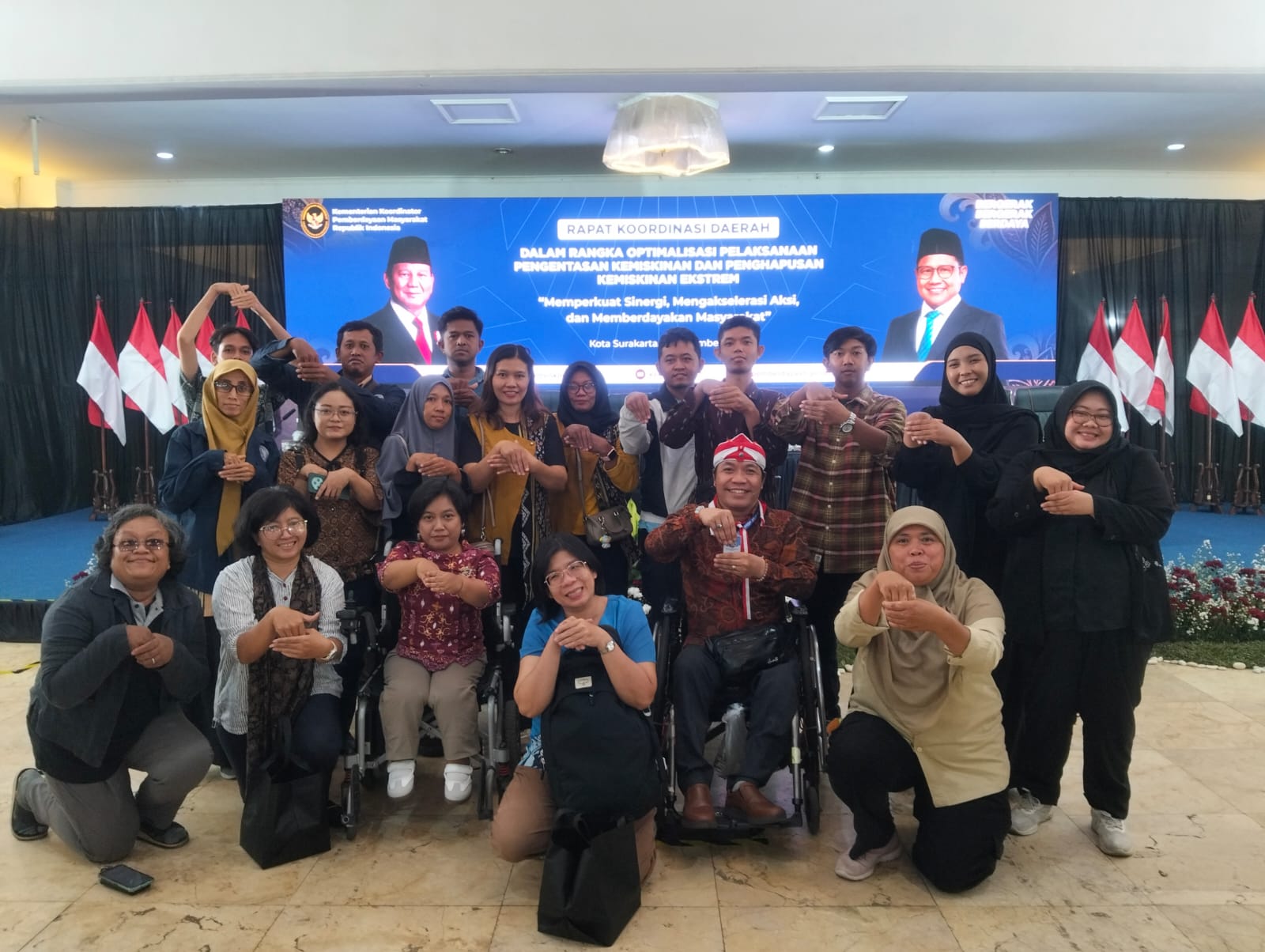
Amongst those pockets of resources, the idea about community funding became apparent. The issue was key topic during the National Conference for the Community-Based Disaster Risk Management or Konferensi Nasional Pengelolaan Risiko Bencana Berbasis Komunitas (KN PRBBK) XVII Year 2026 on Wednesday (16/9) thematic session No- 8. Dimas Ramadhan Perdana from Lokadaya saw the funding issue not only in terms of the money circulating. He also saw how money moved, who determined its use, and what resources were left in the communities once the program finished.
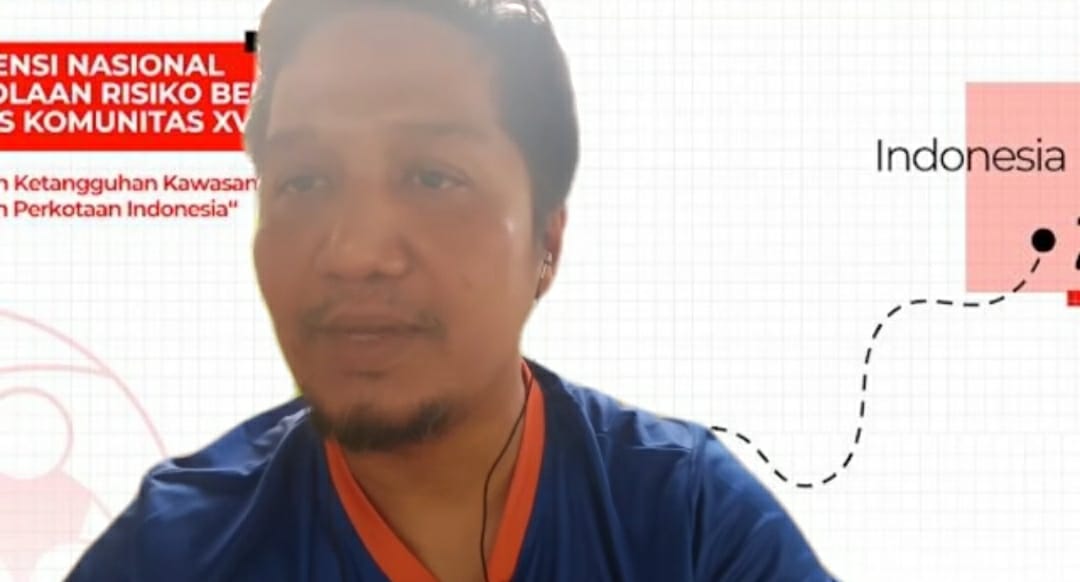
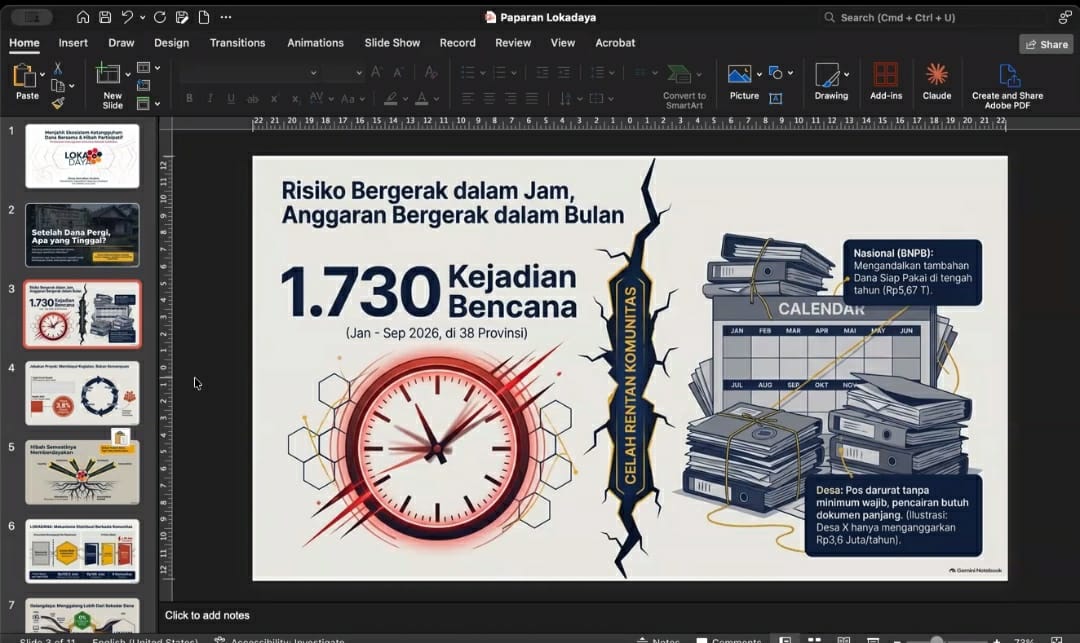
Dimas highlighted the big gap between ideals about local funding and the reality on the field. Based on the research, less than 10% of expected funding went to the local level in 2024. Funds going to the community amounted to around 3.8%. The long path of funding showed that resources went through so many layers.
In each layer, there were administrative mechanism, reporting, activity targets, and demand for accountability. All those were important. The issue was when an organisation spent so much energy on fulfilling project requirements than building community power. Dimas called that “Project Trap”.
The question was then fairly simple, although the answer might not be simple. “After the project ended, were there changes at the local level?” That question hit the point that people often missed. An activity could end, then the report of that activity was submitted, budget was used and activity photos were documented properly.
But the question then was whether the community became stronger? Whether they had new knowledge? Whether local organisation became more independent (self-reliant)? And whether people had the ability to find other resources when the aid stopped coming? Here was the point where Lokadaya offered a different view point.
Lokadaya was a network of civil society organisations working to raise and connect domestic resources for the continuity of civil society movement. The network had hundreds of organisational memberships from different sub-national areas. One of its approaches was evident through local fundraising or Lokadana.
In this scheme, civil society not only stood at the end of the table as recipients of grants. Member communities participated in defining the themes, read proposals, talked about issues in their respective area, and be involved in decision-making. Something changed from that position. Communities not only learned to prepare proposals. They learned to identify their own needs.
They learned to read other organisations’ problems, and learned that the needs of one given area might not be the same as the needs of other areas. The grant process was a learning process. For Dimas, that method was critical to build ownership. Funds no longer felt like something that fell from the sky. People were involved in determining where resources moved.
From money, he discussion then moved to something broader. Resources did not always some in the form of money. Knowledge was another resource, so were time and volunteers. Other resources included networks of friends, someone’s expertise, meeting points, vehicles, even availability of somebody to teach others.
That idea Gagasan was disseminated through Jalan Daya. Dimas gave an example from Gorontalo. There were communities who needed help preparing contingency plan documents. They needed people with knowledge and skills to accompany the process. They did not merely look for funds but also for people who could help. Di sana terlihat bahwa pendanaan dapat memiliki wajah yang berbeda. A person might not have funds to spare. That person might have knowledge. All could be art of an ecosystem of resistance.
That thought brought Dimas to five changes in financing design. Resources had to move closer to the community. Each activity had to lead to capacity improvement. Dependency on one donor had to decrease. Emergency needs necessitated faster mechanism. Success measure had to integrate organisational sustainability, not simply measuring how much budget was used. In the village, that issue felt very real.
A village representative told of the experience building disaster preparedness with limited resources. The village fund was used for training, equipment purchase, preparing public kitchen needs, and building community knowledge about disaster risks. The size of the budget that the village received did not change. Before it was around Rp. 1.1 billion. Subsequent budget was around Rp. 370 million as government had other priorities.
The village did not only wait for one source of funding. There were supports from national budget, Corporate Social Responsibility (CSR), collaboration with businesses, government offices and community groups. Information dissemination did not need to proceed in formal setting. Other opportunities such as religious meetings served also as discussion venue.
Then, what could be done was plastering risk maps on the alleys and other visible places. The maps brought disasters that used to get less attention closer to day-to-day life. People could see for themselves their own area and identify vulnerable spots. They could imagine the routes to take. They could then develop resilience from knowledge they practiced regularly.
The Zakat Forum also proposed a similar view. The Forum collected around 203 organisations managing zakat (religious charity) in 34 provinces. The members came from a variety of backgrounds, from foundations, civil society organisations, Islamic Schools (pesantren), campuses, companies, mosques, to education institutions. Zakat organisations had long experience in managing disasters – providing emergency aid, to recovery. There was aid for families who lost their livelihood.
The Zakat Frum promoted awareness about disaster to include pre-disaster actions such as mitigation, education, preparedness, and training. All those had to be part of community practices. One disaster could change families’ life in a short period of time. Families who were not able to meet daily needs could lose their income. Poor people could become even more vulnerable. Mitigation had to be the protection before people lost everything.
In the discussion, mitigation investment could result in far more benefits that the cost spent for the response and recovery. There was a simpler example from the number.
Aceh community knowledge on moving to higher grounds after an earthquake was once part of the stories told about preparedness based on local experience. That knowledge was passed down and practiced and could be part of life protection. Such knowledge did not always come out of a project.
The National Disaster Management Agency (BNPB) also had a Joint Funding Scheme for Disaster Management as one source of financing. That fund could be from national and sub-national budget, and other official sources and prepared through investment mechanism. The fund could be used for pre-disaster phase, emergency response, post-disaster phase, and risk transfer. The mechanism articulated requirements and verification process.
Government ministries and offices/agencies and sub-national government offices could submit the proposals. Community groups could also be encouraged to propose through sub-national governments, including the disaster risk reduction forum and affected community groups. Activities to support included planning, policy preparation, equipment procurement, training, simulation, mitigation, preparedness, and early warning system.
All that showed that resources for disaster management were spread. (Ast)