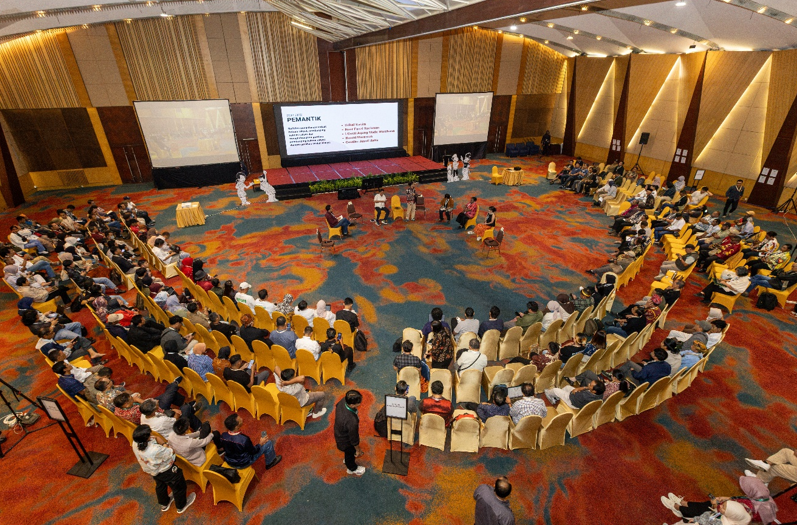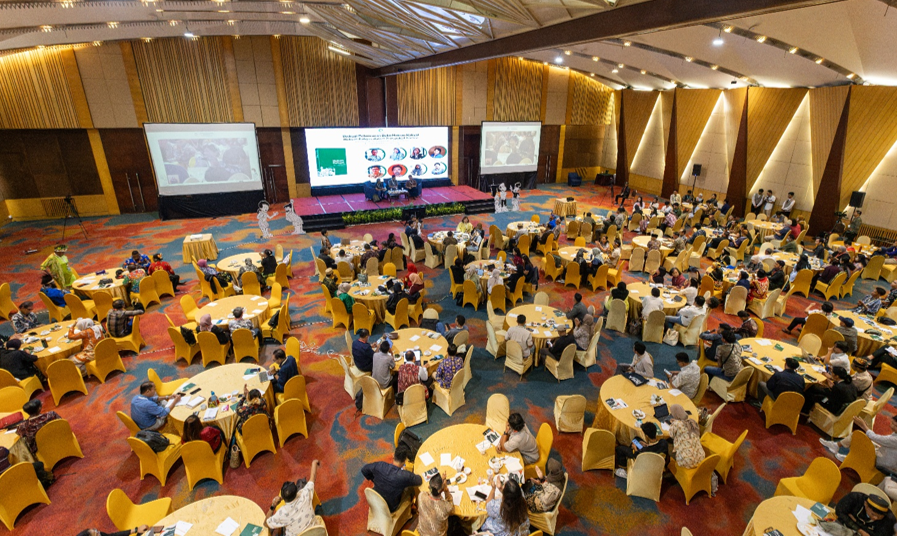



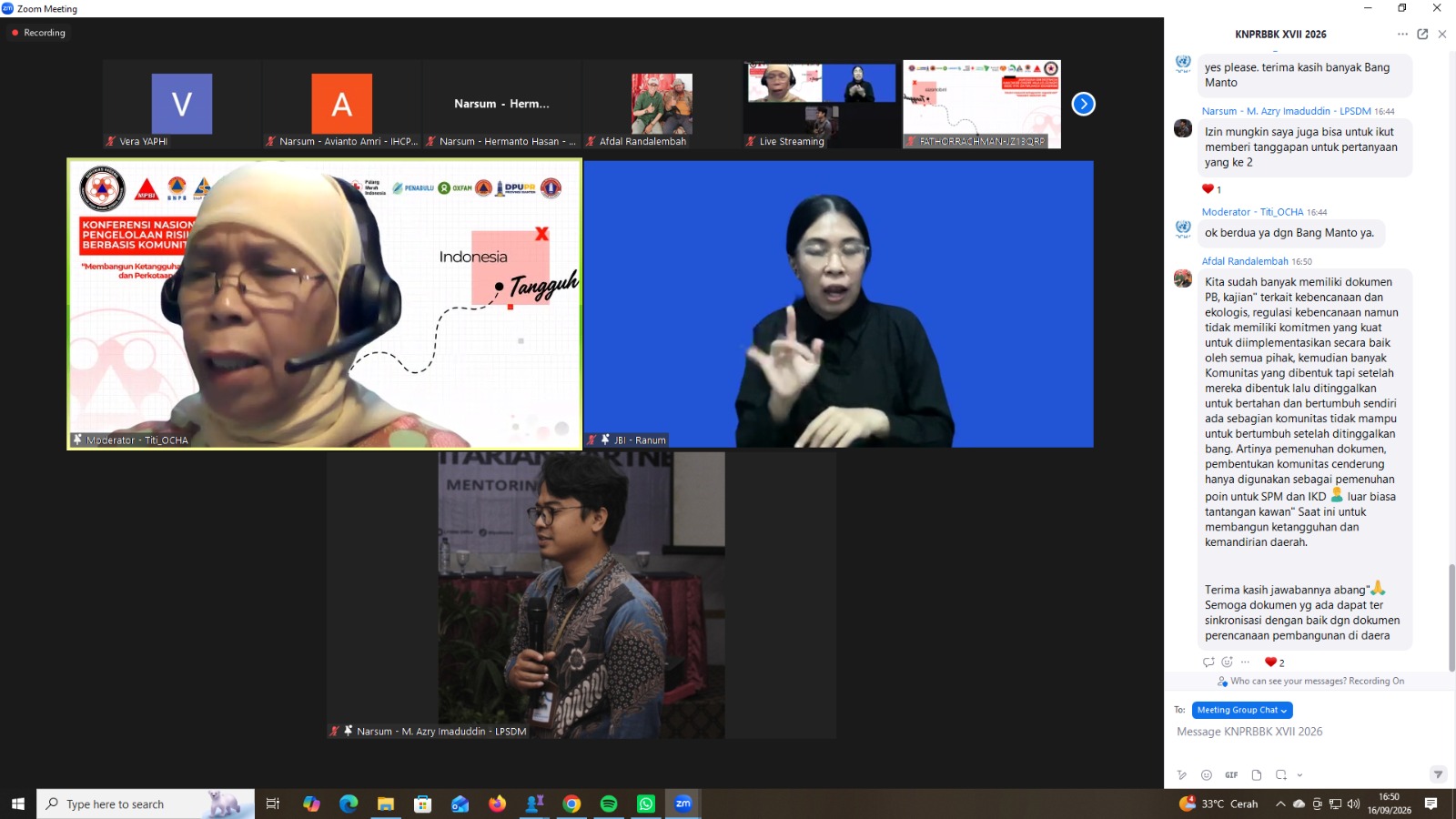

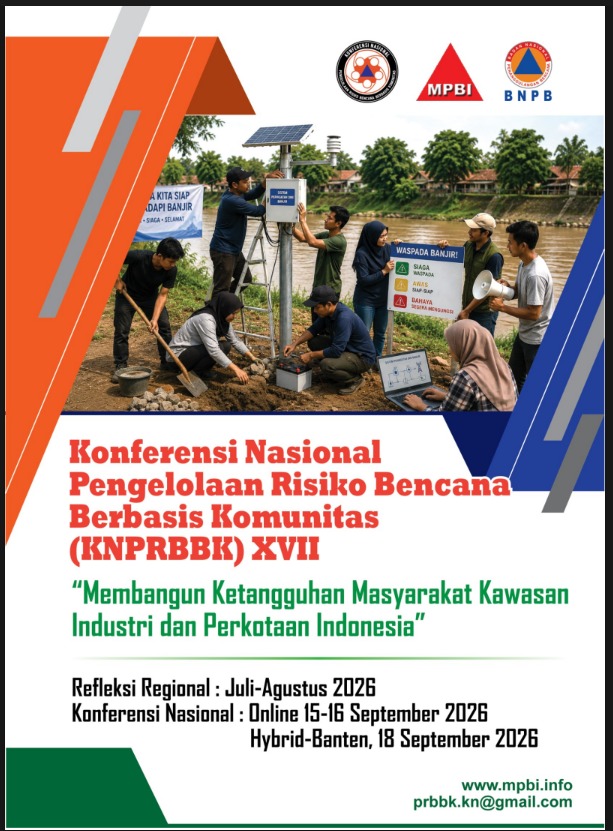
The National Conference for Community-Based Disaster Risk Management or Konferensi Nasional Pengelolaan Risiko Bencana Berbasis Komunitas (KN PRBBK) No-XVII in Banten in September 2026 was a crucial step to deconstruct humanitarian paradigm in Indonesia.
The National Conference for Community-Based Disaster Risk Management or Konferensi Nasional Pengelolaan Risiko Bencana Berbasis Komunitas (KN PRBBK) No-XVII in Banten in September 2026 was a crucial step to deconstruct humanitarian paradigm in Indonesia.
From Participation to Taking Control
Transformation in humanitarian coordination in Indonesia entered an opretaional phase with many challenges. Co-chair of the Indonesian Humanitarian Coordinated Platform (IHCP) and Chairperson of MPBI, Avianto Amri highlighted that the establishment of IHCP in April 2025 was a direct answer to a locally-led system requirement. The effectiveness of the platforms had been undergoing a series of stress tests from the end of 2025 to 2026, such as response to Senyar Cyclone in Sumatera and the earthquake in Flores.
To ensure local platforms work optimally, IHCP adopted six strategic parameters: Adaptive: able to dynamically synchronise with Disaster Emergency Management Command System or Sistem Komando Penanganan Darurat Bencana (SKPDB); Quality: Implement standardised aid services to ensure accountability and agreement; Agile: Possess speedy response based on actual field data; Complementary: Support mandate of sub-national governments as per Law No. 24 Year 2007 without creating duplication; Collaborative: Provide inclusive spaces that involved investors, private sectors, and religious organisations; Accountable: Prioritise full transparency to affected communities who were primary stakeholders.
In deconstructing partnership pattern, local actors were encouraged to transform from implementing organisations to “the driver.” This could be measured through four reflective questions: Who defined the priorities? Who controlled the resources? Who Suffered the risks? And who hold the ultimate accountability? Without articulating the voices from the sub-national level, the national platform only risked to be trapped in bureaucratisation.
Procedural Justice and Grassroots Interaction
Localising was often trapped in an administration defined by outsiders. Muhammad Azri Imaduddin from Forum LokaNusa gave his sharp criticism through "Localisiing from Local Voices " concept – a decolonising of knowledge so that local actors were not simply implementors of programs or directives from outsiders. LokaNusa had grown from an initiative in June 2023 to become national network with 68 members.
Power shifting was distinguished through six justice principles – recognition, procedural, distributive justices, and inter-generational, collective and gender justices. Moreover, the experience of LokaNusa proved that networks were not only built through formal structures, but also through ongoing interaction. Informal and organic forum, such as "Rabu Candu" (Official Discussion Forum) and regular discussion series on Fridays, proved to be vital spaces for trust building. That trust changed participation to real contribution.
Filling the Gap: The Missing Middle and Analysis of Decision
Senior CMC Indonesia practitioner, Hermanto Hasan also provided in-depth reflection, highlighting a perspective of 22-year experience in humanitarian work from Aceh Tsunami in 2004 to 2026. He stated that Indonesia has moved on from "Capacity Development" phase to "Leadership" phase. Yet, there was a major challenge known as “The Missing Middle,” which disregarded leadership at sub-national levels to serve as a bridge between national actors and the communities.
Hermanto emphasised that "Local Presence" was not the same as "Local Leadership." Many international actors felt that they had done localising when they were only establishing local offices, while decision-making remained centralised. For that reason, the approach had to change from "Follow the Money" to "Follow the Decision." National authority for interpreting information, setting agenda, and taking decisions had to be in the hands of local actors, while national or international levels kept non-intervention principle and capacity building.
Test of Reality: From Sigi to the Aceh Paradox
On site, Supriadi from Imunitas indicated that localising would be successful if Disaster Risk Reduction had become habit integrated into village and spatial systems. Communities often became victims of outside policies that they could not control, for example land degradation which he labelled “Ecological Sabotage.”
Ecology crisis in Sumatera at the end of 2025 was a most bitter test. Alvian from MaTA investigated the anomaly known as "the Aceh Paradox," where the national government declared "Sub-national Disaster" status, but managed the Rp 25 Trillion funds centrally through the Ministry. The failure of the formal system led to organic movement "People Helping People" and "White Flag" campaign, which were forms of resistance against State institutions. Organic solidarity and data-based legal advocacy proved to be final defence for people’s safety.
Towards Humanitarian Sovereignty
The facts on the field, i.e. in Sigi, showed that complete regulations on paper failed to revitalise the organic relationship ecosystem. For that reason, the future solution was not in adding new regulations. The panellists in KN PRBBK No-XVII agreed that the key focus had to be on revitalising the ecosystem relationship before disasters, improvement in capacity of adaptation system, and enforcement of true leadership where local actors took control of budget and decisions.
In the end, localising was a peaceful movement, not simply transmission of technical workload. Community safety at the forefront was the absolute measure of the transformation success; for sovereignty without the local resilience was mere rhetoric. (Christina Vera)