


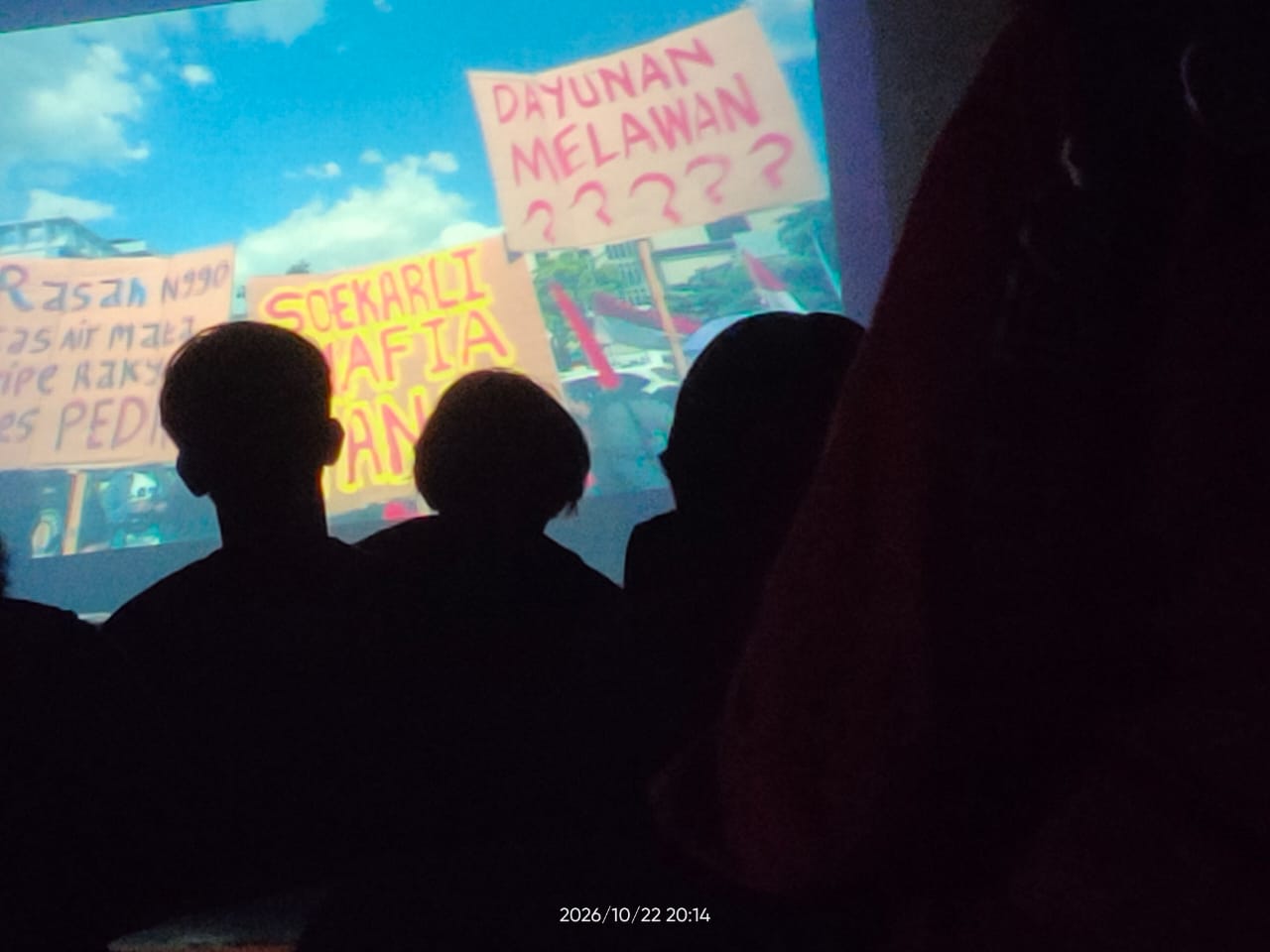

The Film Mengincar Karst Pracimantoro (Eyeing Pracimantoro Karst) by WhatsDoc documented people’s anxiety towards cement industry’s plan and limestone mining that potentially affected local environment and the sources of livelihood of local people.
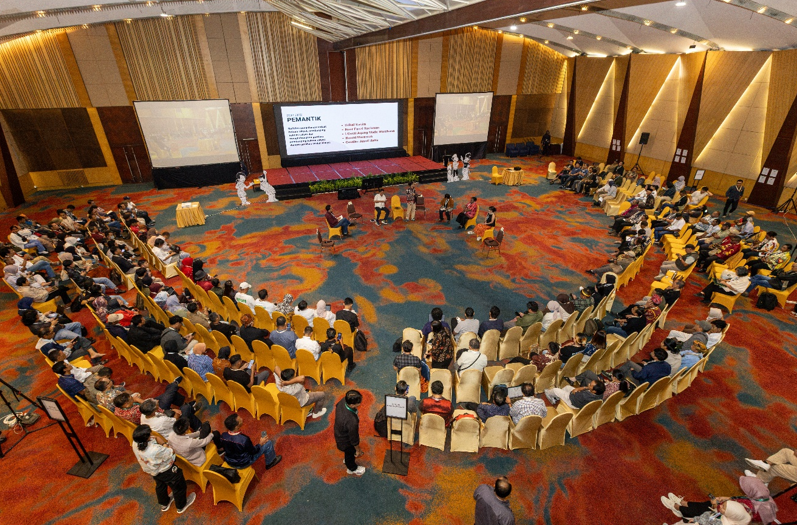
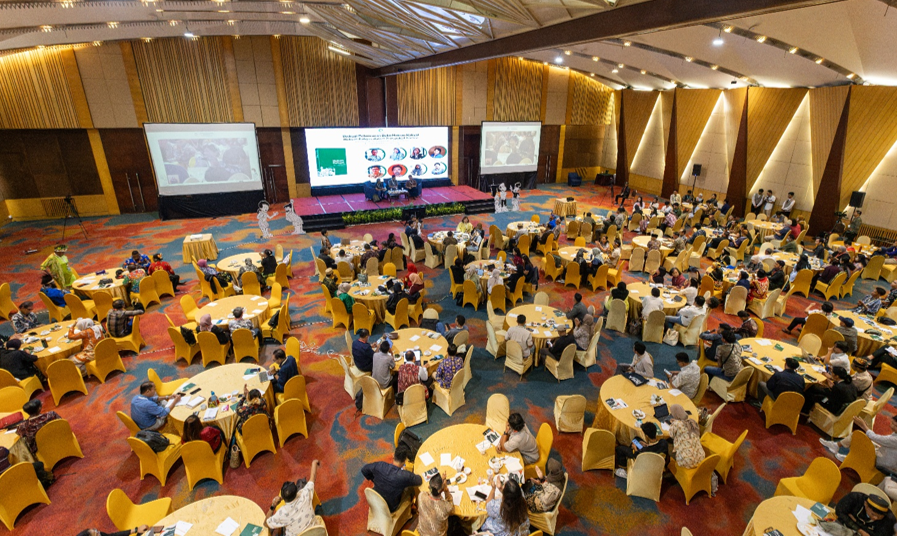
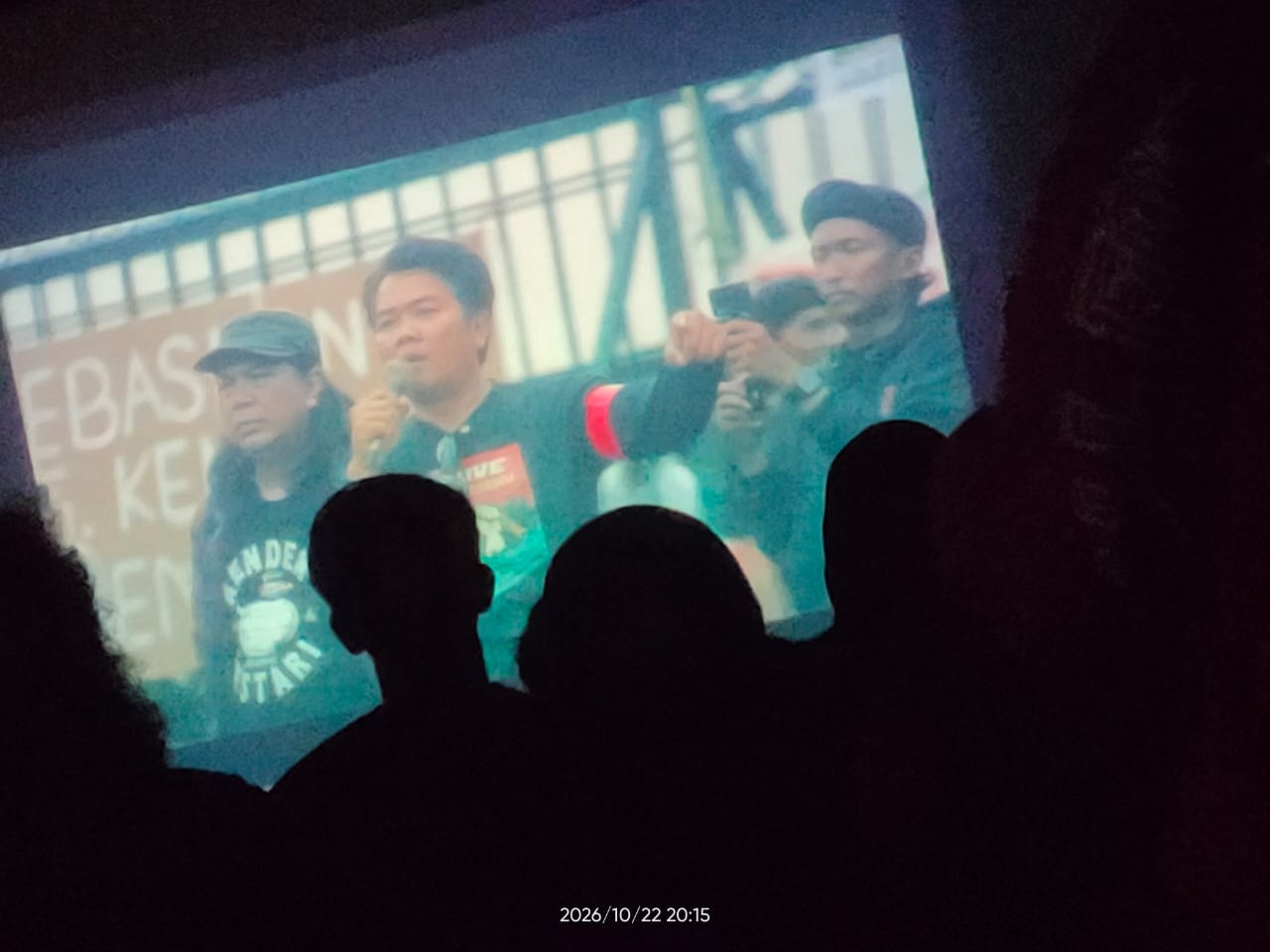
The Film was screened at Kedai Tumbuh, Surakarta during a discussion organised by Sekarpace Research Area in collaboration with Gusdurian Solo on Thursday (22/10/2026). With moderator Suro Aji, the film exposed the environmental impacts, community organising, the roles of culture, and the impacts on access to water for women.
The Film and the subsequent discussion situated the issue of karst Pracimantoro in the context of local people’s reliance on soil, water, agriculture, and animal farm. A number of speakers also talked about the ways people obtained information, express their aspirations, and dealt with potential environmental change.
In the film, Suryanto and Parwanto expressed people’s concern of the impacts of the cement industry and limestone mining. In their testimonies, people relied on natural resources to meet daily needs.
People worked as peasants and livestock breeders and used water for domestics needs, agriculture, and livestock. For that reason, change in water sources could have serious impacts on people’s income and social life.
The film also features fountains, underground rivers, and caves in the Karts region. The three were parts of the inter-connected natural landscape. Yet, geological and hydrological studies were vital to assess the impacts of changing limestone zone on water sources.
Testimonies by Suryanto and Parwanto illustrated the deep concerns of the people who lived and worked in the Karst region. Their concerns stemmed from the possibility of disruption to the local environment and sources of livelihood.
The discussion also information openness with regards to permit and environmental impact analysis. Information about permit process, impact assessment, and environmental management plan was critical for the affected population.
People also needed space to get information, to ask questions, and to submit complaints before any decision about their living space was made.
The Film showed a number of local people’s efforts to build a mass movement, including through meetings, voluntary financial contribution, and internal communication. Those measures showed that local people were trying to organise themselves and to express their aspirations for the future of their area.
Faris Wibisono: Culture in Community Organising
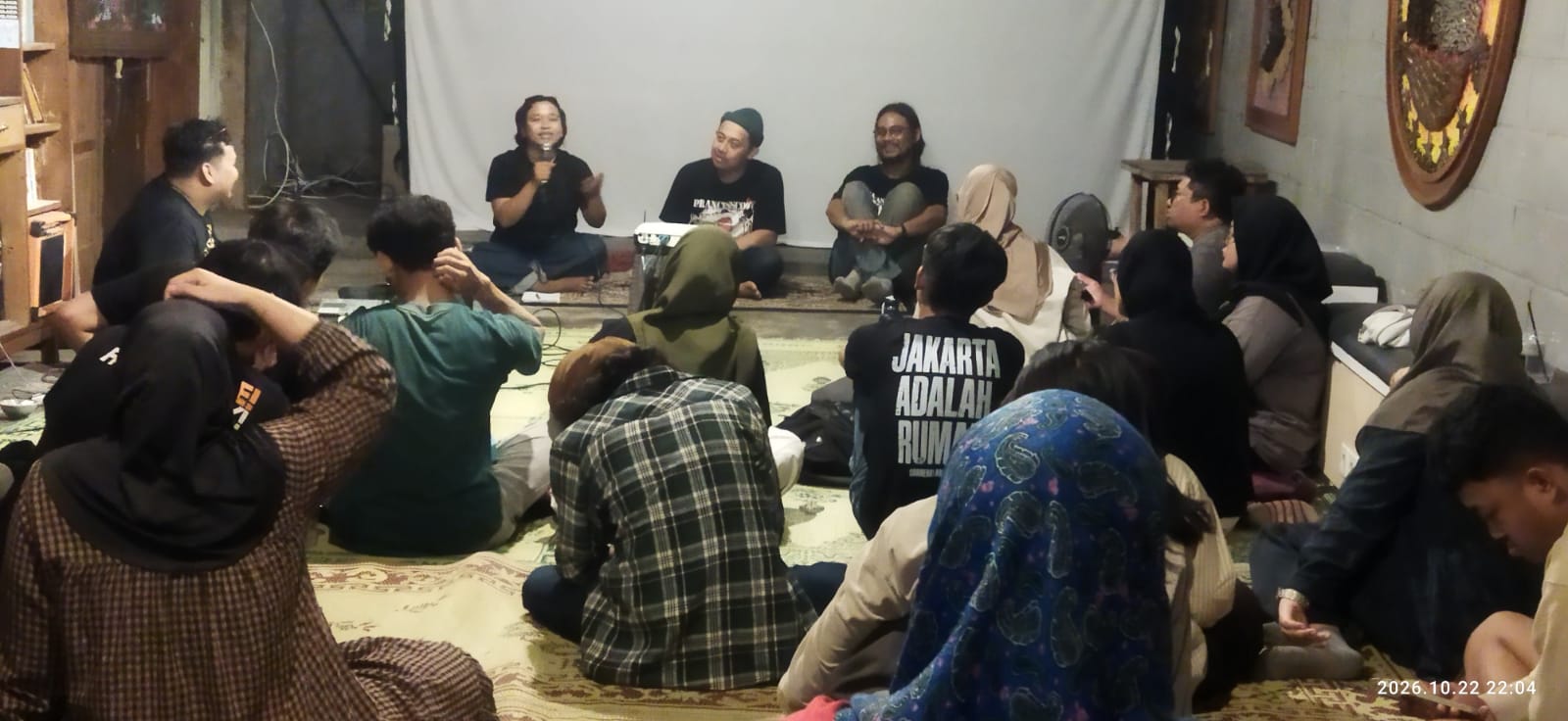
In the discussion, Faris Wibisono talked about community-based approach in social and environmental movements. He argued that organising was not simply about expressing demands or rejection, but also about ongoing relationship with the community.
Faris mentioned the practice of Tali Jiwo, which used culture as a means to build civic engagement. Wayang beber (unrolled shadow puppet), film screening, community visits, and environmental education were means of connecting social issues with day-to-day experiences.
The approach helped explain environmental issue through people’s experience. More technical issues, for example, could be linked to the needs for water, agricultural land, and family life.
In the discussion, people saw the need to be involved in identifying issues, foster mutual understanding, and determine collective actions. Faris also emphasised the importance of easy-to-understand communication relevant to people’s concrete needs.
The involvement of young people was also part of the discussion. The regeneration of movement, necessitated spaces for young people to understand the issues, to express their views, and to be involved in relevant activities.
Local tradition, such as bersih desa (village clean-up) and rasulan (thanksgiving) are also regarded as spaces to strengthen social bonds and foster community closeness with the environment. In this context, culture was seen as a means to preserve collective memories and broaden people’s participation.
Swastika: Disturbance to Access to Water and Women’s Burden
Swastika from Project Sasmita was the subsequent speaker and she talked about the relation between environmental issue, access to water, and women’s domestic workload. When water was hard to obtain, domestic tasks such cooking, washing, house cleaning, and meeting family’s day-to-day needs remained. In unequal division of labour, women could have extra responsibilities and hence needed extra time and extra energy to do her assigned chores.
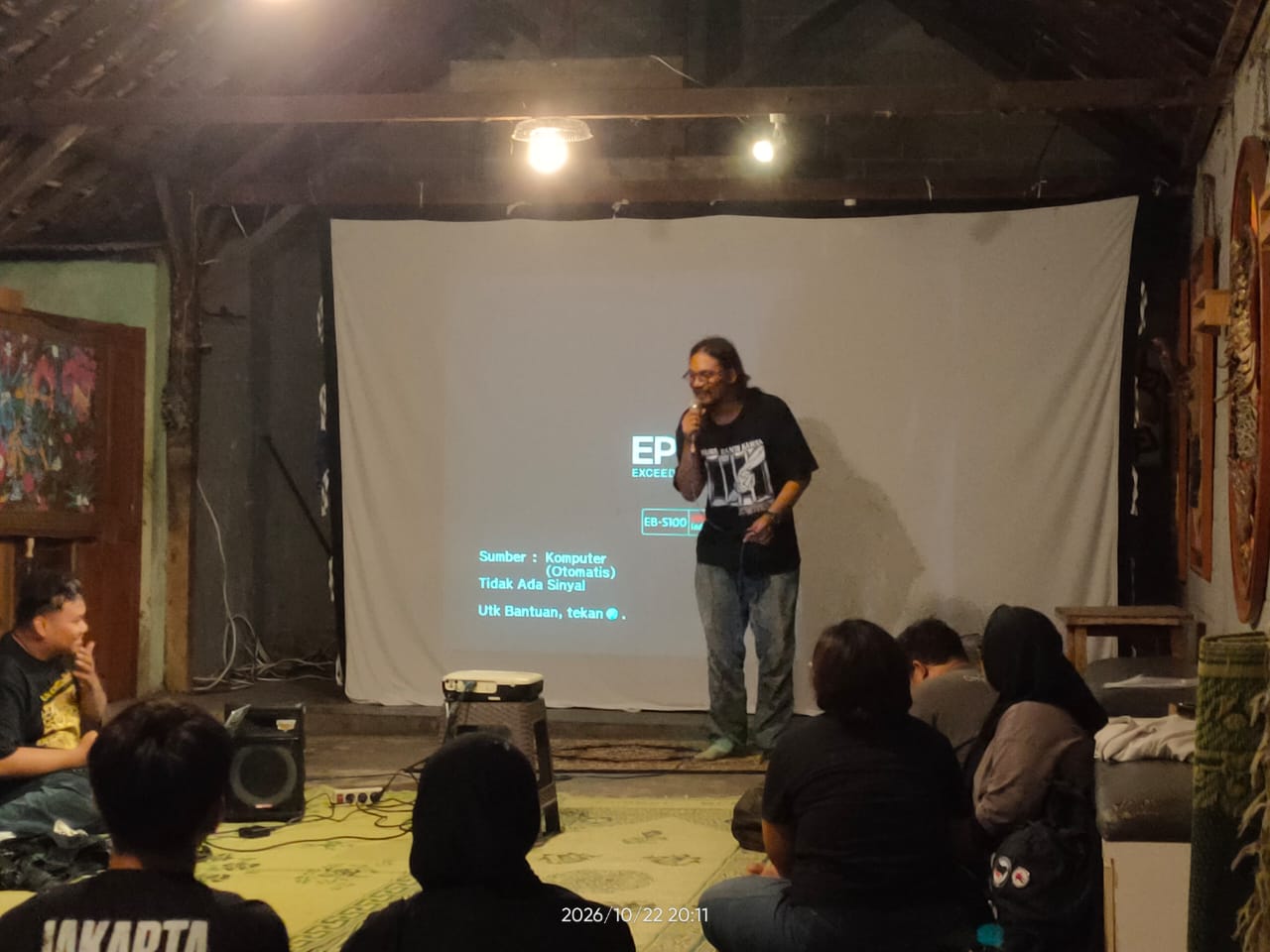
Swastika explained that the impacts of disrupted water access was not only related to availability of natural resources. The impacts could also affect the division of domestic labour, household economic condition, and women’s daily activities.
Swastika also discussed the vulnerability to violence and economic violence when economic pressures increased. Disturbance to sources of livelihood could worsen household condition, especially when women had limited access to resources and decision-making.
The discussion emphasised the importance of involving women in decision making about the environment. Women’s experience in meeting household needs and dealing with access to water could be parts of information to assess the impacts of a policy.
Women also needed to have space for participation in organising and expressing aspiration. That involvement included roles in determining the direction of the movement, not simply as people who bore the impacts.
Dwi Lestari: Accompaniment in Agrarian Conflict
Dwi Lestari shared her experience accompanying communities in Ledoksari on land conflict against PT KAI. That experience showed the importance of solidarity and continuous accompaniment in agrarian issues and in social pressures.
Agrarian conflicts were not only about land status or land ownership. For communities, land was also connected to livelihood, identity, and family survival. When people’s interests clashed with the interests of those who had bigger power, expressing objections could also be accompanied by fear and uncertainty.
Dwi’s experience showed that residents needed relationship and networks that enabled them to support each other. It was not enough for organising to rely on individual courage, as it also necessitated communication, mutual supports, and spaces for people to determine the steps they had to take under the circumstances they had.
The discussion also explored the use of social media, documentary films, media networks, and scientific data for advocacy. Documentation could help explain issues to the public, while environmental data could be vital in challenging claims and assessing potential impacts of a given activity.
However, information had to be delivered carefully. Resident’s testimonies, field findings, and results of scientific analysis were different types of information that had to be presented separately. Resident’s concerns about water sources were critical testimonies, while assessment of the impacts of an activity necessitated relevant studies.
Residents’ Participation in Karst Discussion
Discussion at Kedai Tumbuh explored the issue of Pracimantoro Karst from a number of angles. The Film featured Faris Wibisono who talked about culture and organising. Swastika from Project Sasmita talked about the impacts of disturbance in water access on women. Dwi Lestari shared her experience in agrarian conflict accompaniment.
The similarity in the discussion pointed to the importance of involving the residents in decision about environmental change and development.
Information openness, environmental impacts assessment, and people’s participation were important considerations if an activity potentially had impacts on water sources and people’s livelihood. Environmental education, culture, the involvement of women and young people, and solidarity networks were also parts of the discussion towards people’s organising.
The discussion did not reach a conclusion about what industrial development would proceed. However, the discussion highlighted the decision-making process, environment risk assessment, and the roles of residents’ experience in the process.
For communities who relied on water and land, karst region was closely connected to agriculture, livestock, family needs, and life survival. Such connection was the basis for people’s anxiety towards planned activities in Pracimantoro Karst.
Through the film screening and discussion, Gusdurian Solo connected people’s testimonies to the discussion about organising, gender perspective, and agrarian conflict accompaniment. Information about the impacts of activities on the environment and communities required verification through studies and verifiable data. (Ast)