



Haze from Forest and Land Fires not only covered trees and residential areas. Haze entered houses, children inhaled the smoke, the elderly had respiratory problems, and many people had to live their daily activities amidst the haze.
For residents living in affected areas, polluted air was not simply an environmental issue. They had to deal directly with the unavoidable health risks.
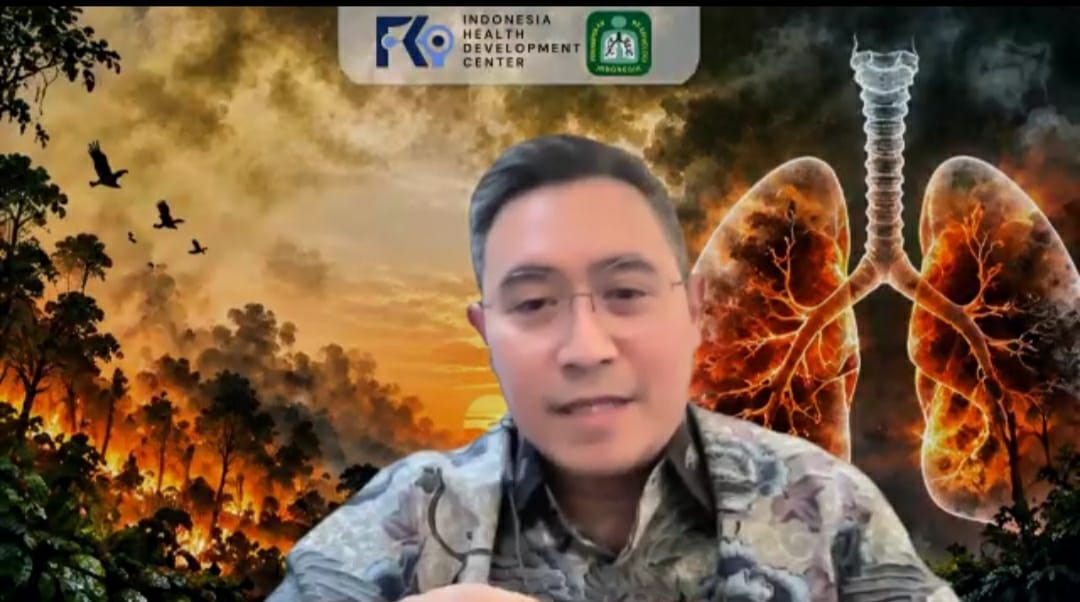
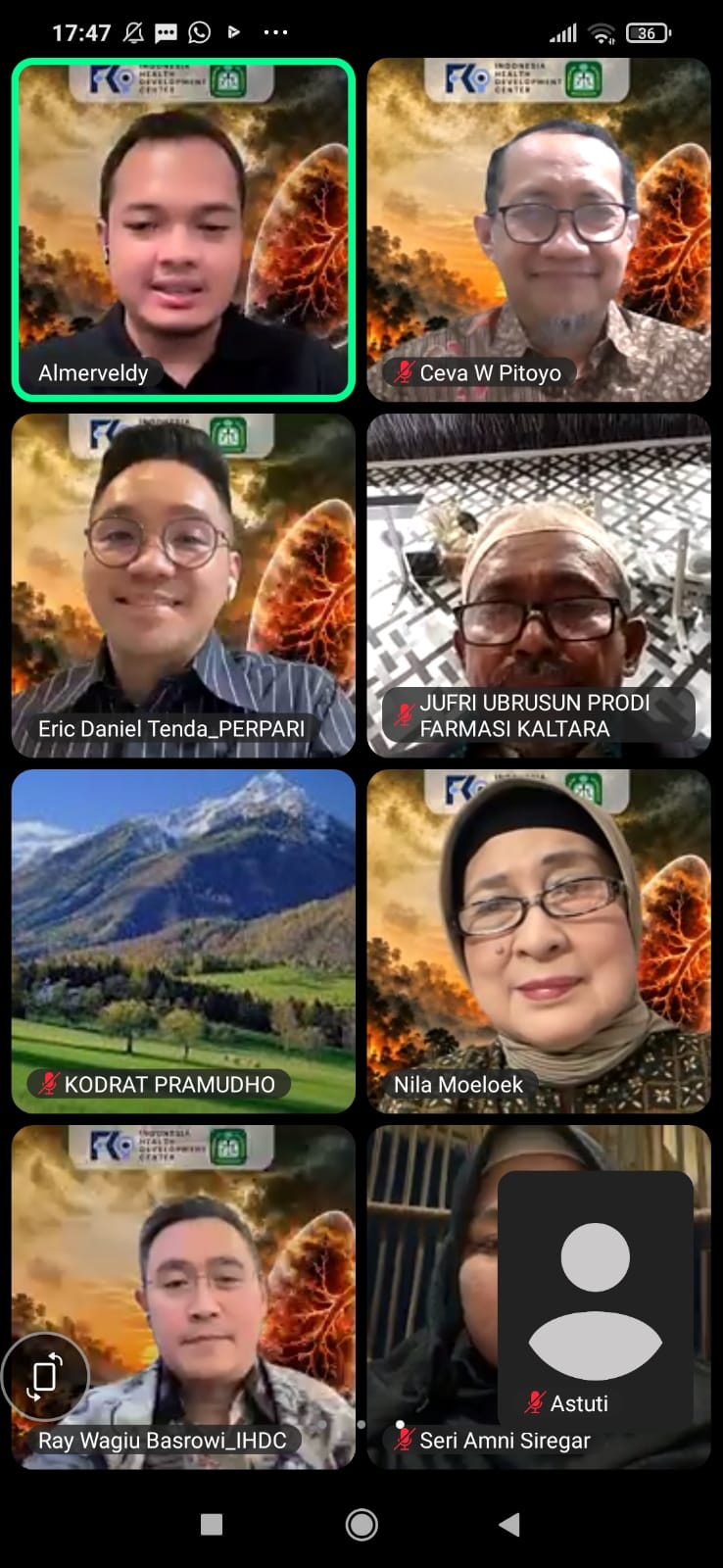
The Eksekutif Director of Health Collaborative Centre (HCC), Dr. Ray Wagiu Basrowi, MKK, FRSPH described the situation through his experience in Palembang. When he participated in a community health education webinar entitled "Be Aware of Haze from Forest and Land Fires" organised by Indonesian Respiratory Association or Perhimpunan Respirologi Indonesia (Perpari) an Indonesia Health Development Center (IHDC) on Sunday (25/10), he felt smoke when he was about to go outside of the hotel. That experience reminded him that many people faced air pollution without adequate resources to protect themselves.
During the health education webinar, Ray reminded that not all affected people had choices to avoid exposure. When some residents might be able to limit their outdoor activities, searched for safer places, or used air filter facilities, others might need to continue regular activities amidst the haze. The disparity in the capacity to protect oneself meant that the impacts of forest and land fires were not felt equally.
The webinar featuring the Minister of Health for the period between 2014 and 2019, Prof. Dr. dr. Nila Djuwita F. Moeloek, Sp. M (K) and internal medicine specialist dr. Ceva Wicaksono Pitoyo, Sp.P.D, Subsp. P. M. K (K), KIC, FINASIM highlighted the need for community health protection alongside the urgency to change in handling forest and land fire.
Exposure to Smoke and Unseen Risks
dr. Ceva explained that forest and land fire smoke contained fine particles and various gases that could harm health. One of the main concerns was PM2.5, partiles with a diameter of 2.5 micrometer or smaller that could penetrate deep into the lung to reach the alveoli where the oxygen exchange took place.
Smokes also contained larger particles, irritant gases, and carbon monoxide. The latter substance could bind to haemoglobin more strongly than oxygen hence impairing the blood’s ability to transport oxygen to tissues. Such exposure could trigger coughing, sore throat, stinging eyes, and shortness of breath. For people with asthma or chronic obstructive lung diseases, smoke could worsen their condition. In some people, exposure also increased risks of respiratory problems that necessitated tests or medical treatment.
dr. Ceva reminded that subsiding symptoms did not mean that the exposure had ended. Certain disorders might not be immediately visible through commonly used lung function tests. Long-term repeated exposure also needed to be studied to determine its possible effects on lung capacity. For residents living in areas prone to forest and land fire, the issue was not simply about how to survive one single episode of haze. They also needed assurance that their health would not be neglected when fires recurred in the following season.
In the presentation, dr. Ceva recalled the PM2.5 concentration in Palangkaraya was more than 2,500 mikrogram per cubic meter. That figure was far above the standard recommended air quality of the WHO, which referred to the guideline PM2.5 of 24-hour average of 15 mikrogram per cubic meter.
The significant difference showed that the pollution level that a forest and land fire could reach. In such condition, Public health advisory alone was not enough if the community did not receive adequate information about air quality, safe shelters, and access to health services.
Children and Vulnerable Groups Faced Greater Risks
Children were one of the groups who needed special protection. dr. Ceva said that their lungs were still developing, and repeated exposures potentially disrupted the lung function development. The impacts were not always immediately visible when children were still young, but they needed to be monitored over the long-term. Such risk put families in a difficult situation when schools, playgrounds, and houses were exposed to haze. Restriction of outside activities could reduce exposure, but its implementation necessitated environmental supports that allowed children to remain safe.
Pregnant women also needed attention. Carbon monoxide could disrupt oxygen supply for the fetus. Meanwhile, the elderly and people with lung or heart diseases had a higher vulnerability as their organ function reserves could drop.
These groups needed more than general information. They needed a system capable of recognising special needs, provide assistance when pollution worsened, and ensured access to health services. In such context, data was critical. The government had to identify the worst affected areas, the number of vulnerable people in those areas, and the facilities available to protect them. Without proper mapping, aid risked failing to reach people who needed it most.
Old Experience, Recurring Problems
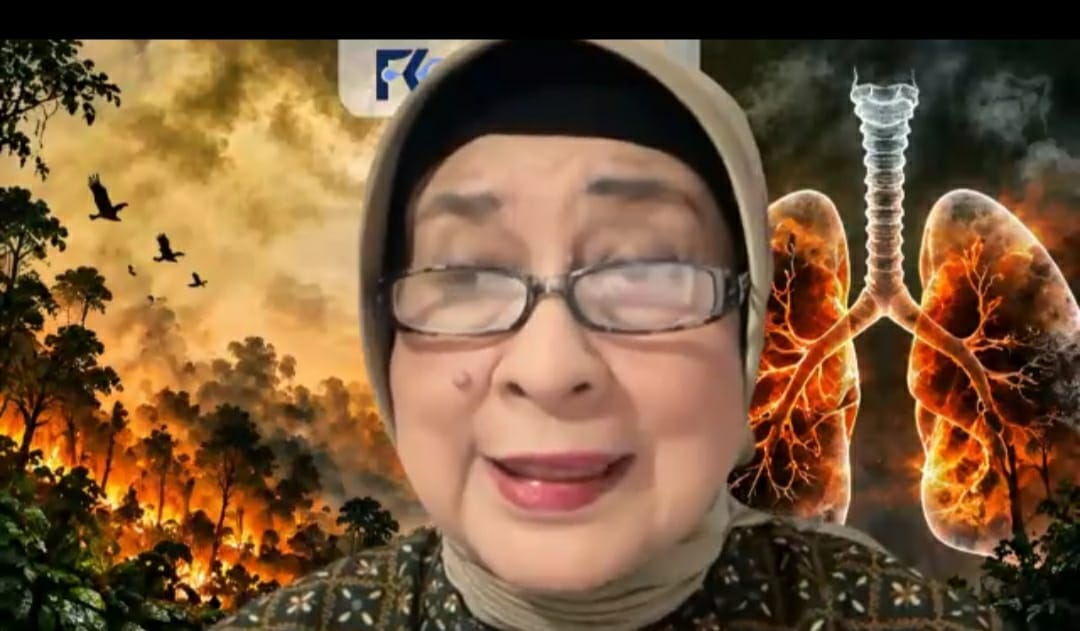
Nila Moeloek recalled her experience as minister of health during the period of 2014 to 2019, including the period when Indonesia dealt with heavy haze from forest and land fire. Then, the government implemented emergency measures, from providing masks, medicines, oxygen, to sending health officials to affected areas. Hospitals and community health centres were involved in services, while shelters were being prepared as safe houses for residents who needed protection.
The Ministry of Health also coordinated with other ministries, including the Ministries of Social Affairs and the Ministry of Education and Culture. This experience demonstrated that protecting the public required collective efforts, and was not the sole responsibility of the health sector. Nila emphasised the importance of presenting information about air quality through Air Pollution Standard Index. The information helped residents understand the environmental condition and determine protective measures, including restricting children activities when the pollution level deteriorated.
She also explained efforts to reduce haze into the house by shutting certain ventilation gaps and using a moistened cloth or curtain on applicable parts. Such step could be part of education, although effectiveness of protection still depended on the conditions of the buildings and level of pollution. The past experiences served as good reminders that handling mechanisms were actually carried out before. The challenge was to ensure such preparedness did not stop after the emergency had passed.
Nila stated that regulation and mechanism for disaster management had to be properly implemented through regular training and mitigation. The government had to prepare itself ahead of fire, rather than only mobilising resources after the public began experiencing health issues.
It Was Not Enough to Ask Residents to Adapt
dr. Ceva proposed regular education on preparedness at village level, local neighbourhood, and schools. Residents had to know how to monitor air quality, reduce exposure, use appropriate masks, and recognise symptoms that required medical attention. People suffering from asthma and chronic obstructive lung diseases had to ensure prescribed treatment continued and seek help when the symptoms worsened. On the other hand, sub-national governments needed to prepare health officers, service facilities, auxiliary facilities, and budget for forest and lind fire risk mitigation.
Yet, educating residents should not obscure the responsibility to prevent fire. Residents also needed to know how to protect themselves, but they also had the rights to an environment that did not endanger their health.
Dr dr. Ray emphasised the importance of addressing factors that caused the forest and land fires. Providing masks, oxygen, safe houses, and health services were necessary to reduce the impacts, but such measure had to go hand-in-hand with fire prevention. He also highlighted the importance of strengthening the documentation of health cases so that the impacts of forest and land fires could be comprehensively understood. The caseload at health facilities had to be interpreted alongside the possibilities of other impacts that had not been identified, including new problems due to repeated exposure.
The webinar explored the One Health approach as a framework to connect human and animal health, to the environment. The Forest and Land Fire could not be handled by multiplying medical services when the smoke was already spreading. Land management, environmental condition, and inter-sectoral coordination were also parts of management strategy.
During the discussion, there were also suggestions that professional organisations and research institutes developed mitigation protocols that took into consideration local characteristics. People’s needs in Palangkaraya and people in other areas were not necessarily the same. Consequently, national coordination had to be coupled with a strategy that fitted local condition.
To Prove Long-term Effects
During the feedback session in the webinar, one participant, dr. Sumardi raised the possibility of long-term impacts of particulate exposure on lung functions. He referred to his experience researching the impacts of volcanic ash during Mount Merapi eruption in 2010, when silica particles were found in people’s respiratory tracts exposed to the volcanic ash. That experience raised question regarding the impacts of repeated exposure to peat and burning wood for many years. He proposed a study to determine whether such exposure was associated with decrease lung functions, especially in children and in communities living in hazard areas.
dr. Ceva welcomed further research. Nila reminded that the relationship between exposure and chronic diseases could not be ascertained without research that took into consideration the duration of exposure, individual condition, and other factors. Long-term monitoring was necessary to collect more solid evidence.
Scientific Evidence could help the government to design better protection and clarify the health burden of the communities. Adequate data was critical in efforts to hold accountable those proven to have caused environmental damage and endangered the people.
In closing, Dr.dr. Ray reminded that the discussion about the haze had to lead to real actions. When experts discussed in a comfortable room, affected people had to inhale polluted air. They needed protection that did not depend on family’s ability to save themselves. Prevention of Forest and Land Fire, information about air quality, health services, research, and mitigation budget were parts of collective responsibility. (Ast)
udara, pelayanan kesehatan, penelitian, serta anggaran mitigasi harus menjadi bagian dari tanggung jawab bersama. (Ast)