



Voices about Mollo often came from outside. History, culture, nature, and community identity in Timor, East Nusa Tenggara were often told from the perspective(s) of people who came to see, research, document, and then leave.
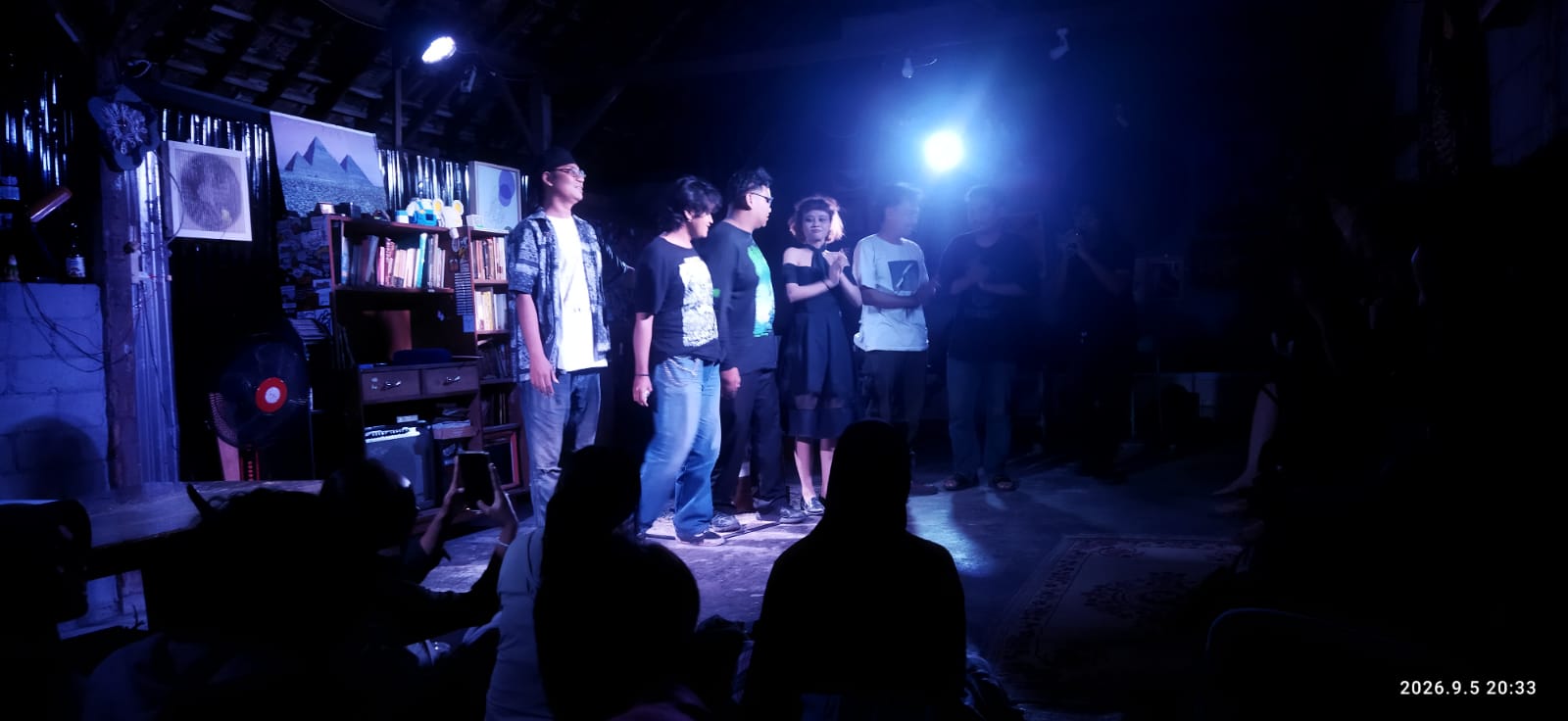
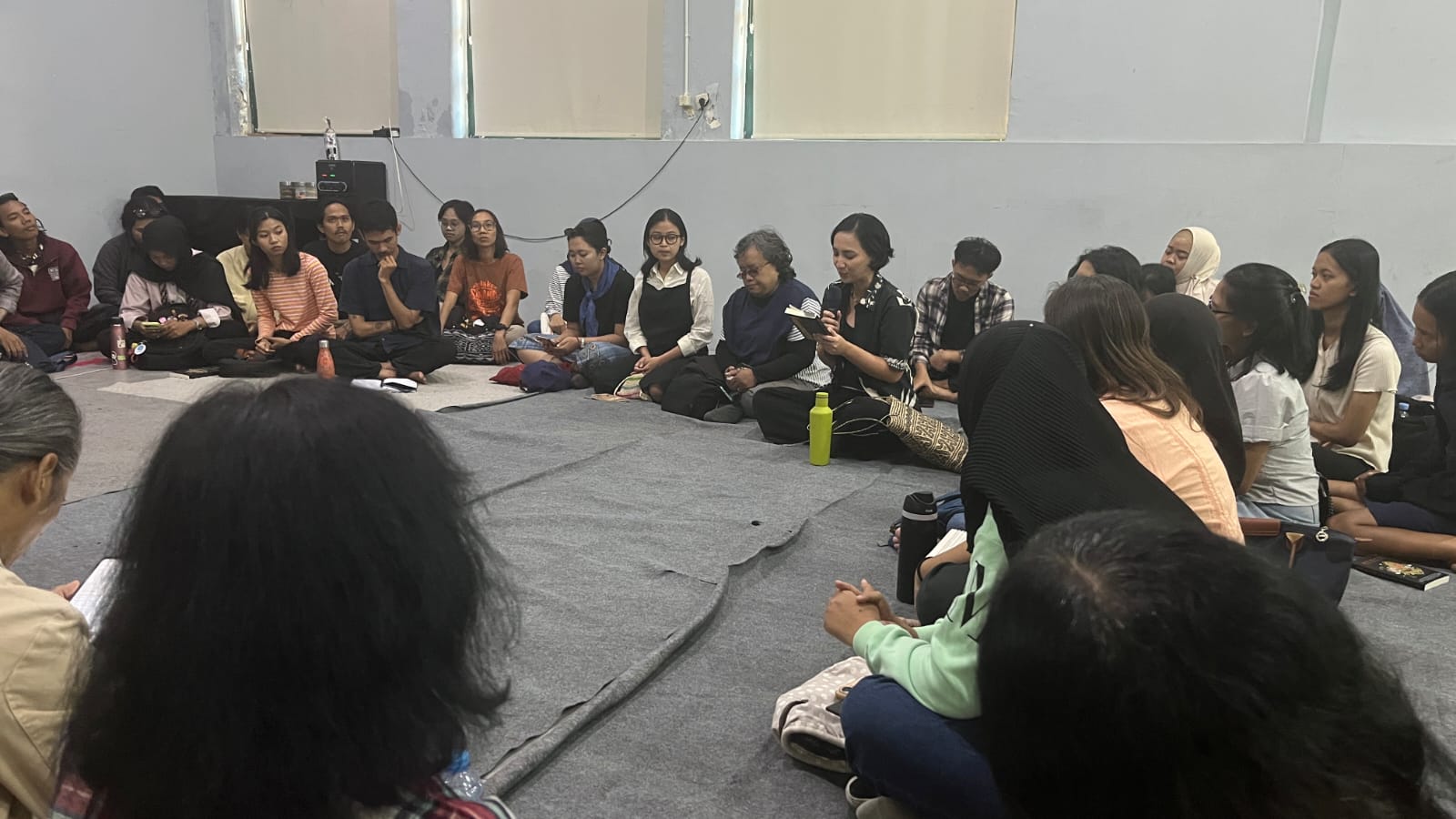
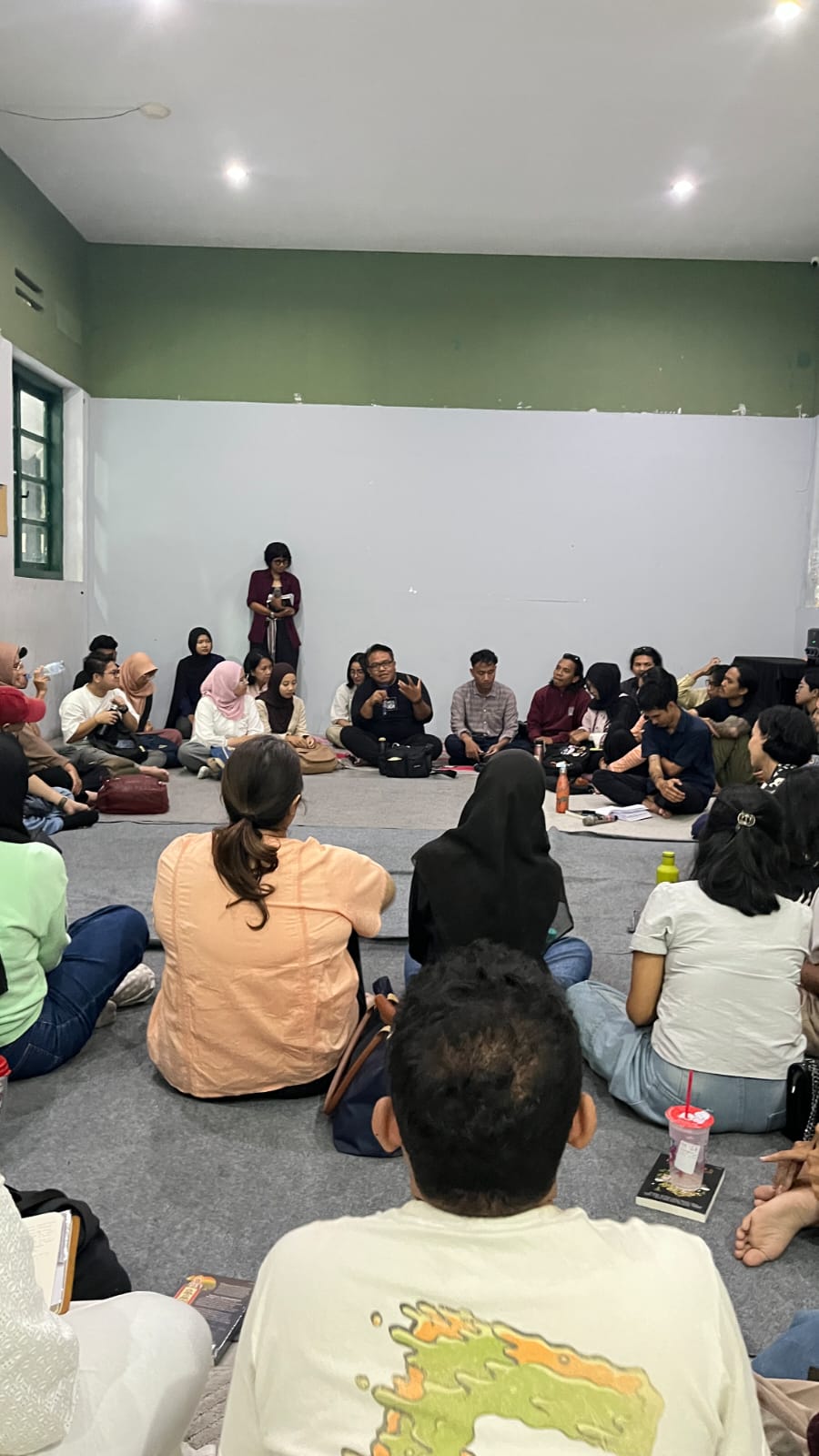
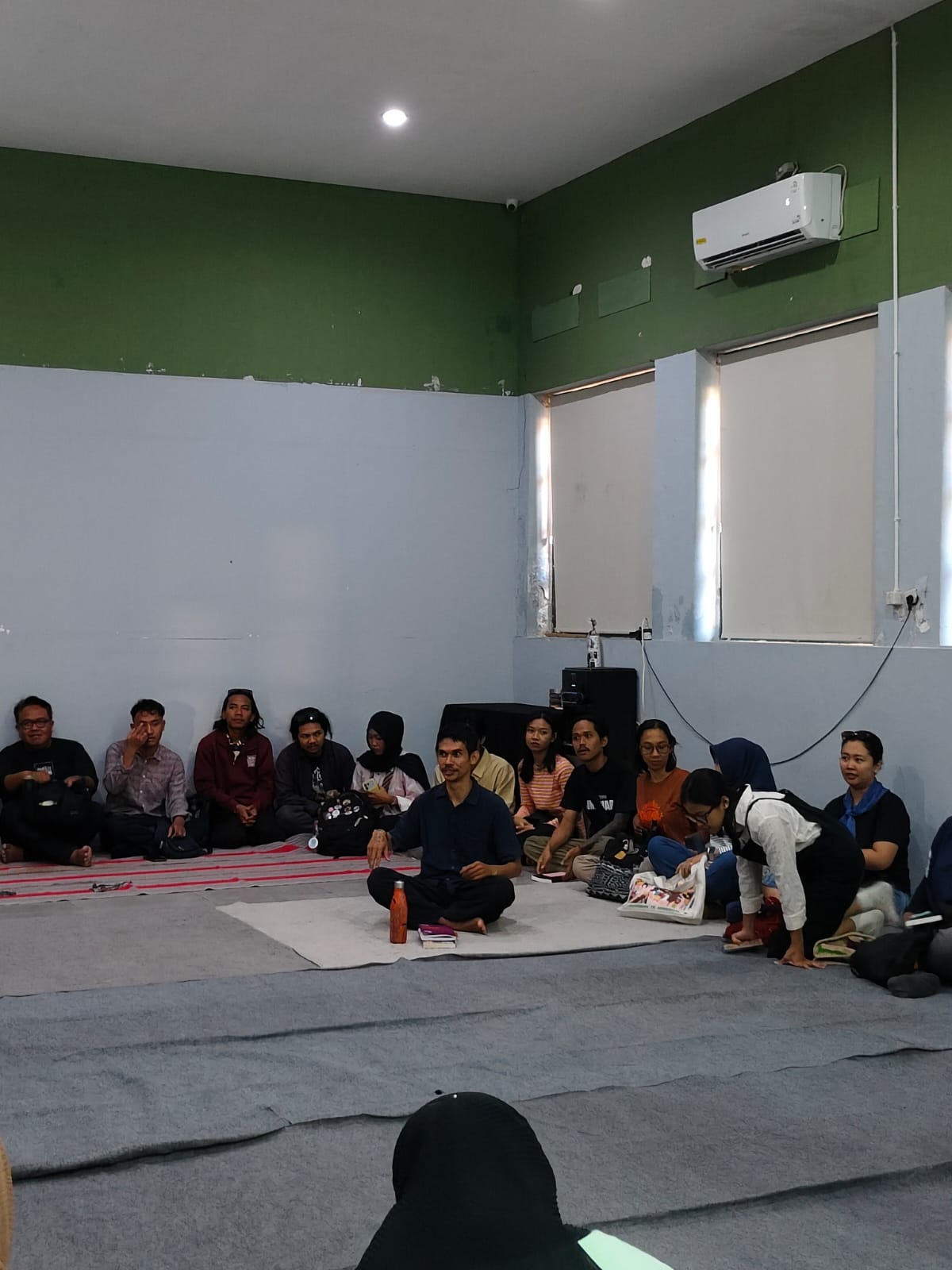
The book "Pah Pinan: Jagat Raya Mollo dan Seisinya" and the film "Naijan On Hai Aina" about Mollo people tried to change the direction of that story. Communities no longer were the object that people came to see. They wrote, record, talk, and determine their own stores about their life. That idea was the common thread in the film screening and book launch "Pah Pinan; Jagat Raya Mollo dan Seisinya" organised by Patjar Merah at Hetero Space, Surakarta on Saturday (5/9). The discussion room moved from stories about production process to broader discussion about mother tongue, local food, education, conservation, colonialism, and community rights to define their own future living spaces.
The book "Pah Pinan: Jagat Raya Mollo dan Seisinya" and the film "Naijan On Hai Aina" about Mollo people tried to change the direction of that story. Communities no longer were the object that people came to see. They wrote, record, talk, and determine their own stores about their life. That idea was the common thread in the film screening and book launch "Pah Pinan; Jagat Raya Mollo dan Seisinya" organised by Patjar Merah at Hetero Space, Surakarta on Saturday (5/9). The discussion room moved from stories about production process to broader discussion about mother tongue, local food, education, conservation, colonialism, and community rights to define their own future living spaces.
One of the initiators of the book and film production, Dicky Senda said that the works were born out of a long community experience who felt that other people often talked about the local identity. "Form that experience, many things many times history or culture or identity of Timor people were written or talked about by other people on our behalf," said Dicky. The book was a means of reclaiming the space to talk. As many as 20 Mollo people were involved in its writing. They came from different generations, including three writers from the Alpha generation and a number of Gen Z writers.
The process did not stop with collection of stories. The authors learned from the beginning the process of writing, editing, preparing the book, and understanding how a work was produced. People involved came from different places such as Jakarta, Kupang, Kediri, and Mollo. The distance was inconsequential in nurturing the creative process. For Dicky, the book was not simply a compilation of articles. It was a sign and an archive for Mollo people.
The film had the same function. Knowledge that was alive through discussion at home, garden, forest, and community spaces was recorded in a new format. The camera served as a means to store memories that could easily be lost if not passed down.
The book editor, Windy Ariestanty faced serious challenges. Many stories in the book started as oral tradition. The day-to-day language had the rhythm, context, and way of expressing which were not easy to transcript into text. For that reason, editing was not intended to establish uniform format for all articles. The voices of each author had to be given proper space.
The process did not stop with collection of stories. The authors learned from the beginning the process of writing, editing, preparing the book, and understanding how a work was produced. People involved came from different places such as Jakarta, Kupang, Kediri, and Mollo. The distance was inconsequential in nurturing the creative process. For Dicky, the book was not simply a compilation of articles. It was a sign and an archive for Mollo people.
The film had the same function. Knowledge that was alive through discussion at home, garden, forest, and community spaces was recorded in a new format. The camera served as a means to store memories that could easily be lost if not passed down.
The book editor, Windy Ariestanty faced serious challenges. Many stories in the book started as oral tradition. The day-to-day language had the rhythm, context, and way of expressing which were not easy to transcript into text. For that reason, editing was not intended to establish uniform format for all articles. The voices of each author had to be given proper space.
"The book was not simply about text issue. The way people express there is through oral language, then we made it into a book and texts, and at the same time maintain the oral sense," said Windy during discussion. She viewed language as part of knowledge. The loss of mother tongue did not simply make people lose ability to speak in certain language. There was knowledge that disappeared too.
One story read during the activity brought participants to the memory of Mollo childhood. There were rocks that people passed by, also a mother’s message to not take anything at will, and discussion with grandpa about the ancestors. From those simple stories, understanding about human relations with the land and nature became apparent.
For Mollo community, nature was not an empty space outside of human life. The forest was a mother. The rocks were the bones. The land was part of the body. The water was associated with life. That view point meant that environmental destruction had deep meaning. Destroying the land was not simply about changing the nature. It hurt the body itself.
One story read during the activity brought participants to the memory of Mollo childhood. There were rocks that people passed by, also a mother’s message to not take anything at will, and discussion with grandpa about the ancestors. From those simple stories, understanding about human relations with the land and nature became apparent.
For Mollo community, nature was not an empty space outside of human life. The forest was a mother. The rocks were the bones. The land was part of the body. The water was associated with life. That view point meant that environmental destruction had deep meaning. Destroying the land was not simply about changing the nature. It hurt the body itself.
That view was also reflected in food. Prior to rice and other food supplies from outside, people obtained their food from the garden and the forests. Corn Bose or porridge was important part of life, so were nuts and other local foods. Food stored knowledge about seasons, environment, language, and family history.
The experience of children bringing local food was the stuff of ridicule by peers. Food as the pride of culture could change into something different. That story showed how standard of life from outside could slowly marginalise local knowledge passed down for generations.
The changes could be seen in signs of nature. Mollo community identified seasons through bird songs, the growth of plants/trees, changes in atmosphere, and the positions of objects in the sky. Certain bird songs were signs of rain. The growth of certain plants was the sign of cold season. Such knowledge was not written in school books. It lived in the inter-generational memory and discussion.
When crops were no longer grown, plant names and functions were forgotten. Plant-related language disappeared. Along with that, knowledge about signs of nature also disappeared.
The issue brought the discussion to education. Mollo had experience developing education based on local context. There were culture schools, community curriculum, learning rooms, and knowledge exchange that did not only happened in classrooms. Gardens, forests and kitchen became learning spaces. Discussion between children and parents became education process.
Dicky said that Mollo community had a long experience dealing with education system that did not fit with their needs. He was a teacher for years in Yogyakarta and in Timor. That experience helped him to see the importance of education that gave space for communities to know themselves. "We made our own curriculum, shared knowledge, and built our own system," he said.
The education was also related to the struggle to maintain the identity. Dicky said that Mollo community had important and long history of struggle against a variety of pressures. He said that the label stupid was once attached to Timor people and it was not simply about word. The label related to the history of power and the way certain groups viewed other groups.
The discussion then moved to broader issue about colonialism. Colonialism was not understood simply as past event. It was present in language, education, policies, natural resource management, and standard of knowledge that placed one group as centre and other groups in the periphery. The discussion resource person, Dandhy Laksono reminded that indigenous people could not be simply positioned as interesting objects to tell. "Do not let it be a romantic issue which we give appreciation, but never become real political power" he said.
That statement was important in the discussion of Mount Mutis and the possibility of the management of the area as a national park. Mollo community was concerned about the conservation concept defined by outsiders. They questioned who determined the borders of the park and the zonation, and who had the authority over natural resources.
The experience of children bringing local food was the stuff of ridicule by peers. Food as the pride of culture could change into something different. That story showed how standard of life from outside could slowly marginalise local knowledge passed down for generations.
The changes could be seen in signs of nature. Mollo community identified seasons through bird songs, the growth of plants/trees, changes in atmosphere, and the positions of objects in the sky. Certain bird songs were signs of rain. The growth of certain plants was the sign of cold season. Such knowledge was not written in school books. It lived in the inter-generational memory and discussion.
When crops were no longer grown, plant names and functions were forgotten. Plant-related language disappeared. Along with that, knowledge about signs of nature also disappeared.
The issue brought the discussion to education. Mollo had experience developing education based on local context. There were culture schools, community curriculum, learning rooms, and knowledge exchange that did not only happened in classrooms. Gardens, forests and kitchen became learning spaces. Discussion between children and parents became education process.
Dicky said that Mollo community had a long experience dealing with education system that did not fit with their needs. He was a teacher for years in Yogyakarta and in Timor. That experience helped him to see the importance of education that gave space for communities to know themselves. "We made our own curriculum, shared knowledge, and built our own system," he said.
The education was also related to the struggle to maintain the identity. Dicky said that Mollo community had important and long history of struggle against a variety of pressures. He said that the label stupid was once attached to Timor people and it was not simply about word. The label related to the history of power and the way certain groups viewed other groups.
The discussion then moved to broader issue about colonialism. Colonialism was not understood simply as past event. It was present in language, education, policies, natural resource management, and standard of knowledge that placed one group as centre and other groups in the periphery. The discussion resource person, Dandhy Laksono reminded that indigenous people could not be simply positioned as interesting objects to tell. "Do not let it be a romantic issue which we give appreciation, but never become real political power" he said.
That statement was important in the discussion of Mount Mutis and the possibility of the management of the area as a national park. Mollo community was concerned about the conservation concept defined by outsiders. They questioned who determined the borders of the park and the zonation, and who had the authority over natural resources.
Water was a critical concern. Mount Mutis was the source of life for the wider areas in Timor Island. Water from the area was used by communities in a number of districts. AS the need for water increased, communities saw the possibility of the emergence of economic interest for water resources. A similar concern was also evident with regards to minerals, marbles, gold, wood, and other resources.
Experience from another area gave reflection points. The Komodo National Park was mentioned in the discussion as example of how local communities faced changes in life spaces after the area received its conservation and tourism status. Dicky said that Mollo community did not reject the idea of nature conservation. They questioned the model conservation which separate humans from nature. "The indigenous community there was deemed as the destructive force, and so became the antagonistic figures," he said. For Mollo community, humans were part of the ecosystem. For that reason, nature protection had to proceed with the protection of community who had lived there and maintained the land.
Experience from another area gave reflection points. The Komodo National Park was mentioned in the discussion as example of how local communities faced changes in life spaces after the area received its conservation and tourism status. Dicky said that Mollo community did not reject the idea of nature conservation. They questioned the model conservation which separate humans from nature. "The indigenous community there was deemed as the destructive force, and so became the antagonistic figures," he said. For Mollo community, humans were part of the ecosystem. For that reason, nature protection had to proceed with the protection of community who had lived there and maintained the land.
The discussion then shifted to an important question about the community sovereignty in determining the future of their life spaces. Dicky argued that collaboration with local community had to be on equal footing. Community had to be involved since the beginning, not only to be invited after the project finished.
It told the experience of a music project that took inspiration from the struggle of Mollo community. The song was made without the involvement of the community. Once the song was finished, the community was asked to appear in the video clip. The community rejected that. For Dicky, that experience showed the importance of avoiding tokenism. "They must be prepared to accept when the community says no," he said. That rejection did not mean that the community refused to work together. That rejection could be part of the community right to determine how they wanted to present their identity.
The film and book discussed in the activity tried to practice a different principle. The director of "Naijan On Hai Aina" film, Wisnu F. Wardana explained that the film production process was in collaboration with the community. Camera was not always treated as equipment to focus on the community to fit the filmmaker’s intention. Many scenes were inspired by daily discussions and activities. "I came as a friend," said Wisnu. The editing process lasted for about one year. The film was transported back and forth between Mollo and Yogyakarta. The translation process and the selection of film parts were discussed many times in order to not lose the context of the story.
The resource woman from Yayasan Kembang Gula, Fanny Chotimah viewed that approach as a form of documentary work to reduce intervention. The film maker did not need to force a story to fit the framework defined by outsiders.
That method was part of the politics of representation. The book and film not only presented the face of Mollo communities. They tried to show how communities understood the land, water, forests, food, language, and ancestors. For the film maker, the work was part of long attempts to maintain memories. (Ast)
It told the experience of a music project that took inspiration from the struggle of Mollo community. The song was made without the involvement of the community. Once the song was finished, the community was asked to appear in the video clip. The community rejected that. For Dicky, that experience showed the importance of avoiding tokenism. "They must be prepared to accept when the community says no," he said. That rejection did not mean that the community refused to work together. That rejection could be part of the community right to determine how they wanted to present their identity.
The film and book discussed in the activity tried to practice a different principle. The director of "Naijan On Hai Aina" film, Wisnu F. Wardana explained that the film production process was in collaboration with the community. Camera was not always treated as equipment to focus on the community to fit the filmmaker’s intention. Many scenes were inspired by daily discussions and activities. "I came as a friend," said Wisnu. The editing process lasted for about one year. The film was transported back and forth between Mollo and Yogyakarta. The translation process and the selection of film parts were discussed many times in order to not lose the context of the story.
The resource woman from Yayasan Kembang Gula, Fanny Chotimah viewed that approach as a form of documentary work to reduce intervention. The film maker did not need to force a story to fit the framework defined by outsiders.
That method was part of the politics of representation. The book and film not only presented the face of Mollo communities. They tried to show how communities understood the land, water, forests, food, language, and ancestors. For the film maker, the work was part of long attempts to maintain memories. (Ast)