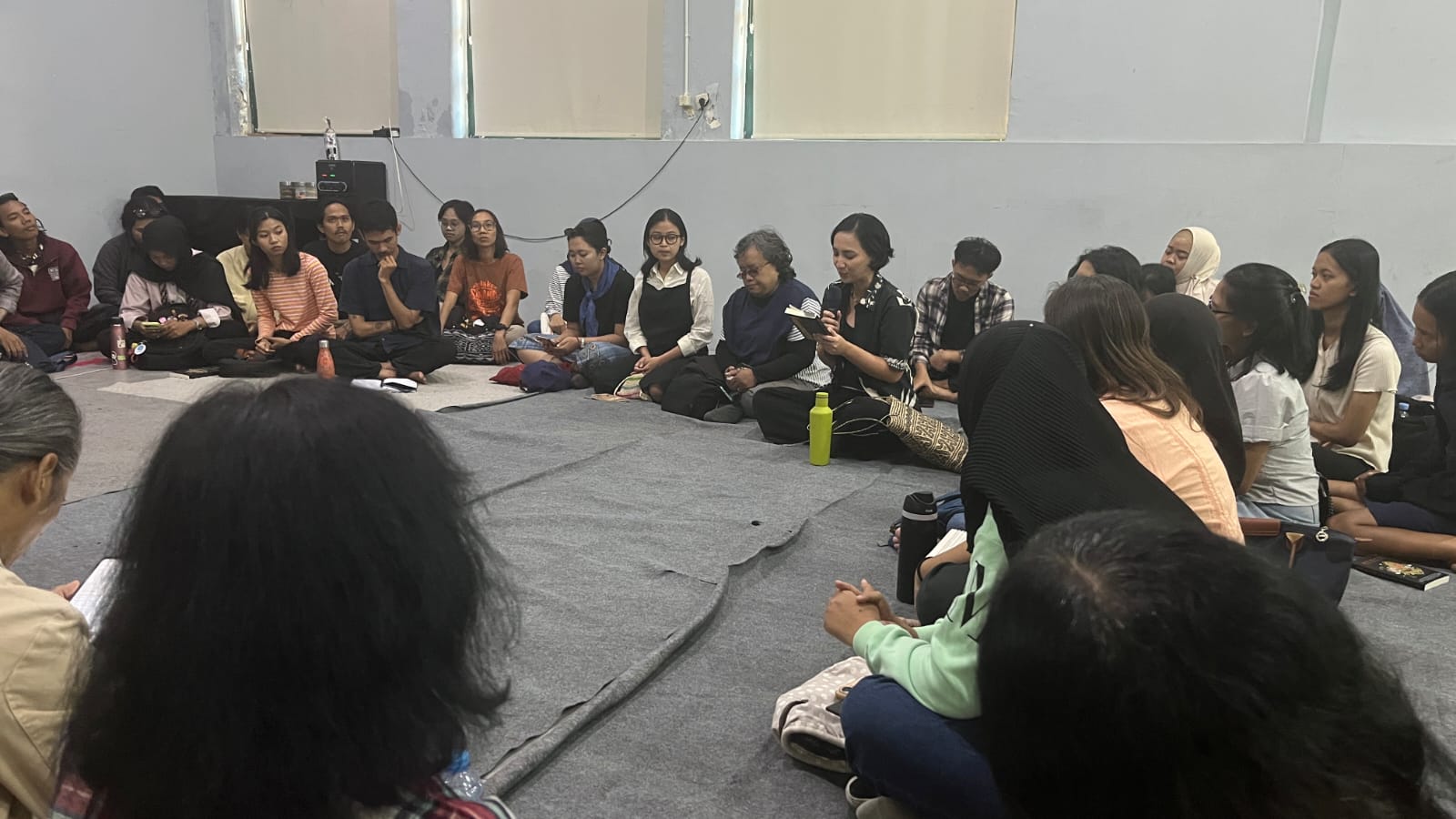




At Kedai Kebun in Jagalan, Surakarta on Saturday night (5/9), a talk about politics was underway. But it was preceded by a poem to fill the quiet space. Gaso stood and read the poem about loss, rain, house, and longing to go home. The words brought the participants to a reflective mood for the commemoration of Gus Dur.
The poem talked about a person who lost the language to explain his feelings. The rain was part of his sadness, the cold tea was a sign of time, while the house was there as something he missed and which he found it difficult to rediscover.
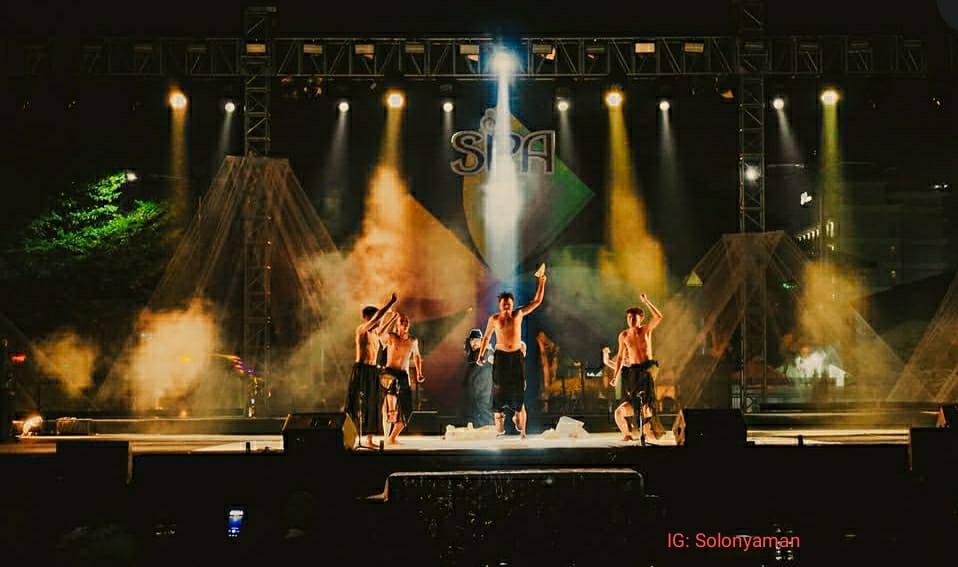
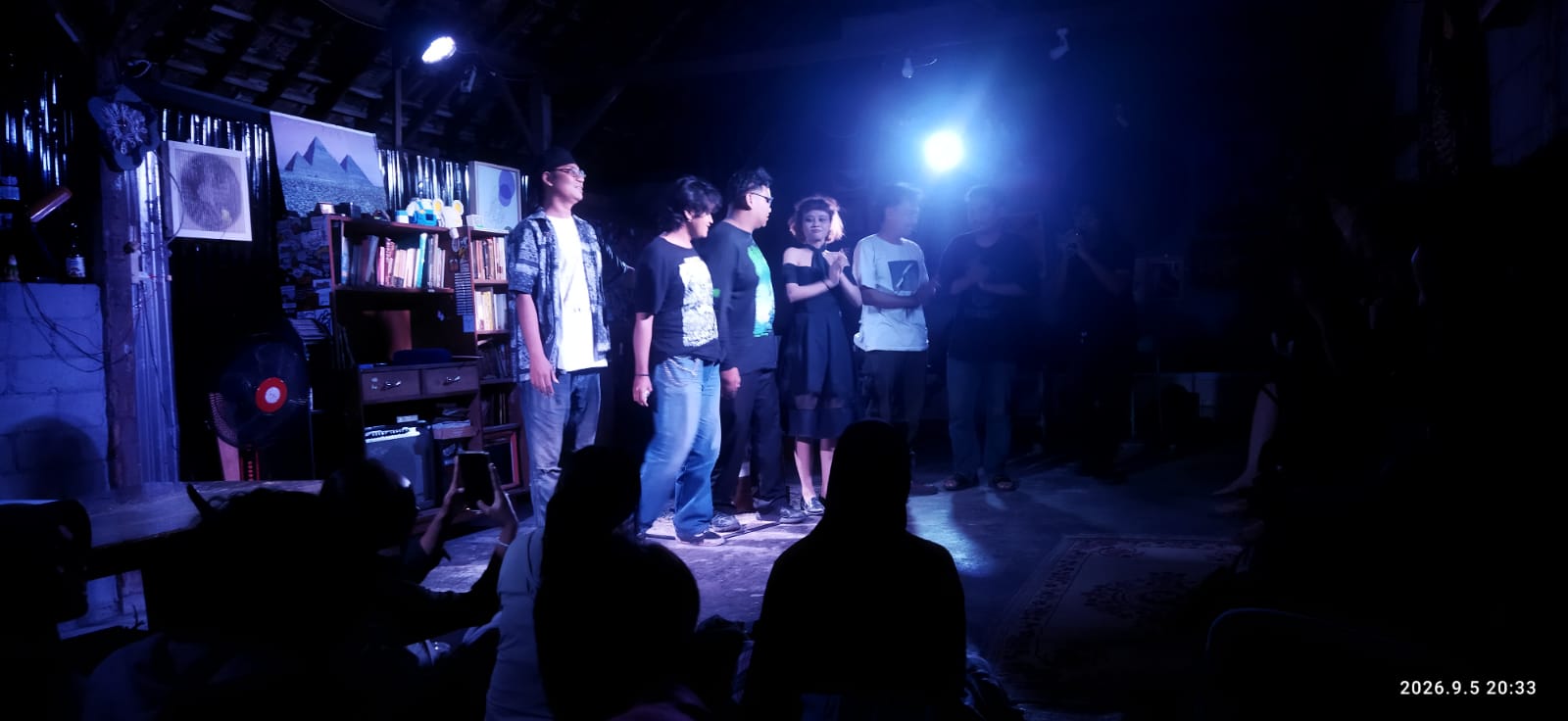
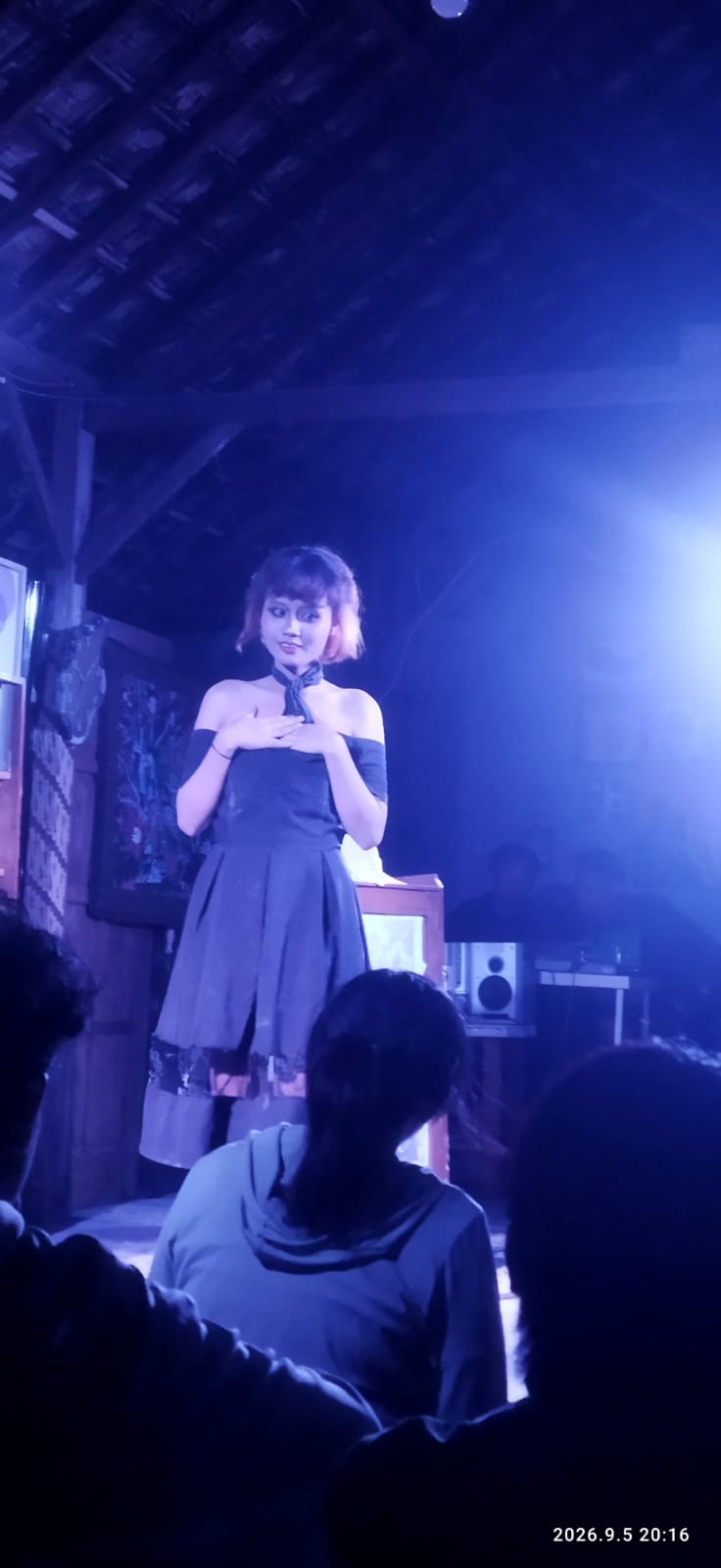
From poem, the atmosphere shifted to monologue. Yeya acted as Vivienne, a living figure amidst different identities and experience of Indonesian history. The monologue brought participants to a story about a mixed blood woman who grew up in Indonesian community. Her father and mother had different backgrounds. Their house used to be a place for the struggle movement and consolidation. After the republic was established, new problem arose. The past identity that was never an issue was suddenly questioned with regards to who were truly parts of Indonesia. With soothing music and songs, and lighting that shifted between light and shadow, Yeya’s performance that night was so sad for most spectators.
Vivienne questioned the meaning of house, blood, culture, language, and nationality. Those questions were relevant when talking about Gus Dur who was the main feature of the night’s program. Gus Dur was known as a religious figure, head of State, or a figure known for pluralism. The discussion at Kedai Kebun tried to open another side of him. Art and culture became the entry points to understanding how Gus Dur saw the community.
Dinda was the talkshow host who introduced Ghany and Olivia to start the discussion. Olivia was also known as a member of Gusdurian Solo and head of PMII UNS. The discussion about Gus Dur brought participants to Gus Dur’s intellectual journey. His education, his reading habit, his interest in literature and philosophy, and his friendship with a wide variety of people shaped his broad view.
The poem talked about a person who lost the language to explain his feelings. The rain was part of his sadness, the cold tea was a sign of time, while the house was there as something he missed and which he found it difficult to rediscover.
From poem, the atmosphere shifted to monologue. Yeya acted as Vivienne, a living figure amidst different identities and experience of Indonesian history. The monologue brought participants to a story about a mixed blood woman who grew up in Indonesian community. Her father and mother had different backgrounds. Their house used to be a place for the struggle movement and consolidation. After the republic was established, new problem arose. The past identity that was never an issue was suddenly questioned with regards to who were truly parts of Indonesia. With soothing music and songs, and lighting that shifted between light and shadow, Yeya’s performance that night was so sad for most spectators.
Vivienne questioned the meaning of house, blood, culture, language, and nationality. Those questions were relevant when talking about Gus Dur who was the main feature of the night’s program. Gus Dur was known as a religious figure, head of State, or a figure known for pluralism. The discussion at Kedai Kebun tried to open another side of him. Art and culture became the entry points to understanding how Gus Dur saw the community.
Dinda was the talkshow host who introduced Ghany and Olivia to start the discussion. Olivia was also known as a member of Gusdurian Solo and head of PMII UNS. The discussion about Gus Dur brought participants to Gus Dur’s intellectual journey. His education, his reading habit, his interest in literature and philosophy, and his friendship with a wide variety of people shaped his broad view.
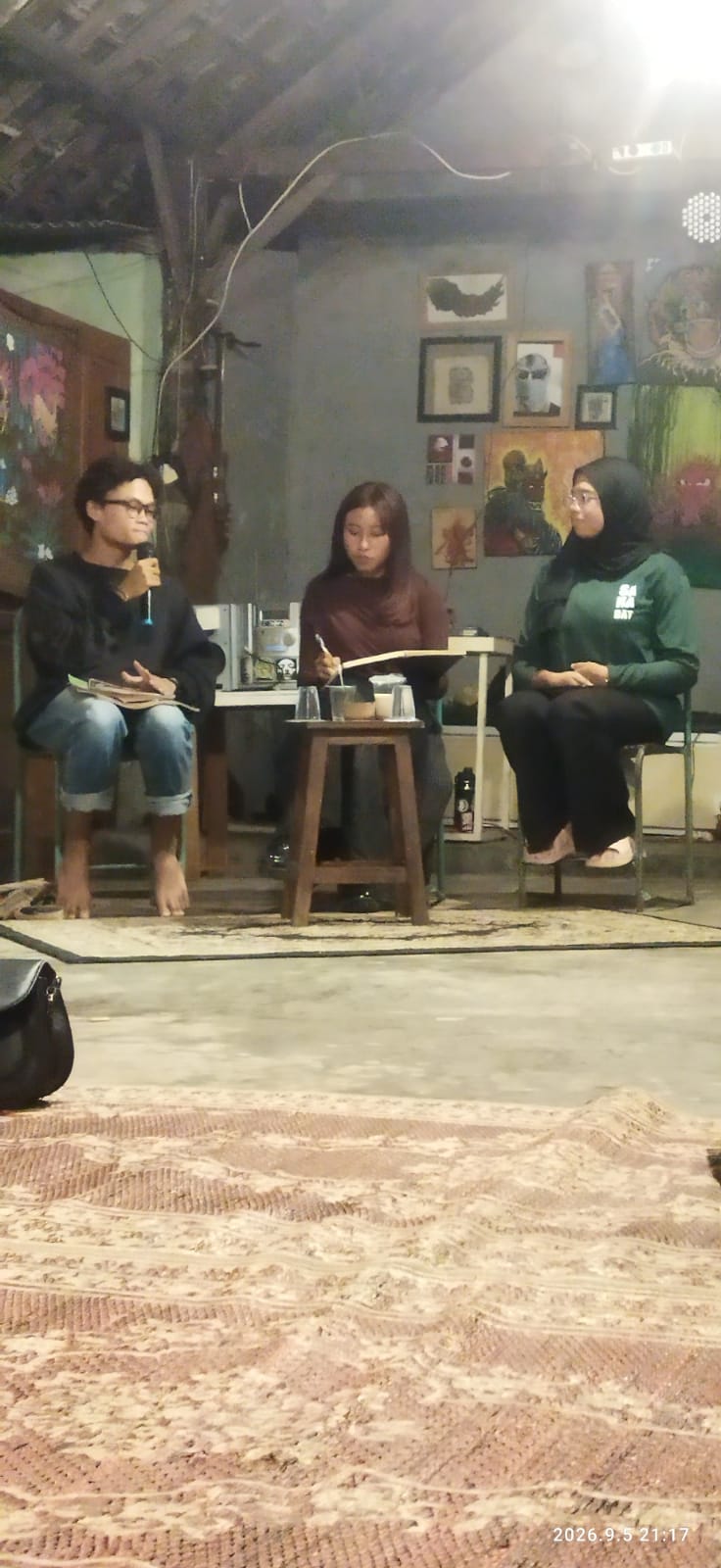
Gus Dur had great interest in culture. He did not consider religion and culture as two strictly separated areas. Literature, art, film, and culture were spaces to read human life. One pint of discussion was about his involvement in Jakarta Art Counsel or Dewan Kesenian Jakarta. He was trusted as the chairperson of the Jakarta Art Counsel in the early 1980s. That position was interesting since Gus Dur was not simply a religious figure. He was known through his writing and thoughts on the social and cultural issues, literature, and people’s life.
Gus Dur’s intellectual experience received significant attention as well. His education at Al-Azhar and Baghdad University exposed him to a variety of thought traditions. Literature and philosophy were part of that journey. Ghany highlighted that the experience shaped the way Gus Dur read problems. "Gus Dur not only focused on literature, but also became involved in talking about film criticism and art issues," he said in the discussion.
The discussion then moved to the relation between Islam and culture. Gus Dur was known to have the ability to present Islamic reading without losing the substance, while also being open to work of literature and art. Sufi literature was also discussed. Work of literature was not only seen as an artistic form, but also as space to express spiritual and humanitarian experience. The name Mustofa Bisri was also discussed in relations to the development of literature and culture.
Gus Dur’s intellectual experience received significant attention as well. His education at Al-Azhar and Baghdad University exposed him to a variety of thought traditions. Literature and philosophy were part of that journey. Ghany highlighted that the experience shaped the way Gus Dur read problems. "Gus Dur not only focused on literature, but also became involved in talking about film criticism and art issues," he said in the discussion.
The discussion then moved to the relation between Islam and culture. Gus Dur was known to have the ability to present Islamic reading without losing the substance, while also being open to work of literature and art. Sufi literature was also discussed. Work of literature was not only seen as an artistic form, but also as space to express spiritual and humanitarian experience. The name Mustofa Bisri was also discussed in relations to the development of literature and culture.
For Olivia, the relation between religion and culture could be seen through the history of Javanese community. She shared her experience finding articles written in Javanese traditional writing system that contained discussion about card game. In it was Javanese culture, Islam, and Chinese. The integration of different elements showed that culture did not develop in separate spaces. There was a process of mutual influence and adaptation.
For Olivia, culture could be a media for value dissemination. Javanese society had a variety of forms of expression such as songs, puppet shows, traditional writing system, and stories. When Islam grew, these forms became the medium to disseminate religious values. "Three cultures could be united and re-interpreted. There lied the value of tolerance," said Olivia.
That view led discussion to the culture issue of the day. Meetings not only happened face-to-face in physical space. Digital technology changed the way society knew and spread culture. Reliving scripts was one example. The technology could be used to keep culture so that it did not became a thing of the past. Cultural values and forms could also be re-interpreted as fit today’s needs.
For Ghany, Gus Dur’s thoughts about diversity was also related to the position of a leader. A leader had to be able to protect diverse religious and faith groups. That idea was then linked to Gus Dur’s experience in reading the Aceh and Papua issues. Local identity, symbols, and people’s demands did not need to be viewed as threats to the State. There was a long history to be re-discovered.
The discussion also touched on the issue about local flags. Identity symbols were viewed as parts of local community experience. The State needed to understand the context so that differences did not become sources of conflicts. Gus Dur was known as a figure who tried to maintain unity without forcing diversity.
Discussion about culture and tolerance then touched on politics. Right before the reform in 1998, Gus Dur went on a journey to visits a number of areas and met with a number of figures who were not aligned with the reform group. That decision invited scrutiny. For some people, visit to figures known to be associated with the New Order could be seen as controversial political act.
For Olivia, culture could be a media for value dissemination. Javanese society had a variety of forms of expression such as songs, puppet shows, traditional writing system, and stories. When Islam grew, these forms became the medium to disseminate religious values. "Three cultures could be united and re-interpreted. There lied the value of tolerance," said Olivia.
That view led discussion to the culture issue of the day. Meetings not only happened face-to-face in physical space. Digital technology changed the way society knew and spread culture. Reliving scripts was one example. The technology could be used to keep culture so that it did not became a thing of the past. Cultural values and forms could also be re-interpreted as fit today’s needs.
For Ghany, Gus Dur’s thoughts about diversity was also related to the position of a leader. A leader had to be able to protect diverse religious and faith groups. That idea was then linked to Gus Dur’s experience in reading the Aceh and Papua issues. Local identity, symbols, and people’s demands did not need to be viewed as threats to the State. There was a long history to be re-discovered.
The discussion also touched on the issue about local flags. Identity symbols were viewed as parts of local community experience. The State needed to understand the context so that differences did not become sources of conflicts. Gus Dur was known as a figure who tried to maintain unity without forcing diversity.
Discussion about culture and tolerance then touched on politics. Right before the reform in 1998, Gus Dur went on a journey to visits a number of areas and met with a number of figures who were not aligned with the reform group. That decision invited scrutiny. For some people, visit to figures known to be associated with the New Order could be seen as controversial political act.
In discussion that night, Gus Dur’s action could be interpreted in a different angle. He was opening up channel of communication and tried to reduce tensions. Gus Dur did not always choose a most popular position. He could visit those deemed as political enemies in order to open up communication channel.
The discussion about such attitude took participants to the question about the boundary of tolerance. One participant, Risqi questioned how far art could be used as a space for criticism. That question came out of his anxiety as student and young generation. Art was present in music, writing, shows, and a variety of other expressions. How far could tolerance give space for such expressions?
That question was critical part of the discussion because Gus Dur’s thoughts about tolerance could not be separated from the confidence to express criticism. Ghany explained that Gus Dur’s thoughts could be seen through a long experience in science, literature, religion, art, and politics. Such experience made Gus Dur adopt a view point that was not so simple to deal with differences.
Gus Dur was also known to actively write in a number of media. Majalah Panji (Panji Magazine) was one source that exemplified his political ideas and attitudes. He dealt with a variety of issues with open arms, including news that were negative of him. Gus Dur’s attitude to criticism was not always translated into retaliation. He often chose to explain, to conduct dialogues, or to find ways to keep conflict at a minimum.
The discussion about such attitude took participants to the question about the boundary of tolerance. One participant, Risqi questioned how far art could be used as a space for criticism. That question came out of his anxiety as student and young generation. Art was present in music, writing, shows, and a variety of other expressions. How far could tolerance give space for such expressions?
That question was critical part of the discussion because Gus Dur’s thoughts about tolerance could not be separated from the confidence to express criticism. Ghany explained that Gus Dur’s thoughts could be seen through a long experience in science, literature, religion, art, and politics. Such experience made Gus Dur adopt a view point that was not so simple to deal with differences.
Gus Dur was also known to actively write in a number of media. Majalah Panji (Panji Magazine) was one source that exemplified his political ideas and attitudes. He dealt with a variety of issues with open arms, including news that were negative of him. Gus Dur’s attitude to criticism was not always translated into retaliation. He often chose to explain, to conduct dialogues, or to find ways to keep conflict at a minimum.
That night, the discussion about Gus Dur finally merged with art. The opening poem, Vivien’s monologue, stories about Javanese scripts, literature, films, politics, and tolerance were within a common framework. There was a simple message in all those. Gus Dur could not easily be placed in a box. He was a religious leader who read literature, an intellectual who entered the political arena, a leader who talked about culture, and a human who tried to be the bridge for different groups.
In the midst of the celebration for Gus Dur birthday, people from Putri Cempo also got the space to tell their problems. Mrs Karni from Jatirejo told of the people’s situation during the fire at TPA Putri Cempo. Smokes, evacuation of under-five-year old children and elderly, and the needs for masks and eye drops were parts of the discussion that night.
That story moved the celebration of Gus Dur’s birthday beyond nostalgia of a leader. The idea about humanity and taking a side was brought back in day-to-day people’s lives. Gus Dur was known not only through his speeches and books. He was also present through questions about how communities treated him differently, how culture was kept and maintained, how criticisms found the space, and how different groups could live in one republic.
That night, Kedai Kebun became a meeting space for a variety of stories. Poem described a house. Monologue talked about identity. Culture led to meetings. Politics triggered confidence to take positions. And people who experienced disasters then talked about smokes and daily needs. All these stories met n ne big idea about humans and humanity. (Ast)
In the midst of the celebration for Gus Dur birthday, people from Putri Cempo also got the space to tell their problems. Mrs Karni from Jatirejo told of the people’s situation during the fire at TPA Putri Cempo. Smokes, evacuation of under-five-year old children and elderly, and the needs for masks and eye drops were parts of the discussion that night.
That story moved the celebration of Gus Dur’s birthday beyond nostalgia of a leader. The idea about humanity and taking a side was brought back in day-to-day people’s lives. Gus Dur was known not only through his speeches and books. He was also present through questions about how communities treated him differently, how culture was kept and maintained, how criticisms found the space, and how different groups could live in one republic.
That night, Kedai Kebun became a meeting space for a variety of stories. Poem described a house. Monologue talked about identity. Culture led to meetings. Politics triggered confidence to take positions. And people who experienced disasters then talked about smokes and daily needs. All these stories met n ne big idea about humans and humanity. (Ast)