



The discussion about men and women often started from something considered simple – the brain. From there, a number of conclusions were drawn – who were considered more rational, who were more emotional, who were smarter in reading given situation, or who were able to perform self-control.
Books, social media, even daily conversations contributed to above perceptions to be so familiar. Men were considered to have a different brain from women. Women were perceived to use feelings, while men were positioned as more logical individuals.
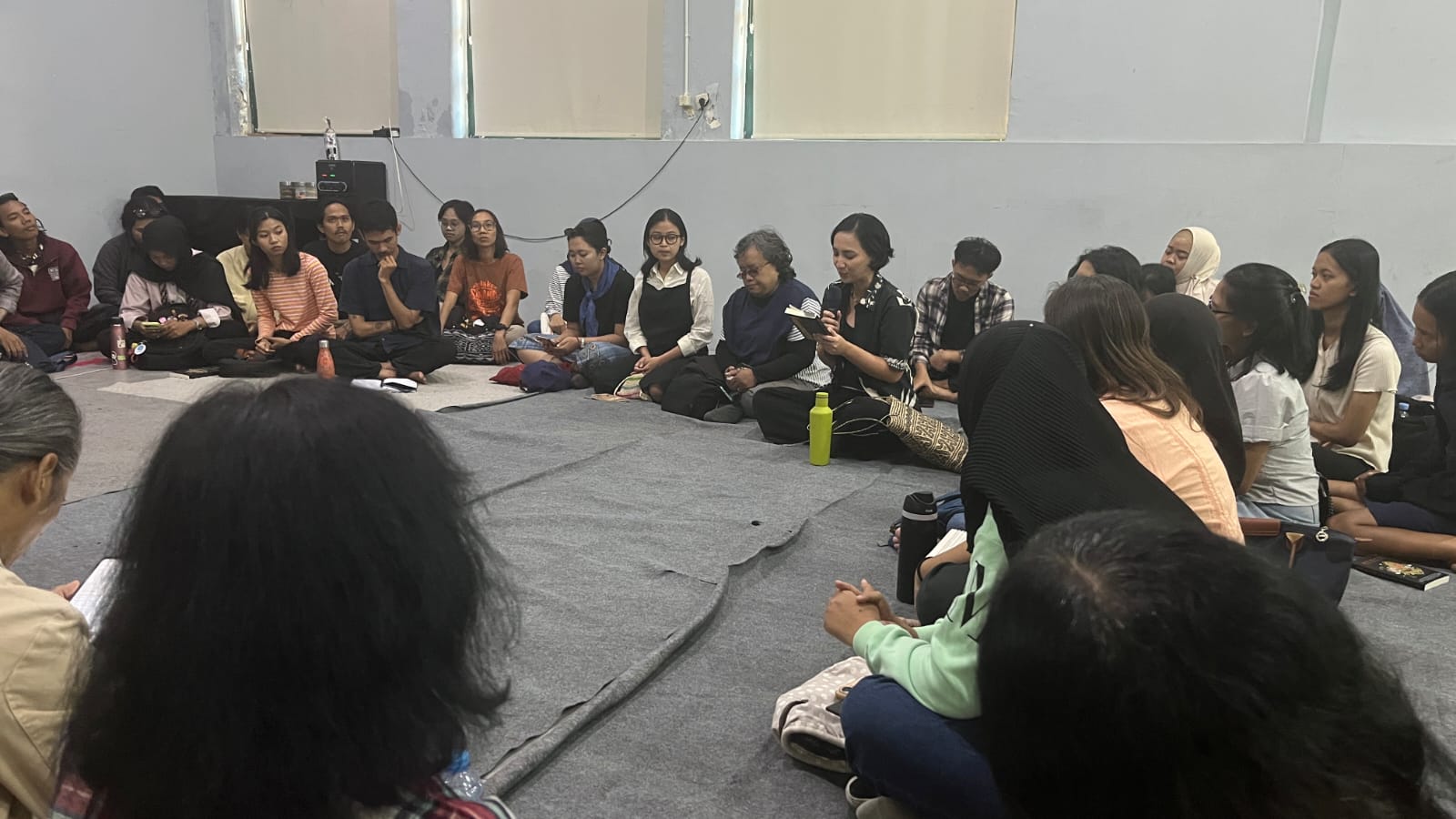
In a discussion session conducted by the New Men Alliance or Aliansi Laki-laki Baru and Magdalene via zoom meeting on Friday (16/9), with Ghevin Agung Nugroho as moderator, Trisa Triandesa asked participants to look back at the perceptions through the neuroscience perspective.
Trisa argued that human brain was more complex than simple division such as male and female brains. Neuroscience was a field that related to many other disciplines – from biology, medicine, psychology, psychiatry, physics, chemistry and social sciences. She also differentiated between neuroscience and neurology. Neurology was a branch of medicine that focused on diagnosis and treatment of diseases in the nerves system. Neuroscience, for its part, had broad coverage and doctors were not the only people studying it.
For Trisa, understanding the brain meant understanding humans as something that continued to grow and to be influenced by experience.
One topic of discussion was the perception about the size of male and female brains. On average, the volume of male brain was larger. The difference was mostly related to body size. That size difference could not be used to determine a person’s intelligence or ability.
Amongst people, there were also many overlaps with regards to the brain characteristics. For that reason, individual differences were important to focus on. "Individual differences were greater than sex differences," said Trisa.

That view was critical because as the discussion shifted to emotion. For years, men were raised with a message that crying was not appropriate. They were expected to be strong, self-reliant and able to solve problems on their own. That kind of message was given since men were very young. Boys who cried could get reprimanded. Children then learned that they had to hide sadness.
Trisa saw that the habit did not emerge because men were biologically lacking in emotion. The ability to feel emotion was part of human experience. The way someone identified, mentioned, and expressed emotion was very much influenced by life experience, family environment, culture and social norms.
The issue was also associated with men’s mental health. In the discussion, Trisa discussed the men’s tendency to not seek help for emotional issues, when global health data indicated that the number of suicides amongst men was higher than amongst women. She argued that the issue could not be explained away with one cause. Norma Norms about masculinity, stigma, ability to identify emotion and access t supports also played a role.
Since they were young, men were used to keep their feelings when they encountered problems, and that could lead to problems expressing what they were feeling. The difficulty to identify and to label emotion was known as alexithymia. Trisa explained that a number of research found the relation between difficulty to regulate emotion and psychological issues. That relation had to be understood as part of broader issue and not as simple cause-effect relation.
For that reason, ability to say "I am sad," "I am afraid," "I am disappointed," or "I am angry " was critical.
To label an emotion did not mean that a person lost control. On the contrary, such labelling could be construed as the beginning to understand what men were feeling and what steps to take.
Trisa also reminded that the body response to emotion involved many parts of the brain. Amygdala, hippocampus, thalamus and parts of the cortex worked in an inter-connected system. It was not accurate that one side of the brain was treated as the centre of human behaviour. Someone’s reaction to fear, for example, was also influenced by the context and previous experience. Bodily sensation which appeared when a person faced a given situation could be interpreted in different ways by each individual.
That showed that humans did not work like machine with buttons always giving the same responses.
The discussion then entered the topic about daily life. One example close to home was domestic work. There were perceptions that men were not good at cooking, sewing, caring for children or managing the house because men’s brain was not designed for those kinds of work. For Trisa, such perceptions did not have simple grounds.
Cooking was a skill. Sewing was a skill. Caring for children also needed skill. All those could be learned through experience and training.
She told of a family experience when boys and girls worked together to do household chores. From such experiences, they learned to cook, iron, and sew. She argued that such experiences were privileges because not all children grew in an environment that gave equal opportunities.
Here, the concept neuroplasticity became relevant. Human brain could change through experience, learning and training. A person’s ability was not something a person was born with. When a boy was not given the opportunity to cook because it was considered a girl’s task, that boy might grow without the skill. The reason had nothing to do with the brain not being able to cook. The boy simply did not get the opportunity to learn.
A similar view could be used to understand men’s vulnerability. Norms that demand men to be always strong could force men to look for other ways when men found it difficult to manage their emotion. Anger, risky behaviour or use of substance could be the different expression men took. Trisa said that such condition was the price of strict masculinity.
She asked participants to see vulnerability not as weakness. seeking help did not mean losing control of life. Help might come from psychologists, friends, family or safe space that allowed someone to talk without fear of being judged.
Such space, according to Trisa, had to be established more. She gave an example of a group of fathers who met, did activities and talked about their experience as parents. Such meeting could provide spaces for men to talk about things they found difficult to express.
Discussion about gender did not stop with men’s experience. In the discussion, participant raised a question about how to deal with perception that men were the biggest victims because they were not allowed to show emotion. Trisa acknowledged that the strict gender role system could disadvantage men. At the same time, women were also feeling the impacts of limiting gender norms.
She gave an example of sexual violence. Men could be victims and rights to consent applied to everyone, regardless of sex. For Trisa, discussion about gender justice did not need to change into a competition about who suffered most. What people needed to see was how social norms could create disadvantages for different people.
That question led the discussion to development in online community using popular scientific or psychological terms to confirm certain views about men and women. Trisa asked participants to not directly accepted claim that sounded scientific. Information had to be scrutinised, particularly when research was cut off of its context and then used to amplify stereotypes.
She also asked participants to develop empathy. When a person talked about women as objects, for example, participants could ask such a person to imagine whether he was willing that people closest to him were treated in the same way. Empathy was an entry point to see humans as humans, rather than categories that had to be conquered or placed in certain hierarchy.
In the discussion, a question was also raised with regards to neurodivergence. Trisa reminded that many research activities used certain participant groups so that those research activities did not automatically apply to all people. Each brain had different journey. Social and cultural experience, economic condition, education, and environment also shaped humans.
For that reason, there was no one recipe to apply to all people. That message brought the discussion back to the early idea. Male and female brains could not be understood through simplistic boxes (categories). There were biological differences. There were also hormonal influences and influences related to body conditions. Hormonal cycle could affect the feelings, but that did not mean that the ability to think or human intelligence could be determined by sex.
What was often forgotten was human experience after they were born. Children learned from families. They learned from schools, friends, media, and communities. A boy learned that he could cry when the environment gave him the space to cry. He could also learn that seeking help was natural when people around him showed that help was not a sign of failure.
The same applied to girls. They could learn to cook, lead, take decisions, and develop other abilities without being restricted by perceptions about what were women’s tasks.
Trisa hoped that the discussion about brain was no longer used to put people in stereotypes. For her, knowledge about brain might open new opportunities. Humans could learn, change, and build new habits. Discussion about brain finally turned into discussion about daily life, about children who were taught to not cry, about men who had to be strong. About women who were limited by stereotypes, and about people needing safe spaces to talk.
And one thing often forgotten was when humans were too busy trying to find differences, that each person carried their own brain, their own experience and their own stories, these could not be grouped into the boxes of men and women. (Ast)