



People expected that data and technology to be able to answer real needs in community and to support decision-making quickly and accurately when faced with disaster risks.
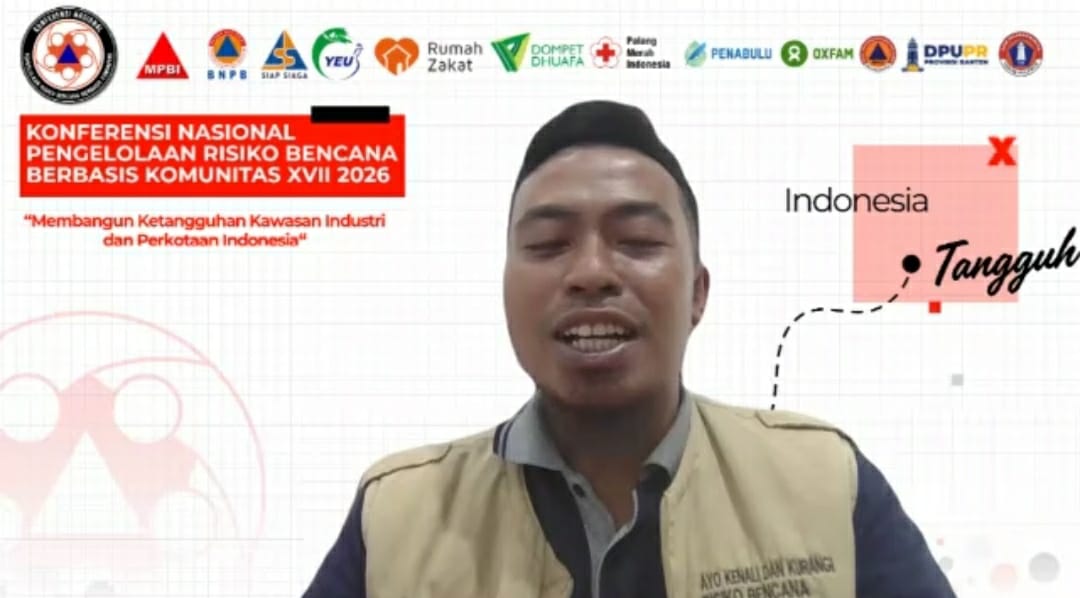
The National Conference for Community-Based Disaster Risk Reduction XVII Year 2026 talked about the importance of the use of data, technology, and local knowledge in risk-based decision-making. The activity proceeded online through zoom meeting and was broadcasted live at YouTube to feature the theme of “Building Resilience in Industrial Zones and Cities in Indonesia”, with 5 thematic focuses: “Data, Technology and Local Knowledge for Risk-based decision-Making.”
The activity proceeded on Wednesday, 16 September 2026 with 96 participants. The discussion featured Hilman Arioaji from LaporIklim, Abah Lala from Mitigasi Lebak Selatan, and Firman Budiman from Fly for Humanity. The moderator was Sekar Chamdi from Pelangi Eka Putra, and Alfan from Atma Connect, and Shadiq from Imunitas Sulawesi Tengah as respondents.
Hilman Arioaji explained LaporIklim’s experience that put together the climate change science and people’s real experience. Through participatory approach, communities could report their experience and the impacts of climate change through WhatsApp and iklimkita.org platform.
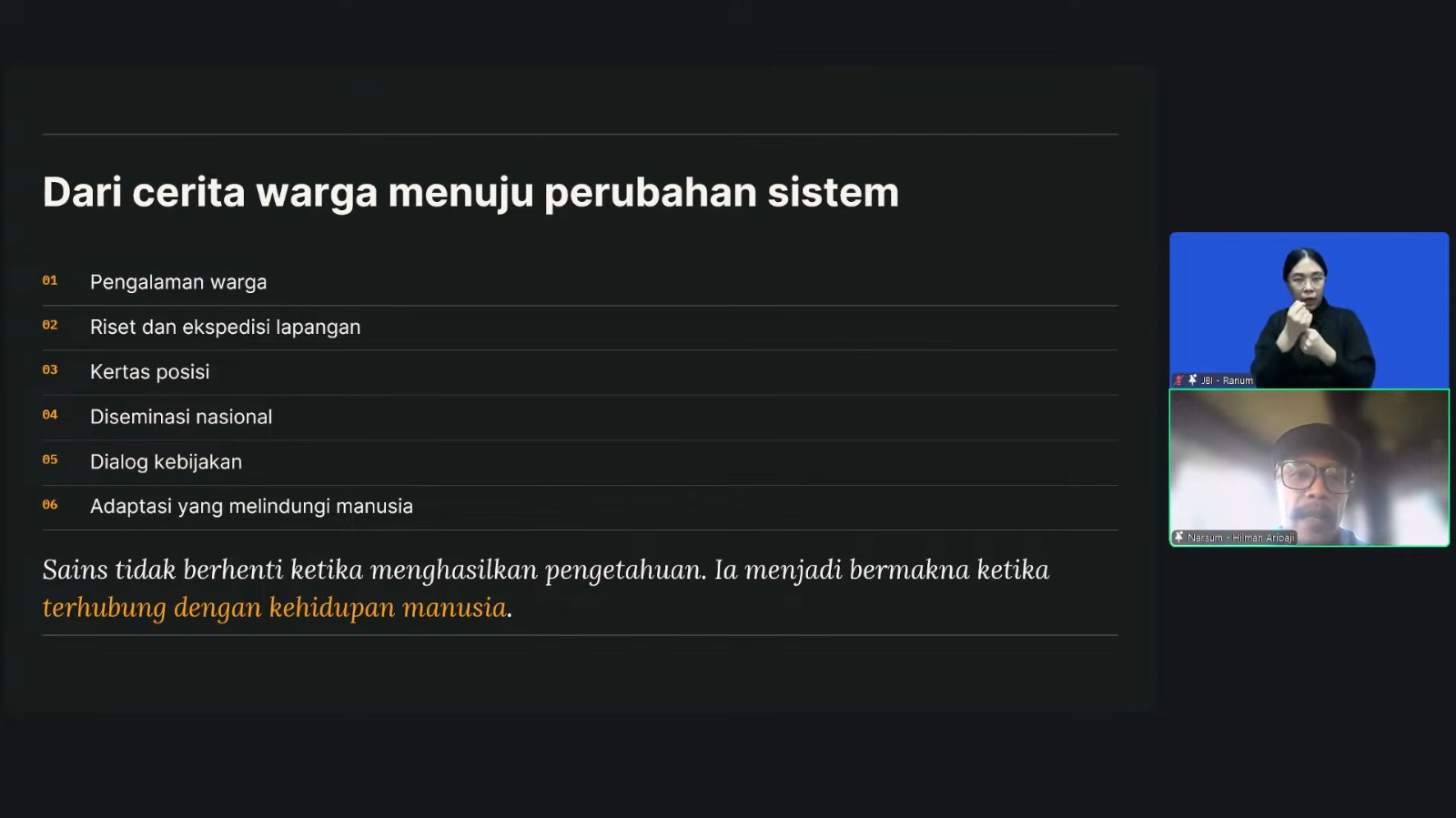
Community report was then verified and acted upon through field expedition, interviews, surveys, measurement, scientific analysis, and preparing position paper and policy dialogue. Through such process, people’s experience did not stop as mere stories, but managed as public evidence that could be used for policy formulation.
In 2026, LaporIklim conducted research in Indramayu, West Java, and Kupang District, East Nusa Tenggara. The research involved peasants and fishermen using a variety of methods, including surveys, field expedition, in-depth interviews, and group discussion.
The research on 300 peasants and fishermen showed that the impacts of heat on health and day-to-day life were real. About 78.3% respondents experienced serious muscle cramps, severe headache, or almost fainting while working. Around 91% sometimes had to stop working due to the heat, while 80.3% experienced sleep disorder due to night fever. Around 39% also felt anger or pressures.
The data was then compared to the climate data from the Meteorological, Climatic and Geophysics Office (BMKG) from the period between 1991 and 2024. The result showed an increase in temperature in research areas. The finding showed that climate data and people’s experience were complementary to give a more concrete picture of the risks of climate change.
LaporIklim offered a number of policy direction, including consolidating heat-adaptive health system, social protection, preparation of safety guideline against heat, strengthening community-based adaptation, heat risk integration into local development planning, and attention to mental health and vulnerable families.
The National Conference for Community-Based Disaster Risk Reduction XVII Year 2026 talked about the importance of the use of data, technology, and local knowledge in risk-based decision-making. The activity proceeded online through zoom meeting and was broadcasted live at YouTube to feature the theme of “Building Resilience in Industrial Zones and Cities in Indonesia”, with 5 thematic focuses: “Data, Technology and Local Knowledge for Risk-based decision-Making.”
The activity proceeded on Wednesday, 16 September 2026 with 96 participants. The discussion featured Hilman Arioaji from LaporIklim, Abah Lala from Mitigasi Lebak Selatan, and Firman Budiman from Fly for Humanity. The moderator was Sekar Chamdi from Pelangi Eka Putra, and Alfan from Atma Connect, and Shadiq from Imunitas Sulawesi Tengah as respondents.
People’s Experience as Evidence for Policies
Hilman Arioaji explained LaporIklim’s experience that put together the climate change science and people’s real experience. Through participatory approach, communities could report their experience and the impacts of climate change through WhatsApp and iklimkita.org platform.
Community report was then verified and acted upon through field expedition, interviews, surveys, measurement, scientific analysis, and preparing position paper and policy dialogue. Through such process, people’s experience did not stop as mere stories, but managed as public evidence that could be used for policy formulation.
In 2026, LaporIklim conducted research in Indramayu, West Java, and Kupang District, East Nusa Tenggara. The research involved peasants and fishermen using a variety of methods, including surveys, field expedition, in-depth interviews, and group discussion.
The research on 300 peasants and fishermen showed that the impacts of heat on health and day-to-day life were real. About 78.3% respondents experienced serious muscle cramps, severe headache, or almost fainting while working. Around 91% sometimes had to stop working due to the heat, while 80.3% experienced sleep disorder due to night fever. Around 39% also felt anger or pressures.
The data was then compared to the climate data from the Meteorological, Climatic and Geophysics Office (BMKG) from the period between 1991 and 2024. The result showed an increase in temperature in research areas. The finding showed that climate data and people’s experience were complementary to give a more concrete picture of the risks of climate change.
LaporIklim offered a number of policy direction, including consolidating heat-adaptive health system, social protection, preparation of safety guideline against heat, strengthening community-based adaptation, heat risk integration into local development planning, and attention to mental health and vulnerable families.
Technology Could Not replace Local Knowledge
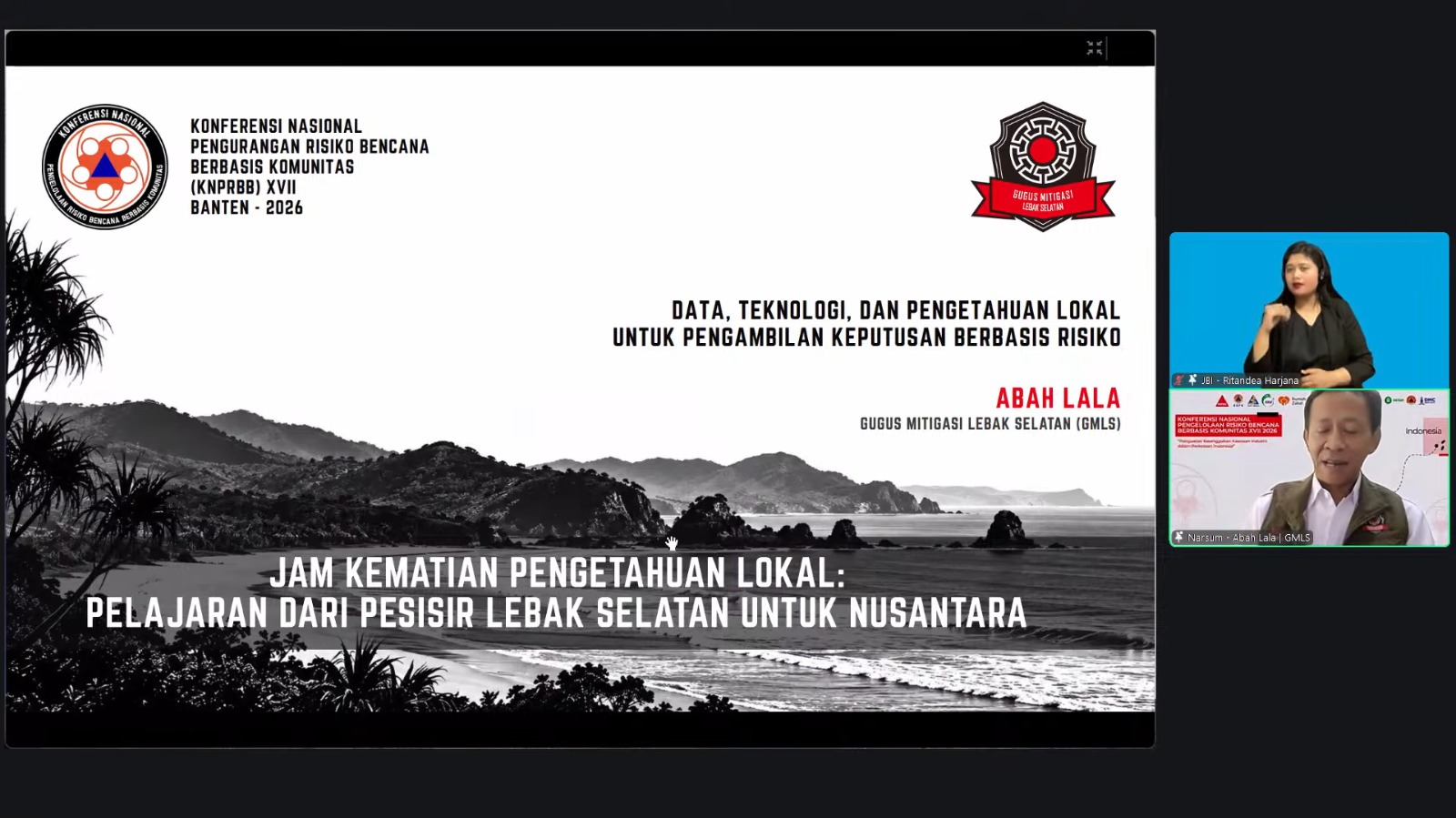
Meanwhile, Abah Lala emphasised that disaster risk reduction could not only rely on technology. Technology could help community deal with risks, but experience, local knowledge, and social context remained critical.
Over-dependence on technology or outside system could create new risks, such as problems with access, dependence on system, to loss of community control. For that reason, technology had to be used to strengthen community knowledge and capacity, not to replace them.
Communities could do four things - documentation, communication, education, and sharing and strengthen the communities. Community knowledge and capacity needed to be documented so that they could be passed on to the next generation. Inter-community member communication also needed to be consolidated, including via radio communication or handy talky. Meanwhile, disaster education had to be done via visual media, using simple language that communities could easily access.
Abah Lala also reminded that communities needed to have the capacity to make decisions and to act when technology and formal system were down or experienced disruption. Disaster information system ideally not only served a one-way communication channel, but provided mechanism for feedback so that people’s knowledge and experience could be integrated into decision-making process.
Drone to Support Disaster Management
The next speaker, Firman Budiman from Fly for Humanity explained the use of Unmanned Aerial Vehicle (UAV) or drone for humanitarian purposes and disaster management.
Experience during landslide in Sumedang in January 2021 gave important lesson. The subsequent landslide claimed additional victims, including Search and Rescue personnel and local people who happened to be at the search location. The situation highlighted the importance of information about the field condition and the potential hazards before communities and Search and Rescue staff entered given risk area(s).
Drone could help obtain the real situation on the field through aerial observation, see hazard potentials, and changes in the site condition, provide spatial data,
documented disaster condition, and support emergency transport and logistics.
Fly for Humanity developed the flow of UAV use from planning, aerial data collection, data management, analysis and visual presentation, to data distribution and automatization.
Data Had to Lead to Actions
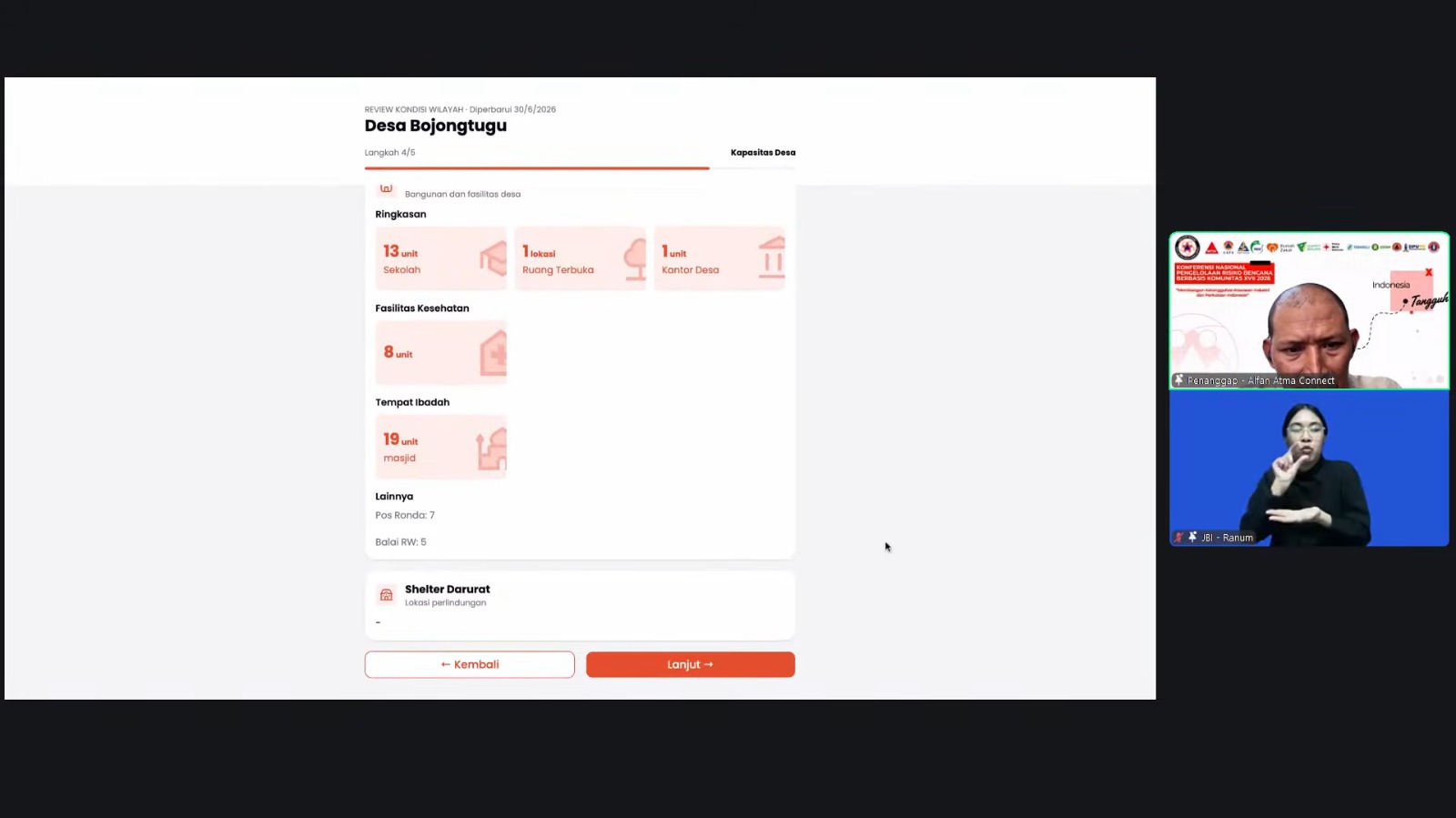
The respondent from Atma Connect, Alfan introduced the use of technology to strengthen community communication. Atma Connect developed Atmago.com platform and Alert Villagers that provided information about local preparedness, including demography, the characters of the area(s), and disaster threats. The information basis involved community participation.
Meanwhile, Shadiq from Imunitas Sulawesi Tengah highlighted that it was not enough to have risk information that was technically accurate. Information had to help communities answer three key questions: what could happen, when to act, and what to do.
The data system and technology had to be designed based on the real condition of the communities. In disaster situation, internet, electricity, equipment, time, and resources were limited. For that reason, the system could not only rely on technological sophistication.
Good risk information had to be relevant, easy to understand, timely, actionable, trustworthy, inclusive, and fit the community needs. A number of issues had to be addressed, from too complicated a system, dependence on digital technology, data that did not answer needs for decision on the field, to sub-optimum involvement of vulnerable groups and local knowledge.
For that reason, data system and technology had to be built on the principles of simplicity, relevance, inclusive, and actionable. System design had to start from needs and community decisions through 5W+1H approach, then defined the right data and technology, integrated local knowledge, and involved the people, volunteers, village governments, and vulnerable groups.
From the webinar, one could conclude that data and technology were not end goal. Both had to be instruments to help communities understand risks, make decisions, and started right actions. This way, risk-based decisions was not only about how much data was collected, but also ensuring that data could be understood, agreed upon, and actionable at community level. (Yohanes Handharu)