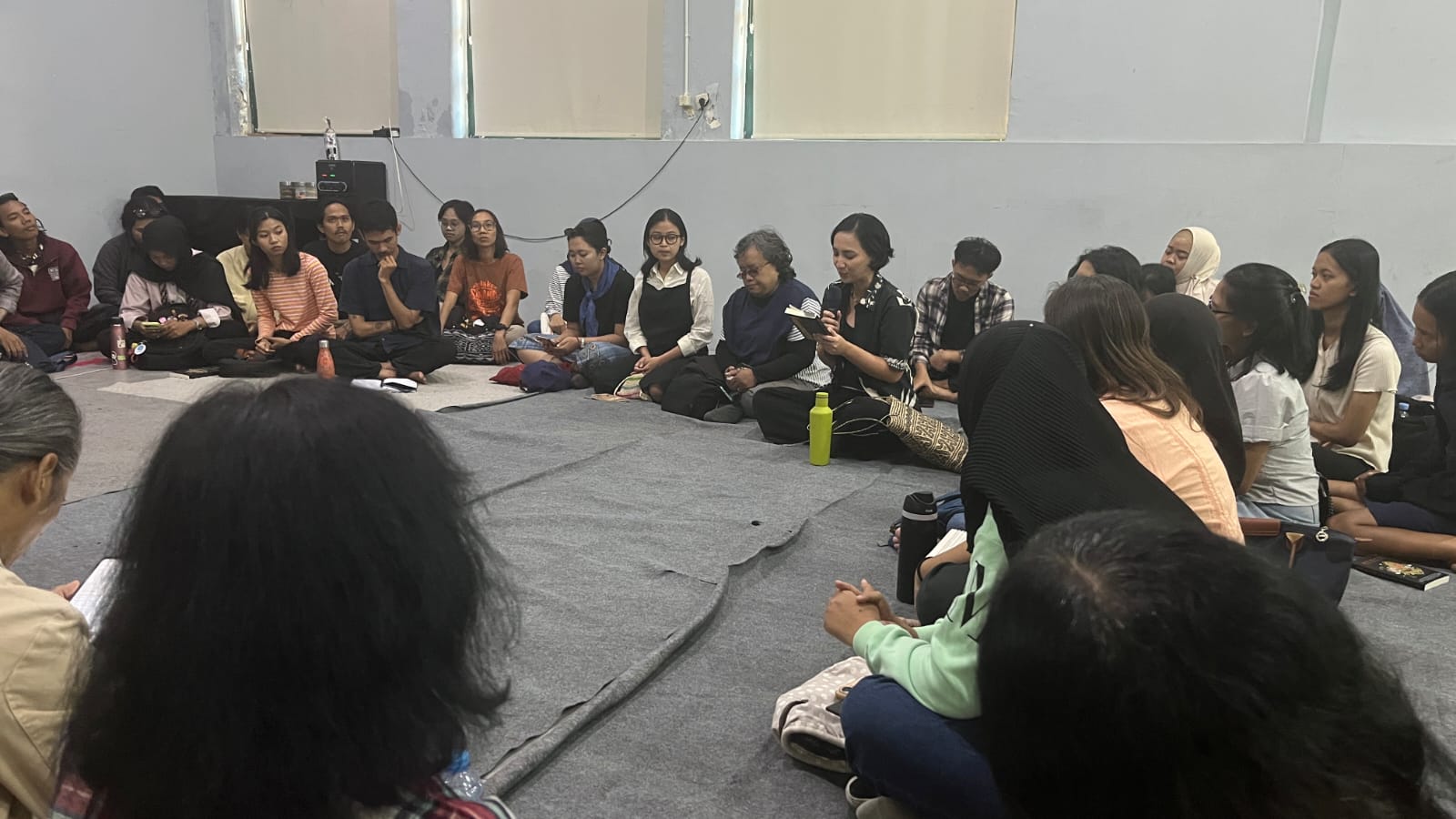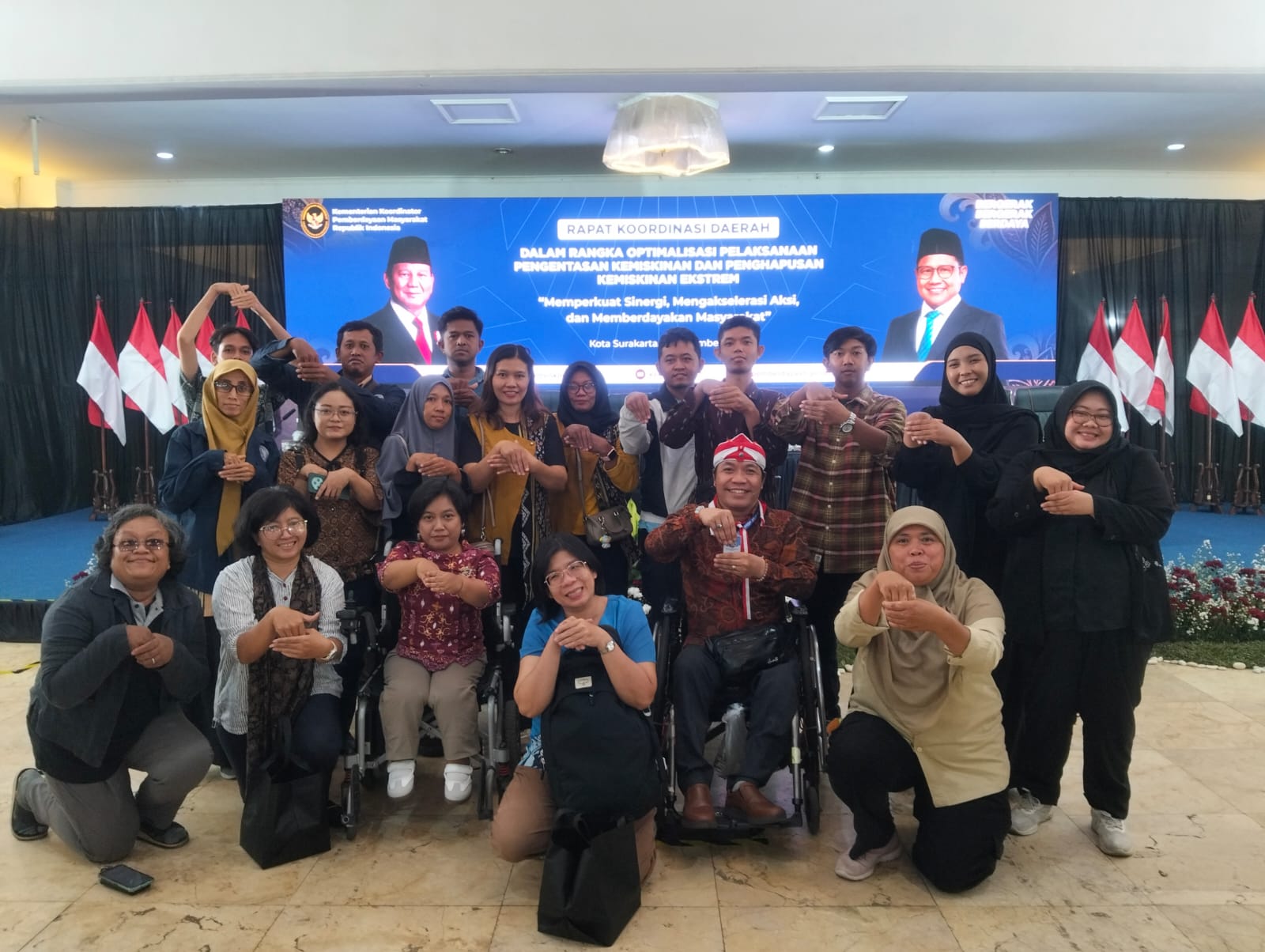





Changes often emerged from simple places. From village meetings, houses became production of snacks, a trip on three-wheeled vehicles to strategic locations, to mobile phone screens used to express people ‘s voices. The stories reflected women with disability stories facing stigma, lack of access, and participation spaces not fully open to them.
They not only spoke about issues they encountered, but also took active roles in changing the circumstances of where they lived. With moderator Wasingatu Zakiyah, they participated in online discussion organised by SAPDA Foundation or Yayasan SAPDA entitled "Stories of Changes in the Leadership of Grassroots Women with Disability through Collective Care" on Thursday (10/9).
Sania from Akar Tuli was one example. Her journey with the community showed the importance of leadership coming out of groups that had direct experience with lack of access. A Feminist colleague, Themis argued that the experience showed that women with disability and people with disability could become key players in main changes. She argued that we should not see disability simply as beneficiaries. They could design programs, conduct advocacy, and determine the needs of their own community.
Strengthening community identity was critical. Akar Tuli grew from student environment and it could focus more decisively on students with hearing difficulty and their needs. Advocacy in campuses, campaigns using sign language, workshops, and activities in public spaces could be initiated based on members’ needs. Leadership also had to be prepared continuously. Accompaniment did not stop after a program finished. Regeneration, capacity building, and measuring impacts could be critical parts so that the community works could grow and expand.
Another story was from Kedungjambal Village, Sukoharjo. Dwi Lestari, or known as Tari, experienced how stigma forced people with disability to stay at home away from social spaces. This 28-year old woman now acted as motivator for KDD Difajaya. She organised women and people with disability in her village so that they had the confidence to express their needs and to be involved in village development.
Tari knew SAPDA from Women’s School or Sekolah Perempuan. From that learning venue, she started to understand that it was not enough to address disability issue with aid. People with disability had the voices and positions to determine policies that affected their life. This group known in the past as Self-Help Group (SHG) then changed into Village Disability Group or Kelompok Difabel Desa (KDD) because the term was easier to understand by villagers. Regular meetings proceeded in the learning venue which also served as a venue for sharing.
Data collection was one important activity. From initial data, the number of members grew. The village government then started to understand the needs of people with disability. KDD also build relation with Family Empowerment and Welfare (PKK), SAPDA, and other parties. That process led to a number of changes. Data collection started to include people with disability which was then integrated into Integrated Social Welfare Data – National Socio-Economic Data or DTKS (DTSEN). People then received direct assistance from village funds. KDD was also involved in village development planning and village development activity planning.
Mapping also included education issue. A number of villagers with disability had never attended education, some even had difficulty reading and writing. In association with PKK, literacy program proceeded twice weekly. Tari was also involved in the process of preparing Inclusive Village Regulation. She said that this involvement was not simply being present in meetings. People with disability had the opportunity to express views and needs.
She felt the changes herself. Women who used to not be confident to go out due to stigma now dared to speak in front of an audience, to meet with village officials, and to articulate community issues in decision-making meetings. Once, she put her name down as a candidate for village deliberation body. That story caught SIGAB’s attention. Syamsudin from SIGAB saw Tari’s experience as an illustration of the leadership of women with disability that grew out of a long process. Villages were critical spaces because village governments were entry points to the nearest services for villagers. Out of tens of thousands of villages in Indonesia, the country still needed exemplary villages for true inclusion.
Another story of change came from Majalengka as recounted by Ulya from Pelita Inklusi Nusantara (Pinus). Vast area and the location of Special-Need Schools concentrated in city centre meant that rural children with disability had to travel far distances and face transport issue. Ulya chose to approach the villagers. Using three-wheeled vehicle, she visited strategic spots to reach out to children and their family who needed information and supports.
Her attendance at women disability school, Ulya learned about advocacy, communication, leadership, and ways to influence policies. She brought such knowledge to her organisation and her community. Majalengka already had district regulation on disability. The issue was its implementation while inter-sector coordination had to be consolidated so that regulation did not sit only as document.
The Education Office in Majalengka supported the initiative. One of the actions was to strengthen data collection of students with special needs through students’ learning profile. The government expected that the data would help improve educational services and prevent school dropouts.
Said Jufri from Inovasi reminded that inclusive education necessitated an ecosystem. The Education Office could not work on its own. The government, community organisations, schools, families, and communities had to work hand-in-hand.
Another change happened in the digital space. Mira from Lira Disability Care saw digital media as a new space for women with disability to express their voices. Since 2022, Lira used online media to write and disseminate information about the disability rights and sub-national policies. From that experience, they found that only a small number of women with disability were involved in policy advocacy.
Leadership training, apprenticeship in another organisation, accessibility workshop, writing stories of change, and training in content preparation were all parts of the activities. As many as 15 women with disability in East Java were involved. Lira also prepared ethical code for disability digital advocacy. That measure was intended to prevent content about disability to turn people with disability into objects.
Ferdhi from Combine argued that the idea was critical because it was not enough to measure participation through physical presence. A person had meaningful participation if that person had the opportunity to influence decisions and the environment.
The National Disability Commission saw the four experiences as examples of changes that happened at personal level influenced the community and the policies. Dante Rigmalia called people with disability as experts based on their own life experience. Knowledge was critical for designing policies that fit their needs.
Maria Ulfah from the National Women’s Rights added that women with disability faced multiple issues. Violence, low education access, limited health services, and limited access to justice necessitated inter-organisational partnership. She encouraged national collaboration so that women with disability from sub0natinoal areas could strengthen each other. It was also critical that local experiences found a path towards broader leadership.
The village chief of Kedungjambal, Suminto saw changes with his own eyes. KDD Difajaya was now involved in village activities. Communication with village officials was also established. Talking via zoom, he acknowledged the fact that the village had the challenge of limited budget. For that reason, networks with sub-district and district governments was necessary so that the needs of people with disability could be integrated into the development. (Ast)