



Peni Candra Rini trained her voice to reach a far distance. When she was a child, her father asked her to stand facing the sea and to scream. She had to produce the strongest voice. It was not only to be heard, but also to learn to produce a strong vocal sound.
Years later, her voice travelled far. From traditional Javanese stage, Peni grew to become a music composer that brought traditional Javanese music instrument (gamelan), songs, poems, and language to international stage. Yet, the voice once trained to penetrate the sea served another purpose: to make people listen to the earth.
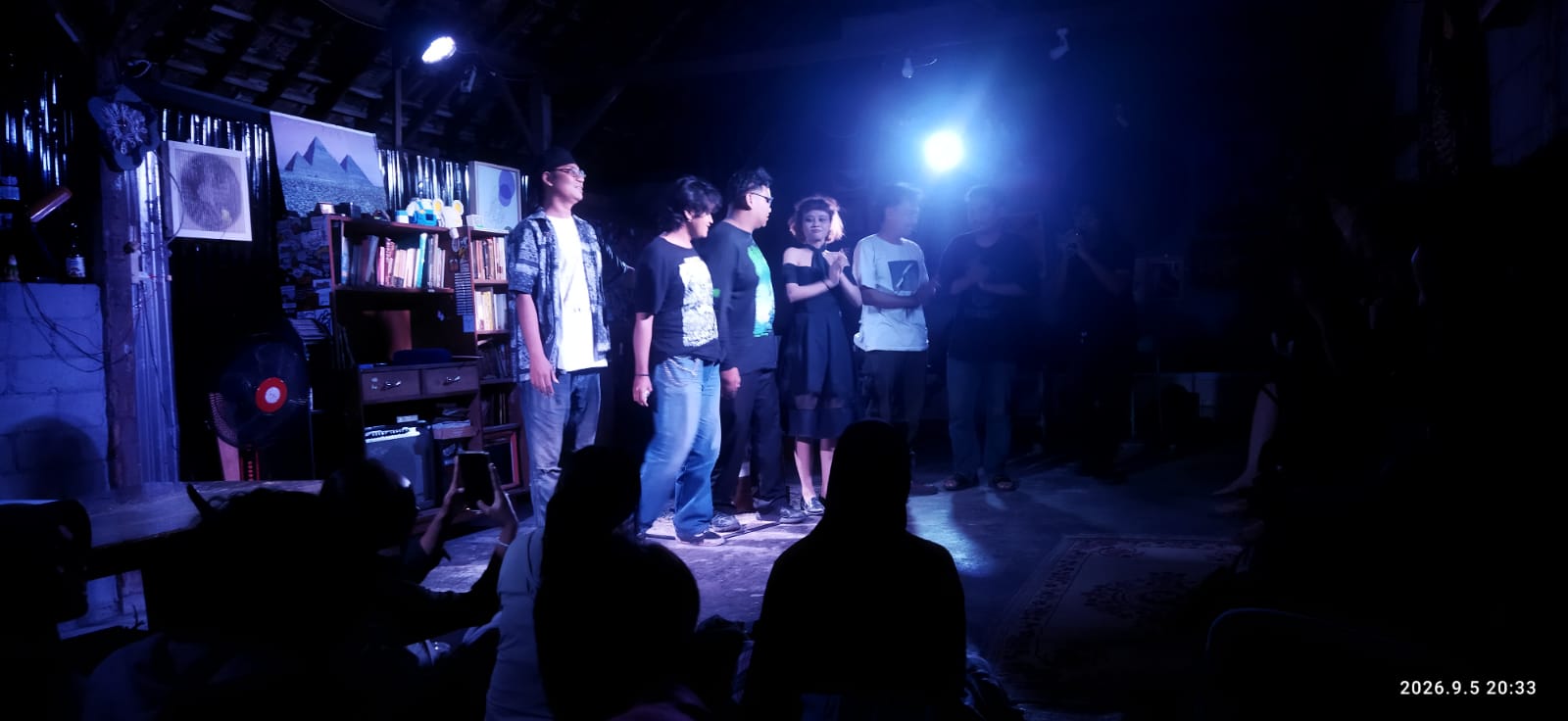
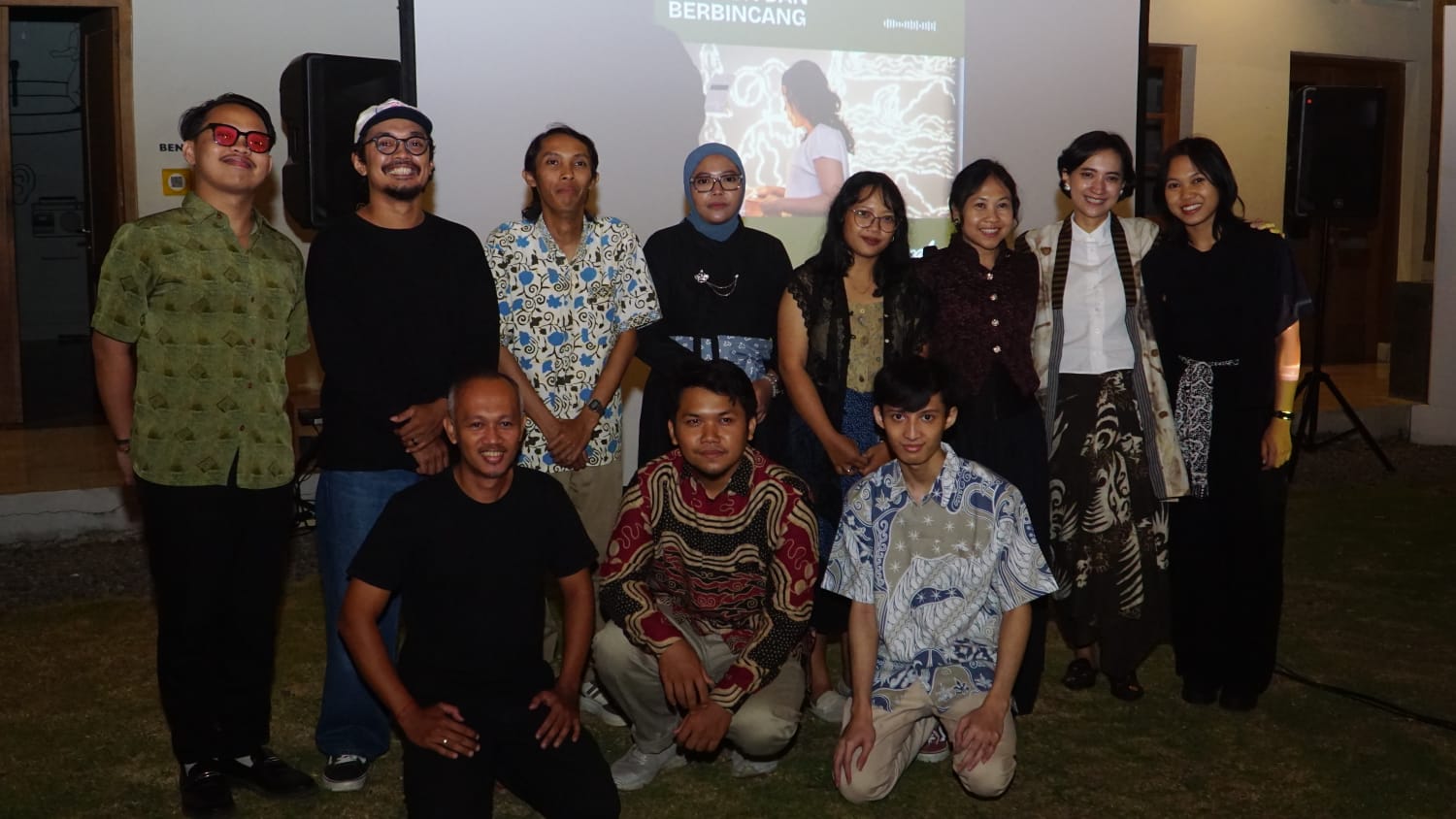
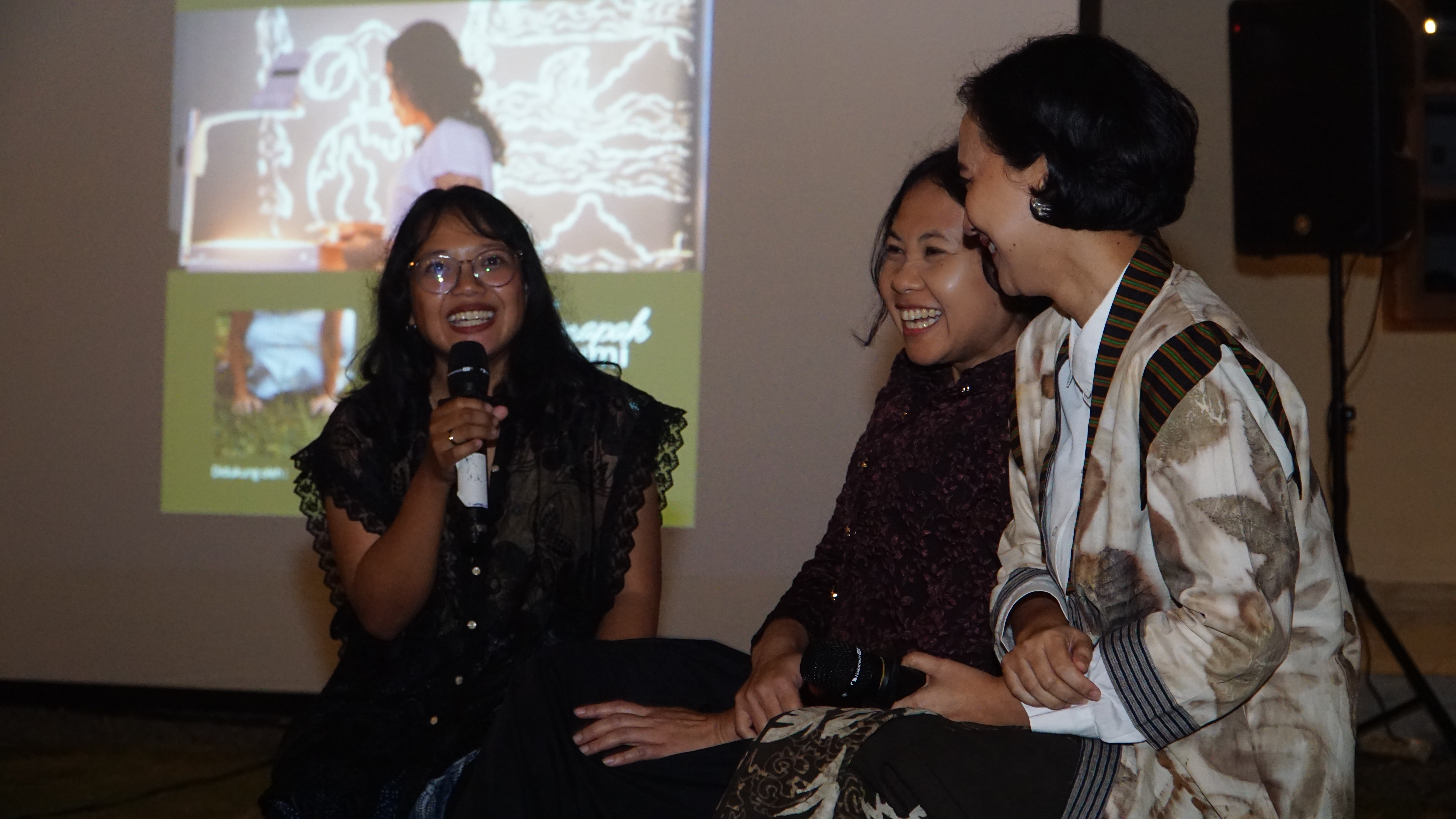
That path was a story in a documentary film by Reni Apriliana and film producer Fanny Chotimah from Yayasan Kembang Gula through Indonesiana Program, the Indonesian Ministry of Culture. The film "Bunyi Menapak Bhumi" (The Sound Travels the Earth) screening on Sunday (30/8), at Taman Galeri, Lokananta, Surakarta, documented the Peni Candra Rini’s creative journey and showed how a female artist used tradition as a stepping stone to talk about the environment.
The earth in Peni’s work was not simply the background. It was present through the sound of birds, frogs, water, soil, drought, and the sensory experience which she translated into music. At Peni’s hands, the sound became the language to talk about something that felt a distance away when presented in numbers, reports, or policies on the relationship between human and nature.
Feminist and academic, Dewi Candraningrum gave her response of the film by saying that she saw that art had the special ability to build a bridge. Issues such as planet destruction, to Dewi, could be approached through such dimensions as affection, psychology, and spirituality. Art allowed ecological issues to become closer and intimate in people’s eyes. Peni’s music worked through that path. She did not need to explain the environmental damages through technical terms. She presented nature as bodily experience.
The sound of birds and frogs was part of the composition. The rain became an experience. Arid soil became a memory. Disappearing water sources turned to sound. Ecological experience then changed into musical experience.
Peni did not start her artistic journey by abandoning tradition. Instead, she brought it into a new space. Traditional music instruments, songs, poems, stories, and experience as singer became materials to work with. Those elements were then combined with electronic instruments and contemporary music ensemble.
Professor Sumarsam saw the process as an intimate relation between nature, human, and music. Something that came out of tradition could be renewed when it met new experience and technology. Peni said that the cultural heritage was an "identity amulet." She took it when she came face-to-face with the wide world. She did not treat that Identity as something fixed. Peni used it instead as a source of confidence to create something new.
That method was critical because tradition was often placed in two poles: to be protected and maintained without change or to be abandoned in the face of modernity.
Years later, her voice travelled far. From traditional Javanese stage, Peni grew to become a music composer that brought traditional Javanese music instrument (gamelan), songs, poems, and language to international stage. Yet, the voice once trained to penetrate the sea served another purpose: to make people listen to the earth.
That path was a story in a documentary film by Reni Apriliana and film producer Fanny Chotimah from Yayasan Kembang Gula through Indonesiana Program, the Indonesian Ministry of Culture. The film "Bunyi Menapak Bhumi" (The Sound Travels the Earth) screening on Sunday (30/8), at Taman Galeri, Lokananta, Surakarta, documented the Peni Candra Rini’s creative journey and showed how a female artist used tradition as a stepping stone to talk about the environment.
The earth in Peni’s work was not simply the background. It was present through the sound of birds, frogs, water, soil, drought, and the sensory experience which she translated into music. At Peni’s hands, the sound became the language to talk about something that felt a distance away when presented in numbers, reports, or policies on the relationship between human and nature.
Feminist and academic, Dewi Candraningrum gave her response of the film by saying that she saw that art had the special ability to build a bridge. Issues such as planet destruction, to Dewi, could be approached through such dimensions as affection, psychology, and spirituality. Art allowed ecological issues to become closer and intimate in people’s eyes. Peni’s music worked through that path. She did not need to explain the environmental damages through technical terms. She presented nature as bodily experience.
The sound of birds and frogs was part of the composition. The rain became an experience. Arid soil became a memory. Disappearing water sources turned to sound. Ecological experience then changed into musical experience.
Peni did not start her artistic journey by abandoning tradition. Instead, she brought it into a new space. Traditional music instruments, songs, poems, stories, and experience as singer became materials to work with. Those elements were then combined with electronic instruments and contemporary music ensemble.
Professor Sumarsam saw the process as an intimate relation between nature, human, and music. Something that came out of tradition could be renewed when it met new experience and technology. Peni said that the cultural heritage was an "identity amulet." She took it when she came face-to-face with the wide world. She did not treat that Identity as something fixed. Peni used it instead as a source of confidence to create something new.
That method was critical because tradition was often placed in two poles: to be protected and maintained without change or to be abandoned in the face of modernity.
Peni Chose a Path
Traditio acted as the root, while the form grew. The Traditional musical instruments (Gamelan) could play along western contemporary music. The spectators could hear the Javanese language, even when they did not understand the Javanese language. Traditional poems became sources of new composition. What was maintained was not simply the form, but the energy and knowledge inherent in them. Peni’s journey showed women’s position in the music world.
Since she was a child, she had to face the demand to master her voice. She then chose a path that was not common then for women who grew in traditional environment. She became traditional singer and that was one of her foundations. Yet, Peni did not stop there. She trained herself to become a composer.
That choice brought consequences. When her work went beyond the traditional standard that people knew, people started to raise questions and voiced their rejection. Peni acknowledged that her journey was not always easy. Yet, she chose not to give up to the mainstream.
She wanted to create her own genre. That attitude was evident in the way Peni saw tradition. When using traditional elements in composition, she felt she had the responsibility to glorify and to safeguard it. To her, tradition was not something she took and then abandoned. She had to understand the tradition, to respect it, and to advance it. The elements such as women, culture, and environment met in Peni’s work.
Dewi Candraningrum read the relation through the ecofeminism perspective. Earth and women appeared together as spaces that were often placed in a position to be cared for, controlled, or exploited. That view point placed humans as the highest authority in managing nature, according to Dewi, that hid problems. Humans felt that they were the most important. Nature was position as object to be managed. Peni’s work offered instead a more equal relation. Humans listened to nature, copied the sound of nature, felt changes in their body. That relation did not stop with knowledge, but moved to experience.
From Drought to Composition
One idea in Peni’s work started from something very simple – waiting for the rain. Long drought created the longing for water as a bodily experience. When the rain poured, the aroma of the earth became a sign that the dry earth had received water. That experience was then transformed into a composition. There was the tired soil. There were disappearing water sources. There was water flow that did not find its usual path. The sound gave her different ways of telling stories about the ecological crisis.
Her work showed that the environmental issue did not always need to start from data about the size of the lost forest, about water quality, or climate change. It could start from the human body that felt the heat. From the soil that was no longer wet, the rivers that lost their water, and the longing for rain, art gave the space for such experience to be shared with others.
The film producer, Reni Apriliana said that the research for "Bunyi Menapak Bhumi" proceeded for about three years. In the beginning, the team did not know the final version of the film. Once they got to know Peni, it was becoming obvious that the story was not simply about a music maestro. There were broader issues. Culture, women, environment, regeneration, and confidence to express started to appear out of Peni’s journey.
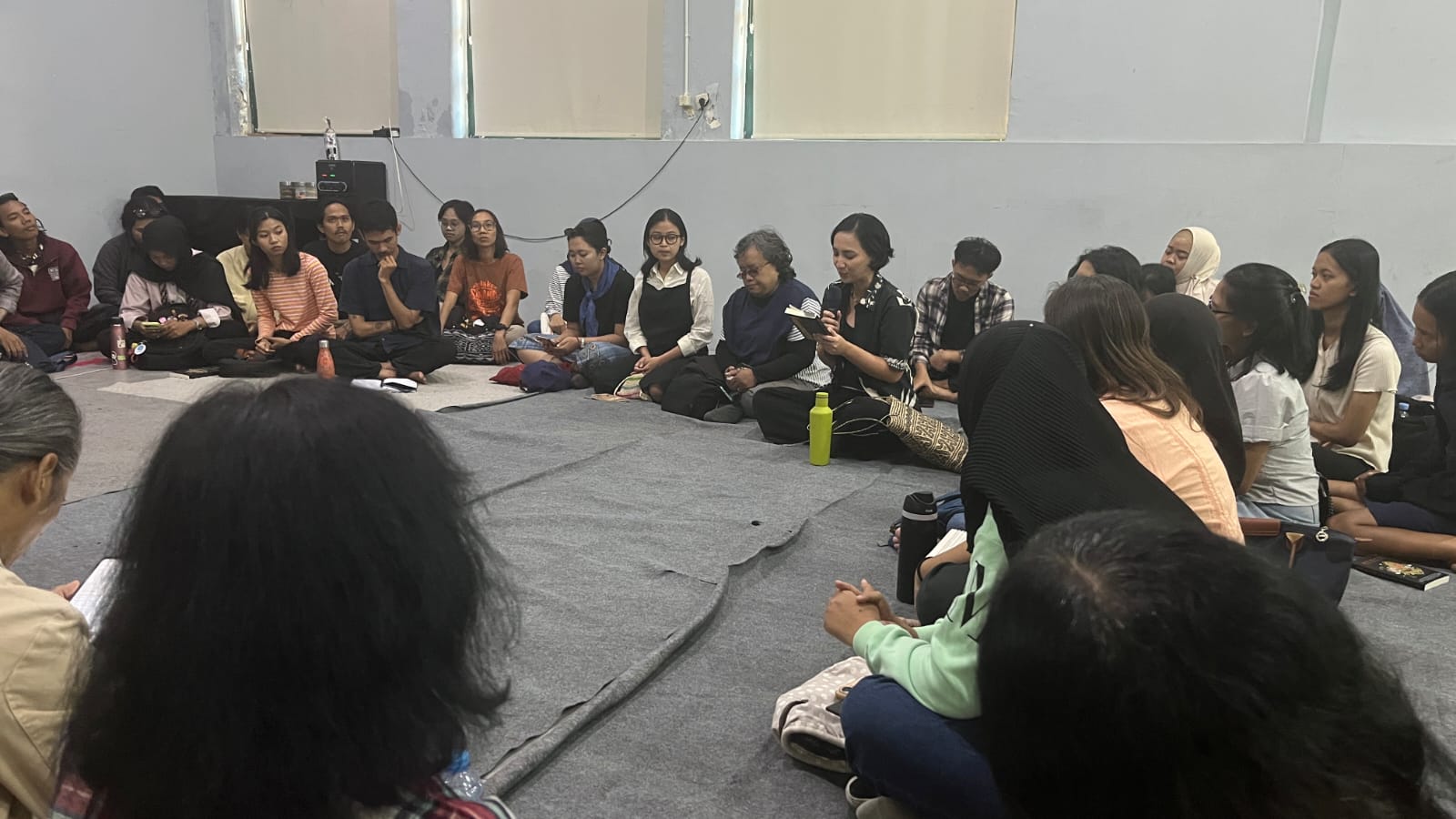
For that reason, the film not only followed a composer’s creative process. It also showed how personal concern could transform into a work with social and ecological relevance. After the screening, the discussion continued amongst the participants.
A woman artist from Solo, Ayu said that the film reminded her that women musicians still had spaces to produce works of art.
Another woman musician, Tiya Rima saw Peni’s journey as a motivation for her to stay in the music path.
Their questions showed one thing: the journey of an artist could provide energy for others. When someone had the confidence to start, that confidence could be contagious.
Peni not only talked about the confidence to create. She also thought about who would continue the journey. For about 18 years, she taught. She accepted students from a variety of areas and was involved in residence program which got together artists from a variety of background. For her, regeneration did not mean creating copies of her in young generation. Each person had their own individual tradition. The challenge was to find ways so that the art could lead to new grounds.
To Keep Things alive
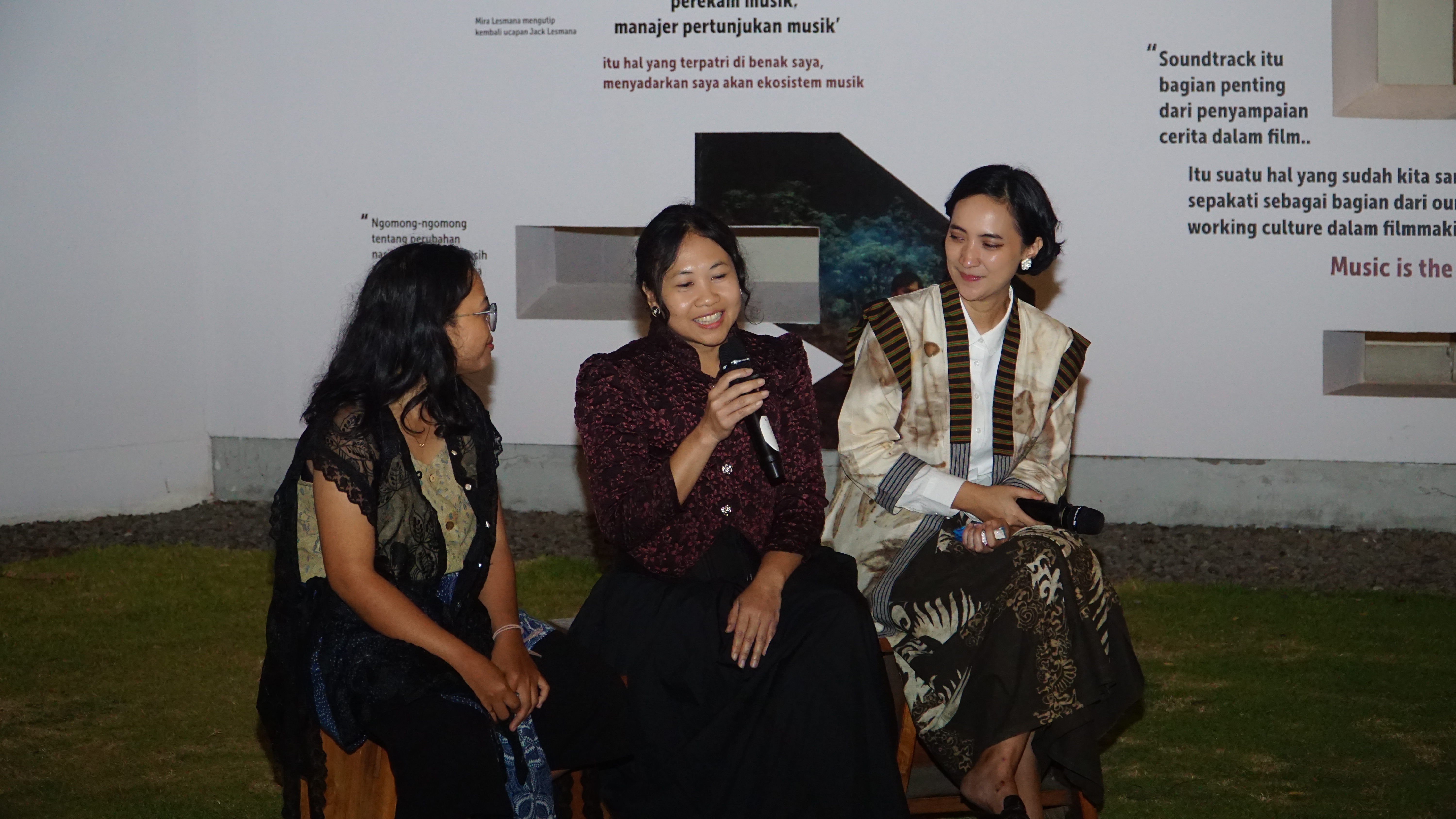
Lokananta, where the film was screened, had a strong connection to the history of music recording in Indonesia. There, discussion about Peni triggered questions about the future of traditional music.
In a discussion after the screening, Lokananta representative expressed the desire to open the possibility for collaboration with artists and communities. There was a need to introduce traditional music instruments (Gamelan) to the young generation who were no longer familiar with the traditional sound. It was not about forcing them to return to the past, but to find a way so that tradition became relevant.
That issue was in fact similar to what Peni did to nature. It was not enough just to have a memory of nature. People had to feel it. It was not enough either to store culture. People had to continue using it, interpret it, and innovate with it. This was where "Bunyi Menapak Bhumi" found its significance. The film was not simply a documentary about a woman who succeeded in bringing traditional music into the international stage. It was an important note about how art could take part in discussion about environmental crisis.
Peni used what was closest to her – the voice which she trained with her father when they were by the sea. The voice that grew with the tradition of being a traditional singer. The voice which then merge with the traditional music instruments, poems, stories, prose, electronic instruments, and contemporary ensemble. That voice now served to remind people that the earth also had a voice. There were the sound of water, birds, soil, drought, and silence when everything disappeared. Peni chose to play them and translated them into work of art.
The message was simple, yet very important, that humans needed to listen to things very close to them all this time. Because when nature was only viewed as resources, humans would easily forger that they were parts of nature itself. (Ast)