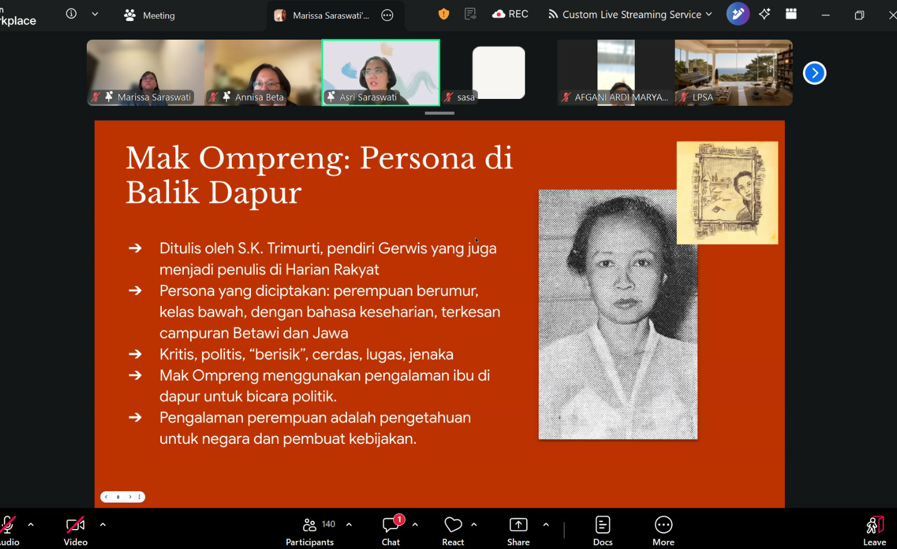




Regulation Expert at the Ministry of Education, Culture, Research, and Technology, Nur Syarifah highlighted during a zoom meeting the importance of understanding six forms of violence as articulated in the Minister of Education, Culture, Research, and Technology regulation No. 55 Year 2024 on Prevention and Handling of Violence in Universities, during a workshop organised by the National Women’s Rights Commission on Friday (16/10/2026). That understanding was necessary so that universities were able to prevent and handle violence, including violence in digital media.
In a presentation at an activity organised by the National Women’s Rights Commission, Nur Syarifah explained six forms of violence which included physical violence, psychological violence, bullying, sexual violence, discrimination and intolerance, and policies that contained violence. She argued that the broadening of the scope necessitated universities to strengthen prevention and handling systems. It was not enough for education institutions to wait for cases to appear in public spaces, they had to prepare mechanism to identify risks early, provide accessible reporting channel, and ensure that each report would be handled professionally and in fairly.
Minister of Education, Culture, Research and Technology Regulation No. 55 Year 2024 took effect on 14 October 2024. The regulation was an improvement from previous regulation which specifically regulated the prevention and handling of sexual violence in universities. The scope of the regulation also included violence through electronic and non-electronic media.
Nur Syarifah explained that violence within campus should not be viewed as individual personal issue. Violence was associated with unequal power relations, discriminatory behaviours, and weak protection mechanism. She gave an example of power relation between lecturers and students, academic supervisors and students, senior and junior researchers, and leaders and teaching staff. Differences in position, influence, and access would become significant issues when they were used to pressure, demean, or control others.
Dalam konteks digital, kekerasan berbasis gender online dapat terjadi melalui pesan seksual yang tidak dikehendaki, ancaman penyebaran informasi pribadi, serangan digital saat seminar, hingga penyalahgunaan dokumentasi kegiatan untuk mempermalukan korban. Kekerasan tersebut dapat berdampak pada rasa aman, kebebasan akademik, kesempatan memperoleh pendidikan, dan keberlanjutan karier korban. Karena itu, penanganannya perlu memperhatikan unsur perbuatan yang terjadi, bukan semata-mata media yang digunakan.
Nur Syarifah explained that in the Education, Culture, Research and Technology Minister Regulation No. 55 Year 2024 digital media was not a separate form of violence, but a means to commit violence. Every incident had to be identified based on the acts and linked to the forms of violence governed by separate regulations. In addition, she highlighted the limits of the authority of the Taskforces for Prevention and Handling of Violence within respective university. Their authority was articulated within the scope of the Three Pillars of Higher Education (Tri Dharma Perguruan Tinggi), which included education, research, and community service.
Should there be enough evidence of suspected violence, yet the incident did not fall under the scope of Tri Dharma, then the university leadership had the authority for follow-up actions through available mechanism, such as ethics or discipline mechanisms. To strengthen implementation of the regulation, Nur Syarifah highlighted the importance of commitment of the leadership, capacity building of the taskforces, budget and facility supports, handling mechanism oriented towards victim’s safety, and evaluation and accountability.
The taskforces also needed to have the ability to understand digital regulations and digital literacy, to assess power relations, conduct empathic communication and risk assessment, maintain secrecy of identity, secure digital evidence, and coordinate with other service institutions and relevant agencies. She emphasised that prevention of violence was not simply the responsibility of the taskforces, but also the responsibility of university institutions. Supports from leadership and a culture of mutual respect were vital so that every report got the appropriate response and every decision could be accounted for.
As a reflection of the Three Pillars of Higher Education (Tri Dharma), Nur Syarifah encouraged victims of violence to report the incident to the taskforce in order to get necessary protection and accompaniment. She said that handling had to take into consideration of victims’ needs, recurrence of incidents, and basis for the institution to improve policies and organisational culture.
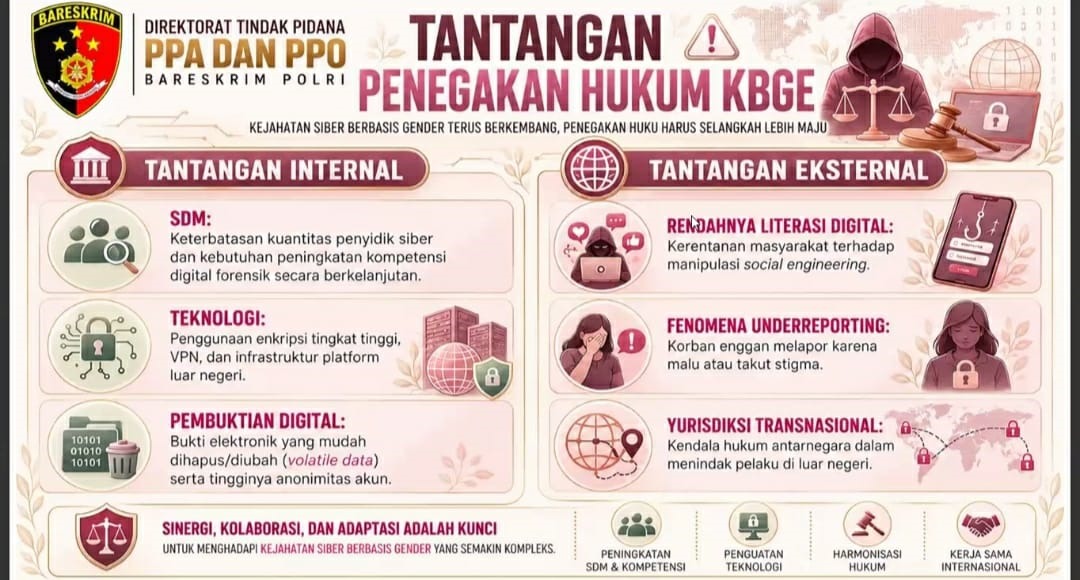
AKP Astik Setyowati highlighted the importance of digital evidence in electronic-based gender violence.

Head of sub-unit of Children and Women Protection and Human Trafficking Eradication of the Indonesian Police, AKP Astik Setyowati highlighted the importance of securing digital footprints when submitting reports of online gender-based violence. Digital footprints were vulnerable to being lost or deleted by perpetrator(s), hence the importance of the university taskforces for preventing and handling violence to take necessary steps to secure them. In her presentation, Astik reminded the taskforces to understand ways to find the footprints, secure them, and preserve them when they received reports.
She suggested that evidence be preserved in a storage devices, such as flashdisk, which victim(s) kept and which victims could take when reporting to the Police. Such evidence had to be preserved so that it was not distributed to unauthorised people. She also reminded that the evidence should not be sent carelessly via WhatsApp or other methods that risked its widespread distribution. Astik urged the taskforces to immediately submit the electronic-based gender violence cases to the authority. She argued that delay in reporting made it difficult to trace the digital footprints of the perpetrator(s) and the recovery of evidence that had been erased.
Digital footprints available since the incident happened could help with the investigation process. Through coordination and law enforcement network, request for certain digital information could be submitted to support case handling. Conversely, if case handling took too long, the evidence gathering process could become more difficult. In addition to securing evidence, Astik also highlighted that the Police could not handle cases of electronic-based gender violence on its own. Such handling necessitated collaboration with other institutions with their own respective authority.
In tracing assets and accounts used by perpetrator(s), for example, the Police could coordinate with the banks, financial services authority, and Centre for Financial Transaction Reporting and Analysis (PPATK). Meanwhile, digital platforms could help with relevant information tracing and with removal of widespread content.
Supports from the Witnesses and Victims Institutions were necessary for victim protection, psychological accompaniment, and recovery. In universities, the task forces for prevention and management of violence could play roles in education, in receiving and handling of reports, and in facilitating victim accompaniment and recovery. Astik argued that inter-agency synergy was vital to ensure that victims received proper protection and handling. Such measure necessitated competent human resources, adaptive technology, responsive and just regulations, and active community participation.
She convinced the victim to have the confidence to speak and to report the violence she experienced. Quick response to such report helped preserve evidence and increased the chances of tracking the digital footprint associated with the perpetrator. Astik expected collaboration with the Police, universities, protection agencies, digital platform providers, and communities in order to strengthen violence prevention and to ensure safe digital platforms for everyone. (Ast)