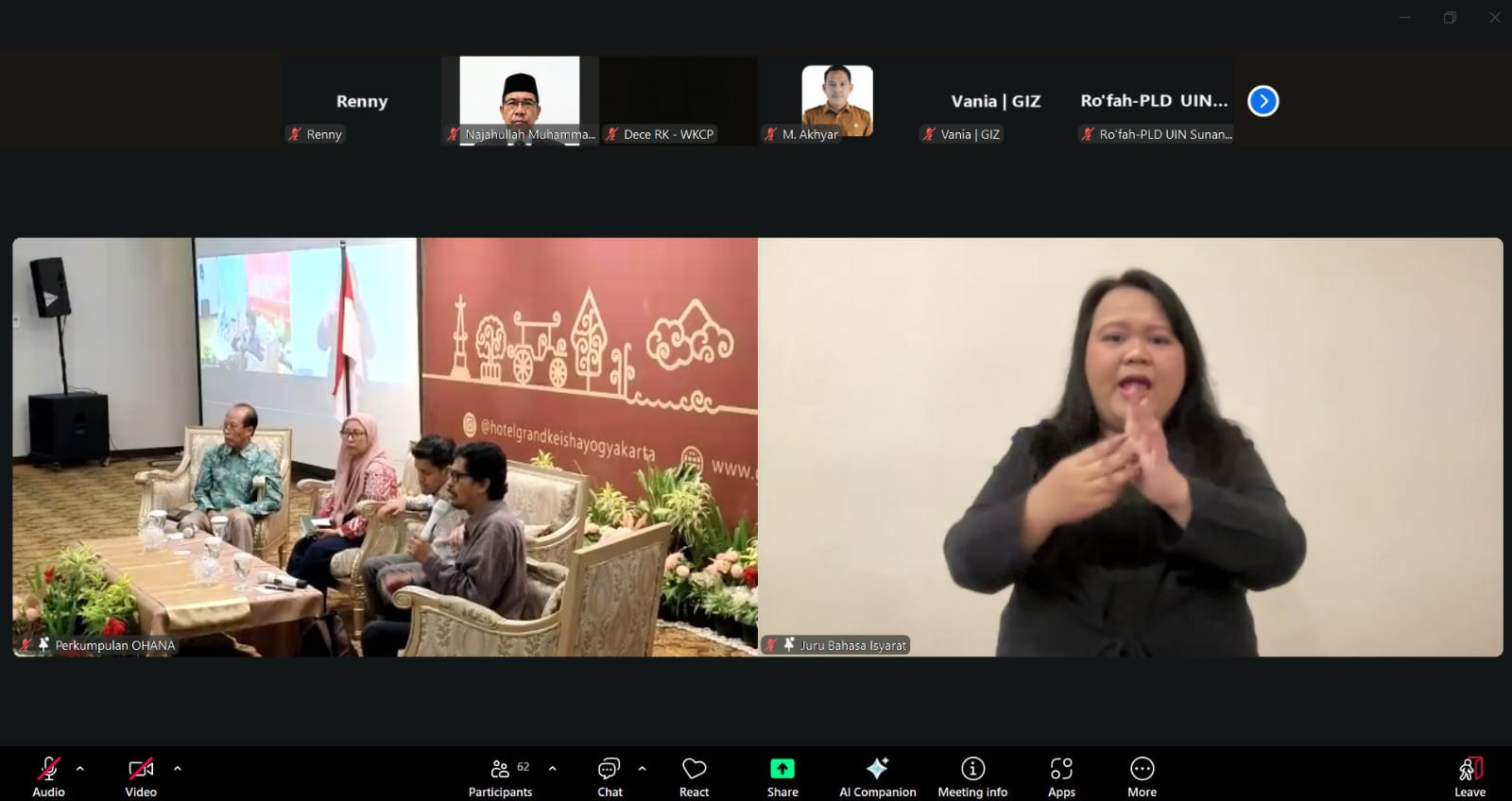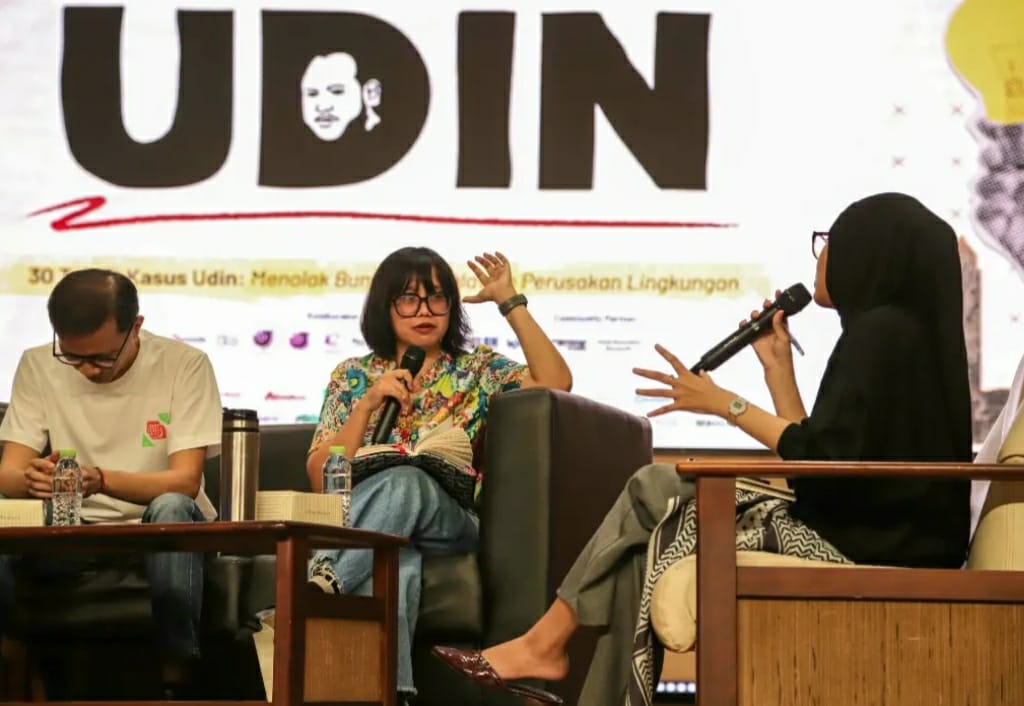




The online discussion organised by Lembaga Partisipasi Perempuan (LP2) on Friday (24/7) was not fully optimistic. In the spirit of celebrating forty years since Indonesia ratified the Convention on the Elimination of All Forms of Discrimination against Women (CEDAW), speakers repeated the same question: Why Indonesian women still faced systemic discrimination?
The answer was not that simple. There were plenty of regulation. New agencies were set up. Complaint services were broadened. Yet, violence against women remained high, child marriage still happened, maternal deaths had not reached targeted number, and women with disability and minority groups still faced multiple discrimination.
"The issue is no longer about the lack of regulation," stated Siti Aminah Tardi or known as Ami, the resource person from the Ministry of Human Rights. "What is more difficult is to change community’s view that perpetuates inequality."
That statement was the common threat in the discussion. Almost all speakers agreed that the biggest challenge to implementing CEDAW was not at the legislation table, rather it was at social spaces where norms, culture, religious interpretation, and power relations continually reproduced inequality against women.
For Ami, CEDAW had provided two simultaneous paths. On one hand, there was mechanism for the protection of women’s rights through the National Human Rights Institution. On the other hand, there was a mechanism for promoting women which the government championed trough ministries and a number of State institutions. The problem was that both mechanisms did not fully converge to make real changes in the community.
CEDAW may have become part of Indonesia’s law since 1984. Yet, for the discussion participants that afternoon, the biggest work started after the ratification ink dried up. As long as women had to negotiate with discriminatory norms, the law would only be paper document, but not present in day-to-day life.
Two mechanisms, One Aim
In front of discussion participants, Ami started her presentation by asking the audience to understand one thing that people often missed when discussing women’s rights. She said that protection of women’s rights at international level did not rely only on one institution or one policy, but worked through two complementary mechanism. "People often think that the two are the same, yet they have different functions," she highlighted.
The first mechanism was protection of women’s rights through human rights institution. This mechanism was tasked with ensuring that States fulfilled their obligation to respect, protect, and fulfil women’s rights. The second mechanism was promoting women – government measures to design and implement policies to make sure gender equality is truly happening in community life.
In the Indonesian context, the Ministry for Women’s Empowerment and Child Protection was tasked with implementing the mechanism to promote women. The human rights protection mechanism, on the other hand, involved human rights institutions, including National Women’s Rights Commission, with functions to monitor and offer recommendations to the State when rights were violated.
For Ami, understanding the differences between the two mechanisms was critical so that people did not see women’s issues simply as government’s program. Women’s rights, she said, were inseparable parts of human rights that placed the State as the sole entity responsible fully for them.
The presentation then shifted to latest development within the Ministry of Human Rights. Lately, the ministry started to promote mainstreaming of human rights perspective in the formulation of a number of regulations. That step was evident in the Ministry of Human Rights Regulation that served as a guideline for ministries and sub-national governments in preparing laws.
"WE want to ensure that each policy design has to be tested using human rights indicators," said Ami.
That approach, she insisted, did not stop at evaluation stage after the regulation passed. It had to start from the very beginning during the preparation of the regulation, human rights analysis had to be completed to avoid discrimination potential before the regulations were passed.
In the last two weeks, the Ministry of Human Rights even conducted training for government officials in the use of human rights indicators when assessing regulation drafts and development policies. The training aimed to enable government officials to identify regulations that potentially contained discrimination of vulnerable groups, including women. To Ami, that step was part of measures to strengthen prevention. To date, many regulations received criticism after they were passed and caused problems in the community. But if human rights perspective was integrated since the planning stage, the potential for infringement could be minimised.
In addition to analysis of regulation drafts, the ministry also used the results of monitoring of agencies, including National Women’s Rights Commission, to identify discriminatory regulations at sub-national level. Those findings provided bases for recommendations to the ministries or sub-national governments so that they could make necessary revision or even withdrawing regulation if the latter contained articles that were not consistent with human rights principles.
"The expectation is that the attempt at synergy amongst regulations will not only aimed at legal consistency, but also to ensure that every regulation respects human dignity," she said. Ami explained that revision of human rights law was now in the stage of synergising. In this stage, inputs from the ministries and other relevant agencies would be integrated before the draft could be discussed further.
In preparing the content, human rights were divided into a number of major groupings – civil and political rights, economic, social and cultural rights, and rights of specific groups. In the last groups, the CEDAW principles served as one key referral in the protection of women’s rights.
Yet, the government attention did not stop on women’s issue. Ami explained that the elderly group was now viewed as part of the group that had to be viewed through human rights approach.
For years, the issue about the elderly was understood more as an issue of social welfare. Yet, progress in international human rights discourse showed that the elderly were viewed as subjects with basic rights that had to be respected.
"The approach is no longer simply social assistance, but how the State guarantee citizen rights," she said. To Ami, changes in perspective happened hand-in-hand with progress in global discussion that put high priority on the protection of the rights of vulnerable groups through human rights approach, and not simply welfare approach.
At the end of presentation, Ami reminded that all mechanisms had one objective: to ensure that every State policy truly protected citizen right particularly those who were vulnerable. The success of protection of women’s rights was not measured by the many regulations passed, but by how far women truly enjoyed justice in daily life.
When Progress Was only On Paper
If Ami asked participants to understand how the State developed mechanism for women’s rights protection, Dwi Yuliawati led participants to a more fundamental question: why after more than four decades of Indonesia ratifying the Convention on the Elimination of All Forms of Discrimination against Women (CEDAW), women still faced strong discrimination? For Dwi, the answer could not be found only by reading the law or counting the number of institutions being established by the government. The key issue lied in the social norms that reproduced inequality.
"The biggest problem is not that we do not have regulations. What we have not been able to overhaul is the norms that keep discrimination live," she insisted.
She reminded that CEDAW was conceived in 1979 as international human rights instrument to eliminate all forms of discrimination against women. Indonesia ratified it through Law No. 7 Year 1984. For almost half a century, the convention developed through a number of General Recommendations issued by the CEDAW Committee in order to address the new challenges faced by women in many parts of the world.
That change, Dwi said, showed that discrimination against women was never static. The forms changed all the time. If the problem in the past was about access to education or employment, now the challenge broadened to gender-based violence in digital world, human trafficking, exploitation by corporations, and strengthening of identity politics that narrowed spaces for women’s freedom.
For that reason, she said, the implementation of CEDAW could not stop at the legal approach. Article 5 CEDAW firmly stated that States had the obligation to transform cultural patterns, stereotypes, and social practices that perpetuated inequality between men and women. "It is not sufficient for the State to pass laws. The State has the obligation to transform norms responsible for discrimination," she said.
Dwi kemudithen talked about the Indonesian periodic report No-9 submitted to CEDAW Committee in Geneva on 28 May 2026. The report was the basis for international evaluation of how far Indonesia met its commitment in implementing the content of the convention.
On paper, the government recorded a number of achievements. The legal framework was getting stronger. A number of new policies were issued. Institutional mechanism was broadened, including improvement in services for victims of violence through sub-national technical units for women protection Unit or Unit Pelaksana Teknis Daerah Perlindungan Perempuan dan Anak (UPTD PPA), and complaint services SAPA 129. In addition, women employment participation level increased compared to the time during the Covid-19 pandemic. The government also reported increase in inter-agency coordination in the women issue management.
Yet, Dwi asked participants to see the report more critically. For her, most achievement was at the legal level – progress in regulation, institutions, and administrative policies. Real changes, in the meantime, that women could truly felt on daily life remained aloof. "What we need is not simply to see what the State had done, but what the impacts are for women," she said.
She mentioned that the government reports acknowledged that there remained many basic problems. The implementation of the law had not proceeded optimally. Preparation of implementing regulation was a key challenge. The gender data system had not been well integrated. Gender mainstreaming had not been well implemented in all areas. Even budget proportion categorised as gender responsive showed reduction.
At the service level, the government also acknowledged that many areas faced limited human and budget resources for the protection of women victims of violence. Data clearly revealed the paradox. National survey showed that one in four women in Indonesia experienced sexual violence. The number of maternal deaths decreased, but still well above national development target. The practice of child marriage continued despite revision in the age of marriage.
For Dwi, all facts showed that development success could not be measured only by the enactment of new policies. "If the indicator is the number of regulation being enacted, we seem to be progressing. But if the indicator is whether women truly enjoy their rights, the answer is no," she said. She argued that the evaluation on the implementation of CEDAW had to shift from simply measuring output to measuring outcome. It was no longer about counting how many programs were implemented, but whether the programs truly changed women’s life towards equality, safety/security, and dignity.
Here, Dwi said, lied the biggest challenge in Indonesia. Legal change is important, but law did not work on its own when discriminatory social norms remained entrenched. As long as community believed that inequality was normal, whatever policies were enacted would risk being administrative document without real impacts on real life.
Issues Not Yet in Reporting
For Dwi Yuliawati, the biggest challenge in implementing CEDAW was in things that hardly appeared in government official reporting. Behind the many achievements being presented, there remained basic problems that had not truly been addressed – social structural change responsible for and perpetuate discrimination against women. She argued that administrative approach was the dominant logic in the periodical reporting in Indonesia. The focus was more on regulation, establishment of institutions, or increasing the number of services. Yet, the issue about women’s rights did not stop at the number of policies the State made, but whether the policies were able to truly change women’s life. "Social norms do not change simply because the law is there," she said.
For Dwi, one weakness was the persistence of discriminatory regulations at sub-national level. In many areas, women faced policies that limited their spaces to move, that regulated the way they dressed, and that gave disproportionate moral responsibility to women. This issue did not get sufficient attention in government reporting.
Another issue that had not received much attention was the narrowing of civil spaces for human rights defenders, including women organisations. In the last few years, civil society groups faced intimidation, stigmatisation, and difficulty voicing their criticism of government policies. Yet, Dwi said, the civil spaces were critical part of accountability mechanism. Without strong civil society, the State would lose a partner and a monitoring entity for ensuring implementation of women’s rights.
The next issue was multi-faceted or intersectional discrimination. To her, women’s experiences were never the same. Women with disability, indigenous women, women from minority religious groups, poor women, and groups with diverse gender identities faced far complex challenges than women in general. It is sad that the diversity of experience was not fully reflected in government policies and reporting. "If we see women as homogenous group, we missed so many issues that happened on the field," she said.
She also took issue with the wide gap between national policies and implementation in sub-national levels. Many regulations were deemed progressive when passed in Jakarta, but the implementation stalled by limited budget, human resources, or even local rejection. This situation showed that issues in implementation was not only related to bureaucratic capacity, but was influenced by social norms in communities.
For Dwi, the State needed to change the way it evaluated policy successes. To date, success was often measured by the number of programs implemented or the size of budget used. Yet, what was more important was the real impacts to women’s lives. She gave an example of economic empowerment program. To her, the success could not be measured only by how much business credits given to women. "The question is not how much credit disbursed, but whether women receiving the credit could get out of poverty," she said.
The same logic applied in services for the protection of victims of violence. The service centres or complaint phone number(s) were critical, but the success indicator was whether victims got the protection, justice, and recovery. For that reason, Dwi emphasised the importance of accountability. The State, she insisted, did not just accept reports of programs being implemented, but had to show the results achieved. How far did the policy reduce violence against women? Did the number of child marriage decrease? Is it easier for women to access health, education, and employment services, and political spaces?
"If we only stop at the point of administrative reporting, we always feel that we have done our work, but women have not felt significant changes," she emphasised.
On the other hand, she reminded that the responsibility to fulfil women’s rights was not only at the hands of the State. Corporation, education institutions, media, religious organisations, and communities have equally important roles to play to create an environment free of discrimination. For that reason, the implementation of CEDAW could not be viewed simply as a State affair. It necessitated the involvement of other stakeholders to take the responsibility to eliminate discriminatory practices in daily life.
At the end of the presentation, Dwi asked participants to see CEDAW not simply as an international legal document, but as a framework for social transformation. She believed that the convention provided complete guideline through its General Recommendations with regular updates to keep up with changing times. "The challenge is no longer about understanding the content of the convention, but how to interpret it into real changes in women’s lives," she said.
That message was a reminder that the success in implementing CEDAW was not simply measured by the number of regulations or institutions established. The real measure was when women, with all their varied backgrounds, were able to live without fear, to get equal opportunity, and to enjoy their rights fully as citizens.
Behind Diplomacy on Women’s Rights
The discussion session entered a new phase when Yuniyanti Chuzaifah took the microphone. The former chairperson of National Women’s Rights Commission not only addressed the presentation of previous resource people, but also asked participants to see how the fights for women’s rights happened at the United Nations’ Assembly. For her, many important processes were never presented in public, but were in fact influential in setting the direction of women’s rights protection at global and national levels.
Yuni started by reminding that when Indonesia ratified CEDAW through Law No. 7 Year 1984, the State not only accepted the content of the convention. Indonesia also accepted the consequences of implementing the recommendation issued by CEDAW committe.
"Often people ask, is the General Recommendation binding? The answer is yes. When countries recognised CEDAW mechanism, then the recommendation from the committee become part of that commitment that they must do," she said.
She said that there were significant number of countries at the international level to question why the CEDAW committee always issued new recommendations. Yet, To Yuni, that development in fact showed that discrimination against women always changed to adapt to the dynamics happening in the community. For that reason, human rights instrument had to adapt in order to remain relevant.
Her experience as National Women’s Rights Commissioner gave her an understanding that the international mechanism was not simply a diplomacy forum. She was involved in a number of efforts to use the United Nations’ human rights system to strengthen women protection in Indonesia, including migrant workers facing violence overseas.
One strategy was to send alternative report when the destination countries, like Malaysia or Saudi Arabia, conducted human rights review at the United Nations. That step was done so that the issue experienced by Indonesian migrant workers could get international attention.
For Yuni, the approach was chosen because many victims did not have safe space to express their voices in countries where they worked. "We use international mechanism so that their problem would not simply ignored," she said.
She also told how the National Women’s Rights Commission proposed new interpretation of rights to life in international human rights instrument. For years, the high number of maternal deaths was often viewed as health services issue. Yet, for Yuni, when the State failure to provide quality health services led to women losing their lives during delivery, the issue was no longer simply about health.
"That is all about the rights to live," she insisted.
Similar perspective was also applied in other issues, including HIV transmission to partners, sexual violence, to natural resource conflicts with direct impacts on women’s lives. All that were parts of human rights violation that had to be considered fully.
Yuni also shared experience when she was entrusted to become a resource person in regional consultation organised by the UN Women in Bangkok for the preparation of General Recommendation No. 41. In the forum, she talked about a number of Indonesian migrant women’s experiences with discrimination because of cultural differences.
She gave an example how Indonesian women’s friendliness when in other countries was misinterpreted as sexual openness. The differences in cultural interpretation became the entry point to harassment and violence against migrant workers. She said that such situation showed that discrimination was not always the result of laws/regulation, but also entrenched social construction in community.
Another issue she focused on was children born out of sexual violence against migrant workers. Many of these children grew without knowing the identity of their biological father, faced social stigma, and found it difficult to have legal recognition. "The question is, who is responsible for them? The State of their origin or the State where they were born?" she said.
For her, that issue showed that female child protection necessitated inter-State collaboration.
Yuni also touched on the challenges faced by women in politics. She often heard that women politicians were only successful because they had family link with male political figures. That Stigma, she said, was born out of entrenched patriarchy culture.
Yet, in a number of conversations with women politicians, she found a different reality. Many women made use of family social asset as a survival strategy in a political system unfriendly to women.
"That does not mean that they have no capacity. That is a way to survive in a system that does not give equal space since the very beginning," she highlighted.
Finally, Yuni remined that significant progress enjoyed by Indonesian women to date did not come overnight. Many policy changes were the results of a long fight by civil society organisations, National Women’s Rights Commission, academics, and Women communities in different places.
She took an example of the elimination of women’s circumcision with no medical indication, the Law on Criminal Sexual Violence Act against Women, and a number of protection policies thanks to the international rights mechanism, including CEDAW.
For this reason, she said, celebrating CEDAW should not stop only as annual agenda. What was more important was to ensure that the convention became instrument to monitor changes in policies and changed the way community view women.
"Ratification is the first step," she iterated. "The real work is to ensure that every woman truly enjoy their rights in daily life."
That question closed the session with one key message: The fights for women’s rights was not simply happening at parliamentary meetings or international forum, but at home, in schools, workplaces, and every space of life where inequality proliferated.
Ratification Was Not the End Product
The discussion session continued with a number of participants’ questions. Ne question was from Richa Daniel on why after more than four decades of Indonesia ratifying CEDAW, discrimination against women continued systematically. Did the problem lie in regulations, implementation, or weak political commitment?
The question seemed to reflect the concerns that were evident since the beginning of the discussion. Ami answered that discrimination against women was not an issue that emerged overnight. It was the result of power relations rooted in culture, care system, religious interpretation, and social practices that placed women as unequal.
For that reason, it was never enough just to have regulations. Indonesia had already laws – Law on Elimination of Domestic Violence to Law on Sexual Violence Criminal Acts. Yet, the bigger task was for social transformation.
She even reminded that, to date, Indonesia did not have specific comprehensive law that translated CEDAW principles into national law. The National Women’s Rights Commission’s work was based on Presidential Regulation, not on law that provided articulation on the independence other State agencies.
For Dwi Yuliawati, another important issue was accountability. It was not enough for the State to prepare programs and to reports administrative achievement. What had to be measured was whether women were truly getting the benefits from the policies.
"If economic empowerment program proceeded, the indicator was not about how much credit was transmitted. The indicator was whether women were able to escape poverty," she highlighted. She also emphasised the importance of increasing community knowledge about women’s rights. As long as women were not familiar with their rights being guaranteed by the State and CEDAW, they would find it difficult to demand protection when their rights were violated. For this reason, human rights education, women’s organisations’ strengthening, and spaces for community participation were inseparable parts of the implementation of the convention.
The discussion that afternoon did not offer a simple answer. On the contrary, it revealed that promoting women’s rights necessitated extensive work that could not be completed simply by revising the law. Regulation was important as a foundation, but new changes would be truly felt when discriminatory social norms, cultural practices, and power relations were addressed.
Forty years after Indonesia ratified CEDAW, the biggest challenge was not to convince the State to sign an international convention. The real challenge was to ensure that every written commitment was tangible in women’s life – at home, in schools, at workplaces, in political spaces, and in public service spaces.
At the end of the forum, CEDAW was no longer understood simply as an international document worthy of annual celebration. It was thought of as a reminder that the fight for women’s rights always adapted to changing times. As long as discrimination remained perpetuated by norms, culture, and imbalance in power relations, the work was never completed.
The ratification was an entry point. The long path was to ensure every woman, regardless of their social, religious, disability, identity, and residential background, could enjoy the right rights, live without violence, and treated equal as citizen. (Ast)