



For some people, a trip to a bus stop might be a few hundred meters away. Yet for those in wheelchairs, women returning home at night, or cyclist who had to deal with motor vehicles, that same distance posed different challenges. In Yogyakarta, that issue was blatantly apparent in people’s day-to-day use of public transport.
The narrow footpath with plenty of potholes, the distance between the houses and the bus stops, cross roads without safe crossing, and limited facilities for people with disability were parts of issues facing people’s daily mobility.
The issue with transport was no longer simply about how many buses were available or how long the routes were. The more fundamental question was: who could make use of the transport system safely and independently?
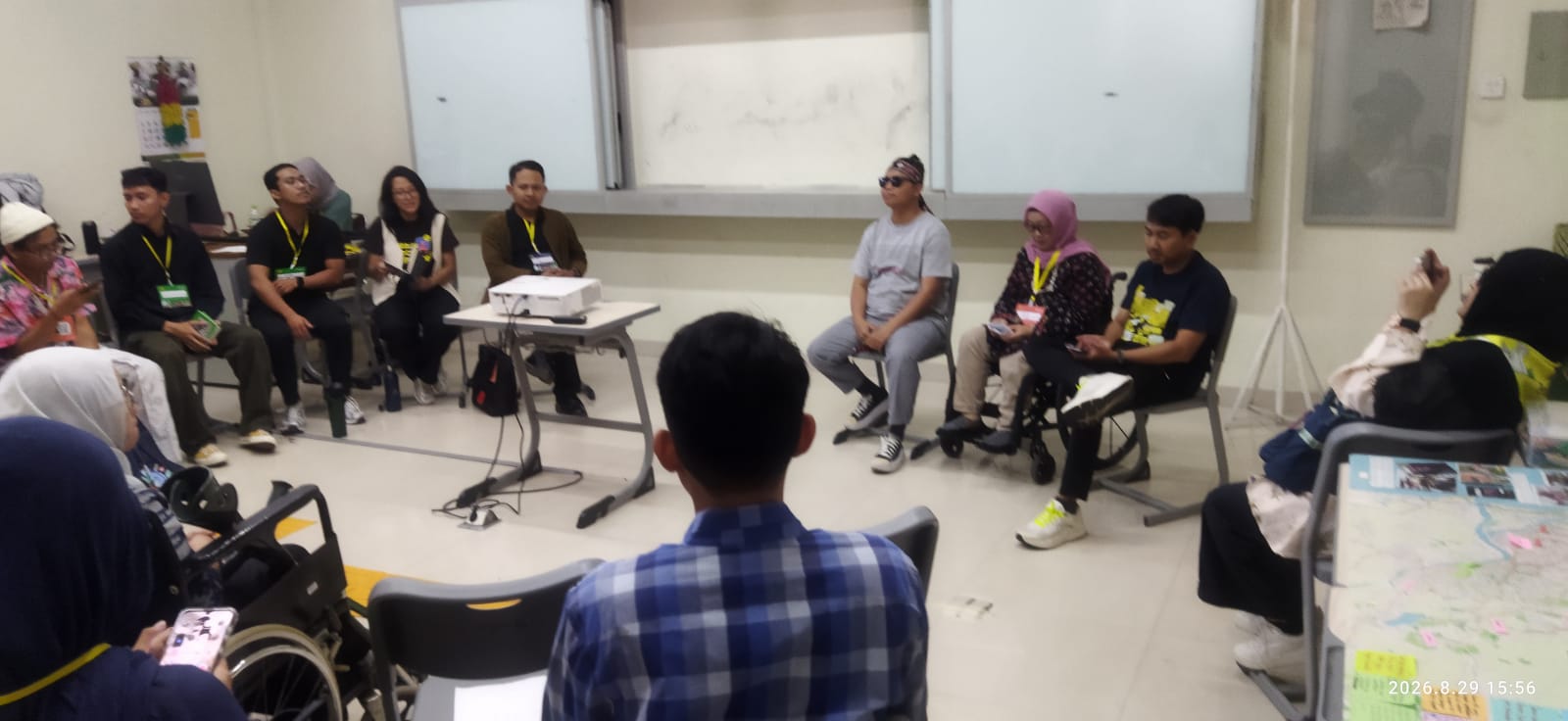
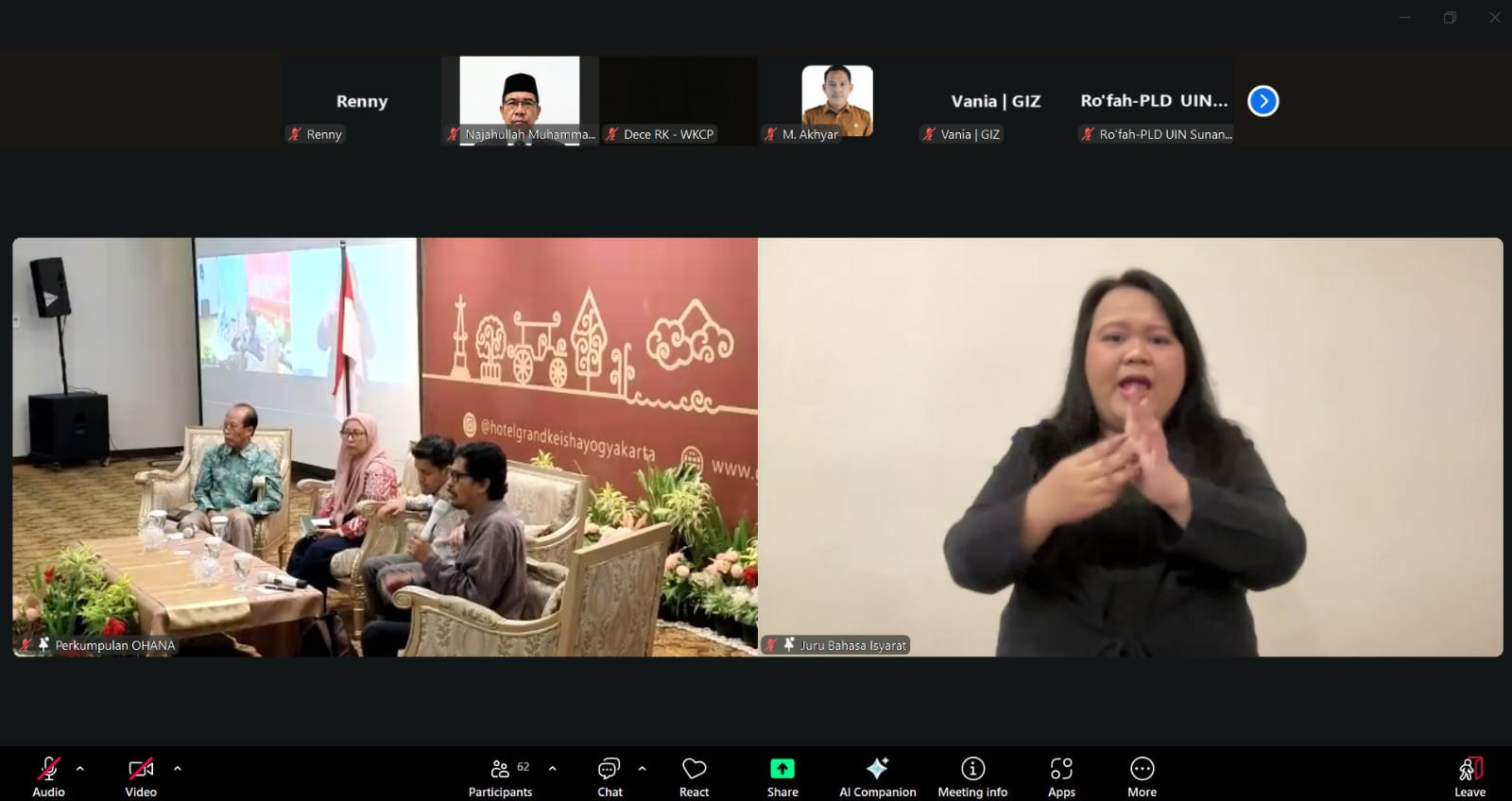
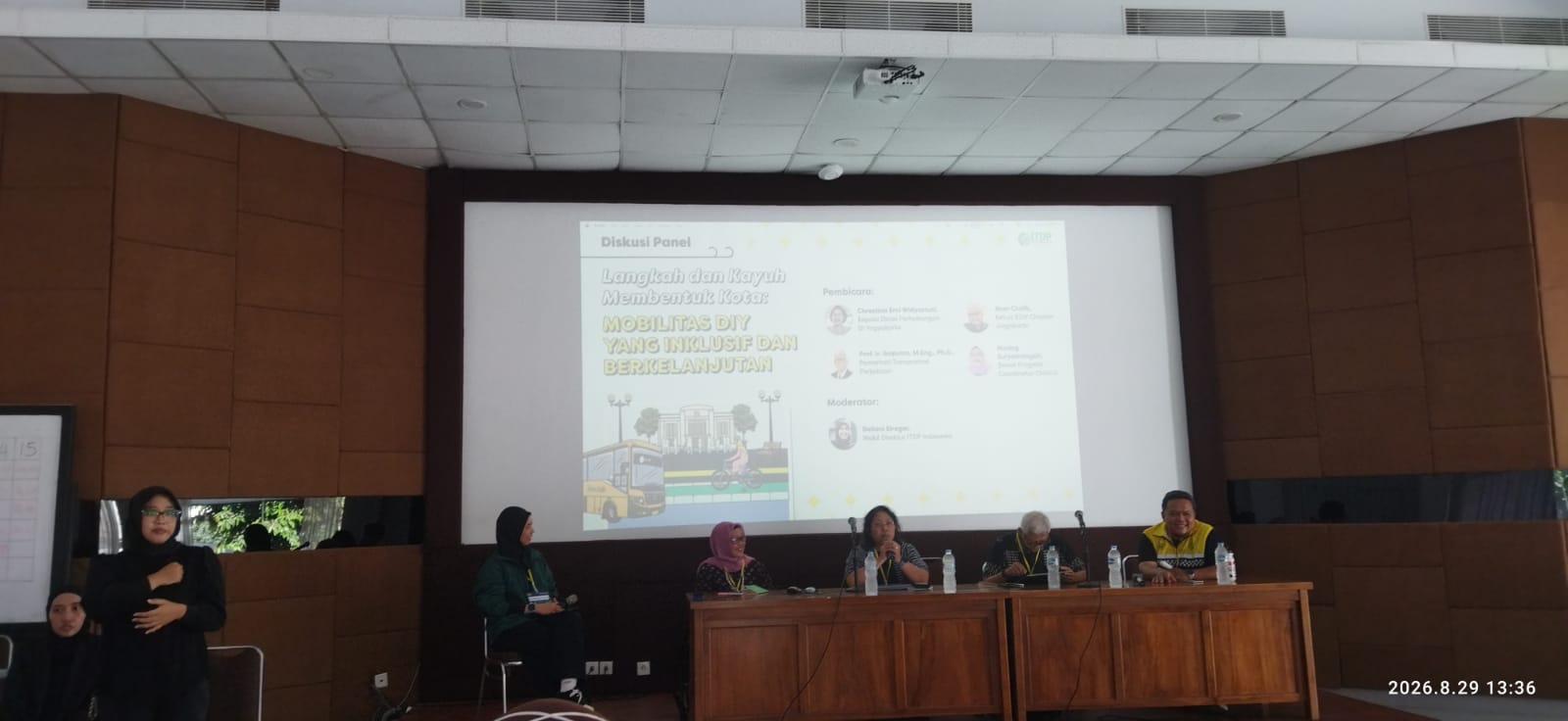
That question was raised during discussion at the Urban Social Forum (USF) No-12, on Saturday (29/8) in collaboration with The Institution for Transportation and Development Policy (ITDP) on the issue of Sustainable Transport Development in Yogyakarta. Women, people with disability, cyclists, government, academics and community met to talk about the same issue: how to develop a transport system that was not only available, but also that everyone could use.
Women’s Journey Was Not as Simple as House-Office-House
The discussion started with a question to participants: Was it more difficult for women to use public transport than it was for men? Tyas raised her hand. She then told about her experience using public transport. She said that the problem started even before she reached the bus stop. The distance between her house, the bus stop, and her final destination was quite far. The foot path was not even good enough. “There were potholes, and the path was narrow,” she highlighted.
She was also concerned about safety. When she passed an area where construction work was or where the path was quiet, women had to consider the potential nuisance on the way. During the afternoon or at night, lighting and safety became increasingly important.
The discussion moderator, Deliani explained that the experience was relevant with differences in women’s mobility pattern. Women did not always travel from home to office and then back home. There could be additional assignments that women had to do – such as shopping, picking up family members or doing other domestic chores. “The trip is more complex, as there were more things to do,” said Deliani.
Safety issue affected women’s opportunities in education and employment. Worrying about night trip could trigger a woman to cancel her plan to take up a job or promotion that required her to finish late at night. Transport was directly related to access to life’s opportunities.
Electric Bus and Promise of Low-emission Transport
The discussion then shifted to energy transition. Buses that operated from morning till night necessitated huge amount of energy. Use of electric energy in public transport gave the promise of reducing operational costs and emission. The discussion highlighted the experience of TransJakarta that showcased much lower operational costs of electric buses compared to buses using diesel fuel. The cost saving was then allocated to improving quality of services, adding more buses, or widening service coverage.
Yet, electrification did not automatically lead to better transport system. Electric uses needed effective routes, accessible bus stops, and users’ safety. Energy transition, for that matter, could not be separated from attempt to reduce dependence on private vehicles. As more people were willing to use public transport, the more chances there would be for bigger environmental benefits accrued from a change in the system.
Public transport became an important part of urban emission reduction. A review of low-emission transport showed that use of bicycles and public transport could be key part of a strategy to improve urban air quality.
Bicycles were often touted as environmentally-friendly transport mode. Yet for women, the decision to use a bicycle was not always easy. One participant, Sajiko faced that dilemma herself. Major challenges for using bicycles on a daily basis included the limited room to manoeuvre, the need to change clothes after bicycle ride, and the many things that she had to bring including clothes with her. "If my office gives its support, for example by making available a bathroom or a locker, then that helps a lot,” she argued. That meant, it was not enough to encourage people to use bicycles by making available bicycle paths, as there was a need for other ecosystems to exist.
Bicycle parking had to be safe. Users needed a place to repair their bicycles when the bicycles broke down. There had to be information about routes. Work places, schools, and public areas had to make available safe and comfortable facilities for cyclists. The issues showed that selection of transport modes was very much dependent on conditions beyond the modes of transport themselves.
Trans Jogja and the Issue about Distance to the Bus Stop
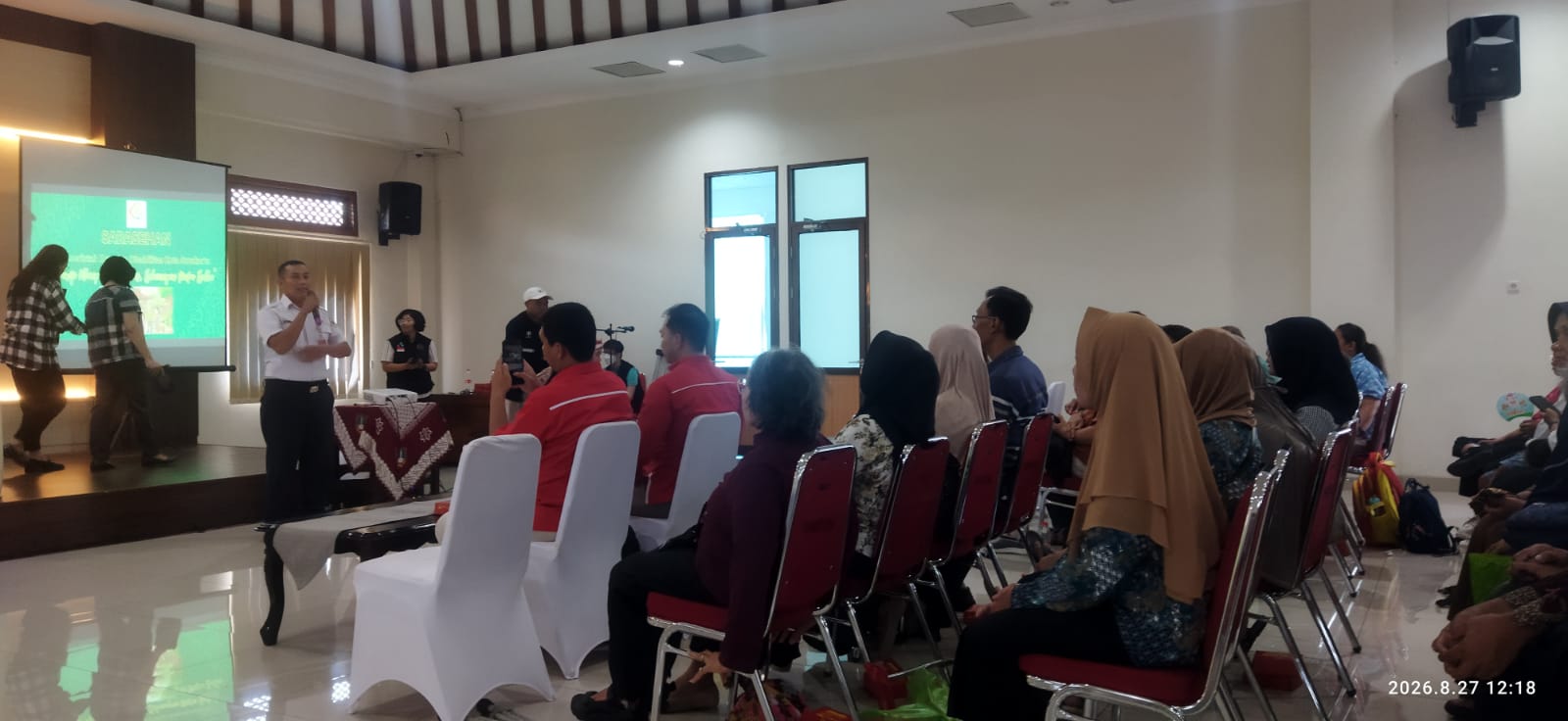
The head of transport in Yogyakarta province, Chrestina Erni Widyastuti explained during a talkshow that the government had updated the Trans Jogja services. Security cameras had been installed in a number of buses that allowed for remote monitoring. Drivers who broke the law could face sanctions. Yet, another issue was the distance to the bus stops. Chrestina acknowledged that the distance to the bus stops remained a major challenge. In a number of situations, the distance could be 500 meters from users’ home. “That distance to bus stops is really problematic as they are too far from our friends’ homes,” she highlighted.
The local government was assessing the possibility of a collaboration with online transport services to provide services from home to the bus stops. This integration would reduce the gap in distance between home to the public bus stops. The challenge was financing. Public transport required subsidy so that people could access the services at affordable cost. For electric vehicles, Yogyakarta Province only had two electric buses. The local government planned to add around 40 electric buses. Yet, the number of buses did not mean success. Chrestina argued that what was also important was whether the community felt that public transport was more comfortable and reliable than private vehicles.
Service Coverage Did Not Always Mean Access
UGM academic, Prof. Ir. Ika Putra reminded that public transport had to be treated as one system. Buses were only one of its parts. Before entering a bus, users had to walk to the bus stop. When users got off the bus, they had to again walk to where they wanted to be. Between those points in the footpath were crossings, traffic signs, bicycle paths, waiting rooms and other facilities. "It proved to be not so simple for pedestrians,” he highlighted.
He gave examples of transport projects that showed that not all people could make use of facilities built to comply with all technical specifications required. For that reason, Ika argued that joint audit, joint planning, and trials by users were critical. A project did not stop simply at the completion of a construction phase. There had to be evaluation to see whether the facility was truly functional.
For wheelchair users, The Distance of a Few Centimetres was Significant
Nuning Suryatiningsih shared a different experience in the discussion. As a wheelchair user, she faced a problem every time she had to get on and off public transport. The distance between the bus stop and the bus door was too far and that could pose problem. “If I get on or off the bus, the somebody have to push or pull me,” she said.
Another issue related to access to the bus stops. The height differences between the asphalt road and the footpath could become significant barrier. For users with vision impairment, the issue was again very different. There was not always a staff person to help them. Voice information was not available in all locations. That showed that one transport system could give different experiences to every person. What was easy for one person may not have been so for another person.
Inclusive Facility Was Not about Privilege
The question about inclusiveness was raised. Did facilities for people with disability make transport system more exclusive? Nuning argued the opposite. Ramp, Braille, voice information or specific room/space for wheelchairs were not forms of privilege. These facilities were parts of users’ rights to access transport independently.
Then Prof. Ika linked with human experience that continually changed throughout human life. A person may have been able to walk without any problem at one stage of life. Yet, when that person was injured, or when that person was getting older, carrying a child or in a specific condition, the need for mobility changed. For that reason, planned facilities for people with disability would provide wider benefits. "such change(s) involved mindset change,” said Ika.
He argued that empathy was the critical base for public space planning. One way to develop empathy was via simulation. Participants could try a wheelchair or close their eyes when using transport facilities. That short experience could show challenges that others may not have necessarily seen.
Cyclist Wanted to Be Involved since the Planning Stage
Noer Cholik from Bike to Work Chapter Yogyakarta saw that the City had enough resources to promote bicycles as day-to-day transport mode. Bicycles allowed distances within city limits to be covered conveniently. Yet, the biggest problem was safety. Cyclists had to deal with motor vehicles that moved fast. Crossroads posed greatest challenges.
Bicycle boxes did not always give a safe feeling. When crossing, cyclists had to negotiate with other road users.
Noer argued that communities had to be involved in the planning process. “If we are invited to participate in planning like in the past, we would have significant inputs on which points to use,” said Noer. Communities had experience that was not necessarily captured in planning documents. They knew which routes were vulnerable, which points were often used, and which facilities that no longer functioned as they were intended.
Community involvement after the policy ended only make room for information dissemination. Involvement from the beginning gave opportunities to integrate experiences of users into policies.
A City Was Not Simply Built for Vehicles
A participant from UGM reminded about changes in family mobility pattern. Between 1970s–1980s, people sued bicycles to go to school. By 1990s, motorcycles were dominant. That change did not happen on its own. Development in automotive industry, increasing ownership of moto vehicles, and city development followed growth in private vehicles that eventually shaped the face of the Indonesian transport.
The question was how to change that trend. Yogyakarta had opportunities to develop a transport system that was not simply oriented towards motor vehicles. Pedestrians had to have their own access. Cyclists had to be protected. Public transport had to be integrated. People with disability had to be able to move independently. Women had to feel safe. All those required a different point of view.
From Infrastructure to Rights to Mobility
At the end of the discussion, Chrestina re-affirmed that the transport vision for Yogyakarta Province was integrity, inclusiveness, safety, and sustainability. Yet, that vision would be tested on the road. Women would test that vision when they walked to the bus stops after sunset. Wheelchair users would test the vision by going through the footpath towards the bus stop. Cyclist would test the vision when they came face-to-face with motor vehicles on crossroads. The elderly people would test that vision when they need access without stairs. School children would test the vision when they had to cross the streets.
Sustainable transport was not simply about changing diesel-fuel buses with electric buses. It was neither simply about building bicycle paths or making available more bus stops. The success measure was the city’s ability to ensure that everyone moved safely, cost-effective, and with dignity. When one person could not reach a bust stop because there were potholes in the footpath, then evidently that inhibited other people i.e. people with wheelchairs) to enter the bus on their own, or when a woman had to cancel her planned trip because she did not feel safe, then the transport issue changed into an accessibility issue.
Transport did not only depend on the vehicles. It was about human who wanted to move, and about whether a city was willing to make things available for that. (Ast)