



Press freedom did not always mean silenced through reporting restriction. Often, it worked through much subtler means, for example a phone call from unknown individuals, a demand that certain text be scrutinised before publication, threats of ad removal, lawsuit, and fear that slowly penetrated the editing room.
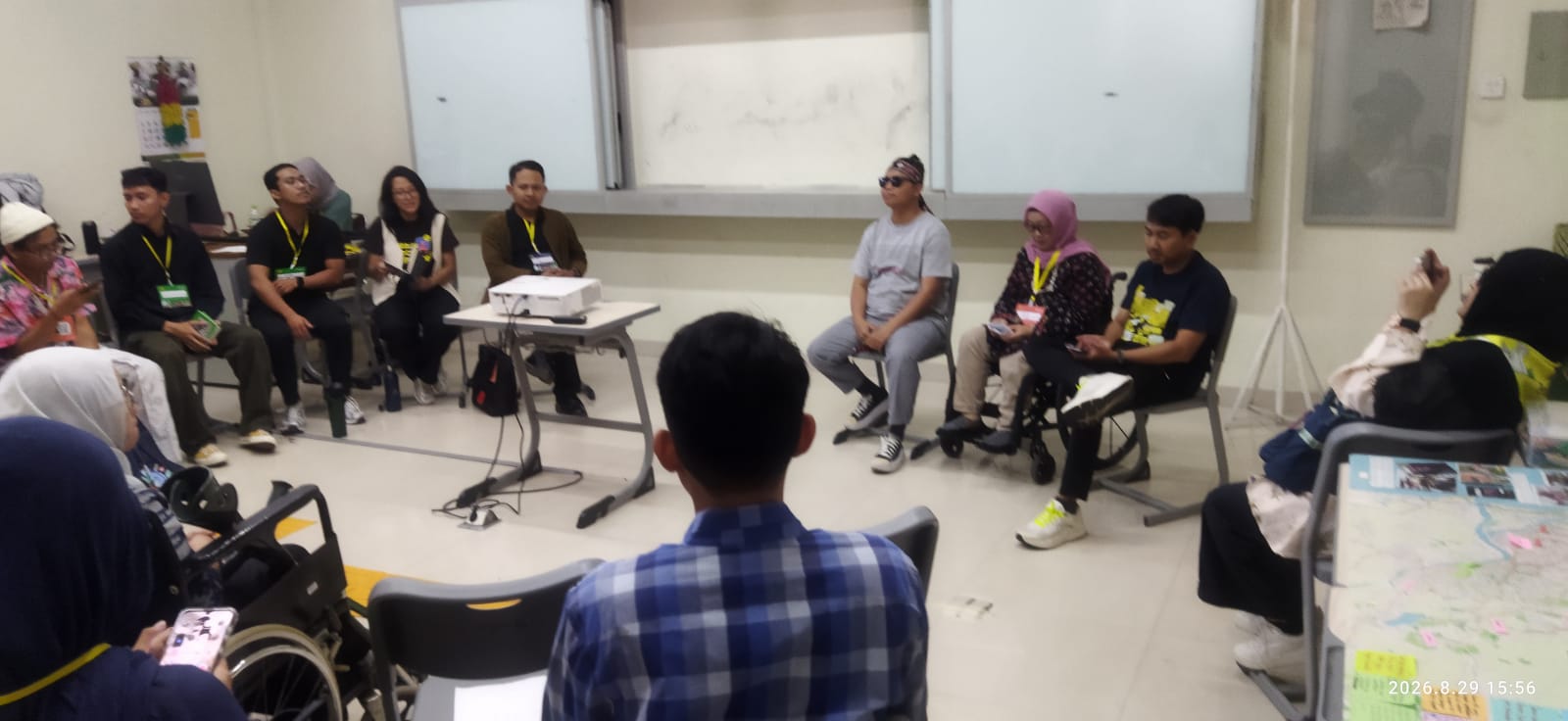
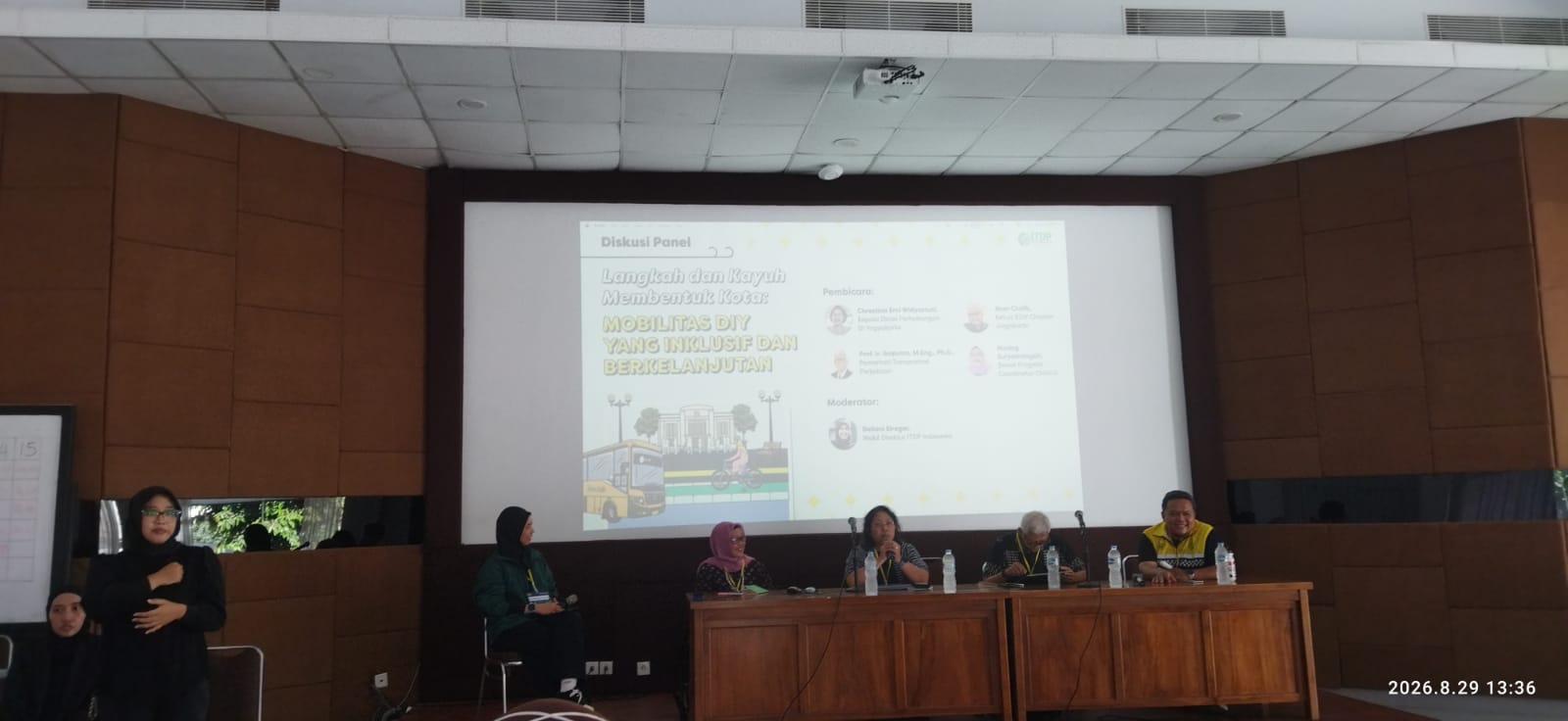
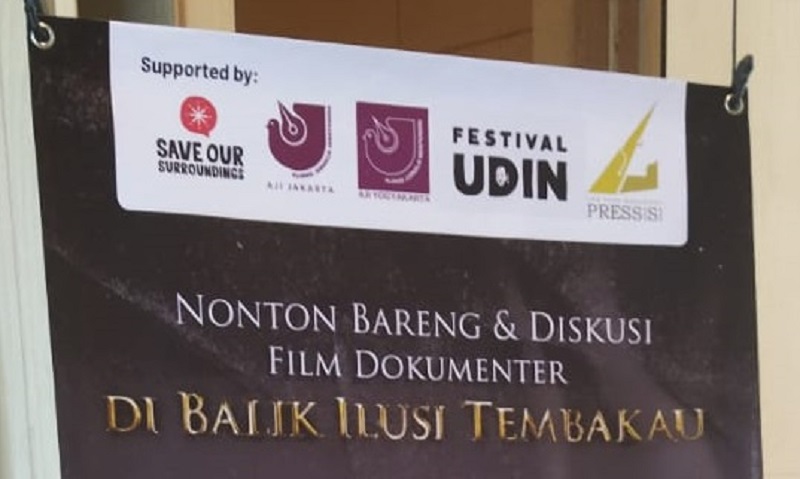
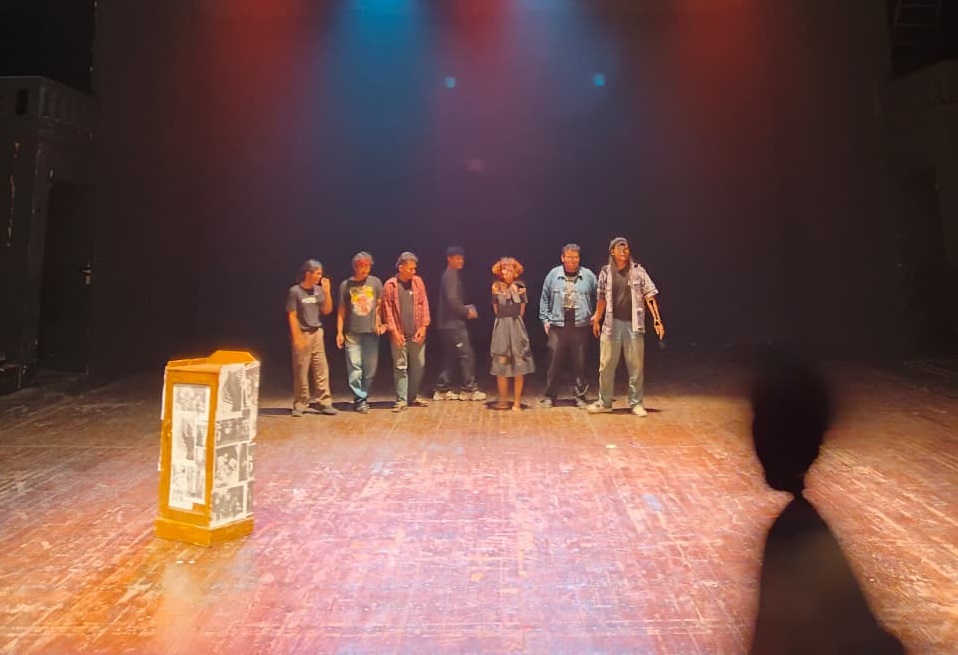
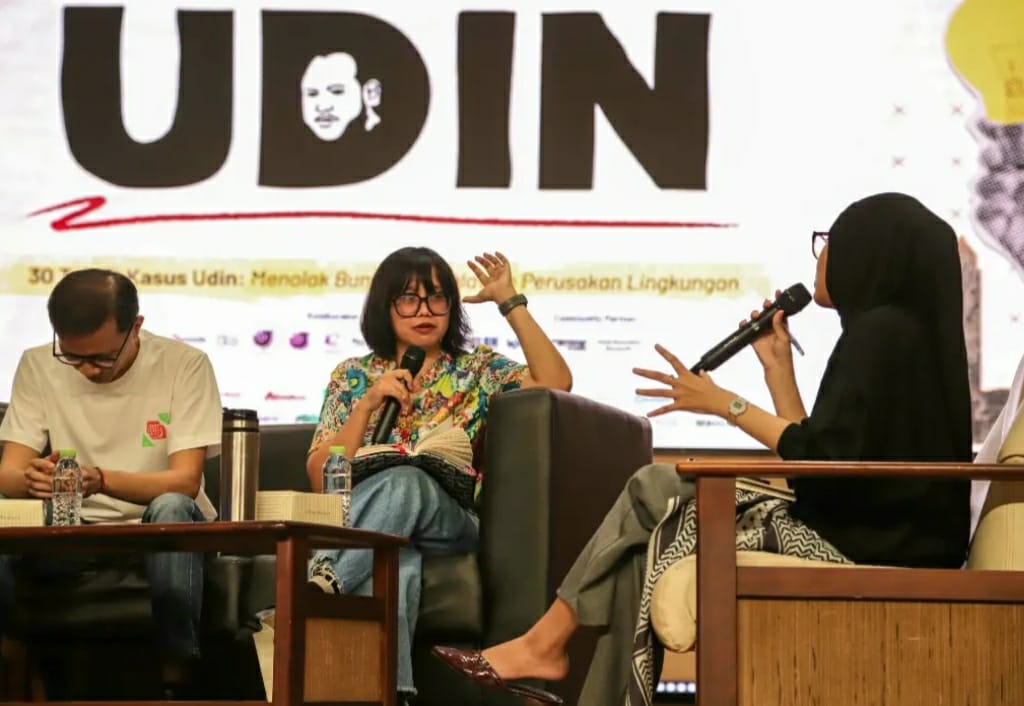
When fear started to work from within journalists, censorship no longer required the hands of the authority. That situation was a topic of discussion in a talkshow that put journalists, freedom of expression activists, and civil society together in Yogyakarta for a series of Festival Udin organized by Independent Journalist Alliance of Aliansi Jurnalis Independen (AJI) Yogyakarta in collaboration with Regulation Monitoring Authority and Media Regulator (PR2Media) at Concert Hall ISI Yogyakarta between 13 and 15 July . The discussion talked about censorship practices, self-censorship, criminalisation, content moderation, and a number of pressures faced by the media and journalists.
The talkshow was made possible through collaboration with a number of communities and independent media in Yogyakarta. In the hall, participants also found mobile library, community shops, and a number of civil society groups who had worked on freedom of expression and democracy.
One resource person was Tempo journalist, Shinta Maharani who followed press freedom and human rights activities, and who stated that self-censorship and repression were important key words to understand the situation of journalism today.
Shinta explained that the symptom was a reflection of an authoritarian state. The government suppressed people’s freedom, and people lived in fear. Technology was supposed to broaden democratic space, yet it was used instead to monitor, limit, even put pressures on freedom of expression.
“This is very much related to authoritarian principle. The early symptom towards distopia,” she highlighted. Yet, she explained that the kinds of pressure to the press today was different than during the New Order era.
During the Soeharto regime, the silencing the press was more overt. The media could be shut down and actors who executed it had clear link to the power structure, including the military and the government. In the post-reform era, pressures became more varied.
Shinta said that the State was no longer the only actor. Corporation, community organisations, certain groups, and individuals could use a number of instruments to pressure journalists. Lawsuits for defamation, libel and slander, threats to media business sustainability, and digital attacks were parts of issues facing journalists.
She pointed to lawsuit against Tempo demanding fantastic amount of money as one form of such threat to the media. That kind of pressure could influence media’s confidence in covering certain issue.
“The actors are diverse now. There are corporations, community organisations, criminalisation, accusation of defamation and libel, and censorship increase,” she said in the talkshow moderated by Putri Laksmi Nurul.
Shinta then shared her experience when she worked as a journalist. It was reporting about the closing of the Mother Mary Statue in Kulon Progo. The issue was related to freedom of religion and faith. Yet, the news about the incident was never coming.
Another experience was when a source person asked that the article was shown before publication. That request, according to Shinta, could potentially be a form of censorship when the media followed it. For that reason, she and the editors had to explain the boundary between the interests of the source people and of journalistic independence.
That request to show the script before publication could appear in a number of forms. For journalists, not all requests automatically were self-censorship. Yet, when the source person started to tell which part could and could not be published, then the editing room faced a different issue.
Pressures also appeared when media publish sensitive issues, from agrarian conflicts, National Strategic Development Program, gender minority issue, environment, and religious issues. In a number of cases, journalists even faced threats of ad removal.
Shinta mentioned issues such as Strategic National Program, Village Red-White Cooperative, and Free Nutritious Food Program that could land media into a difficult position when the news touched on business interests and the authority. There were phone calls asking journalists to not be so critical. There were also concerns that certain news could have impacts on media income.
Hence, the media independence was not only about journalists’ confidence. It was also about business structure where journalists worked. “Editing room had to be separated from media business,” said Shinta.
That separation was critical so that the economic interests did not define what news could and could not be written.
The discussion then shifted to content moderation in social media. It was different to the time when the government single-handedly could block sites or ask media to take down news, now the information selection process went through the digital platform.
Provider or company platform had big leverage to define content that could be viewed, limited, taken down, or distributed by users.
Another resource person a researcher with PR2Media, E. Wendratama argued that the situation showed a paradox of digital democracy. The technology developed in democratic society could bring back authoritarian characters when used to limit information. The government, for example, could ask platforms to takedown certain contents, while the final decision was in the hands of platform companies that had their own moderation system.
The issue became more complex because most of the process used automatic system, artificial intelligence, and recommended algorithm. On one hand, the system was necessary to manage millions of contents produced on a daily basis. Yet, on the other hand, the non-transparent mechanism could make it difficult for the public to know why contents were limited or even taken down.
Wendra argued that European Union countries started a different approach. Digital platforms not only were asked to take down illegal contents after problems appeared, but that they had the obligation to conduct risk analysis, report to the government, and prepare mitigation steps. That approach showed that the content moderation issue was not as simple as taking down a content.
To him, there were issues about citizens’ rights, transparency, accountability, and limit to State or technological companies’ authority. The issue about press freedom in Indonesia also involved a number of indexes and notes with regards to violence against journalists.
Shinta mentioned that the Indonesian position in the press freedom index showed trouble. In the last few years, Indonesian position was on a downward trend.
She argued that notes about attacks against journalists also showed that threats never stopped. Even, digital attacks were becoming increasingly preferred form of attacks. Yet, what was more concerning was not simply the number of attacks. There was another more difficult issue – when journalists started to set up boundaries for themselves.
Environmental issues, minority groups, freedom of religion, gender identity, and government policies could be deemed sensitive issues. Some media then chose to be cautious, even not publishing relevant news.
In Yogyakarta, for example, diversity of religions could be problematic when news only looked at the aspect of legal permit, not the perspective of citizens’ rights to perform their faith. Shinta saw the tendency as a form of fear that grew amongst journalists. When journalists were afraid because they feared attacks, loss of employment, or faced legal proceedings, pressures did not have to come directly from the government. Journalists already conducted self-censorship on their own.
“The most concerning situation is when humans were no longer forced to do self-censorship by other people, but by their own head out of fear,” said Shinta.
In question and answer session, a participant asked how journalists should take a stand when pressures came from the media where they worked. Shinta argued that the journalists position was to revert to their basic responsibility: to the public. Journalists were not the mouthpieces of authority. They were not click engine.
The task of journalists was to gather facts, investigate information, provide context, and present to public in a responsible manner. “We should not be the mouthpieces of the people in power and to be click engine. Our responsibility is to the public,” she said. For that reason, when the editing room asked journalists to take down or change an article because of reasons that had nothing to do with public interests, journalists needed to question such decision.
Shinta argued that debates in editing room were critical. They were not intended to make journalists heroic individuals, but to ensure that the journalistic process remained firmly in support of public interests.
Shinta added that the issue about pressure to the media could not only be addressed by asking journalists to become bolder. There was a structure that needed reform.
Wendra argued that the State needed string regulations to protect freedom of expression and to ensure that any limitation to that freedom had to be done in limited manner and with clarity. Indonesia had ratified International Covenant on Civil and Political Rights (ICCPR) through Law No. 12 Year 2005. In that principle, limitation to freedom of expression could not be done arbitrarily. There had to be clear, valid, and proportionate reasons.
The problem was regulations in Indonesia were fragmented and a number of articles could be broadly interpreted. In such situation, civil society, academics, journalists, and media organisations had common task of ensuring that regulations id not transform into gag instruments. Wendra also emphasised the importance of collaboration.
The media did not have to face the pressures on its own. When a media was attacked because of its reporting for public interests, solidarity with other media, civil society, academics, and community groups could provide critical protection.
Collaboration was also necessary to strengthen journalists’ capacity to deal with legal issues, digital security, and pressures from those parties with certain interests. Within the media itself, the firewall principle needed to be strengthened. The editing room and business interest had to draw clear lines.
Without That Separation, Economic Pressure Could Easily Enter the Journalistic Process
The discussion about journalism funds was also in the discussion. The media needed resources to work. Journalists needed descent salary. The media needed funds to cover news reporting, particularly investigative news that required a long time to complete. Yet, funding supports should not abandon media independence. When media no longer performed its control function, it was not only the journalists who suffered a loss. The public also suffered loss of information to monitor the people in power.
Democracy necessitated that citizens had access to information. Without independent information, communities would find it difficult to differentiate between facts, propaganda, and interests. For that reason, threats to journalism did not stop at one news not being published. The impacts could be far reaching: the weakening of public control, the increasing power of the authority, increasing risks of corruption, and increasingly difficult revelation of human rights violation.
Shinta reminded that press freedom was not simply the journalists’ responsibility. It was a part of democratic life. When a journalist did not have the confidence to write because of fear of losing their jobs, of being attacked, being sued, or being discriminalised, community in fact lost the opportunity to know what truly happened.
For that reason, the task to maintain press freedom was not as simple as asking journalist to stand up. The editing room had to be protected. Media business had to be separated from editorial decision. Regulation had to prevent criminalisation. Digital platform had to be transparent. The State had to respect freedom of expression. And civil society had to build solidarity when attacks against journalists happened. Because, the biggest threats for democracy did not happen when someone stood and prohibit journalist to write.
That threat emerged as the prohibition was no longer necessary, because fear had been instilled in journalists’ head. This was where censorship was so silent, and so utterly dangerous. (Ast)