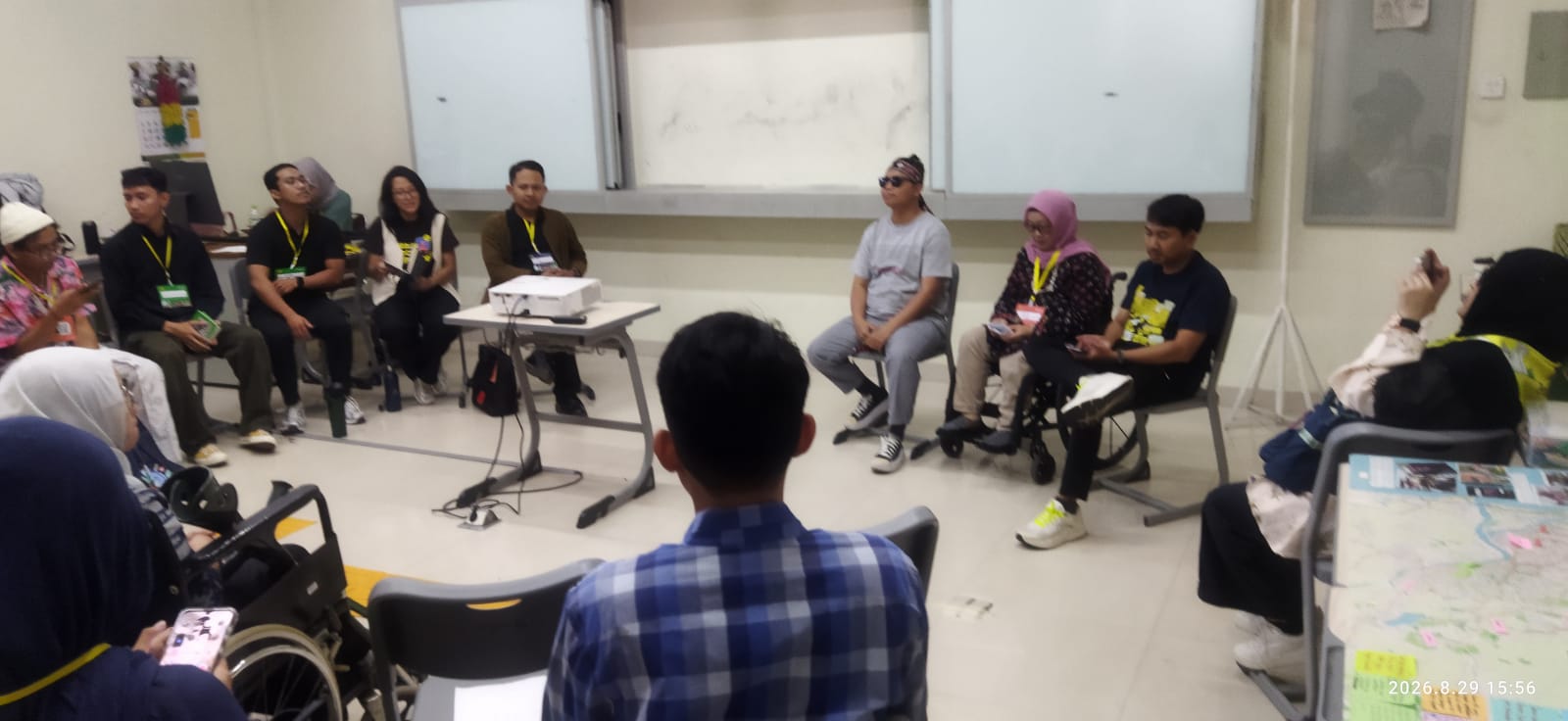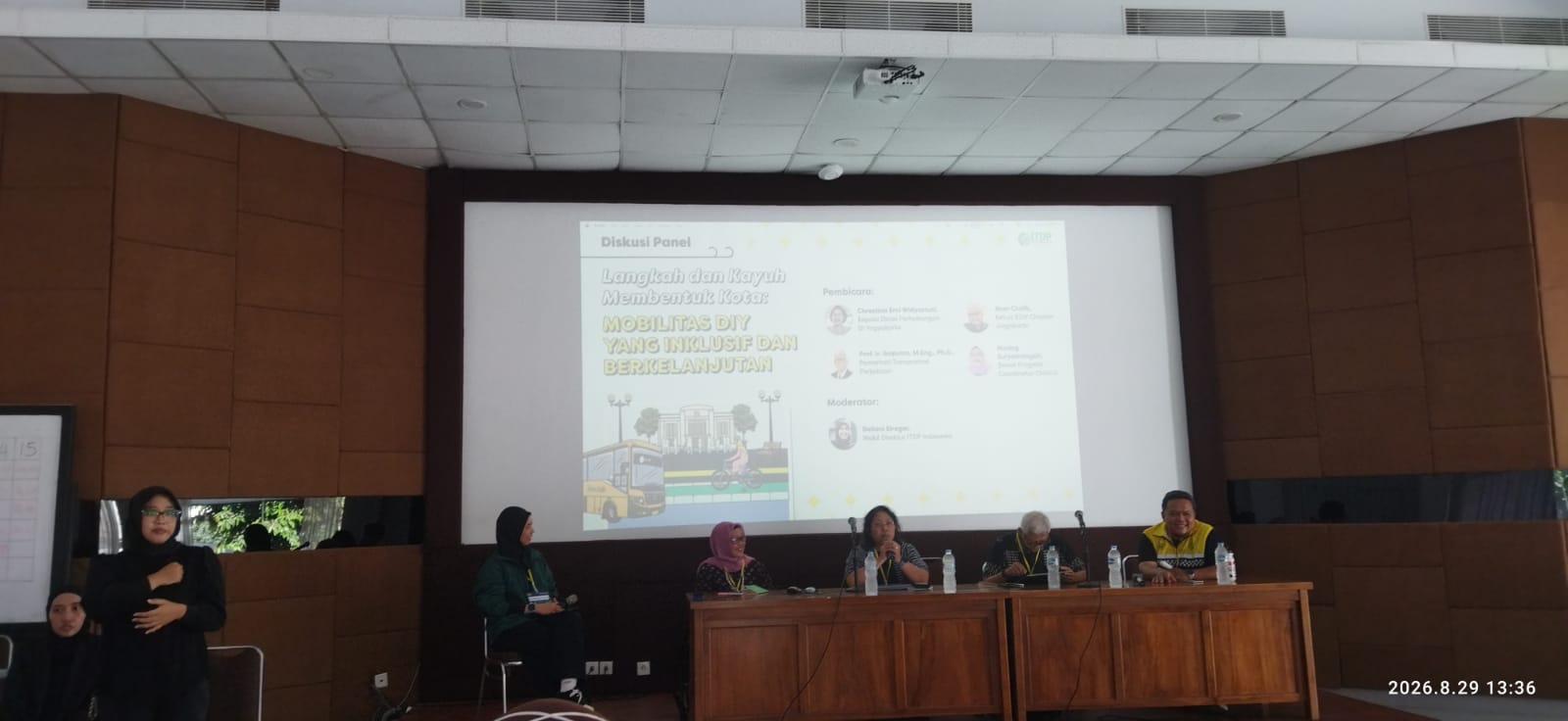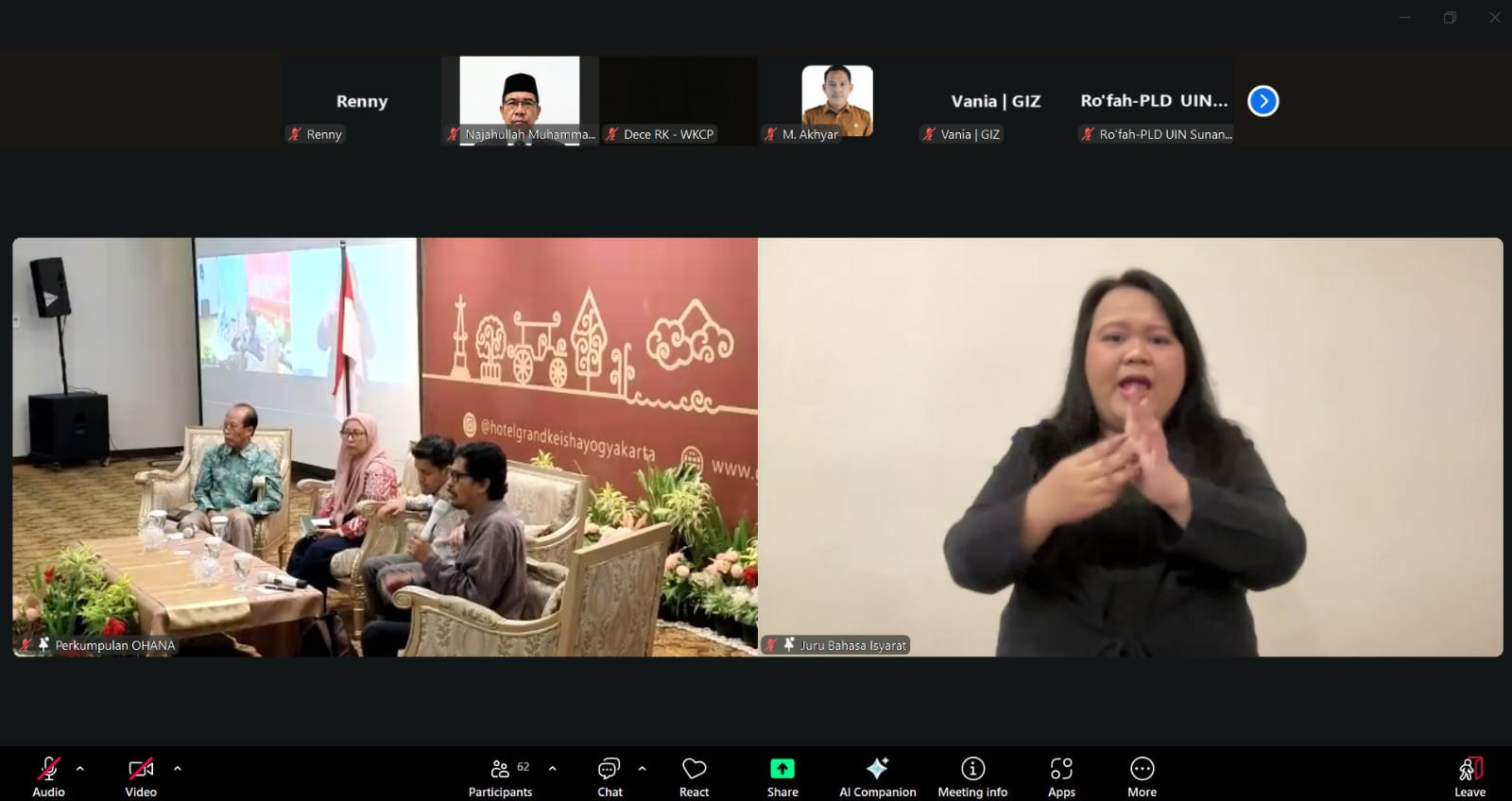



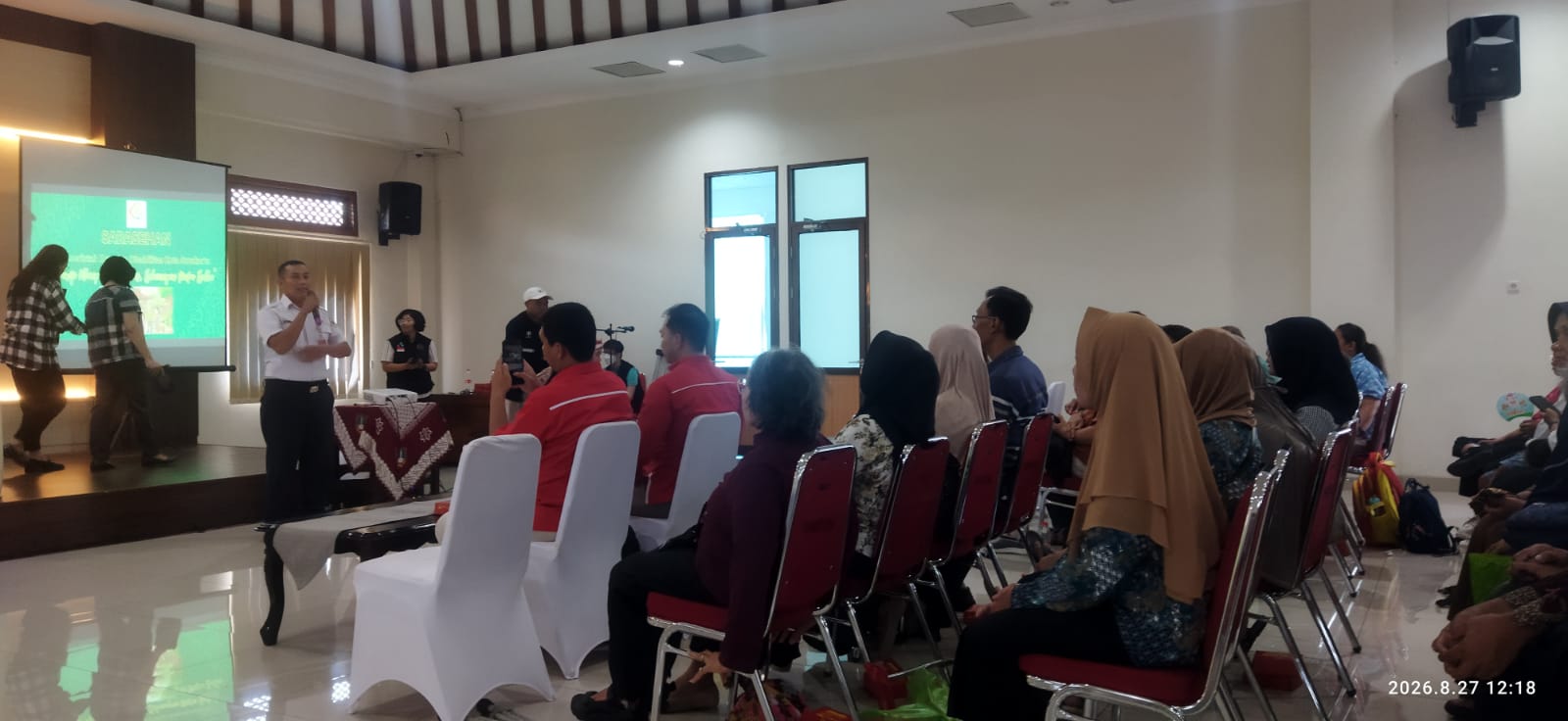

The hall on the third floor, the City Health Agency in Surakarta, Thursday, 27 August 2026, was hot. Yet, that did not prevent people with disability, community organisations, local governments, and other stakeholders to meet. They came with one objective: to ensure that city development proceed by incorporating their voices that were often ignored in decision making processes.
The activity theme “Nyawiji Mbangun Inklusivitas” (United towards Inclusiveness) was a space to meet between government and communities of people with disability. The chairperson of KDD (Local Disability Committee), Sudarti highlighted that inclusiveness was not founded only by one party. KDD (Local Disability Committee) was an attempt to take part in development by allowing parties to meet – local officials to organisations of people with disability. That meeting space allowed for needs, experience, and inputs from people with disability to be discussed.
“Nyawiji mbangun inklusi,” (United towards Inclusiveness) was the theme in the meeting. The government of Surakarta City was represented by the head of the Social Office Samsu Tri Wahyudin, who acknowledged the importance of the forum during his opening speech. The mayor of Surakarta City was unable to come because he had other agenda in Jakarta, hence he was represented by Samsu.
He reminded that city development should not only be prepared behind government desk. The government had to listen to the people, including people with disability. Differences in conditions, capacities/abilities, and needs were not reasons to limit access to development. On the contrary, diversity had to be the strength to build a more just, friendlier, and equal city.
The “No One Left Behind” principle had to be translated into real policy. All citizens, including people with disability, should be able to access education, health, employment, public services, transport, and opportunities to participate in social and political life. A number of accessibility facilities had been established in Surakarta. Yet, Samsu acknowledged that developing an inclusive city was a long project.
The Forum was expected to be an interactive space to share experience, needs, criticism, and recommendations directly to the government through officials present in the meeting. What the Forum wanted to establish was not simply policy about people with disability, but policies prepared with people with disability.
Participation Was Not Simply about Being Present
The chairperson I of the Central Board of Indonesian Union of People with Disability (Pertuni) and public official at Library Office, Agatha went further with that idea. She led participants to one important term: meaningful participation. Agatha argued that participation of people with disability had the legal base – the Convention on the Rights of Persons with Disabilities (CRPD), Law No. 8 Year 2016 on People with Disability, and Government Regulation No. 70 Year 2019.
Meaningful participation did not simply mean the presence of people with disability in a meeting. Their involvement had to be active and substantial in all stages of development, from planning, implementation, monitoring, and evaluation. If people with disability were only invited to some to fill in the attendance list, while decisions were made beforehand, then that participation was not meaningful participation.
Agatha described a number of issues that still happened. One such issue was the uneven human resources capacity. Families and communities had important roles in supporting people with disability, yet many did not understand the rights of people with disability. That situation made it difficult for a number of people with disability to participate in public spaces.
Civil society organisations faced similar issue. Not all organisations understood the issue and the fulfilment of the rights of people with disability. In a number of areas, organisations of people with disability were not yet active or even available. Another challenge came from the government officials and public services. Awareness of the needs of people with disability was not even. Accessibility issue remained a major challenge. Agatha reminded that accessibility was not simply about physical facilities. People also had to pay attention to proper accommodations, particularly for people with disability who had invisible challenges.
Openness of public information was the next issue. People with disability should be able to access documents and information relevant to development. The fact however was that there was information that remained unavailable in accessible format. Yet, involvement in development could not happen without information.
When People with Disability Were Involved in Budget Monitoring
Agatha saw that meaningful participation had wider impacts than simply ensuring the voices of people with disability being heard. Their involvement from the beginning of planning stage to evaluation helped the government use budget more efficiently. Direct knowledge of people with disability helped minimise errors in procuring goods, services, facilities, and programs needed.
With regards to the social aspect, the involvement helped communities change their view about disability. The government was able to build a more inclusive services, while stigma decreased in the community as community increasing realised that they had to integrate people with disability as part of the society with their rights and capacity for participation.
KDD (Local Disability Committee) as a Bridge
Sunarman from KDD (Local Disability Committee) explained how the organisation functioned in Surakarta City. KDD (Local Disability Committee) had a function to build inter-sector coordination and bring issues about the rights of people with disability to local development. KDD (Local Disability Committee) brought together communities, organisations of people with disability, governments, and other stakeholders.
Another function was mediation. When there were issues on the field, KDD (Local Disability Committee) received report and bridge the communication with local officials. Advocacy was also another important part. KDD (Local Disability Committee) proposed and monitored policies and programs relevant to protection, fulfilment, enforcement, and promotion of the rights of people with disability.
There were also social and consolidation functions. KDD (Local Disability Committee) disseminated information to public officials about how to interact with people with disability and helped identified organisations and movements of people with disability in Surakarta City. Sunarman described KDD (Local Disability Committee) as a bridge between rights holders and the government.
Yet, that bridge was only useful when the two sides were able to communicate openly. For that reason, the KDD (Local Disability Committee) demanded the consolidation of physical and non-physical accessibility, audit of public facilities, outreach services, economic empowerment, enhancing sensitivity of government officials and communities, and data update with regards to people with disability. Data was important because policies and budget had to consider people’s real needs.
Voices from the Meeting Hall
When the question and answer session started, participants voiced a number of inputs. Representative of Pertuni Unit in Surakarta asked about the mechanism for the selection of KDD (Local Disability Committee) board. The representative wanted to know how the selection process proceeded that resulted in a decree with regards to the board. Other question was about the organisation(s) for people with disability that already had a legal standing but had not received any funds from the government.
Sukarti from Ikatan Tuna Netra Muslim Indonesia (Indonesian Association of Moslem with Visual Impairment) talked about people with disability who were not joining the organisation. How did they get information and access services if they did not have an organisation as their entry point? That question showed that it was not enough for an inclusive system to only reach out to people with disability who were organised.
From an employment sector, Esti from ULD Ketenagakerjaan (The Disability Employment Unit) in Surakarta City told of two workers with hearing impairment who succeeded to secure a job at Indomaret. Another worker with hearing impairment secured a job at an import company in July. The process was long. Businesses and job seekers needed to understand their respective needs and capacity. In September, the Employment Agency also planned an apprenticeship program that could accommodate five to seven people with disability.
Yet, participants reminded that the work choices for people with disability should not be limited to sewing or garment industry. Many people with disability had the capacity and desire to work in a variety of fields.
Decile and the Threat of Losing Access to Assistance
Participants paid serious attention to socio-economic data issue. Entok Darmanto expressed his concern about the decile changes in DTSEN or National Socio-Economic Data. Changes in classification affected a person’s access to social assistance. He questioned how changes in employment situation affected decile and how to revise data if the data no not much real situation.
The Social Agency explained that families could update data at the local village by bringing with them administrative documents and explained the real condition. Changes in decile category depended on data update and socio-economic records. Intan also read a similar issue coming from Forum Buah Hati Berseri – a forum that represented parents of children with disability.
Families of children with disability faced complex needs – from assistive devices to accompaniment. Most families faced a challenge – decile classification – when accessing aid. Intan also questioned about the children’s future when parents were no longer able to care for them. The question was not simply about assistance, but also about long-term protection system.
Challenges to Accessibility on the Field
A person with visual disability, Widadi proposed that each government agency had space or facility to access information. Another participant pointed to accessibility issue at Balapan Train Station. The path for people with wheelchairs and the path for people with visual impairment remained blocked.
Representative of KCI (Commuter Line Indonesia) explained that the inputs would go to the head office. The representative also asked people with disability to not be hesitant to ask for help from station’s officers. For some participants, accessibility was not simply about the availability of facility. The facility had to be totally accessible.
The Political Right Never to Disappear
The Election Office in Surakarta City provided information about the political right of people with disability during the meeting. People with disability had the same right as citizens, both as voters and as election candidates as the law articulated. It was important to look at the voters’ data. People with disability had to ensure that their data was recorded through online voters’ data services.
The discussion broadened the meaning of inclusiveness. An inclusive city was not simply about footpaths, tactile paving, or accessible services. An inclusive city also provided space for people with disability to determine the political and development direction that affected their life.
From the Forum to Action
By the end of the activity, one package was obvious from the voices: people with disability did not only wish to be heard. They wanted involvement that could bring changes. Surakarta City Government opened up the hall for the Forum. Organisations of people with disability brought along their experience and needs from members. Local government officials had the mandate for public services. Each had different roles.
The challenge was to ensure that all the voices did not end up as side notes of the meeting. Samsu already highlighted that whatever was expressed in the Forum had to be firmly documented and acted upon by local governments. Communication between government and communities of people with disability had to continue. (Ast)