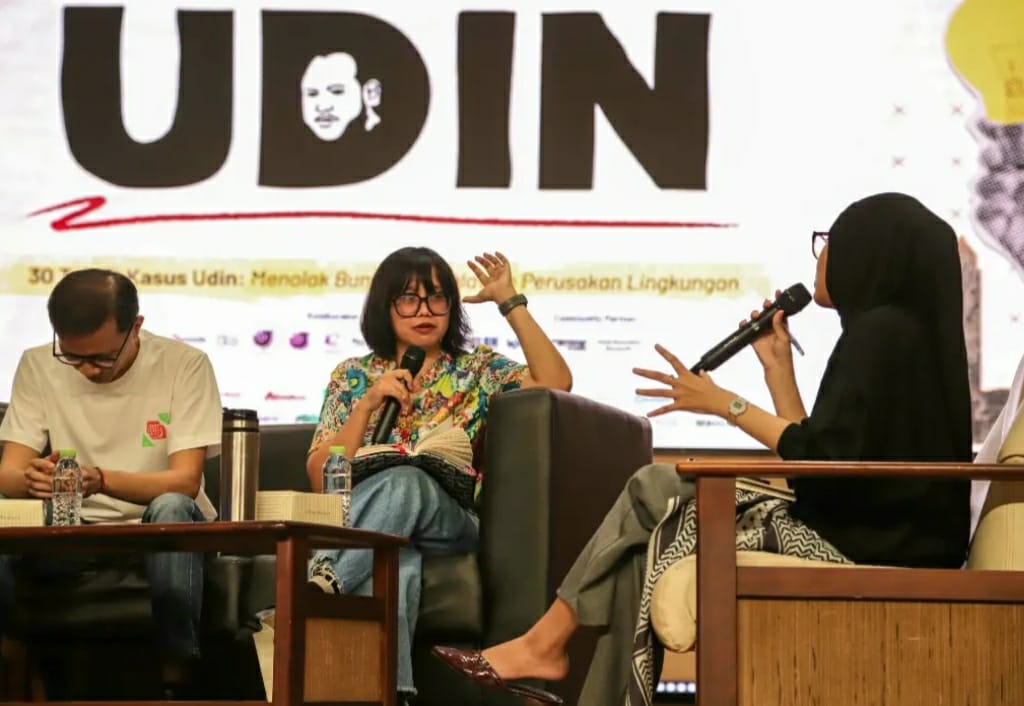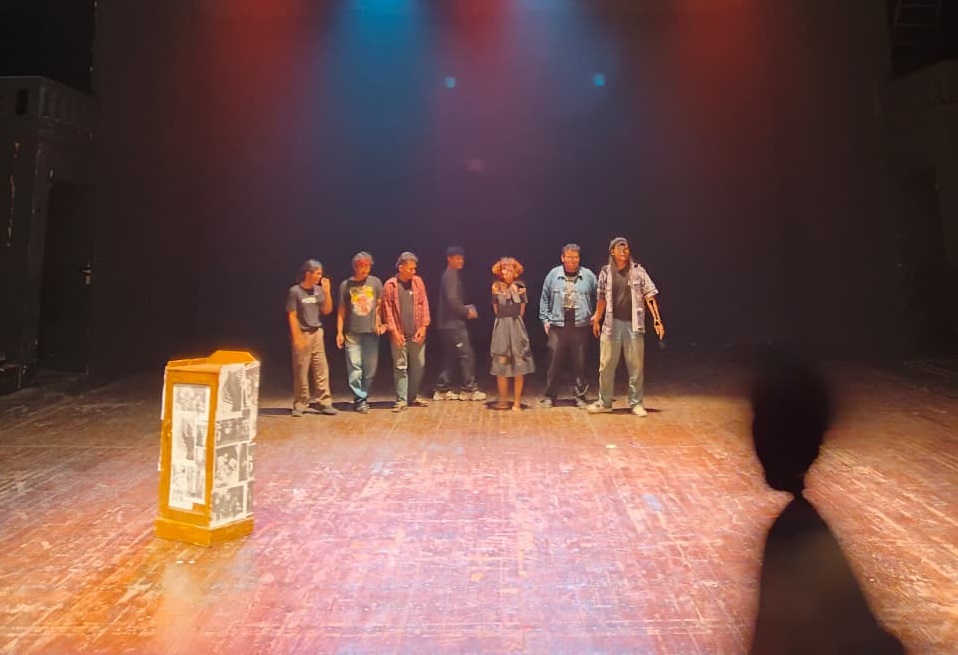



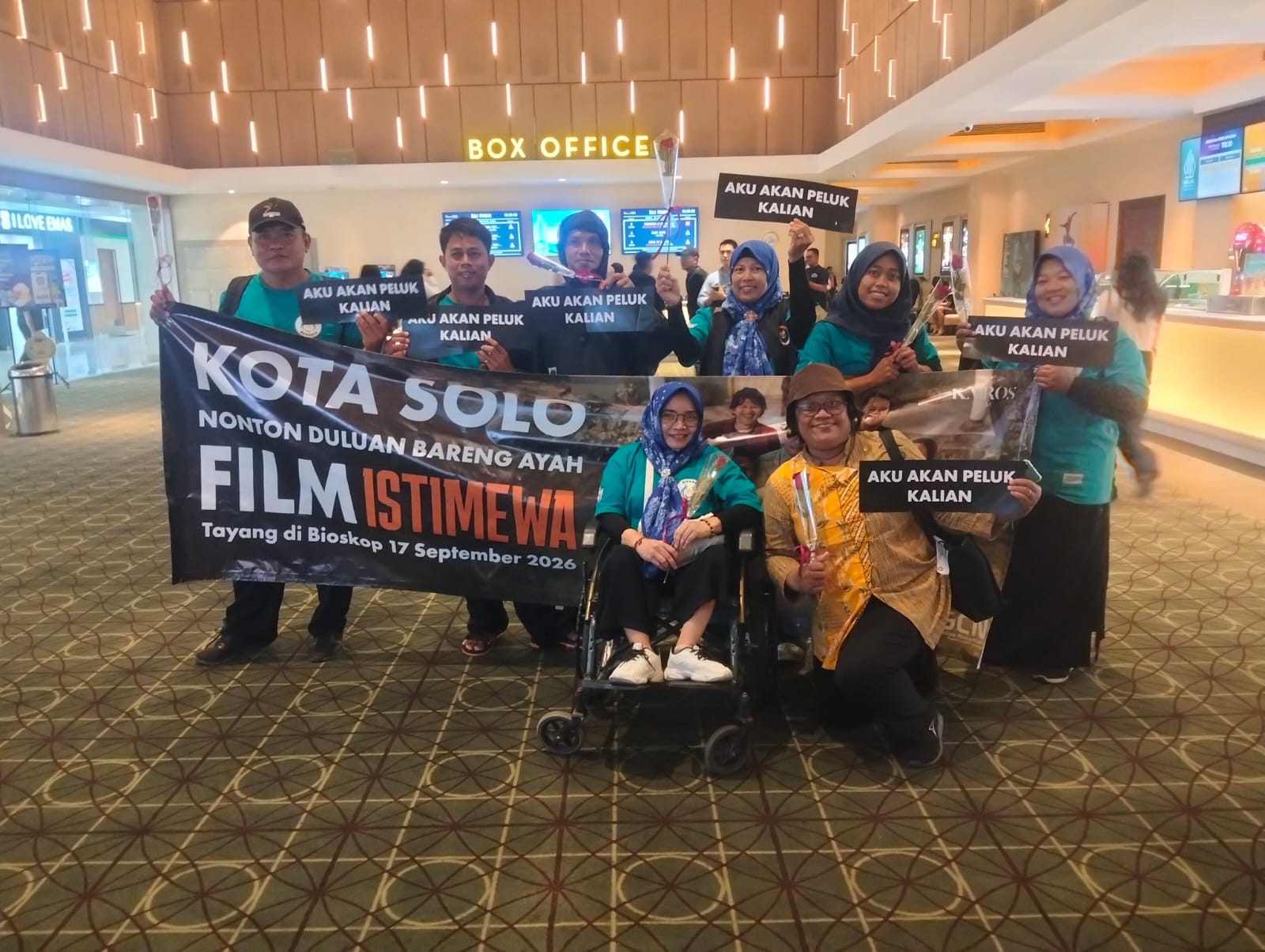

The screening of Istimewa film in Solo on Thursday 13 August was not simply a screening of a drama film. The film producer had close connection to the story of a family, struggle, loss, and opportunities for people with disability as the main characters in a cinematic work.
The film was based on a true story of a man who cared for six children with disability. Some of those children had been abandoned or disowned by their family, while others lost their parents. A man than took them under his care in a house known as “the Special House.” The story began to unfold from that house.
Their life was not easy. Economic issue was part of day-to-day life. In one part of the story, the man had to sell his card to pay for the rent. The situation became dire when the man had to get to the hospital for his cancer treatment.
That situation forced children to face a new reality. The character of the female sister, Kinan played important role taking care of her siblings in order to survive and to continue living in that house. Yet, when they tried to find the man who had been treated in a hospital in the city, they encountered a new challenge which they never anticipated.
On the journey, the children met an entertainment group. They saw an opportunity to work as entertainers, for shows in a carnival. Yet, that offer was a trap. They faced a situation when humans were treated like commodities and potentially were traded.
The search for the man changed into a journey with many challenges.
The film Istimewa did not opt of a sombre drama. In the face of many conflicts and tragic stories, there were light and comedic scenes. The choice showed that the story did not just move in one emotional direction.
From Special House (Rumah Istimewa) to the Big Screen
The producer from the Kairos Pictures Production House (or Kairos Film), Abdullah Mansuri, or known as Mr. Mansuri or Father Mans Ayah Mans, explained that the film story was based on his own life as a father. The story of his life then developed into a film story.
He said that he had thousands of children in the house network or community network developed from the idea of “Rumah Istimewa.” The total number was close to 5,000 children in many different parts of Indonesia.
“This is a true story and it happened to me as a father in this film,” he highlighted during the screening.
The idea for Rumah Istimewa then evolved. What was initially a house then evolved into a broad network. In the film story, the children’s experience of being abandoned by their family was the source of the story.
He explained that the film production process was far from being simple. The main challenge was that most of the actors were children with disability. The production team had to consider the actors’ condition, such as the location of shooting and where they would rest.
The shooting happened in three locations - Bogor, Jakarta, and one other location. The locations were selected based on accessibility and the ability of the crew to monitor the actor’s condition.
The involvement of children with disability as key characters in the film was not simply driven by artistic decision. For the production team, their presence became the central message of the film. The actors were not simply background characters to support other people’s story. They played characters, faced conflicts, built relations, and showed their ability in front of the camera.
Mansuri said that the film idea was also based on a story written by one of his children. A number of children’s experiences at Rumah Istimewa were also sources of inspiration for the film story. The characters in the film were based on real experiences. One such experience was of a child who used to lock himself/herself in a room and then was confident enough to come out of the house. The life course then changed.
The house became a symbol of a safe house for children who had lost a home to return to.
He also added that the production cost was around Rp. 13 billion, including for promotion. The film was to be released on 17 September. After screening in Indonesia, the production team would also plan to screen the film overseas.
Film as Inclusive Space
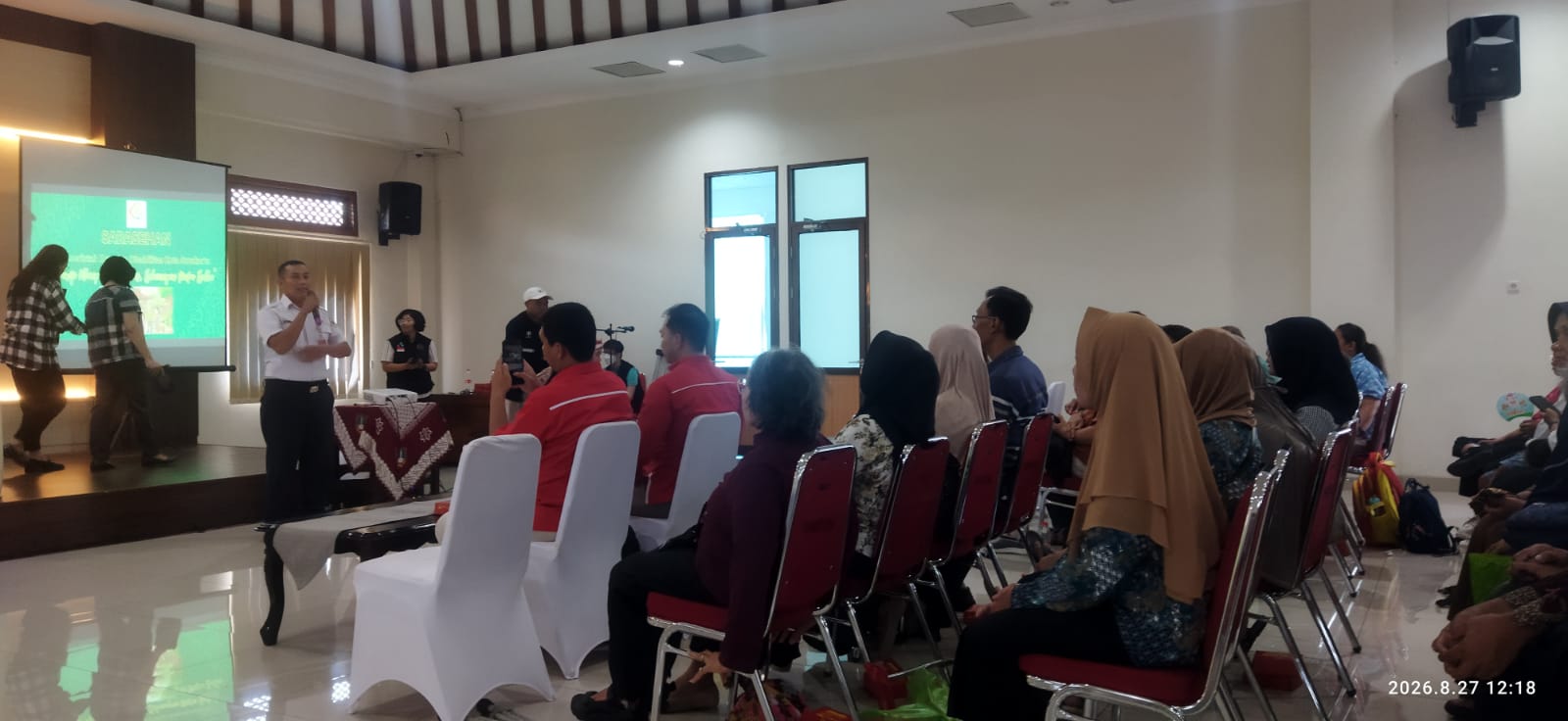
In her opening speech, the vice city mayor in Solo, Astrid Widayani placed Istimewa film in the broader context of the city’s plan to provide equal access to people with disability. She welcomed the communities of people with disability, the film community, academics, film reviewers, conten creators, and influencers in the Greater Solo area.
She said that the inclusion spirit should not stop at education, training, or public services. Culture and creative spaces had to be inherent parts of such inclusion.
“How can we provide equal access, no one left behind,” she highlighted.
Astrid said that the film was one of the effective mediums to spread that idea. Communities could see that people with disability were not simply groups in need of assistance, but individuals with capacity and potentials.
On the other hand, she also encouraged people with disability to have more and more self-confidence to show what they could do. “WE just saw that some of them had shown to be great actors,” she highlighted, referring to actors in the film Istimewa. She expected that similar films would provide broader artistic and cultural spaces for people with disability.
That message was evident in the film. The actors with disability were not only present to “represent” people with disability. They were the main characters that became the key theme in the story.
When the Film Reminded of a Father
For one spectator, Hermin, film Istimewa has a personal connection. The story about a father that was central to the life of children reminded her of her own father.
From her children, her father was always so supportive of her. He never treated her differently than other children.
There was on sentence that her father said that she always remembered – that she was not different from other children and for that reason, she did not need to feel different. That message was the reason why the film left an emotional imprint on her.
She cried while the film was playing, not because of the story, but because the film took her back to the memory of her father. Hermin’s experience showed that the power of the film did not lie in how solid the story was. Often, a film worked through the personal memory of the audience.
Another spectator, Ami provided another story. Ami said that the film had important value because it helped reduce stigma about people with disability. While some spectators offered their take on the storyan the flow of the scene, they remained fixed on the central message of the film as something truly important.
At this juncture, film Istimewa had two faces. It was a family drama that touched people’s emotion, while at the same time was opening up spaces for representation of people with disability in Indonesian film industry.
Yet, a number of spectators also offered their take on some scenes in the film. One such spectator, Tatik, for example, questioned the consistency with regards to time and the mood of the story. She argued that there were parts that had a long time-gap, but the film did not portray the changes in age or the condition of the characters convincingly.
Katrin offered another take. She focused in the details of continuity in a number of scenes, particularly when a character took a trip and a search for an extended period of time. The character’s clothes and appearance did not portray the day-long journey.
“Wow, why is this so,” was the message that she got watching some of the scenes which she thought lack details.
Nonetheless, the criticism did not lead her to lose sight of the key message of the film – how to see people with disability as humans with their own life, conflicts, abilities, non-exploitative, and personal choices.
The film reminded that a story about people with disability did not always need to focus on suffering. There were families, friendship, work, comedy, conflicts, ability, and ideals woven into it. Film Istimewa was also showcasing people with disability establishing a comedy group as something natural. With the unpredictable plot, the film presented an unbelievable scenario.
Wat was equally important was that people who were usually featured as objects of a story now played the central characters in a film.
From Rumah Istimewa, the story then moved to the big screen. The expectation was that it would open up more spaces, and less reasons for people with disability to be sidelined in art, culture, and social life.
Film Istimewa tried to open that door. (Ast)