



For some people, energy transition may sound like a way out of dependence on fossil fuels. Cleaner energy, renewable energy, reduction in emission, and environmental recovery were all words used in many government policies.
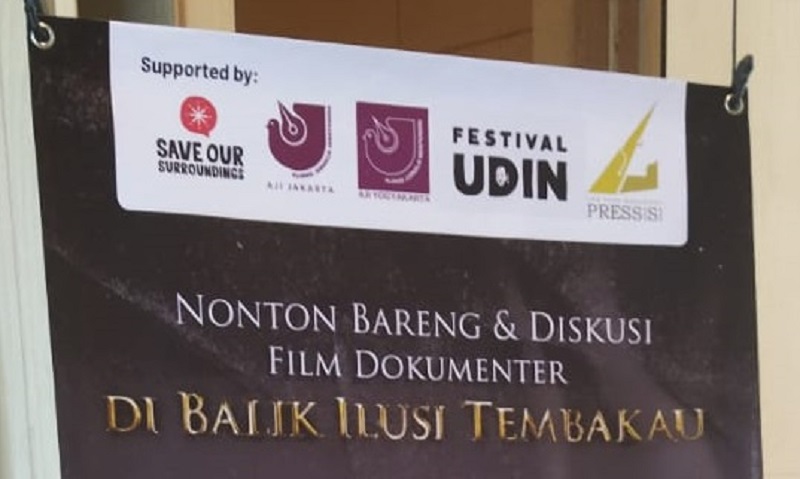
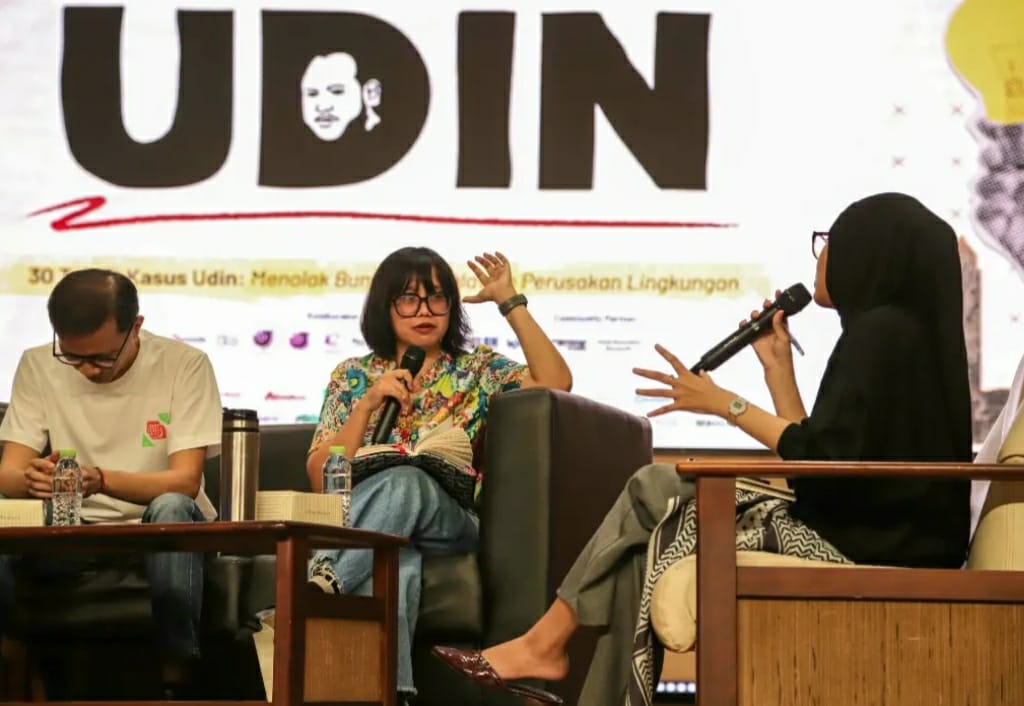
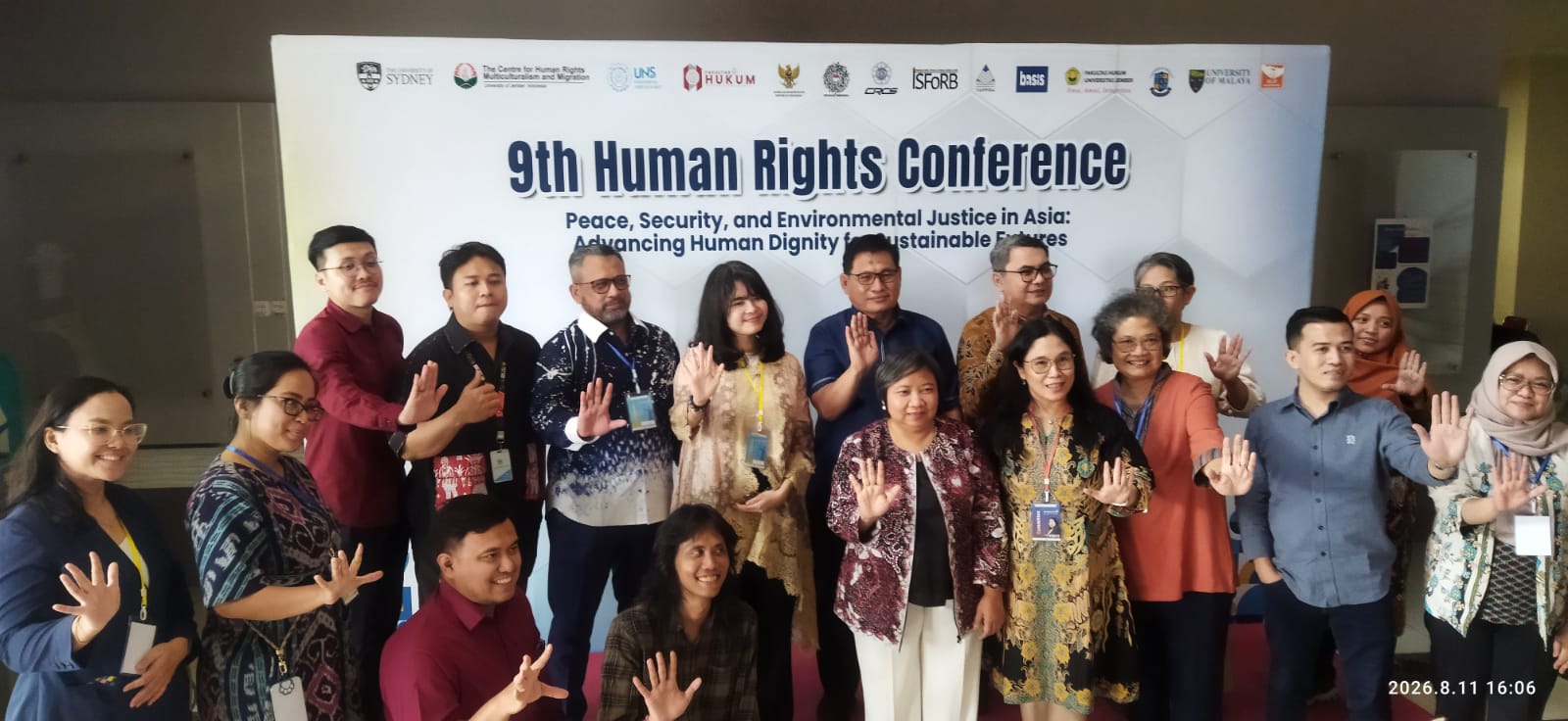
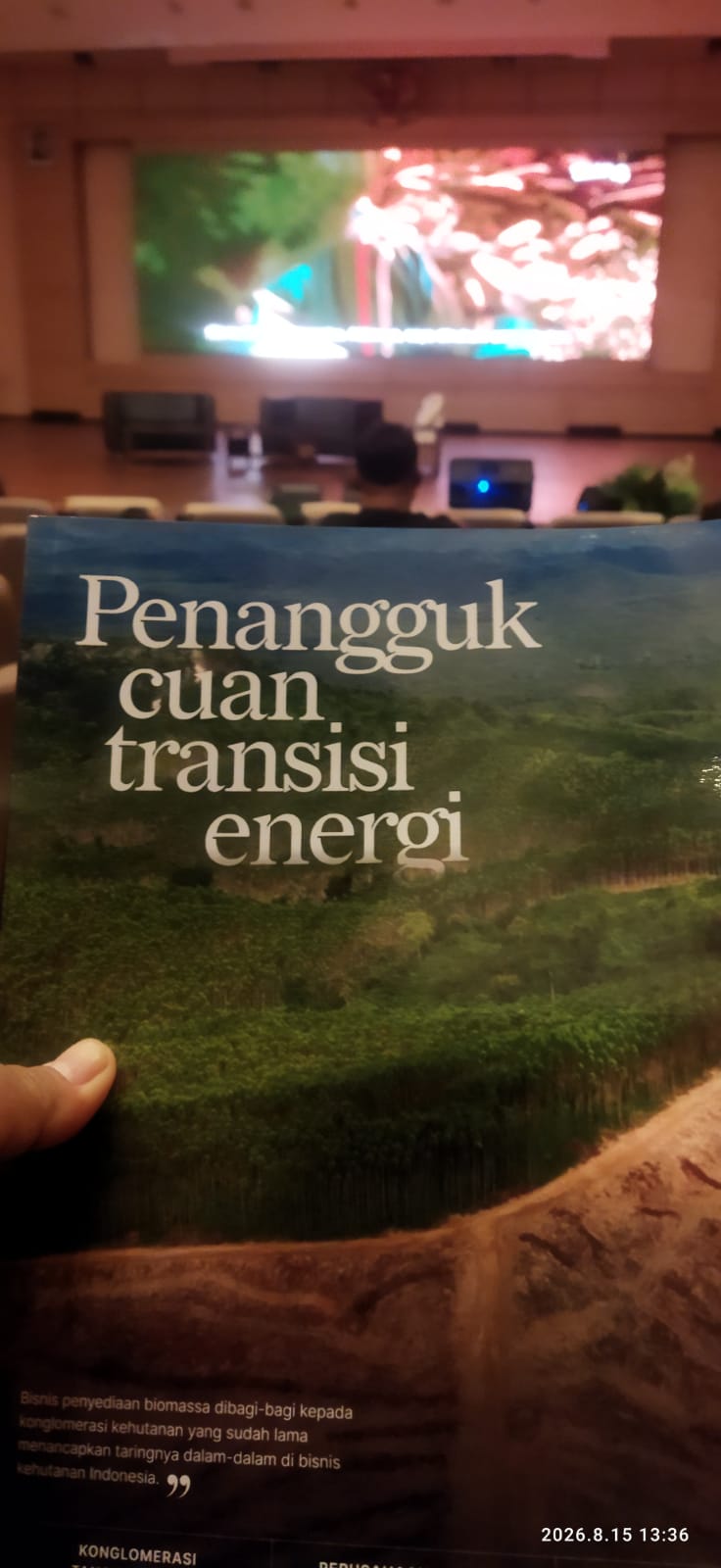
Yet, at the local level, that story was never as simple as it sounded. In a number of villages, energy policy changes were intertwined with old issues – who owned land, who were allowed to work on forest land, and who bore the impacts when a zone was designated as part of energy projects. That was the key issue in the film presented during a talkshow session at Festival Udin by AJI Yogyakarta in collaboration with Trend Asia at Concert Hall ISI Yogyakarta on 13 to 15 August 2026.
The issues presented included development of biomass as resources for electricity generation. A person involved in energy transition and community life spaces research, Bayu Maulana stated that biomass promotion in a number of areas faced issues related to ongoing local practices in land management. He gave examples from Java and outside Java that featured promotion of plant cultivation as raw material for biomass production. In Sukabumi, for example, the research team found an area previously managed by the community through social forestry scheme.
When that area was included in the biomass development plan, a new issue emerged. "The energy transition program became one part of conflict for land and space,” said Bayu.
The issue did not stop at changes in the land function. The types of plants proposed for biomass development had direct effects on the kinds of plants grown by local people. Kaliandra (Calliandra) and Gamal (Gliricidia), for example, became the preferred plants for biomass raw materials. In practice, those plants grown in/around agricultural areas posed new threats for local people.
Biomass plants required plenty of nutrition and space to grow. When they were planted close to food crops, local people were concerned that they would interfere with local food crops – their sources of livelihood. That was the key issue in the conflict.
Bayu said that in one area they observed, peasants showed their resistance by cutting biomass plants that they believed interfered with their crops. For local people, that action was not simply about plants. There was a long history of soil management that preceded it.
Local people had worked on the land long before the biomass project started. They had an economic, social and ecological relationship with the area that was later integrated into the biomass development scheme. When a new project came with new rules, the relationship between local people and their living environment changed.
The conflict that emerged since 2020, according to Bayu, was a latent conflict in land claim. Local people maintained Masyarakat their living space and had to faced new rules and the authority. This was where the problem became more complicated. Local resistance was not simply about resisting the project, but importantly placed them into the party that defied the rules.
Their past roles as local stewards changed into disruptors of government program. "In the process, local people not only lost their area, but they were also deemed as criminals,” said Bayu. Yet, he emphasised, local people were only defending and using the land that had been inherent part of their day-to-day life.
That issue led to a bigger question – how green was the energy transition being promoted? Bayu reminded that the claim – re. biomass would replace coal – could not be simply accepted. On one hand, the government promoted use of biomass as part of energy transition. On the other hand, production and use of coal continued in a massive scale.
There was concern that biomass energy was an in fact a way of maintaining the energy generation that relied on coal, with a more environmentally-friendly packaging.
Criticism against such narrative appeared because biomass project potentially required large areas. When the forests or local people’s land were included in the energy supply chain, the issue of deforestation and land use could not be separated from discussion about clean energy. “Do not let green energy program to sacrifice the forests,” was one major issue in the discussion.
That question was important as forests were not simply empty spaces. There were people who depended on them for their livelihood, including those who had access to their management through the social forestry scheme. When the areas were then designated as energy project areas, local people had to face changes in rules about the land they already managed.
For that reason, the measure of success in energy transition was not simply about how much emission could be reduced or how many generators used alternative raw materials. There was another key question that was more important to local people – for whom was this energy transition?
The question about energy transition the brought a researcher Laksmi to the question about the State. She argued that local people’s experience in defending their land showed that the State was not always present in the most easily identifiable form. The State was present through policies, projects, institutions, agencies, and regulations that defined who could do what in its territory.
She saw people’s confidence in telling their stories as critical. They took risks when they talked about conflicts with the State and State institutions that had power over certain area(s). For Laksmi, the local experience showed that resistance did not emerge out of empty spaces. Local people had a long experience of dealing with policies and institutions they believed taking over or limiting their living spaces.
Such issue led to her question about the way the State understood the people. The State, she argued, should not have been seen as something separate from the community. The State was the community and had the obligation to safeguard people’s rights. When policies led to people losing their access to land and resources for livelihood, the question then was who was development for. Laksmi saw the energy transition issue in the context of global capitalism.
On one hand, local people were encouraged to use modern technology, including electric vehicles. Yet, behind such technology were the needs for large-scale land, minerals, energy, human labour, and investment. For that reason, energy transition could not be viewed simply as an issue about technological change.
There was also issues of resource management/control. Land was one key part in such process. When development programs entered a new area, the need for land arouse. At the same time, local people who had lived there for generations and managed the land had to come face-to-face with the emerging interests.
In such situation, people who tried to protect their land were then seen as barriers to development. To local people, defending the land was not simply about ownership. There were needs inherent on that, food crops were grown, water resources had to be maintained, social relations that had developed for generation had to keep going. Local knowledge about land and forests had to be preserved.
When the function of such space changed, the whole life was affected. Bayu stated that conflicts occurring in the research area(s) showed that local people did not always accept energy transition projects.
Cutting biomass plants by local people was a form of resistance. Such resistance came face-to-face against rules. Here, local people could become more vulnerable, i.e. criminalisation. yet, from the perspective of local people, such action was a way to protect local food crops and livelihood. The conflict only showed a paradox. The program, which policy-wise, was touted as solution to climate crisis in fact created new ecological and social problems when implemented without regards for local people’s rights to their living spaces.
In the middle of the discussion, there was one key note from a participant from Yogyakarta. The participant highlighted the lack of women’s perspective in the resistance story. The film triggered discussion about experiences of men, particularly men going face-to-face with conflicts on living spaced and development projects. Yet, what about women?
That question opened the space for a different type of discussion about energy transition. When the function of an area changed, the impacts were only felt amongst those people who went face-to-face directly with the State officials or company officials. The change was also perceptible within local households.
When agricultural land was disturbed, women who managed household needs also felt the impacts. When income dwindled, domestic workload changed. When food sources were difficult to get, women were often at the forefront to ensure household needs were met. For that reason, women’s experience was critical in discussion about energy transition. It was not just an additional information, but as inherent part of local people’s social and ecological experience.
The other question was about the energy politics in Indonesia. Not all generators had the same technology and not all biomass could be used in every generator engine. For that reason, the energy choice was not simply defined by technical consideration. There were also political and economic interests that determine the policy direction.
Indonesia had a strong dependence on coal. In promoting renewable energy, the interests of mining and electricity generation industries played an outsized role. That situation led to Ktug of war in interests. On one hand, there was the need to reduce emission and fulfil climate commitment. On the other hand, there were interests associated with business, investment, electricity generation, and economic structure built around fossil energy.
In such situation, biomass could be part of a solution. Yet, it could also create new issues if its development took local people’s living spaces or encouraged access to forest areas. The question about energy transition, for that matter, was not sufficient to be addressed by substituting one form of energy source with another energy source. It necessitated a thorough discussion about who controlled resources, who gained the benefits, who bore the impacts, and who had the power to define the future of their area.
Building Power from the Community
One discussion participant, Darmanto opined that the issue was related to the power of civil societies. When State institutions were not able to ensure that people’s interests were protected, then the power of civil society became critical. Community needed their living space to self-organise and to monitor the people in power. Yet, that struggle necessitated resources. Confidence in a long struggle by itself was not sufficient. There were other critical components such as knowledge, organisations, networks, funding, and sustainability of the movement.
Without them, local movement would be weak when coming face-to-face with the State or with large corporations. For that reason, the issue about energy transition once again was about the question of democracy: how far were communities directly involved in policy decision about their living spaces?
The Sultan Ground and the Complexity in Yogyakarta
The issue was the shifted to Yogyakarta. A participant asked how people’s resistance could develop in an area where the ground was designated as the Sultan Ground. The situation in Yogyakarta was not similar to other areas. There was a long history with regards to the relationship between people and the land, the power holder, and institutions that defined the character of the conflict in such area. For that reason, local people’s resistance in Yogyakarta had its own complexity.
The question was no longer simply about whether communities could resist, but how such resistance could work vis-à-vis the long-standing power structure and history of land holding. In a number of areas, the forms of conflict might differ. Yet, the common thread was the same: communities came face-to-face with chances functions in the living space that threatened their livelihood.
Energy transition did not need to led to people losing their living spaces. If clean energy was developed by sacrificing the forests, agricultural lands, and communities who worked on them, then the term “green” had to be questioned. The bottom line was that energy was not simply about electricity and technology.
Energy also involved land, forests, humans, authority, and whoever had the rights to define the future of a particular area(s). (Ast)