




Six years after the discourse on Law revision emerged after the election in 2019, changes in election regulation was at a crossroad. The draft revision which went to the National Legislation Program was never seriously considered. Yet, the countdown towards Election 2029 continued.
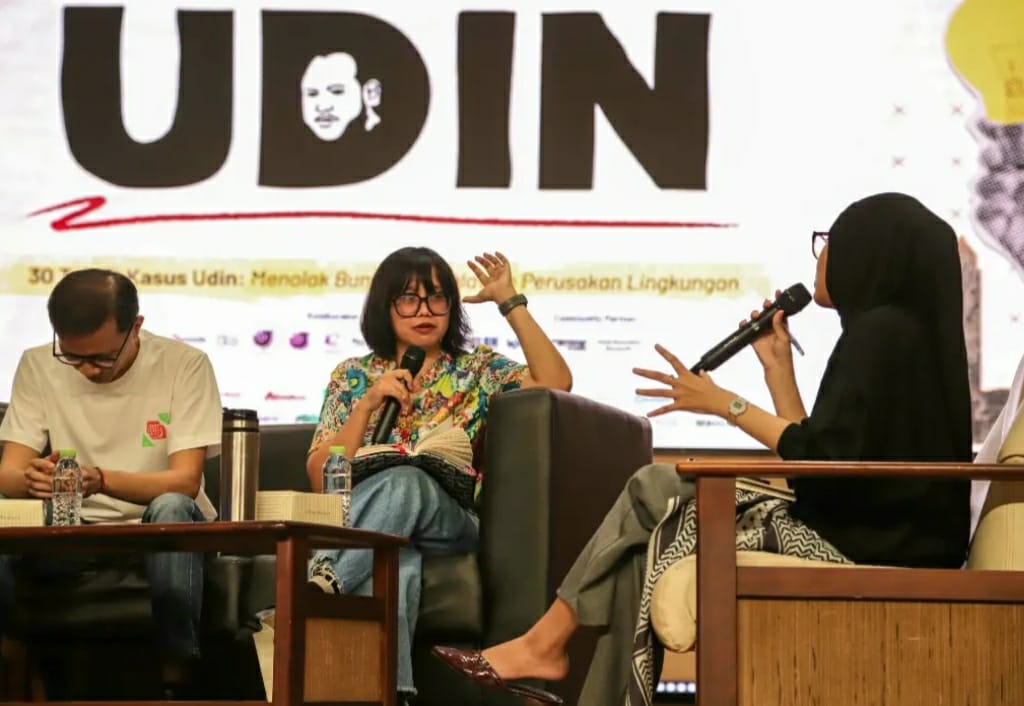
This situation was the discussion theme during the launch of “Legislative Inaction in Election Law” book by Titi Anggraini on Thursday (6/8). In front of academics, civil society activists, election commission personnel, and the media, Titi proposed a thesis that triggered debate: The biggest challenge to Indonesian democracy was not simply a bad law, but a law deliberately not being updated.
The discussion moderator, Khoirunissa started the discussion by reminding of the long process towards the revision of Law No. 7 Year 2017. After the Constitutional Court issued a decision No. 55 Year 2019 on the Design of Simultaneous Election, the Parliament had prepared a draft revision. Yet by 2021, the discussion stopped. The reason given was Covid-19 pandemic, preparedness of simultaneous sub-national election in 2024, and a number of political considerations as reasons to stop the discussion.
By August 2026, there was no progress with regards to the revision. Yet, the selection of members of Election Commission and Election Monitoring Authority for the subsequent period was to be started immediately, while the election 2029 stages would proceed in less than one year.
For Titi, this condition was not simply administrative delay. She labelled it legislative inaction – a situation when lawmakers intentionally did not act, despite the obvious need to change the law even when the Constitution demanded it.
She argued that the silence of lawmakers was not a neutral position. In that silence was a strong political calculation. The Parliament and the government, as parties who prepared election regulations and at the same time who contested in the election, had conflict of interests as lawmakers and actors in election.
In a book with more than 700 pages, Titi mentioned that phenomenon as a form of institutionalised conflict of interest. Political parties had incentives to maintain regulations that strengthen their bargaining positions. As a result, maintaining status quo was often more beneficial than implementing a reform.
She identified four main causes that led to stagnation in election law reform. First, the conflict of interests amongst lawmakers. Second, log rolling practice – exchange of political interests amongst parties. Third, tendency to maintain the status quo that benefited the previous election victors. Fourth, absence of independent agency to permanently prepare legal reform based on research.
Titi also showed that the silence of lawmakers did not mean that the State stopped making regulations. As the legislation space shut, the reform arena moved to the Constitutional Court. She called this phenomenon escalation of judicial politic.
In the last few years, a number of basic election issues were addressed through the Constitutional Court. This included the design of simultaneous election, the threshold of sub-national head election, and a number of other technical issues. As a result, the Constitutional Court more often played a role of de-facto election policy makers.
Titi argued that this development created new tension between the judicative and the legislative bodies. The incident in August 2024, when the parliament tried to response to the Constitutional Court decision with regards to election of sub-national administrators and which triggered public protests, was but one example of how conflicts between branches of government became more open.
In addition to moving to the court room, stagnation in legislation also created new issue at technical regulation level. Titi introduced the term "election regulation abiosis" – a condition when technical regulation prepared within the procedure results in a substance contrary to the democratic principle. She gave an example of sub-national election regulation, women representation, and the easing of requirement for ex-convicts that were deemed to violate the Constitutional Court decision. In her view, this phenomenon emerged because political interests were not accommodated in the revision of the law but was relegated to the technical regulation for election administrators.
The subsequent impact was the emergence of what she called autocratic election management. One example was the intervention by the government and parliament in decision on election schedule, manipulation of political party verification, and weakness in formal monitoring of digression.
For Titi, all these symptoms were inter-connected and were rooted in the failure to openly reform the law through legislation mechanism. To move out of this impasse, she offered a form of independent and permanent Election Legal Commission. Members of that Commission were experts tasked with preparing academic article and draft research-based law, so that the reform process did not solely depend on the short-term political interests.
That proposal led to a long debate. The constitutional law professor from Andalas University, Charles Simabura argued that the legislative inaction concept as described by Titi was not only relevant for the election law, but also reflected the legislation pattern in Indonesia in general. He reminded that many draft laws faced similar situation. The Law on Domestic Worker Protection, Draft Law on Indigenous People, and a number of strategic regulations were becoming popular at times and then disappeared from the discussion agenda.
For Charles, the key problem was the political configuration. What was planned in National Legislation Program was often different from the political reality. The discussion momentum was always dependent on the political parties’ calculation of the benefits that they could get. He even reminded that if the discussion on draft revision of Election Law only started in 2027, then there was not much time left. A Law required a process to prepare regulations for its implementation, information dissemination, simulation of its implementation, and adaptation by election participants and by the community.
In the absence of enough time, Indonesia would only repeat the election situation in 2024, when many issues were in the end went to the Constitutional Court. Charles also reminded of other possibility that people needed to pay attention: enactment of government regulation in lieu of law. He argued that if the parliament and the government kept postponing the discussion, that would give them a reason to issue regulation in lieu of law for emergency purposes. He believed that that short cut potentially reduced public participation in the preparation of new election law.
Brahma Aryana from the Independent Election Monitoring Committee or Komite Independen Pemantau Pemilu (KIPP) had a similar view. He welcomed the idea to set up an Election Law Commission, but reminded that the new organisation may not be able to address the key issues. Brahma argued that even when the independent commission was able to prepare the best draft law, the final decision remained with the parliament and government. At this very point, the conflict of interest once again came to the fore. For that reason, he believed that the biggest challenge was how to consolidate civil society pressure for the election law.
He proposed a number of possibilities, from lodging complaints to the Ombudsman, lawsuits based on unlawful government acts, and preparing mechanism for constitutional sanctions against legislative institutions that defied their obligation to make laws.
Meanwhile, Heroik Mualim from Perludem focused on civil society experience in advocacy in the last two years. He argued that almost all political parties had received inputs for revision from civil society organisations. There were already hearings. Yet to date, there was no certainty whether all inputs were integrated into the academic draft or the draft of the law. He argued that such situation showed that public participation process was only a formality.
Heroik reminded that revision of election law had to focus not only on the election system such as the parliamentary threshold or the proportional system. The issues about the institutional framework of the implementing agency, election management, and law enforcement also necessitated urgent reform. If lawmakers did not make a move, then the civil society would ask the Constitutional Court to address the legal reform.
At the end of the discussion, there was criticism with regards to the proposal to establish Election Law Commission. A number of participants questioned the effectiveness of the new body if its recommendation was not binding to the parliament.
Titi answered that question by stating that the commission was not meant to take over the legislation function, but to ensure that the State had the academic draft and the draft law prepared in a sustainable manner, based on research, and free of partisan interests. Titi believed that the biggest problem in Indonesia was not simply a lack of ideas for legal reform, but the absence of mechanism able to maintain the election reform process to continue without relying on five-yearly political cycle.
By the end of the discussion, one concern seemed to come to the fore as made clear by the speakers. If revision of Election Law was once again postponed towards the election 2029, Indonesia potentially repeated the same pattern again: lawmakers kept silent, the Constitutional Court served as the venue for any correction, while the community had to face uncertainty of regulation as the election stages proceeded.
In such situation, Titi Anggraini’s book was not simply an academic dissertation. It was a reminder that there was a possibility that democracy could weaken after political miscalculation, but also because of decisions not to make any decisions at all. (Ast)