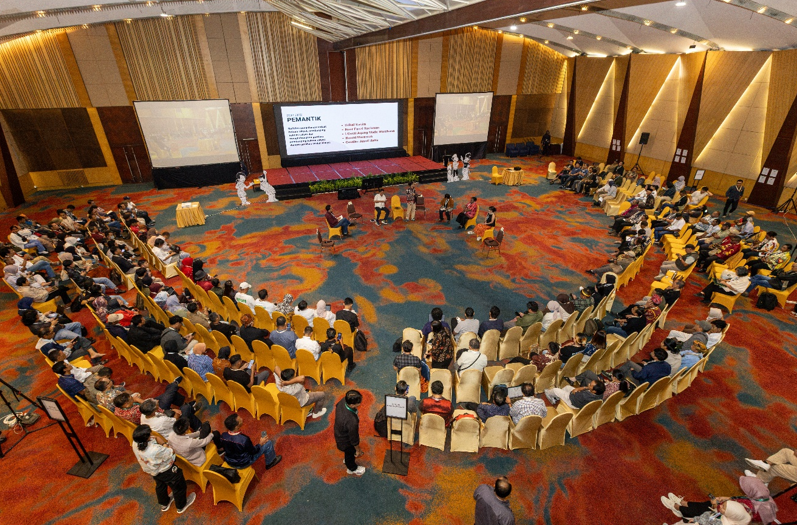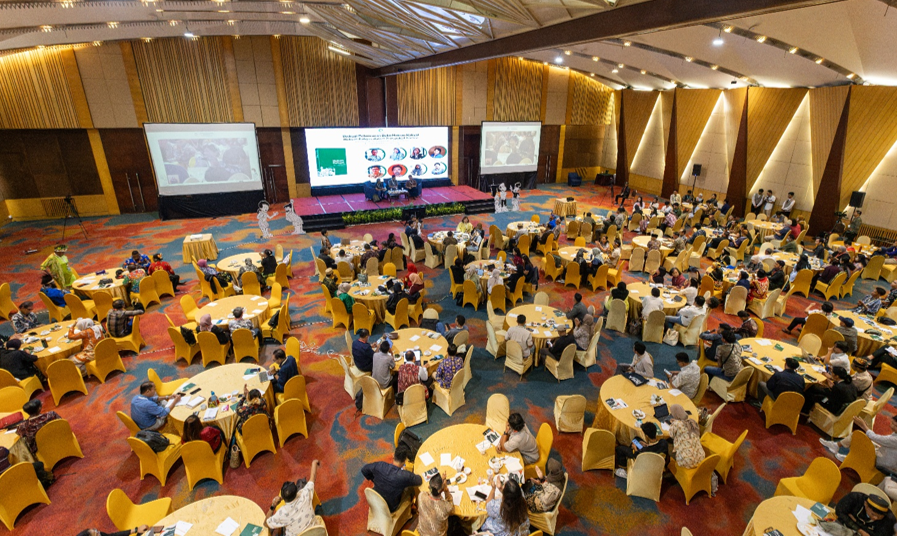



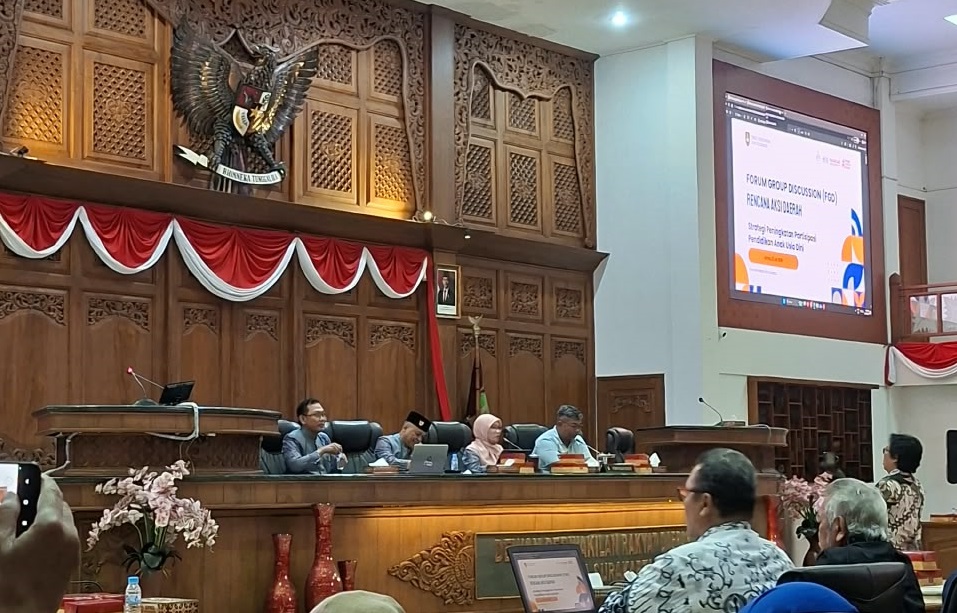

The Parliament plenary hall in Surakarta City was the meeting venue to discuss the education issue. On Friday, 25 September 2026, the Surakarta City Education Council conducted hearing with the City Education Office, Community for Education in Surakarta or Masyarakat Peduli Pendidikan Kota Surakarta (MPPS), and a number of other stakeholders. The meeting started at 13.00 and ended at 15.30.
The activity opened with the National anthem. Afterwards, participants listened to two speeches. Then, the discussion about education in Surakarta started with a presentation by the City Education Office in Surakarta, Dwi Ariyanto.
The theme was “Strategy to Increase Participation of Early Child Education students”, and Dwi explained the steps taken by the government of Surakarta City to ensure increasing number of students got early education access. Dwi said that such measure proceeded in a number of ways. The government provided Early Childhood Education with necessary facility and infrastructure, broadened education access, improved quality of teachers through scholarships, consolidated Early Child Education management, and Conducted advocacy.
The issue about early education access not only related to the availability of education institutions. Community ability to reach education services was also a vital part to pay attention. For that reason, the government developed partnership with private Early Childhood Education Schools. Dwi mentioned that one form of partnership was a subsidy of Rp. 150,000 for each student per month.
From Early Childhood Education, the discussion moved to public schools in Surakarta. Dwi explained the idea of re-branding public schools as a response to changes in community interests in public elementary and junior high schools.
In the last few years, public schools faced issues about decreasing public interests. One relevant issue had to do with community perception of public schools as free schools. When schools organised activities that required budget and demanded contribution by parents, some parents saw it as illegal fee. That perception posed a unique challenge to public schools when managing its education activities.
From there, there was an idea about a Special Program Junior High School (SMPN Program Khusus). That Special Program was designed as strategic partner and as a bridge to connect students’ potentials and talents with higher education levels. In Surakarta, the government opened Special Program classes at SMPN 24 and SMPN 25. The Program provided space to students to develop their capacity and potentials. The target was not simply about students’ success at school, but also students’ capacity to compete at national and global levels.
For the Education Office, public schools also needed characters and excellence that allowed communities to recognise schools’ functions and strength. Dwi also touched on inclusive education issue. She hoped that Surakarta had priority inclusive schools with potentials for development and with quality human resources.
Inclusive education required more preparation than accepting students with special needs. Teachers and school staff needed to have the necessary capacity. There had to be the right facility and infrastructure in place for students with special needs. Availability of special education teachers was vital to ensure that education process proceeded smoothly.
The issue about human resources in education posed a significant challenge. Dwi said that in 2026 there were around 250 retiring teachers. At the same time, the government did not allow recruitment of non-permanent teachers as replacement. That situation led the Education Office to look for other forms of collaboration. One such collaboration was through partnership with university - Universitas Sebelas Maret, Universitas Muhammadiyah Surakarta, and Universitas Veteran Bangun Nusantara. Such partnership proceeded through internship program.
The issue about teachers was part of a bigger discussion about education quality. Changes in policies, students’ needs, technological development, ad community demands shifted, while schools needed teachers able to follow such shift. The discussion then moved on to presentation by Psychologist Soleh Armini Yahman, M.Si. on “Quality Education for All.”
Soleh started his presentation with a short sentence, “Education is life.”
That sentence was the entry point to see education not simply as an issue about schools. Education had to do with human life since a child grew up, got to know his/her environment, develop relations with other people, make decisions, face changes, and fins his/her place in the community. Soleh argued that a number of basic issues had to be considered when talking about education in Indonesia.
The first issue was education orientation which was easily reduced into numbers. Values, grades, graduation, and accreditation were often primary measures used in education. Such measures made it easy to see education success in numbers. In midst of such numbers, there was one essential question – what kind of humans were education aimed to create?
That question brought education back to humans. Children were not simply individuals with scorecards in the reports. Children grew with experience, emotion, family, social environment, and different needs. The second issue was disparity in school quality. Schools in urban centres and in remote areas did not start on an equal footing. Availability of resources, social environment, facility, educators, and access to technology could be different. For that reason, when talking about education quality, the condition each school faced had to be considered fully.
The third issue was about teachers. In classrooms, teachers not only taught. They also dealt with administrative work, assesment, technology, students’ psychological issues, and communication with parents. Increasingly more complex tasks meant teachers work went beyond teaching lessons. The fourth issue was the relation between education and family. Schools and families often go their separate ways, yet a child’s education proceeded within three key environments - family, school, and community.
What children learned at schools would connect with what they saw at home and what they experienced in their social environment. For that reason, education could not entirely be left to school. The fifth issue was technological change which moved faster than the education’s ability to adapt. Children grew in the midst of almost infinite information flow. In such situation, knowledge was no longer simply about memorising what teachers gave at schools.
Children needed to have the capacity to search, assess, use, and produce knowledge. That ability was vital when information received everyday was overwhelming and not all were trustworthy. The sixth issue was character education which was not always integrated into social life. Characters were not formed only when children listened to advice about honesty, responsibility, care, or bravery. Characters developed when children experienced, practiced, saw role models, accepted consequences, conducted reflection, and applied the behaviour(s) on a day-to-day basis.
From the plenary room of Surakarta City Parliament, the discussion about education returned to something close to day-to-day life – children who needed Early Childhood Education, schools’ attempts to rediscover its appeal, children with special needs who needed welcoming schools, teachers with more responsibilities, and families and communities that could not be separated from the education process.
The audience showed that education was not simply about children went to school and received their scores. In it were issues about access, quality, human resources, technology, family, social environment, and the way a city prepared its generation. Education, as indicated by Soleh, was about life. When talking about education, what was at issue was not only about schools, but also humans who grew up and the lives they would live. (Damar/Ast).