


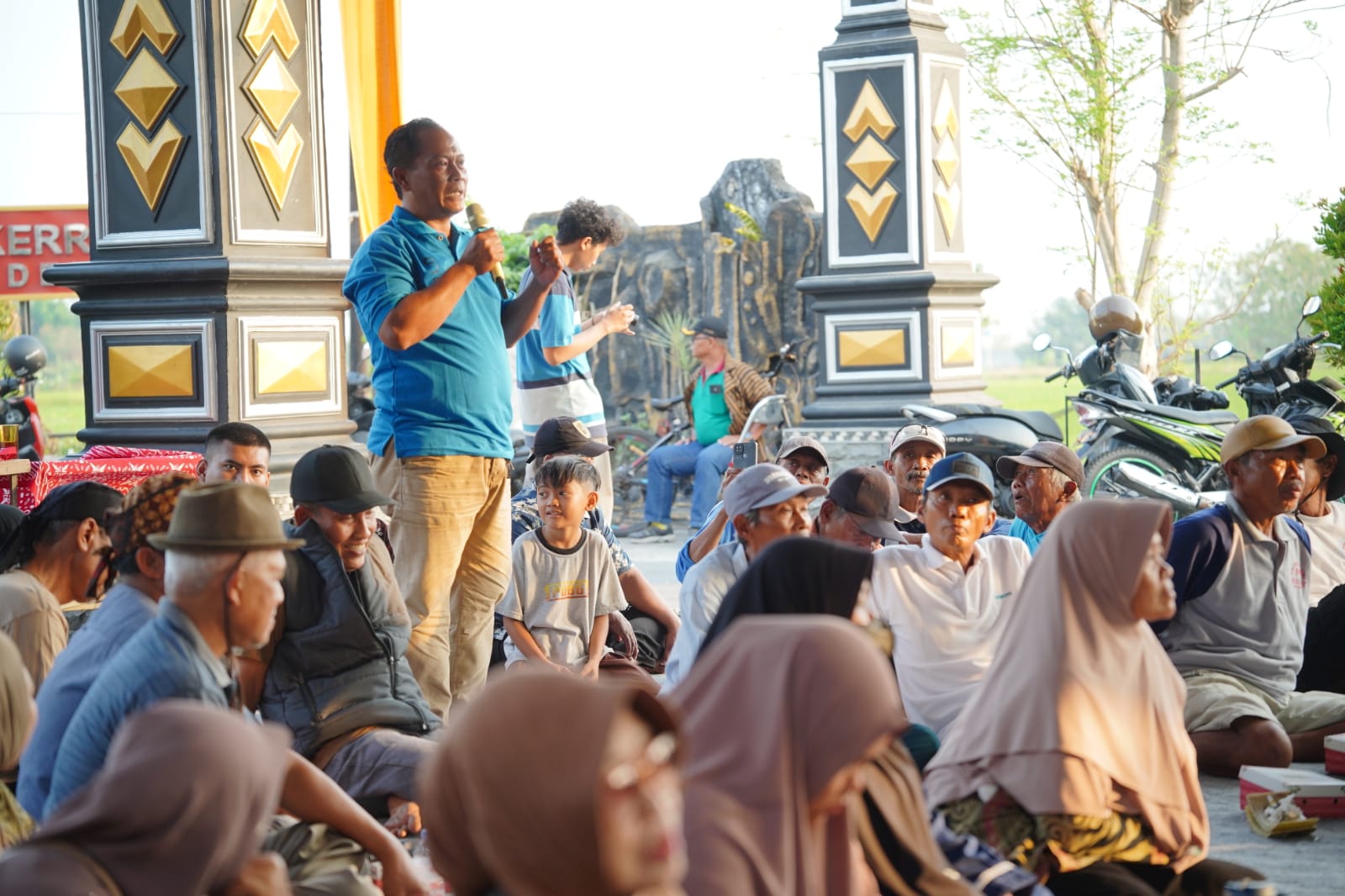

Hours of waiting for water to flow into the rice field could be a long wait for a peasant. During the dry season, many interests shared one water source. Rice fields were waiting, while fish ponds, fishing ponds, and water-related tourism also needed the same water to flow. Downstream, peasants could only wait for their turn.
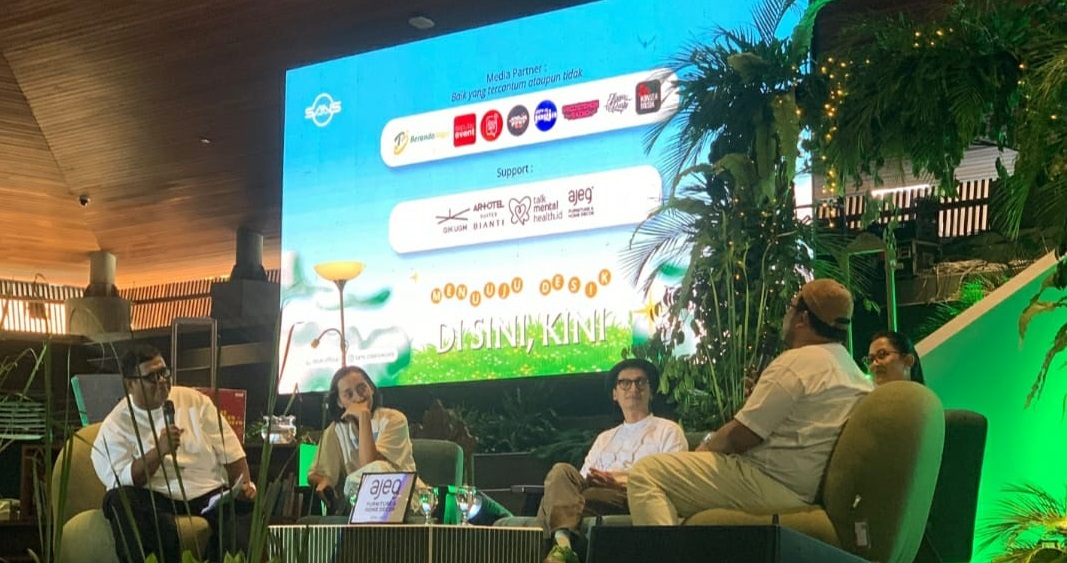
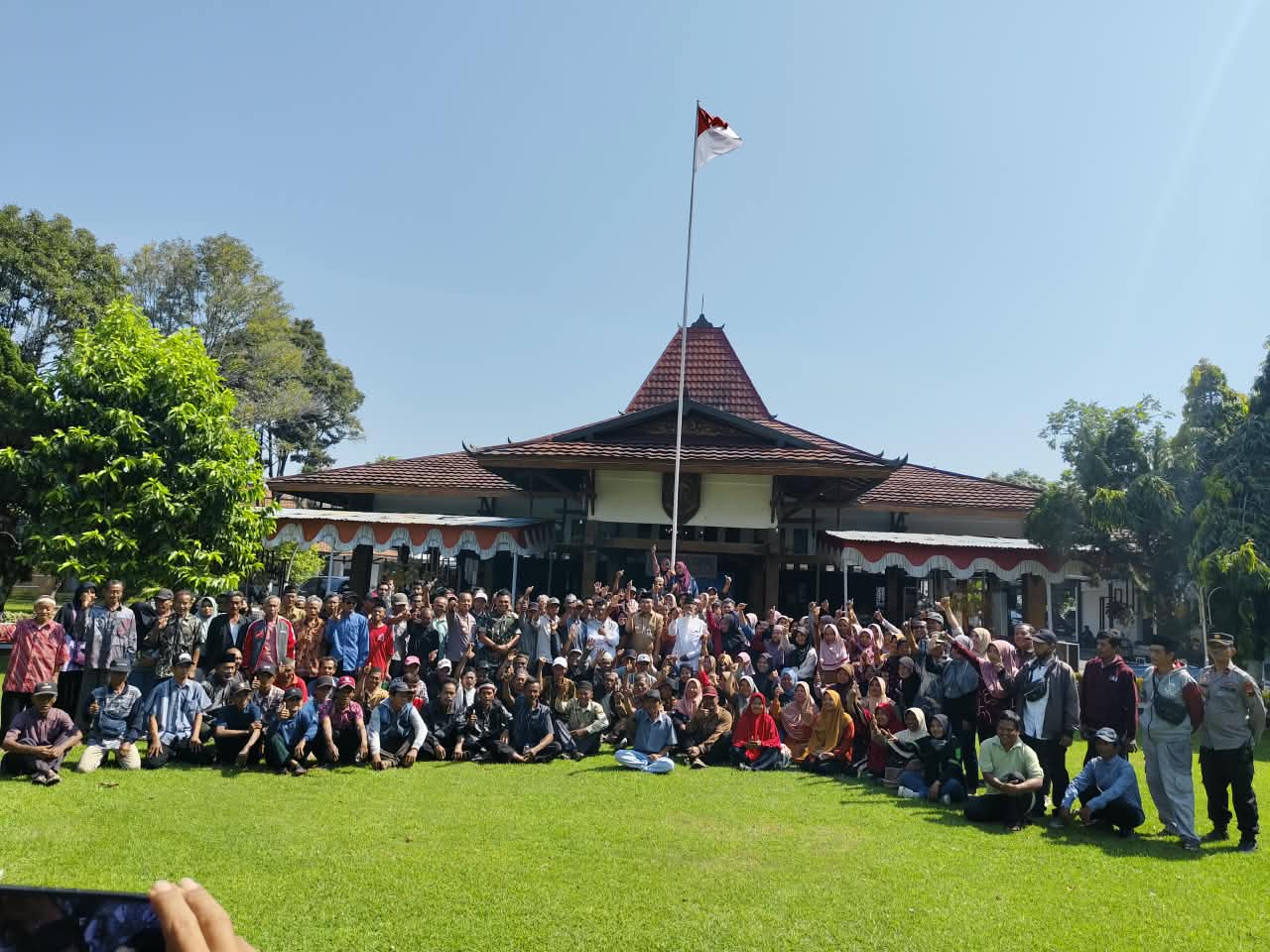
The issue was critical during a peasant dialogue at Sanggar Rojolele during the Mbok Sri Festival No-9 on Friday (25/9). The Forum got together peasants, women peasant groups, village governments, environmental activists, and the Agricultural Office at Klaten District.
They came with different issues. Some talked about water, while others talked about fertiliser and pests. Some were worried about the dwindling number of young people interested in agriculture. There were also some who came with stories about Rojolele Srinuk – a rice variety developed in Klaten expected to offer better economic return for peasants.
The head of Sanggar Rojolele, Eksan Hartanto reminded that his group had existed for more than two years. Since 2017, they tried to re-grow Rojolele variety through development and planning. Now, that endeavour was in its ninth year towards its tenth year.
The question they asked was also changing. It was no longer about how to grow Rojolele, but how to develop an agriculture ecosystem that created opportunities for peasants to get the benefits and rewards from what they planted. “The motivation for this movement welfare,” said Eksan. That sentence became the unifying theme in the meeting. Peasants’ welfare was not simply determined by the harvest. There were soil, water, prices, markets, technology, and policies.
Peasants and the Ideal of Social Justice
Former Vice Chairperson of the National Human Rights Commission for 2012-2017, Muhammad Nurkhoiron asked participants to look at agriculture from broader viewpoint. The National Peasant day, he argued, was not simply about annual celebration. The Forum semacam could be a space to re-visit peasants’ position in the Nation’s existence.
Indonesia was built by agrarian societies. In its long history against colonialism, peasants were critical in changing situation. After independence, the subsequent job was to create a more just society. Here, the issue about land was important. Nurkhoiron reminded of the ideal of social justice in the Constitution. He viewed the right to land as part of human rights. Article 33 of the 1945 Constitution, he argued, did not stop at the notion that earth, water and natural resources contained therein were controlled by the State. The control had more specific objective – for people’s prosperity.
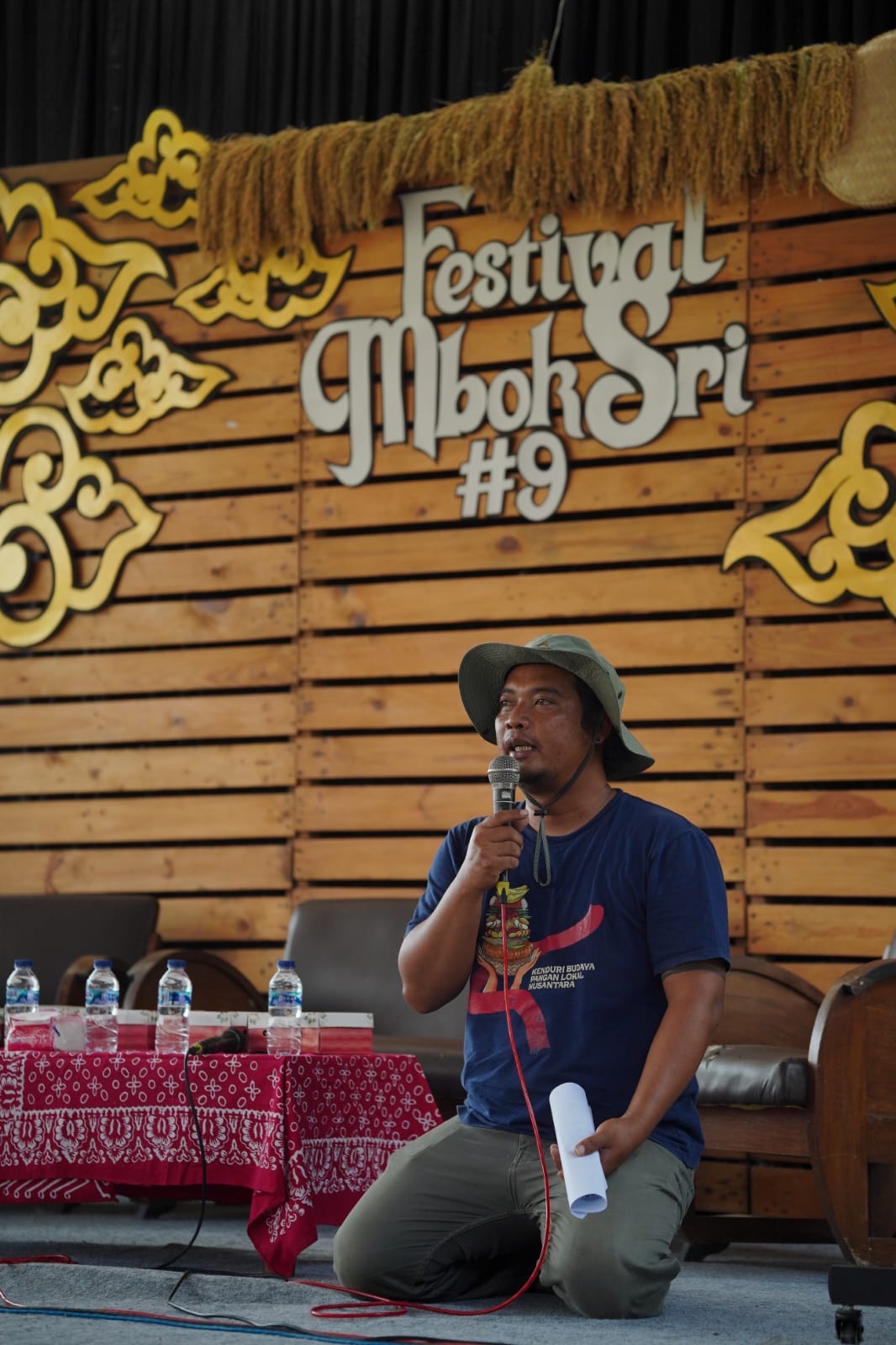
For that reason, agrarian reform had to give peasants access to land and means of production. He shared his experience when he was working at the National Human Rights Commission. Then, he highlighted the inequality in asset control in Indonesia.
The question about justice then became more concrete. Who owned the land, who controlled the resources, and what was the peasants’ position when they did not control access to the land they had been working on?
Nurkhoiron the shared a story about countries who did agrarian reform and agricultural development as part of national development. He mentioned China and Vietnam as examples on how the State maintain a role in managing economic life, while making available ample space for market and communities. He argued that the State had to be present to ensure that economic power did not go unchecked thus harming the people. “To attain social justice, the State had to intervene,” he highlighted.
The discussion then moved on to food. Indonesia had a nutrition issue while at the same time had large food resources. Many food sources grew in the land and many types of food originated from community knowledge. Rojolele was one of such food sources.
Nurkhoiron saw the food policy as an opportunity to connect people’s needs with peasant’s interests. The large-scale food program needed on-going supply. If such need could be met by large industries, local peasants would risk being left out of the supply chain. Peasants, he argued, could be part of such a system. Rice, vegetables, eggs and other food sources could be produced in local communities and distributed through organised food chain.
The issues included production capacity, continuity of supply, quality standard, and distribution mechanism. Hence, food program did not only talk about getting food into the table. It also served as market for peasants. The idea showed that food and agriculture issues did not stand alone. When the government needed foods in large quantity, the question was not who cooked and who received, but also who planted and how the food harvested by peasants could fetch the right price that gave peasants the incentives to keep producing.
The Election Commissioner in Klaten also known as environmental activist, Muhammad Ansori moved the discussion to the relation between agriculture and the environment. He reminded that humans did not live separately from the land, water, plants, and animals. Agriculture needed ecological awareness because a change in one part could affect other parts.
Ansori asked participants to look again at community knowledge that had thrived in the agricultural tradition of Java. There were thanksgiving rituals, traditional rice-harvesting methods, and celebration, as well as use of buffalos to plough rice fields. For Ansori, such tradition was not against modern technology. Local knowledge could be observed, investigated, and developed in conjunction with modern knowledge.
Agricultural technology, he said, did not need to erase knowledge gained from peasants’ experience."Knowledge was born out of experimentations,” he said. Knowledge grew out of experience. For that reason, peasants’ experience had to be part of knowledge accumulation process and agricultural technology.
The discussion looked at the environmental issue from a more concrete view point as extrapolated by Danang Setiawan, the chief of Pundungan Village, Juwiring, Klaten, who was also a water irrigation and conservation activist. Danang argued that the issue about water in agriculture could not be detached from the situation upstream. Water flowing to the rice fields was part of a broader ecosystem, including the Mount Merapi area and water catchment area.
During the dry season, the issue was becoming more critical. In one irrigation network, several villages would be dependent on the same water source. Without mutual consent, the needs for water could be the source of conflicts. Danang shared the experience of seven villages that made a joint agreement to distribute water. Water use was neatly scheduled to ensure that each village got its turn.
He said that such management was critical because conflict over water was not simply about water shortage, but about the distribution mechanism that people could not agree on.
He also suggested the idea of payment for environmental services. Upstream communities who keep trees and water sources gave downstream communities the benefits of water for agriculture and other activities. For that reason, economic benefits of water use could also be shared with upstream communities who safeguard the water sources.
In the village context, the water issue was also related to economic activities. Fishing, pool and water parks needed to mind the downstream peasants’ needs for water. Danang offered coordination between village and sub-district governments for finding management system that could address such issue.
The other issue was regeneration. Most peasants were now in their fifties. Not many young people saw agriculture as a promising sector.
Technology was one entry point used to change that situation. Planters, drones, sprayers and other technologies could help reduce the workload and brought agriculture closer to the world of the young generation.
After-harvest technology was also vital. Un-hulled rice had to be processed, packaged, marketed and reached consumers. This was the stage when the agricultural harvest could increase in value or stuck in prices determined by others.
Kukuh from the Agriculture Office in Klaten shared a story of the journey of Rojolele Srinuk. Around 2020, there was serious efforts to further promote the development of Rojolele. Peasants were then interested in growing the rice variety. The issue was evident during harvest.
There was production, but how to sell the harvest? Kukuh remember the question peasants asked after harvest. “Sir, how will we sell this?”
The question about justice then became more concrete. Who owned the land, who controlled the resources, and what was the peasants’ position when they did not control access to the land they had been working on?
Nurkhoiron the shared a story about countries who did agrarian reform and agricultural development as part of national development. He mentioned China and Vietnam as examples on how the State maintain a role in managing economic life, while making available ample space for market and communities. He argued that the State had to be present to ensure that economic power did not go unchecked thus harming the people. “To attain social justice, the State had to intervene,” he highlighted.
From the Rice Field to the Table
The discussion then moved on to food. Indonesia had a nutrition issue while at the same time had large food resources. Many food sources grew in the land and many types of food originated from community knowledge. Rojolele was one of such food sources.
Nurkhoiron saw the food policy as an opportunity to connect people’s needs with peasant’s interests. The large-scale food program needed on-going supply. If such need could be met by large industries, local peasants would risk being left out of the supply chain. Peasants, he argued, could be part of such a system. Rice, vegetables, eggs and other food sources could be produced in local communities and distributed through organised food chain.
The issues included production capacity, continuity of supply, quality standard, and distribution mechanism. Hence, food program did not only talk about getting food into the table. It also served as market for peasants. The idea showed that food and agriculture issues did not stand alone. When the government needed foods in large quantity, the question was not who cooked and who received, but also who planted and how the food harvested by peasants could fetch the right price that gave peasants the incentives to keep producing.
The Election Commissioner in Klaten also known as environmental activist, Muhammad Ansori moved the discussion to the relation between agriculture and the environment. He reminded that humans did not live separately from the land, water, plants, and animals. Agriculture needed ecological awareness because a change in one part could affect other parts.
Ansori asked participants to look again at community knowledge that had thrived in the agricultural tradition of Java. There were thanksgiving rituals, traditional rice-harvesting methods, and celebration, as well as use of buffalos to plough rice fields. For Ansori, such tradition was not against modern technology. Local knowledge could be observed, investigated, and developed in conjunction with modern knowledge.
Agricultural technology, he said, did not need to erase knowledge gained from peasants’ experience."Knowledge was born out of experimentations,” he said. Knowledge grew out of experience. For that reason, peasants’ experience had to be part of knowledge accumulation process and agricultural technology.
Danang and Village-Level Water Issue
The discussion looked at the environmental issue from a more concrete view point as extrapolated by Danang Setiawan, the chief of Pundungan Village, Juwiring, Klaten, who was also a water irrigation and conservation activist. Danang argued that the issue about water in agriculture could not be detached from the situation upstream. Water flowing to the rice fields was part of a broader ecosystem, including the Mount Merapi area and water catchment area.
During the dry season, the issue was becoming more critical. In one irrigation network, several villages would be dependent on the same water source. Without mutual consent, the needs for water could be the source of conflicts. Danang shared the experience of seven villages that made a joint agreement to distribute water. Water use was neatly scheduled to ensure that each village got its turn.
He said that such management was critical because conflict over water was not simply about water shortage, but about the distribution mechanism that people could not agree on.
He also suggested the idea of payment for environmental services. Upstream communities who keep trees and water sources gave downstream communities the benefits of water for agriculture and other activities. For that reason, economic benefits of water use could also be shared with upstream communities who safeguard the water sources.
In the village context, the water issue was also related to economic activities. Fishing, pool and water parks needed to mind the downstream peasants’ needs for water. Danang offered coordination between village and sub-district governments for finding management system that could address such issue.
Peasants were Getting Old
The other issue was regeneration. Most peasants were now in their fifties. Not many young people saw agriculture as a promising sector.
Technology was one entry point used to change that situation. Planters, drones, sprayers and other technologies could help reduce the workload and brought agriculture closer to the world of the young generation.
After-harvest technology was also vital. Un-hulled rice had to be processed, packaged, marketed and reached consumers. This was the stage when the agricultural harvest could increase in value or stuck in prices determined by others.
Kukuh from the Agriculture Office in Klaten shared a story of the journey of Rojolele Srinuk. Around 2020, there was serious efforts to further promote the development of Rojolele. Peasants were then interested in growing the rice variety. The issue was evident during harvest.
There was production, but how to sell the harvest? Kukuh remember the question peasants asked after harvest. “Sir, how will we sell this?”
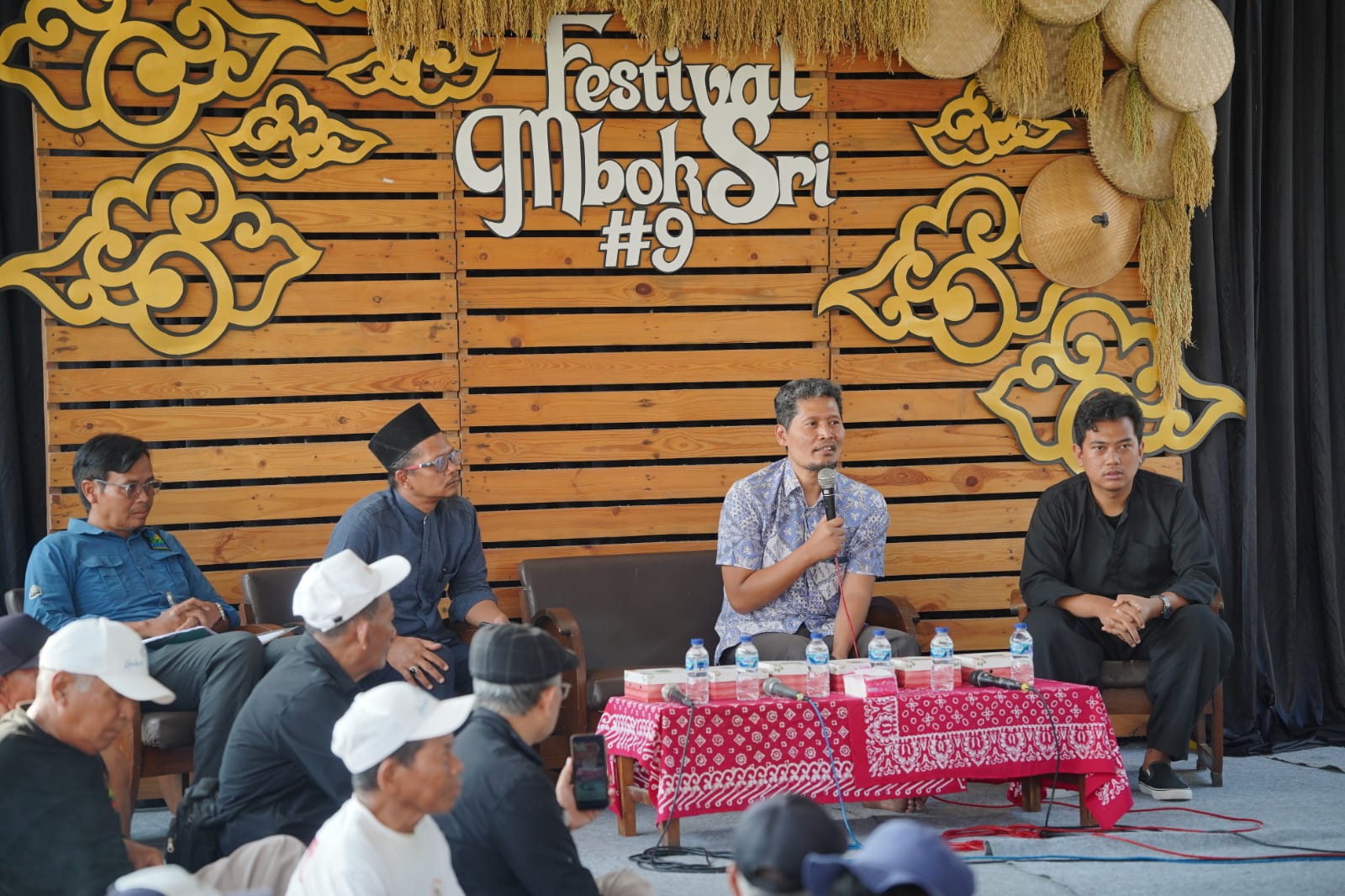
That simple question illustrated the issue that had been lingering for years that peasants faced when growing Rojolele. Developing a variety and increasing production did not automatically ensured that the harvest could be absorbed by the market. For that reason, the discussion about Rojolele Srinuk did not stop at seeds and planting. Peasants needed certainty about who would buy the harvest, what was the market needs, how to maintain quality, and how to build marketing to ensure continuous sale.
Rojolele also needed a string product identity. The taste of rice, the characters of the soil in Klaten, and the planting process could be parts of such identity. When product identity met a clear market, the top variety would not only become the pride of an area, but also offered opportunities to give added value to peasants. Here, the issue about Rojolele intertwined with the issue about welfare.
Peasants not only needed a good variety. They also needed economic justification to continue planting.
Towards the end of the forum, the peasants’ voices highlighted day-to-day issues they faced. There were issues about fertiliser, complains about rats on the rice fields, and the issue about shared water use. All those problems could not be addressed during the meeting.
At least, the Peasants’ Meeting (Jagongan Tani) compiled the many issues in one space. Land was discussed in conjunction with agrarian reform. Water was discussed in conjunction with ecosystem and mutual consents amongst different villages. Rojolele was discussed in conjunction to the market. Peasant regeneration was discussed in conjunction to technology and income.
For Rojolele peasants, the issue became concrete. They had planted. They had harvested. The next question was where to sell the rice and whether the market was able to absorb in a continuous manner.
The same question also applied to water and sustainable agriculture. Who managed water distribution during the dry season? Who ensured activities upstream so that it did not harm the peasants downstream? Who helped peasants dealt with pests and production costs?
After the forum ended, those questions lingered on beyond the forum. Peasants returned to their rice fields. Rojolele continued to grow in rice fields. Water continued to be distributed. Harvested rice needed buyers.
There, the success of an agricultural movement became tangible. It was not only when Rojolele were planted, but when the harvest found buyers at the right price, peasants were able to pay for the production costs, and they still had reasons to plant again the next season. (Ast)
Peasants not only needed a good variety. They also needed economic justification to continue planting.
Rice Fields Waiting for Certainty
Towards the end of the forum, the peasants’ voices highlighted day-to-day issues they faced. There were issues about fertiliser, complains about rats on the rice fields, and the issue about shared water use. All those problems could not be addressed during the meeting.
At least, the Peasants’ Meeting (Jagongan Tani) compiled the many issues in one space. Land was discussed in conjunction with agrarian reform. Water was discussed in conjunction with ecosystem and mutual consents amongst different villages. Rojolele was discussed in conjunction to the market. Peasant regeneration was discussed in conjunction to technology and income.
For Rojolele peasants, the issue became concrete. They had planted. They had harvested. The next question was where to sell the rice and whether the market was able to absorb in a continuous manner.
The same question also applied to water and sustainable agriculture. Who managed water distribution during the dry season? Who ensured activities upstream so that it did not harm the peasants downstream? Who helped peasants dealt with pests and production costs?
After the forum ended, those questions lingered on beyond the forum. Peasants returned to their rice fields. Rojolele continued to grow in rice fields. Water continued to be distributed. Harvested rice needed buyers.
There, the success of an agricultural movement became tangible. It was not only when Rojolele were planted, but when the harvest found buyers at the right price, peasants were able to pay for the production costs, and they still had reasons to plant again the next season. (Ast)