



Sleman was growing - more campuses, growing investment, expanding residential areas, and increasing needs for space. In such growth, the district government faced a difficult question: What kind of growth did Sleman anticipate?
That question sounded like a spatial question. Yet, in a forum with journalists, academics, art community, researchers, and communities in Yogyakarta, that question led to something more fundamental: when a city continued to change, what kind of population did the city want to create and how to feed that population?
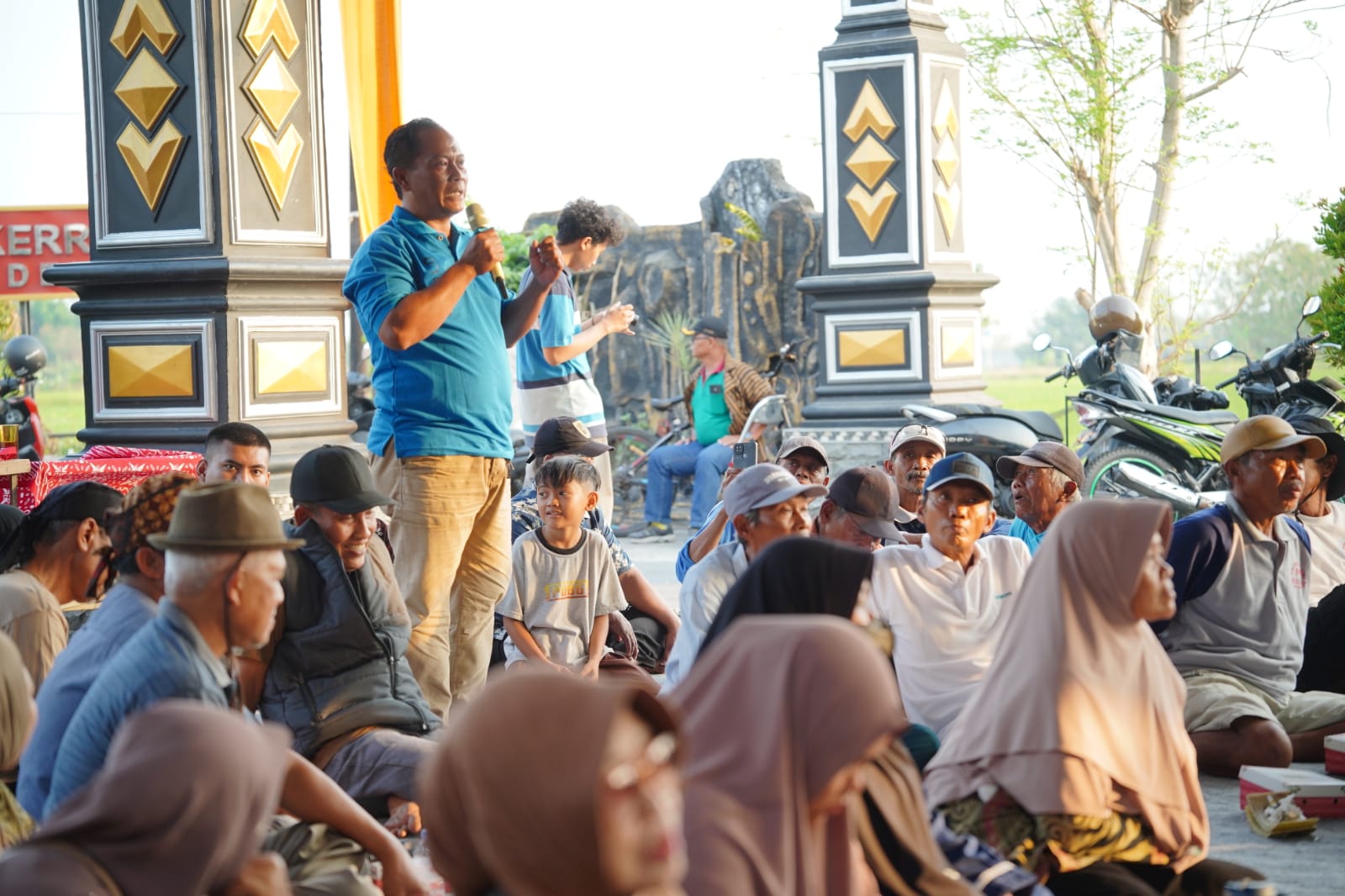
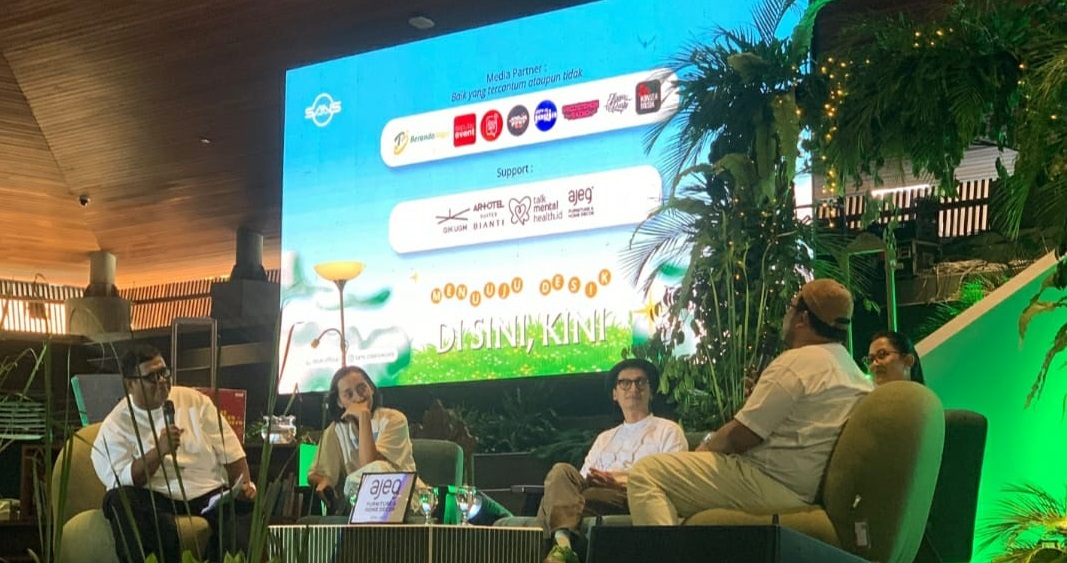
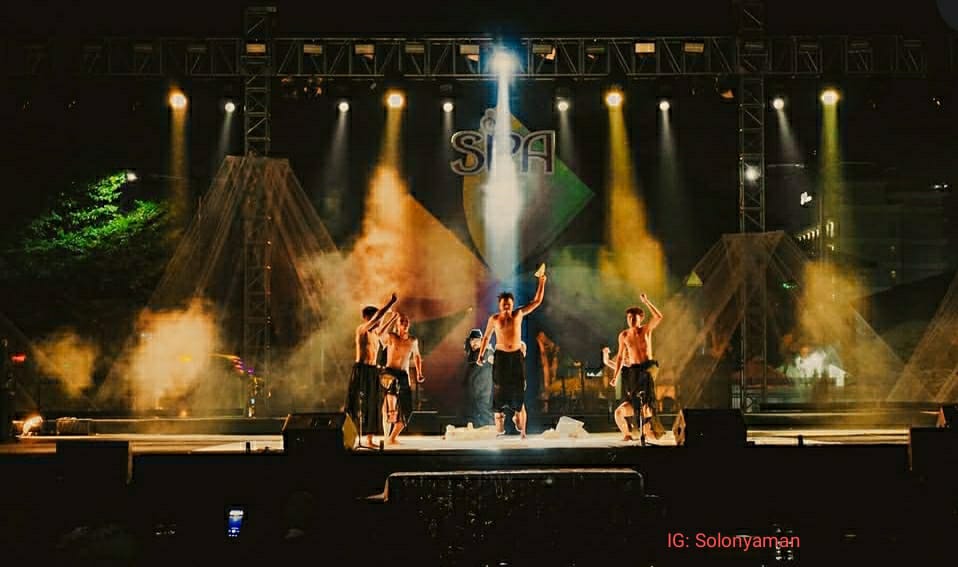
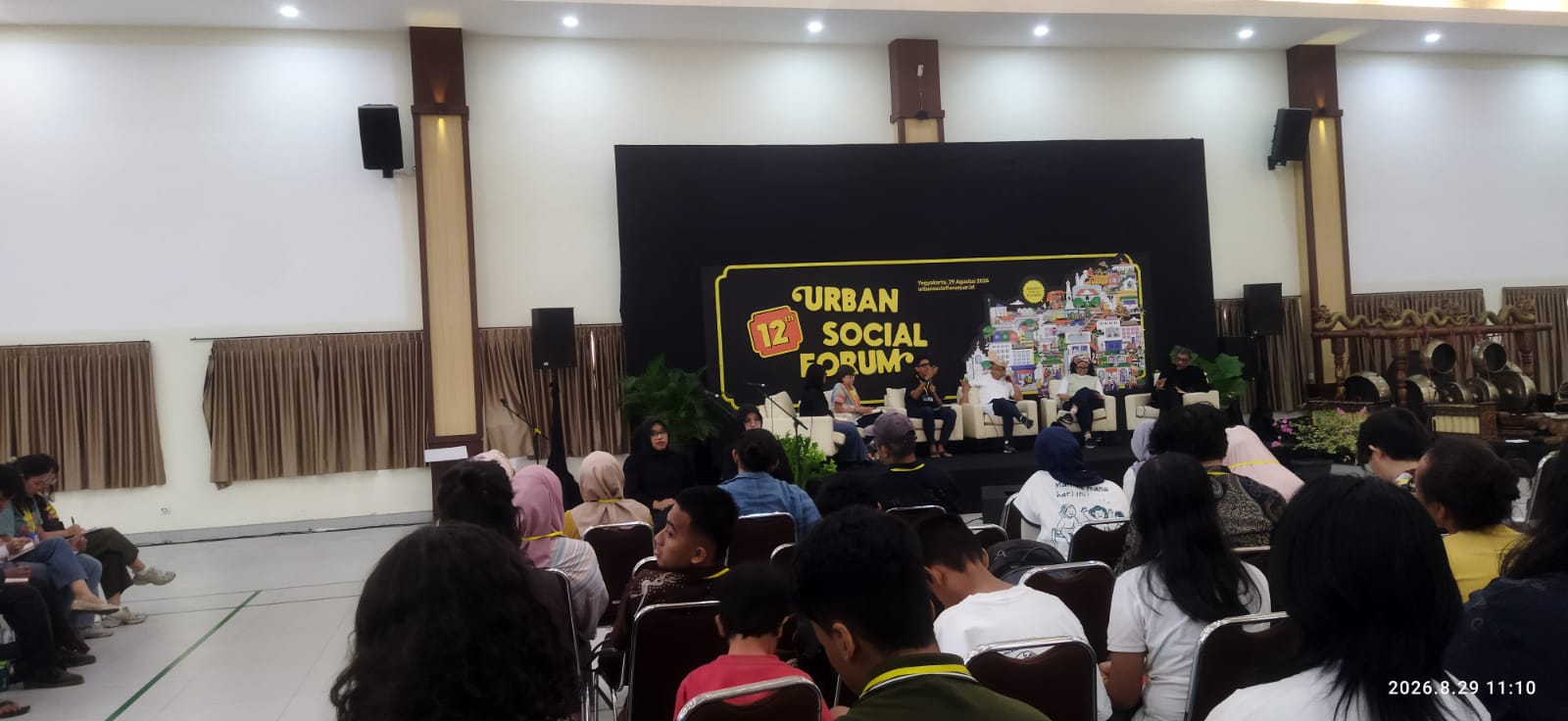
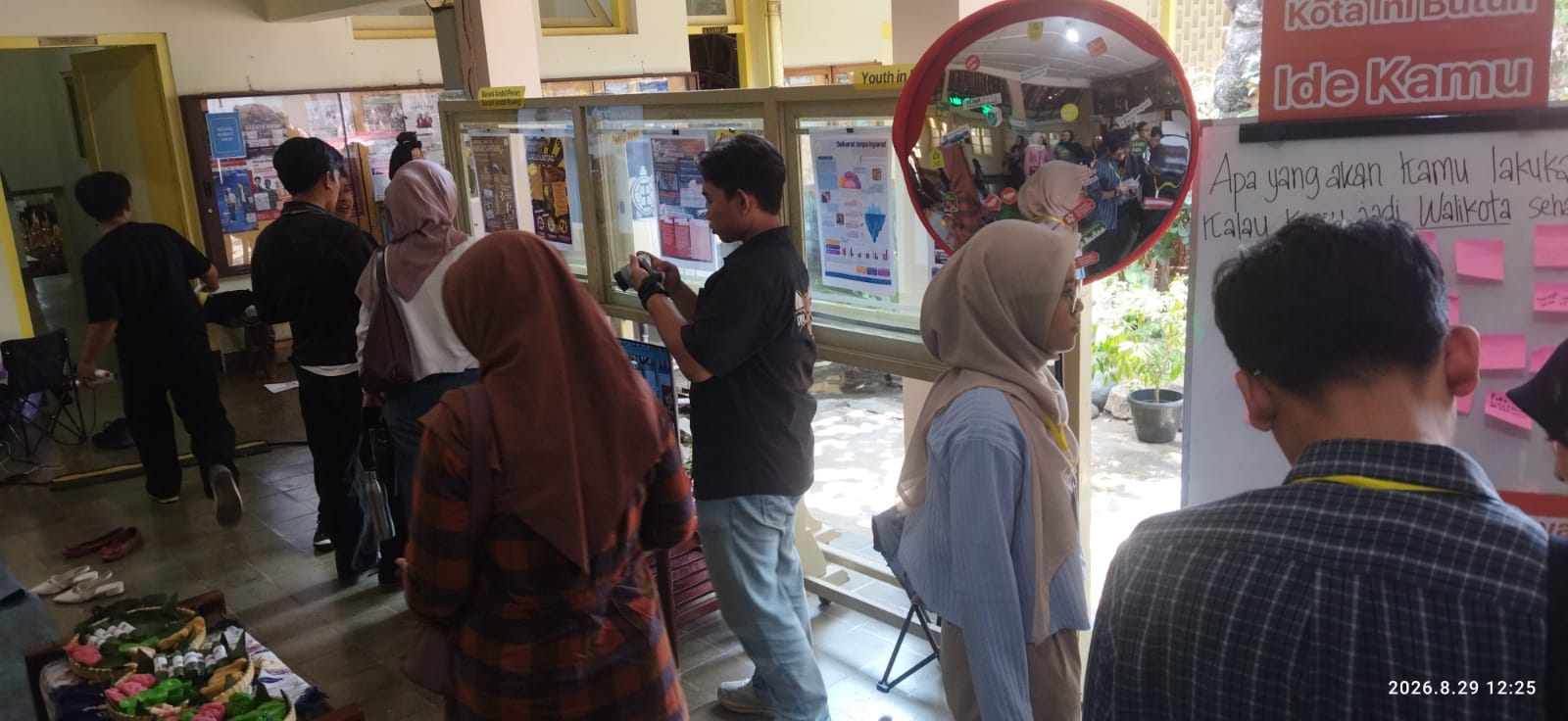
The question was the entry point in the first panel discussion, Urban Social Forum (USF) No. 12, on Saturday (29/8) entitled “Unusual, Weaving Public Spaces and Citizens’ Practices in the City” or “Raumum, Menyulam Ruang Publik dan Praktik Kewargaan di Kota" – a meeting point talking about the future of the city, public spaces, democracy, civil liberty, and various ways that people used to maintain public spaces. USF No. 12 proceeded at SMA Kolese De Britto, Yogyakarta with discussion panels and talkshow, art exhibition and music performance.
The term “Raumum” or Unusual was chosen to reflect the Jogja nuance. It referred to public spaces while asking the question “who actually could use such spaces?” A space might be called public, but may not be truly accessible to the public. Roads were blocked. Public square uses were limited. Public facilities could be commercialised. Digital space could be inundated with information that made it difficult for people’s voices to be heard. Freedom of speech remained formally available, but the voices were drowned in attacks, stigma, and floods of information. That was where the issue about public spaces became an issue of democracy.
The vice district administrator of Sleman, Irene Riana stated in the opening of the forum that the district government needed space to listen to the people. The people’s forum was critical because development was not only about economic growth, but about the sustainability of living spaces. Sleman had wealth that could not simply be measured by the number of investments. There were water sources, agricultural areas, cultural areas, tourism, campuses, villages, and disaster risk areas.
Each area had its own unique characteristics. The northern part of district faced Mount Merapi and hence prone to disasters. The eastern part of district had Prambanan Temple. The central part of district developed into education zones and universities. While the western part of district served as the food basket. Development, for that reason, needed to ask more thorough questions: Build what, where, for whom, and by whom?
The district government mentioned protection of agricultural land as one issue it tried to champion through policy synchronising. The challenge was finding a balance between the needs for investment, economic growth, employment opportunities, and environmental protection.
It was true that living spaces could not be separated from ecological system. Rice fields were not simply unbuilt land. Water was not simply resources to count. Disaster-hazard areas were not empty spaces waiting for investment. Cultural sites were not simply tourism hotspots. All were connected with people’s lives. In that perspective, public spaces were not simply public squares. They were places where people met, talked about issues together, and criticised the government. When freedom was still there, but the voices were hardly heard.
The resource person, journalist from Project Multatuli, Evi Maryani, took that issue to the civil liberty and press freedom. For Evi, civil society felt the pressures against freedom of expression. Fear had become part of daily conversation, particularly with regards to physical safety, digital safety, and freedom to express opinions. Experience with large protests involving many young people gave one illustration of the issue at hand. Arrests and pressures against protest participants showed that young people could be in vulnerable position when expressing their criticism of those in power.
Evi argued that the press faced similar issue. The forms of pressure against the media did not always come via direct ban. Journalist could be summoned, intimidated, their credibility attacked, or they became targets of digital attacks. Such pressures worked in a more dispersed way.
On one hand, social media opened opportunities for anyone to speak. On the other hand, the same space could be flooded with irrelevant information, personal attacks, and contents that blurred substantial issuess to make people lose interests. People’s voices remained. The issue was whether such voices could be heard. Information flood could result in noises. An in those noises, valid information of public interest mixed with misleading information or information specifically designed to divert people’s attention. For Evi, such situation constituted a big challenge for press freedom and freedom of expression.
That question sounded like a spatial question. Yet, in a forum with journalists, academics, art community, researchers, and communities in Yogyakarta, that question led to something more fundamental: when a city continued to change, what kind of population did the city want to create and how to feed that population?
The question was the entry point in the first panel discussion, Urban Social Forum (USF) No. 12, on Saturday (29/8) entitled “Unusual, Weaving Public Spaces and Citizens’ Practices in the City” or “Raumum, Menyulam Ruang Publik dan Praktik Kewargaan di Kota" – a meeting point talking about the future of the city, public spaces, democracy, civil liberty, and various ways that people used to maintain public spaces. USF No. 12 proceeded at SMA Kolese De Britto, Yogyakarta with discussion panels and talkshow, art exhibition and music performance.
The term “Raumum” or Unusual was chosen to reflect the Jogja nuance. It referred to public spaces while asking the question “who actually could use such spaces?” A space might be called public, but may not be truly accessible to the public. Roads were blocked. Public square uses were limited. Public facilities could be commercialised. Digital space could be inundated with information that made it difficult for people’s voices to be heard. Freedom of speech remained formally available, but the voices were drowned in attacks, stigma, and floods of information. That was where the issue about public spaces became an issue of democracy.
Sleman and the Question about Development
The vice district administrator of Sleman, Irene Riana stated in the opening of the forum that the district government needed space to listen to the people. The people’s forum was critical because development was not only about economic growth, but about the sustainability of living spaces. Sleman had wealth that could not simply be measured by the number of investments. There were water sources, agricultural areas, cultural areas, tourism, campuses, villages, and disaster risk areas.
Each area had its own unique characteristics. The northern part of district faced Mount Merapi and hence prone to disasters. The eastern part of district had Prambanan Temple. The central part of district developed into education zones and universities. While the western part of district served as the food basket. Development, for that reason, needed to ask more thorough questions: Build what, where, for whom, and by whom?
The district government mentioned protection of agricultural land as one issue it tried to champion through policy synchronising. The challenge was finding a balance between the needs for investment, economic growth, employment opportunities, and environmental protection.
It was true that living spaces could not be separated from ecological system. Rice fields were not simply unbuilt land. Water was not simply resources to count. Disaster-hazard areas were not empty spaces waiting for investment. Cultural sites were not simply tourism hotspots. All were connected with people’s lives. In that perspective, public spaces were not simply public squares. They were places where people met, talked about issues together, and criticised the government. When freedom was still there, but the voices were hardly heard.
The resource person, journalist from Project Multatuli, Evi Maryani, took that issue to the civil liberty and press freedom. For Evi, civil society felt the pressures against freedom of expression. Fear had become part of daily conversation, particularly with regards to physical safety, digital safety, and freedom to express opinions. Experience with large protests involving many young people gave one illustration of the issue at hand. Arrests and pressures against protest participants showed that young people could be in vulnerable position when expressing their criticism of those in power.
Evi argued that the press faced similar issue. The forms of pressure against the media did not always come via direct ban. Journalist could be summoned, intimidated, their credibility attacked, or they became targets of digital attacks. Such pressures worked in a more dispersed way.
On one hand, social media opened opportunities for anyone to speak. On the other hand, the same space could be flooded with irrelevant information, personal attacks, and contents that blurred substantial issuess to make people lose interests. People’s voices remained. The issue was whether such voices could be heard. Information flood could result in noises. An in those noises, valid information of public interest mixed with misleading information or information specifically designed to divert people’s attention. For Evi, such situation constituted a big challenge for press freedom and freedom of expression.
Democracy in the Midst of Information Flood
Resource person Prof. Zainal Arifin Mochtar saw the issue from the point of the relation between democracy and power. Modern democracy, he argued, always came face-to-face with those in power. When those in power had ample resources, democracy needed people to be able to use their freedom wisely and controlled those in power. The problem was that communities today did not have a lack of information. They were, instead, inundated with information. What was rare was the ability to sift through the information to create knowledge. Information could come without any context, without data, and without process of examination. Pieces of information could make someone feel that he/she knew an issue fully.
Social Media then Became a Judgement Arena
A person could be attacked because of a piece of statement. Long debate ensued, but lacked in data. Political gimmick got the big attention, while more substantial issues lost their space. Such situation, according to Zainal, was dangerous for democracy. Communities could be very actively debating but that did not help them understand the issue more thoroughly. For that reason, opening up public spaces had to proceed in conjunction to opening access to knowledge.
Zainal questioned community access to the university research results. Campus research, including those proceeded through funding scheme, should not have stopped within academic rooms. The public needed to know what research had been done, what data was available, and how the research results were used. Democracy needed information. Yet, a healthy democracy needed more than information: it needed knowledge that could be examined.
When Physical Spaces Disappeared
Narrowing public spaces not only happened in mobile phone screens. Zainal pointed to physical spaces as other issues that people often missed. Public squares and open spaces could be shut. Meeting places were becoming rare. Spaces formerly used by the people change into rented facilities. When public spaces were becoming rarer, community lost the opportunity to meet with other people. People then met based on the basis of common identity and hobbies. Religious groups met in prayer rooms. Special interest communities found their own spaces. Inter-group meetings needed spaces deliberately designed for such meetings.
In such situation, communities risked becoming spectators. Screens became the primary media to see the world. Information kept coming. Debates went quickly. Yet, social relations that allowed people to meet directly became a rarity. Public spaces lots one of its basic functions: to get different people together.
From Small Space, Democracy Found Its Practice
The next speaker, Syafiatudina looked at the issue from the perspective of people’s daily life. He argued that something which was considered “public” was not always available for people to use. A street could be public street, yet it was closed for a certain reason. A facility could be public facility, yet its use was limited.
The question then was not simply who owned the space, but who could use the space and who made the regulation about its use. Yet, people also had the ability to create new spaces.
The experience of the community he shared showed how houses, shops, offices, kitchens, and small spaces could become learning spaces and spaces to build solidarity. People with different background could meet to cook, write, discuss, and share experience. Learning spaces did not always happen to be in schools or campuses. Those outside of formal education could still have knowledge they gained from life experience.
From such small spaces, networks developed. Environmental communities met people’s associations. Researchers met artists. People met other groups with similar issues. Something which started small could develop into a strength through connection.
Syafiatudina also reminded that narrowing spaces could not be separated from narrowing time. Economic condition increasingly became informal, and that forced many people to work with uncertain schedule. People not only lost spaces to meet. They also lost time to be citizens.
Democracy necessitated both - Co-housing and shared political life. Nani Susiani from Studio Tanah showed another example about how democracy could be practiced through daily life. Studio Tanah developed from an old building in Jageran Village, Yogyakarta, to become collective space. People of different backgrounds united and brought their own needs and abilities. One of the principles was simple: What did people need and what could people give. There was no rigid authority structure. Each person could take their role based on ability and needs of the community.
That experience then developed into a number of activities, including the idea of “Finding Neighbour Club” or “Klub Mencari Tetangga” that got people who needed housing together with land owners and people who had specific skills such as architecture, mapping, research, and art.
The co-housing concept not only talked about building. Before physical facilities were built, they needed to talk about the ability to live together. There were needs for responsibility, adaptation, and understanding of other people’s needs. There, democracy was present in a very simple form: how decisions were made together and how someone lived with differences.
Finding a Niche when the Spaces Became Narrower
Ugorant Prasad focused his presentation on the grassroots movement. He noticed that people found it difficult to find a space to stage protests against big projects. Experience with community conflicts in many parts showed that power could also work through a strategy to divide communities. For that reason, movement necessitated networks. Resource-sharing was critical. What was shared was not simply money, but also knowledge, skills, networks, arts, and experience. When formal spaces were shut, people needed to find other niches. Those niches could be communities, houses, art, small meetings, to solidarity kitchen.
Syafiatudina explained about solidarity kitchen as a practice born out of need. People cooked together voluntarily. There was no central command. Each individual took an initiative while engaging in discussion. That practice showed more horizontal organisational form. Not all fights had to look big. The question about victory always popped up. How would people’s movement face those in power and those with investment who had massive resources?
Evi acknowledged that the fight proceeded asymmetrically. Those in power had legal, political, economic and technological instruments. Yet, community work had its own significance. A slow, rooted, and inter-connected work could maintain the stamina necessary for the movement. Pesimism could be a way of reading the situation more clearly. From there, people could see what they could still do. What was critical was to not stop connecting. Physical meetings and digital online meetings were complimentary. New people who met in a forum could be part of te next solidarity network.
Nani reminded that we did not have to adopt a single strategy. Experience in Yogyakarta might not have been suitable in Surakarta. Each city had its own unique culture, history, problems/issues, and characters. For that reason, the strategy started by reading the needs of the communities. Not all changes had to start from big projects. Often, changes started from coffee shops, houses, kitchen, learning spaces, art communities, or people sitting and talking together.
What Kind of People were the City Trying to Shape?
“Raumum” Frum posed one bigger question beyond the Spatial issue. A city was not only shaped by its streets, buildings, investments, campuses, residential areas, and government policies. A city was also shaped by the way people met, share different views, share knowledge, maintain the environment, maintain common spaces, and respond to those in power. For that reason, the future of a city not only depended on decisions made in government offices and in meeting venues. It was also determined by places people often deemed insignificant: people’s houses, coffee shops, campuses, art rooms, local alleys, solidarity kitchen, and communities working without much exposure.
In such spaces, people practiced something fundamental for democracy: the ability to live together with differences. The question about city then shifted, not simply what kind of city one wanted to build, but what kind of people did they want to be. Did people wanted to accept decisions that define their life, or participated in the decision making? Would public spaces be allowed to disappear, or would people continue to find niches to meet?
And when common spaces were squeezed by those in power, by investments, and by information overload, would people still have the confidence and courage to build their own spaces? Those questions did not indicate one single answer.
As the city continued to change, one thing became clear: democracy not only needed spaces available for it. Democracy also needed people to be willing to create, maintain, and bring such spaces to life. (Ast)