



Disaster never gave much time to think. When water suddenly rose, the soil moved, or an earthquake shook, a few minutes even a few seconds could be vital for saving lives. For that reason, preparedness was not something to contemplate when disaster came. It had to be prepared beforehand, even in the space closest to use - home.
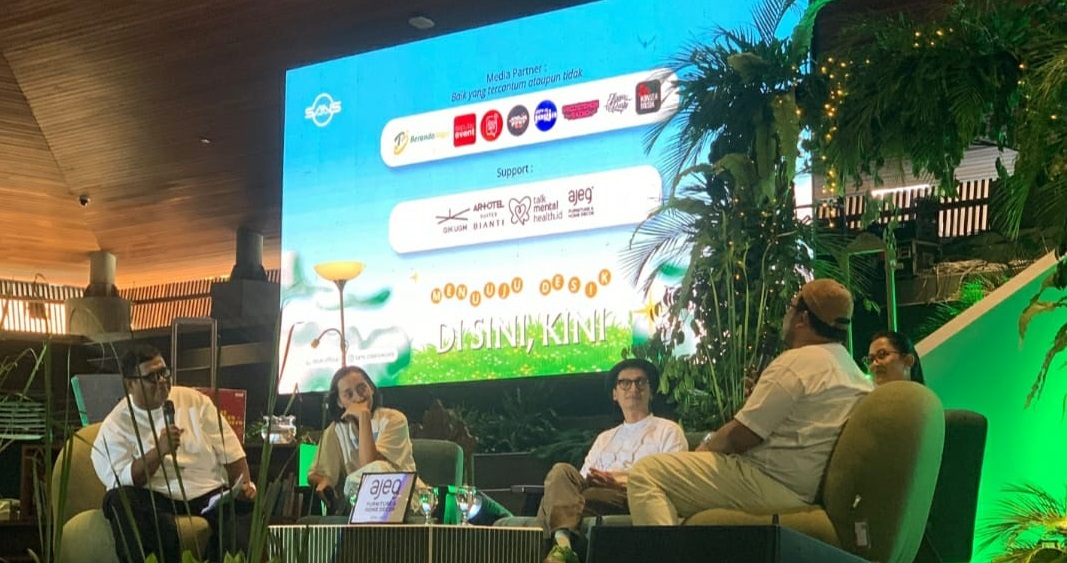
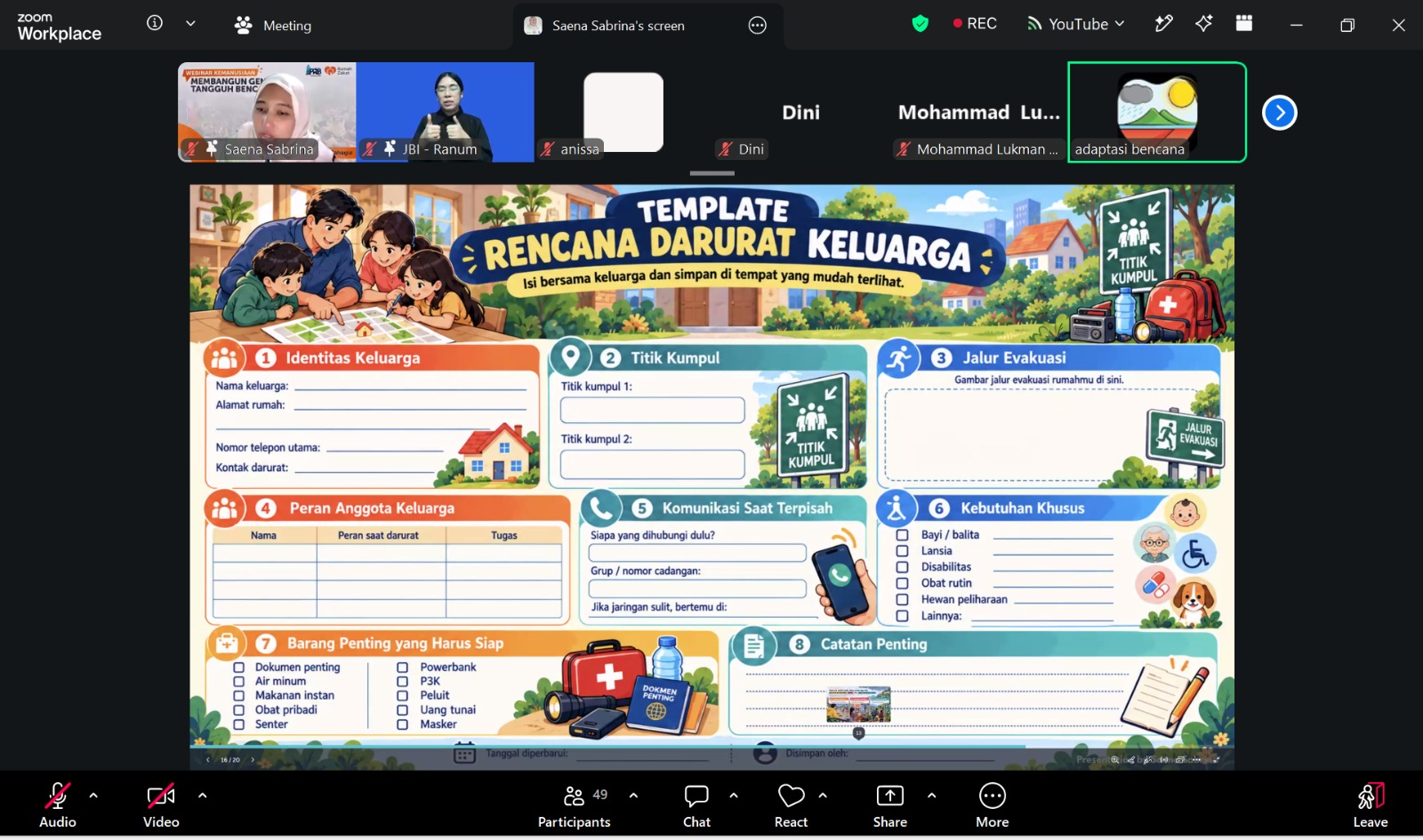
That message was at the forefront of a humanitarian webinar with communication and disaster risk reduction practitioner, Saina Sabrina. In the forum, she encouraged participants to see disasters not simply as natural phenomena, but as situations necessitating knowledge, quick decisions, communication, and real actions.
With her more than 20-year experience in disaster preparedness education, Saina emphasised the importance of an alert mindset. She argued that communities needed to understand the risks of disasters and the knowledge needed to deal with the disaster emergency.
14 Minutes Saved Thousands of Lives
One story being shared in the webinar showed the importance of quick decisions.
In a flash flood in Nepal, warning received by the school head was immediately followed up. Lessons stopped immediately, siren sounded, and students and teachers were evacuated to a safe ground.
Within 14 minutes, the decision saved 900 students and 16 teachers and staff.
That story was not simply about a faraway disaster story. It carried a simple question to us all: If a disaster happens right now, do we know what we would do?
That question was critical because in an emergency, panic might cause people to lose the critical time. On the other hand, knowledge and training could help people take decisive actions.
When Family Members Were Separated, Where Could They Meet?
Preparedness started close to home: Family.
Participants imagined a simple yet probable situation. An earthquake happened when family members were at different places. Communication was disrupted. Children were at school, parents were at work, while other family members were at home.
When family members were so far apart, where would they meet? Who to contact? How to ensure that most vulnerable family members were safe?
Those questions were critical parts of family emergency plan.
The plan might not need to be complicated. A family could determine a specific meeting point, agreed on communication channel, identified evacuation route from home, and divide tasks for each family member.
The needs of each family members also need to be taken into account. Babies, elderly people, and family members with special needs might require specific equipment and/or different supports.
In other words, preparedness was not simply about having emergency kit. It was also about identifying needs, understanding each other’s role(s), and knowing where to look for each other during non-normal situation.
Emergency Kit Was Not Simply Stuff
In the webinar, participants prepared emergency kit. The content could be customised to suit a family’s needs, including important documents, personal medicines, food and drinks, flashlights, batteries, power-bank, clothes, and other basic necessities.
Yet, what was more critical than the content of the emergency kit was the preparedness to use it.
The emergency kit was no use when it was stored neatly if the family did not know where it was or if the family never practiced on how to evacuate.
Preparedness was not something stored in a house. It was knowledge to be practiced.
From House to Policy
The webinar discussion then moved further. Family preparedness was critical, but community safety could not be solely placed on individual hands.
Disaster issues were also related to system, policies, spatial issues, infrastructure, government capacity, emergency services, and environmental condition.
The discussion also touched on flood issue in urban setting. One participant pointed to the drainage issue, narrowing river, and reduced rain-water storage capacity. The discussion highlighted the importance of looking at upstream-to-downstream risks, not simply looking at the issue when the water started to enter people’s homes.
For that reason, preparedness needed collaboration.
The government had the authority and responsibility to develop a system to protect the communities. Civil society could increase literacy, conduct advocacy, and monitor policies. Communities had the knowledge and direct experience of local risks.
Data and review were critical so that disaster advocacy did not stop simply at submitting complaints. Field findings had to be translated into inputs and solutions that could be integrated into policy decisions.
Disaster Was Everyone’s Business
In the end, the webinar reminded that no one could work alone on their own in the face of disaster.
Preparedness had to start from home, school, community and the government. Knowledge upgrade was critical because the risk characters might change and the disaster experience might be different.
The key message of the webinar was simple: do not wait for the disaster to come to learn to save your own life.
Start today. Determine family meeting point. Agree on how to communicate. Identify evacuation route. Prepare disaster kit. Train children. Pay attention to the needs of the elderly people, and family members with special needs.
When disaster finally came, people might not have much time to open their guideline manual.
What people had might only be a few minutes to make decisions.
And during that time, preparedness participants came to learned today could save their lives and the lives of people they loved. (Yohanes Handharu)