



In a fast-moving world, a pause might seem difficult.
Humans were used to chasing. When one job was completed, another job was ready. After one objective was attained, another appeared. The mobile phone rang, messages came through, schedules came and went. In social media, news moved quickly. One problem had not been fully addressed another problem knocked on the door.
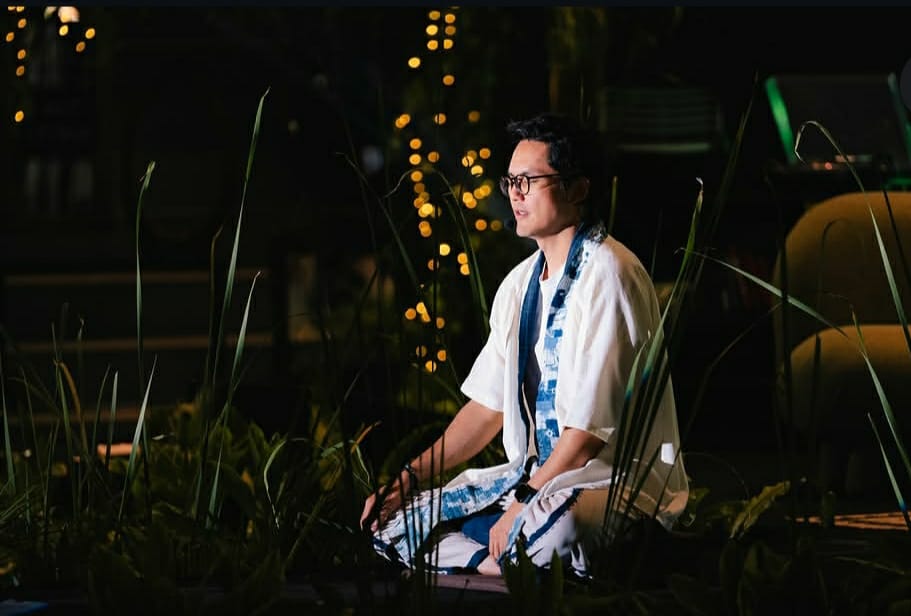
The body might sit in one place, but the mind might wander everywhere. That situation was apparent during a silence session with Adjie Santosoputro as part of the activities at DESIK program that featured stories, ideas, and experiences, where participants were encouraged to do something very simple – to pause. The program was organised by GIK UGM on Thursday (24/9).
To pause meant to not chase anything, to not achieve anything, just to sit down silently and be aware of one’s own presence.
A silence session. “the most beautiful gift for someone you love is your own full presence for that person,” said Adjie. That sentence was the entry point to a journey to the inner self. Adjie said that humans lived in an excessively fast-paced world. For that reason, humans had to learn to stop. T was not to stop living, but to stop in order to realise how that person lived his/her life.
Life, he highlighted, was not simply about how fast a person moved. It was about how wise a person’s life was. Participants were then asked to sit down as comfortably as they could. They might lean. They might change positions. There was no need to look perfect in silence.
"Slowly, close your eyes.
Focus on your breathing.
Breath in. Be aware.
Breath out. Be aware.
No need to force anything."
Thoughts came and went. Past memories might appear. A vision of the future might come through. Past conversation suddenly came to mind. There were unfinished jobs. There were problems bothering the mind.
For Adjie, all those were not failures. When the mind wandered, participants returned back. Return to their breathing. Return to the moment. That was the interesting part of the silence exercise. Silence did not mean that the mind had to be empty.
It was an exercise to be present. In daily life, humans often had objectives to achieve. Eating while thinking about work. Walking while preoccupied with the next meeting. Talking with somebody while checking mobile phones once in a while. Even when resting, the mind was busy making a list of things to do.
The body was here, but the mind was somewhere else. For that reason, the breath was the anchor. When the mind wandered too far, someone could return to what was nearest to that person – his/her breathing.
"Breath in.
Breath out.
return."
In his presentation, Adjie explained that meditation was not merely an activity that people did while witting for a period of time. Daily activities could become the space to be present when a person was fully aware what he/she was doing.
Silence was not a competition to attain a given state. It was an exercise to be present.
In the session, Adjie also asked participants to see the connection between the past and the future. The past was no more. It was only in human memory. There was no way to bring it back and change the story. The future was not yet. It was only a possibility. What is happening is the now.
Awareness of the now did not ignore the past or the future. It gave people the space to not be drawn into something that happened in the past or something that had not yet happened. Breathing was the bridge to the now.
After engaging with participants in the awareness of their breathing, Adjie took the exercise to a more personal level. He asked participants to put their right hand on their left shoulder and the left hand on their right shoulder. As if hugging oneself.
That movement looked quite straight forward, yet behind it was not so simple question. When was the last time a person hugged themselves? People were often busy doing things for others, being considerate to other people’s feelings, meeting family needs, chasing jobs, answering messages, and being a place for others to lean on. In such busy roles, the self was the very thing that people often neglected the most.
Adjie asked participants to return to themselves again. Whatever appeared, just accepted it. If happiness came, accepted it. If sadness appeared, accepted it. If tears flowed down, let them flow down. Acceptance did not mean loving everything that happened. Acceptance meant confidence/awareness that everything that happened did not need to be turned away immediately.
Sadness did not need to be chased away immediately.
Anger did not need to be denied right away.
Fear did not need to be covered up with words that everything was okay.
What was critical was to be aware first of all.
In the face of an emotion, someone learned – this was happening to me. There was a tiny gap between the self and the emotion. In that gap, people had the opportunity to not react immediately.
Adjie also asked participants to learn to be friendly and patient to themselves. The ay a person treated himself or herself was a reflection of how that person treated other people.
When a person kept hating himself/herself, life felt tough. When a person started to learn to love oneself, there was greater space to love others.
The session came to a simple yet fundamental level. Participants were urged to say thank you to themselves.
“Thank you for holding on.
Thank you for going this far.
Thank you for the self to keep moving despite all the troubles."
There was something gentle about that request. It was often easier for people to say thank you to other people than to themselves. Yet, the relationship with oneself also necessitated love.
At the end of the session, participants slowly opened their eyes. Some participants might feel relieved. Others might be sad. Still others might shed tears. Tears were nothing to be ashamed of.
“We are humans,” was a key message in the session. Humans had feelings. Humans could be tired. Humans could be happy, sad, angry, fearful, disappointed, and cried. All those were part of human experiences.
For Adjie, silence was not a space to escape from life. It was through silence that someone found a fuller life. It did not promise that silence made things go away. Silence was not a means to change the past or to ensure the future.
What changed was the way a person was present vis-à-vis what that person was experiencing. In silence, people learned to see that thoughts were only in the mind. Emotions were only emotions. Memories were only memories. The person himself or herself did not need to be drawn to all of those things.
There was awareness that observed. And perhaps that was where the word “returning” found its meaning. It was not a return to a physical home, but to return to oneself.
In a world urging people to rush, silence offered something simple. A gap.
A few minutes not chasing anything. A few breaths to realise that the body was still here. A few moments to listen to the sound that had been drown out by the noise.
And perhaps, a few minutes to ask oneself, how was I today? That question sounded so simple. But it was the one question often ignored to ask to oneself. People were too busy to find what they lacked, to chase after what they had not got, and to think about what would happen.
At GIK, through the silence session as part of the DESIK series, participants stepped back from all the things that they normally chased after. It was not about abandoning the world, but to return to the world more holistically.
It might be the case that before a person was fully present for the loved one(s), that person needed to be present for himself/herself. And before a person started to run again, it was better that that person took time to ensure that he/she knew where he/she wanted to move. (Ast)