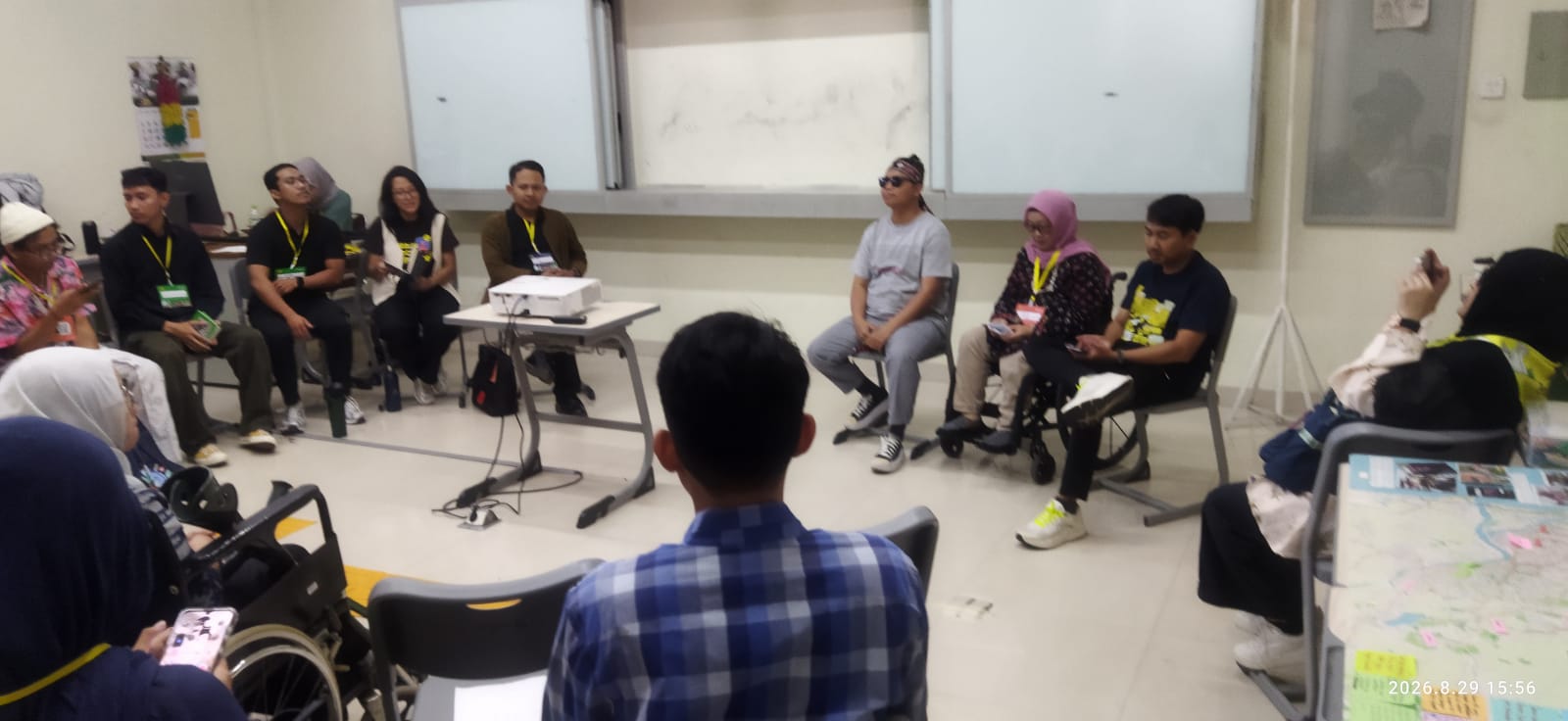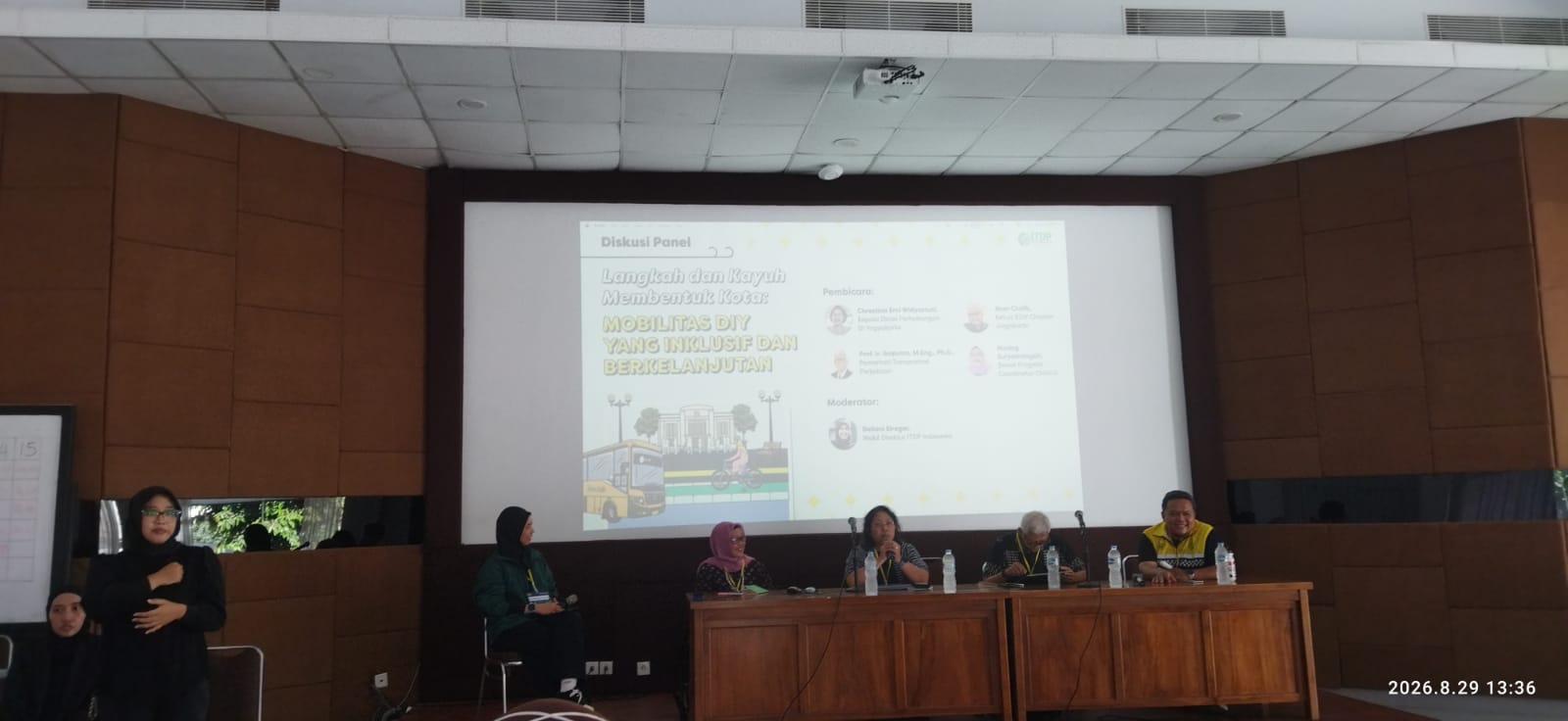



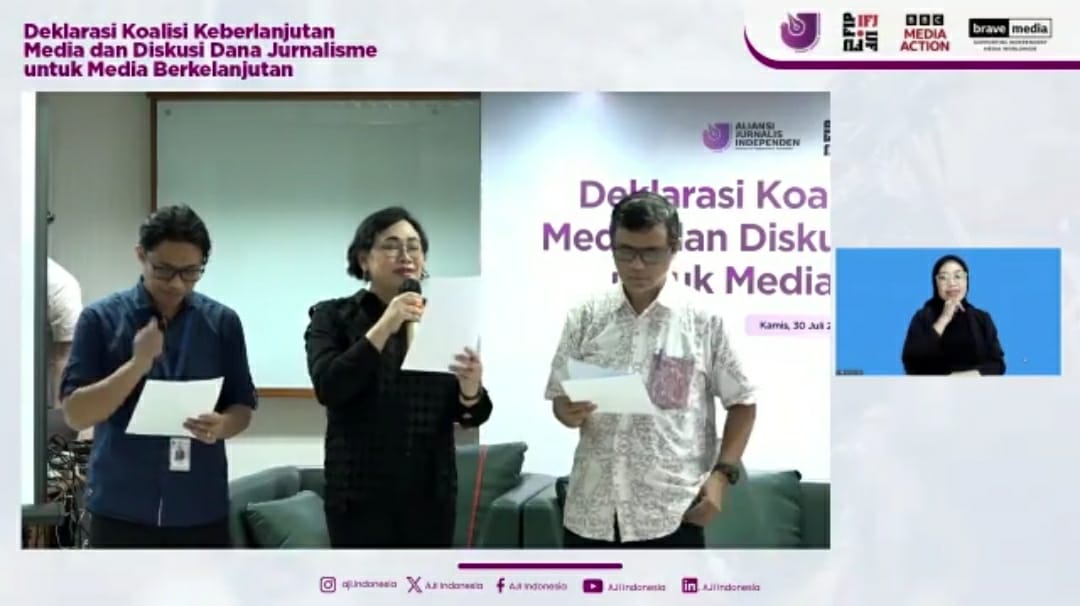

With increasing economic pressures on the media industry, tens of media organisations, journalist association, academics, State institutions, and civil society organisations gathered at Universitas Indonesia, on Thursday (30/7/2026). They declared a Coalition for the Media Sustainability, an inter-sectoral forum to serve as common space for consolidating future journalism in Indonesia.
The declaration was a sign that the issue about the media could not be ignored simply as press company problem. Changes in digital technology, domination of global platforms, artificial intelligence (AI), and decrease in advertisement revenue fundamentally changed the landscape of media industry. In such situation, collaboration was critical.
The head of Independent Journalist Alliance or Aliansi Jurnalis Independen (AJI), Nany Afrida in her opening speech stated that the establishment of the Coalition was a first step. The biggest challenge was going to emerge after the declaration. "This is the beginning. There will be many challenges ahead. I hope that we all can walk together," she closed her opening speech.
That statement illustrated the awareness that building trust amongst diverse stakeholders was not a simple act. Many organisations had different interests, experiences, and viewpoints about the future of the media. Yet, they met with one objective: to ensure the sustainability of independent media.
To Develop Common Agenda
Representatives read the declaration in turn. The document confirmed that changes in how community read information affected the media business model drastically.
The Media not only competed with similar press companies. They had to come face-to-face with global technological powerhouses in the distribution of information, public attention, and digital advertisement marketing. For that reason, participants agreed to set up a Coalition for Sustainability of the Media as a venue for preparing a common agenda.
The Coalition not only talked about saving the media’s economy. In it were governance, technological innovation, development of journalists’ capacity, protection of press freedom, and public policy advocacy that supported healthy media ecosystem. The forum was also expected to be a space for coordination, knowledge exchange, innovation development, and inter-sectoral collaboration.
In the initial structure, the coalition involved a variety of organisations such as AJI Indonesia, AMSI, Serikat Media Siber Indonesia, Perhimpunan Pengembangan Media Nusantara, LBH Pers, MediaLink, Tempo, Universitas Indonesia, Universitas Multimedia Nusantara, Universitas Al Azhar Indonesia, Bappenas, Dewan Pers, BBC Media Action, and Committee Responsible for Digital Platform Companies for Quality Journalism (KTP2JB).
The coalition membership was open to media organisations, campuses, government institutions, and civil societies.
Responding to Global Crisis
The Coordinator for the Alternative Media Coalition or Koalisi Media Alternatif (KOMA), Lusiana handled the post-declaration discussion flow by inviting a number of resource people from the government, the Press council, academics, and media activists.
The director of Communication and Digital Ministry, Farida Dewi Maharani acknowledged that the government saw media as one pillar of democracy with important social function and business entity. She said that the dual functions of the media could not be separated. Media needed financial sustainability so that it was able to serve its public service through credible information.
That was the reason the government opened the space for discussion with regards to funding scheme for journalism, although the mechanism remained discussed with the Press Council and various media organisations.
Farida emphasised two principles that the government tried to maintain. First, the funds had to be truly received by credible and quality media. Second, transfer mechanism had to maintain editors’ independence in order to void intervention to financial assistance. "The government understand that media is a business and social entities. What we want to keep is the social function to continue without sacrificing independence," she emphasised.
She added that the government also reviewed a number of regulations relevant to media industry, including strengthening supports for local media. One step being prepared was to encourage the local government to prioritise collaboration with local media that had been verified by the Press Council, and increased the number of competency test facilities for local journalists.
This step was expected to improve quality of the media outside of Jakarta that faced more serious challenges.
Jurnalism funds Not Simply about Money
Academic at Universitas Islam Indonesia, Masduki asked participants to see the problem more broadly. He argued that the media crisis in Indonesia was part of a global crisis.
The domination of digital platform shifted the power of information distribution from media companies to global technological algorithm companies. That situation shifted advertisement revenue to digital platform, while the media kept paying the production cost of journalism. Yet, Indonesia faced more specific challenges.
There remained concentration of media ownership, marginalisation of local media and communities, and weak inter-agency consolidation in the media sector. For that reason, he argued that establishment of the Coalition for the Sustainability of Media became important momentum.
The Coalition was seen as a collective space for press organisations, campuses, government, and civil society to act together. Masduki also introduced the concept of media viability or media sustainability at the international level.
He believed that media sustainability was not only measured by the ability to generate profit. Far more than that, sustainability was joint responsibility because journalism was public property that defined the quality of democracy.
He encouraged participants to set up indicators for sustainability of media in Indonesia that could become the foundation for assessment of what media was worth supporting. "It is not just about the economic aspect, but about the quality of journalism, governance, technological mastery, public supports, and legal recognition," he highlighted.
Saving Journalism Function
Member of the Press Council, Dahlan Dahi saw the problem from more fundamental angle. He argued that there was a need to save not just the media companies, but the function of journalism itself.
He reminded that if journalism was lost, public space would be filled with political propaganda and business promotion without proper and sufficient verification mechanism. In a democratic system, journalism played its function to search, manage, verify, and present information to the communities. For these reasons, its existence could not be replaced by social media or digital platform.
Dahlan revealed ta pressures that media faced kept increasing. Income from search engine and social media continually went downward, while production costs remained high. This situation triggered a wave of employment termination in media companies.
He estimated that economic pressures would continue if policies were unable to strengthen the press industry. For that reason, journalism funds became an urgent priority.
The funds were needed in order to support journalistic activities such as coverage, training, and capacity improvement of journalists. What needed to be maintained was the mechanism for funds transfer so that editors’ independence could continue. Dahlan also explained that the discussion about the protection of economic rights of journalistic work through revision of Law on Copyrights was underway.
He argued that the regulation became one key instrument to ensure that digital platform gave due recognition to journalism work that they used.
Learning from Other Countries
Lecturer at Universitas Indonesia, Haryanto explained that the concept of journalism funds was not new.
A number of Nordic nations had provided subsidy for a long time to media as a form of protection of public assets.
Yet, international experience also showed one important lesson. Journalism funds should not have come from one source.
Ideal funding was a combination of government, digital platform, philanthropy, company CSRs, ad community contribution. This way, no one source had the majority and dominant power to influence news contents.
Haryanto also emphasised that funds had better be allocated based on journalism projects, and not to support companies’ operation in general. With this approach, use of funds could be measured clearly through results of coverage, social impacts, and accountability for transparency. He reminded that organisation that managed funds had to be independent, open, and had consolidated audit system.
Integrity Was the Foundation
Throughout the discussion, ne theme kept emerging repeatedly - integrity.
Many participants reminded that the biggest issue was not about finding funding sources, but ensuring funds management to be highly credible. Masduki argued that no funding model was totally free of risks.
Each scheme had the potential weaknesses. For that reason, what was most important was to build transparent governance and involved many parties so that there was a balanced of influence.
Member of Press Council, Dahlan Dahi reminded of the experience of the Press Council that secured funds from the government budget without losing its independence. He argued that individual and organisational integrity was far more important than the sources of funds.
Not the Only Solution
Representative of KTP2JB, Sasmita reminded that journalism funds were not the only answers to the media crisis. The funds were only one instrument to strengthen the press industry sustainability. Improvement in regulation, protection of copy right, consolidation of local media, improvement in public literacy, and business model innovation had to go hand-in-hand.
A similar view was proposed by discussion participant who reminded about the importance of openness about the origin of funds, including ensuring that no funds were received against the ethical principles and public interests.
In closing the discussion, Masduki reminded that the establishment of Coalition for the Sustainability of the Media was a small victory that had to be nurtured. He believed that Indonesia had the opportunity to present inter-sectoral collaboration model that not many nations had developed.
The coalition allowed press organisations, campuses, government, international organisations, and civil society to meet in one forum with one common objective.
He expected that the coalition would not stop as a discussion forum, but would be able to promote policy changes, strengthen protection for journalism, and present funding mechanism to maintain media quality and independence.
In rapid technological change, participants realised that time was not on the side of media industry.
The big house of journalism often had to deal with many leaks. Waiting too long would only increase the damages. For that reason, the Declaration for the Sustainability of the Media was viewed not as the finish line, but as a start to prepare common actions to ensure journalism survived as a key supports for democracy in Indonesia. (Ast)