



"When our forest is taken away, where would we stay?"
That sentence seemed simple. Yet, when it appeared on a documentary film Pesta Babi, it became a call that would be difficult to ignore. It was not simply a question about where to live, but a question about the future, about identity, and about Papuan indigenous community rights in the face of large-scale expansion of projects in their ancestral land.
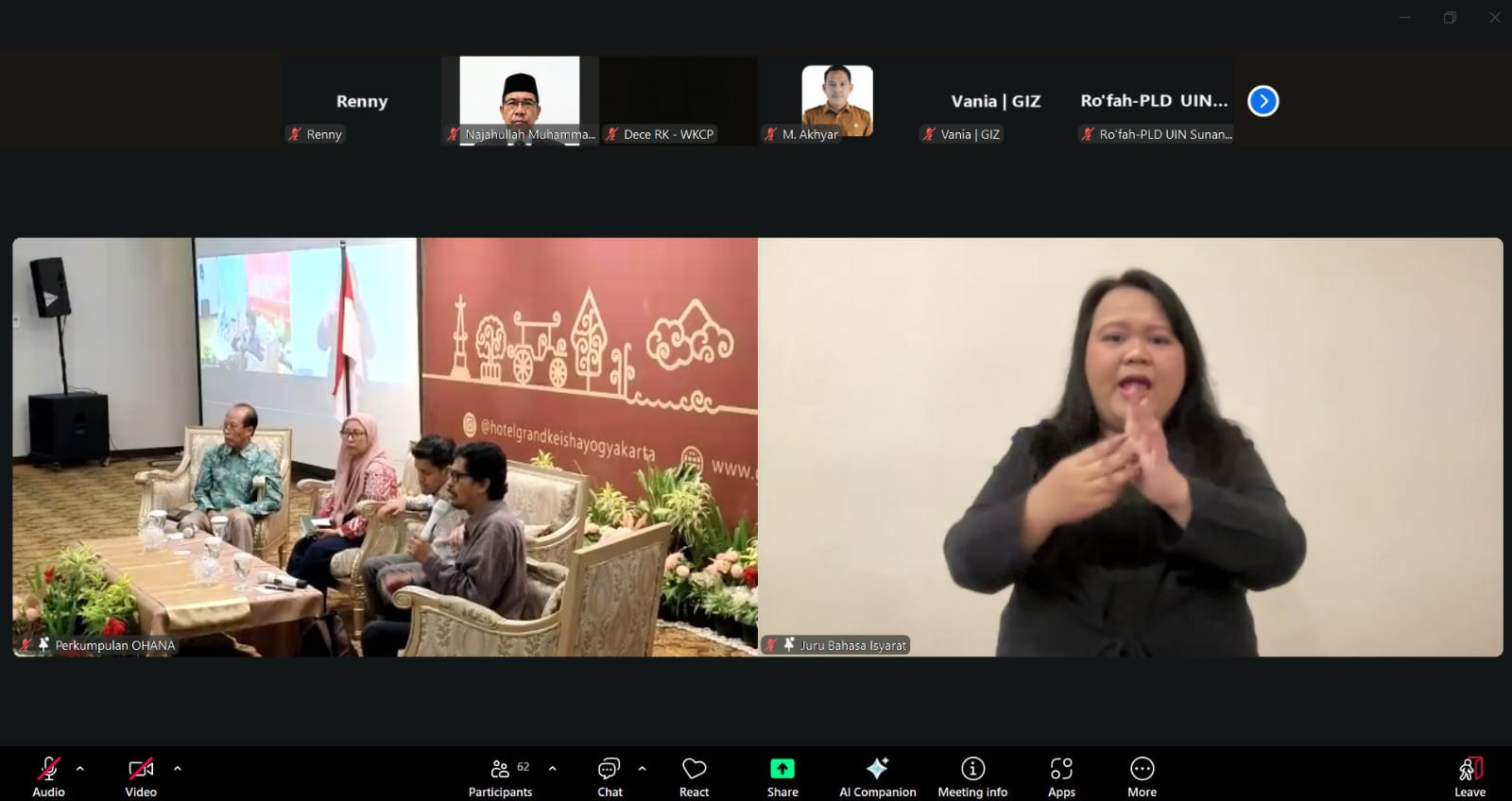
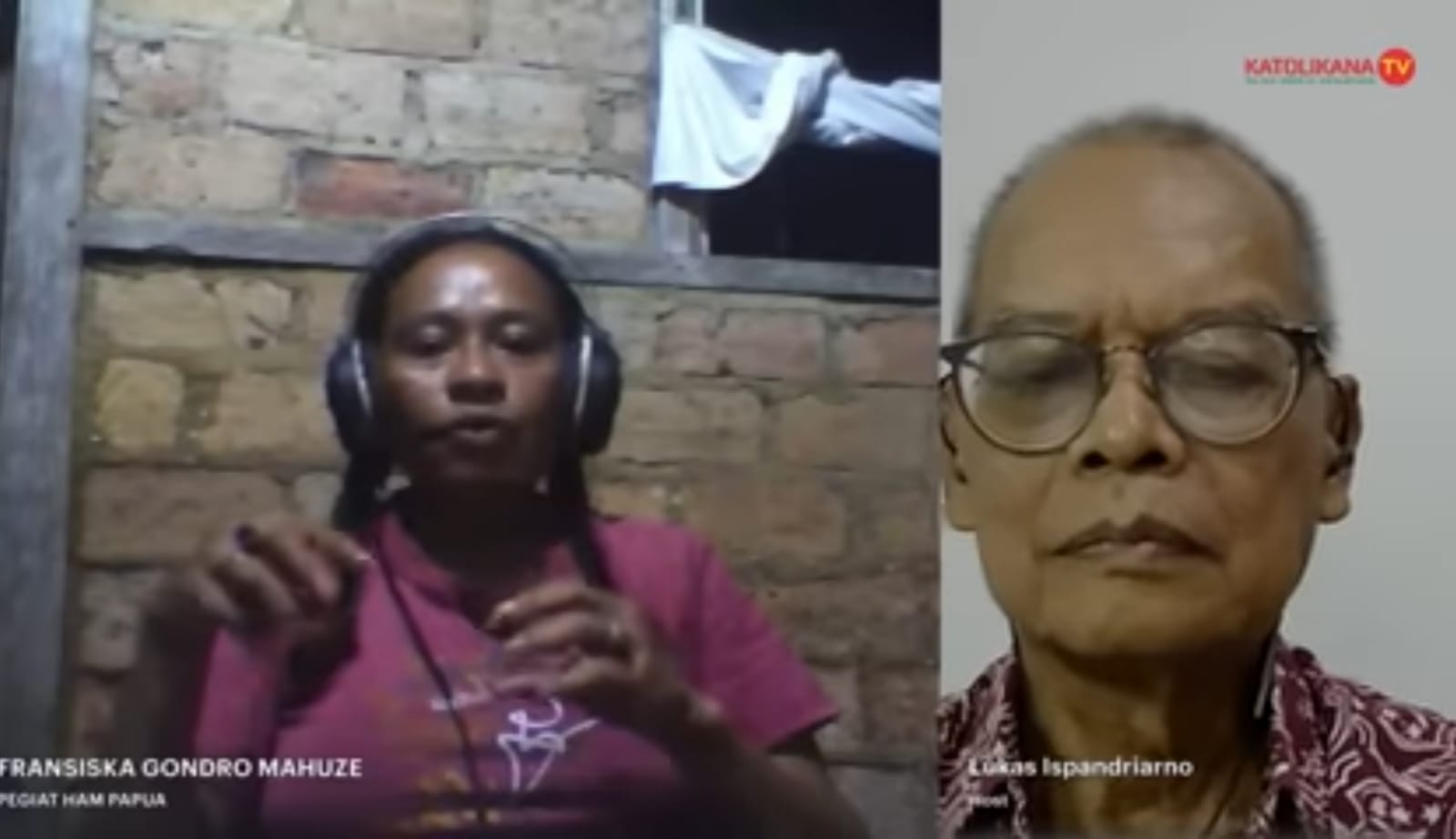
The documentary film Pesta Babi was the centre of discussion in a Katolikana YouTube broadcast hosted by Lukas Ispandriarno in collaboration with Veritas Indonesia, on Friday (29/5). The discussion invited researcher and filmmaker Cypri P. Dale, the Secretary to the Justice and Peace Commission KWI Romo Marthen Jenarut, Lisa, Academics, Pater Kasmir from Catholic Media, and Fransiska Gondro Mause, Marind woman from Merauke.
For many spectators, the film was not simply a documentary about Papua. It was a meeting point between humanitarian crisis, ecological crisis, and Spiritual struggle.
Cypri P. Dale said that the film was the culmination of a long (years of) research process. She confirmed that the main objective of the film was not simply a social criticism, but an attempt at amplifying the voices that were previously ignored.
"We made the film to amplify the cry for help for Papua which was for so long ignored," said Cypri.
Yet it was not simply a cry of indigenous people. More than that, he saw a cry of the all living things affected by it.
"It was not simply a cry for help from indigenous people. It was a cry from trees being cut down, from casowari, from the crocodiles, and the living things who lost their living space. In a Catholic religious discourse, it was the call from Mother Earth who needed our attention."
For Cypri, what happened in South Papua was not simply a local issue. What happened in Merauke was a reflection of the relationship between human and nature, development, and humanity as a whole.
"This is not just about Papua. This is Indonesia. This is about religions. This is about the world and our humanity."
The Media Presented the Lost Narrative
Pater Kasmir saw the importance of the documentary film as a media to present voices often ignored by mainstream news.
He said that the media often failed to provide enough space for the reality of Papua people.
"We tried to present narratives that could get a proportional space in mainstream media," he said.
In that context, Pesta Babi became significant. The film not only presented data and facts, but also the living experience of communities at the periphery of public attention.
The discussion also paid attention to how digital media played a role in disseminating the key message of the film. Through platforms such as YouTube, the story of Papua could reach millions of people and open wider dialogue spaces.
Yet, the speakers reminded that exposure to information alone was not enough. What was more critical was to ensure that communities gained accurate information from sources who lived the reality.
For Romo Marthen, the major power of the film was its ability to show that ecology never stood alone.
He acknowledged that he was deeply touched when he heard local people say, "When our forest is already taken away, where would we live?"
"That came out of their sincerity and real-life experience," he said.
He said that the film was a living proof that the ecology was integral as is articulated in the encyclical Laudato Si'.
"The film shows that reflection about ecology was not a reflection in a void. This is a way to prove that there is a strong connection between human and their environment."
In integral ecology perspective, environmental damage was not simply about destroying flora and fauna. It also destroyed culture, identity, and social relations in community who lived off nature.
For that reason, the struggle to keep the forest intact was also a struggle to keep human dignity.
Papuan Women and the Loss of "Nature’s Supermarket"
Fransiska Gondro Mause brought a new and very important perspective in the discussion: the experience of Papuan women.
He said that forest functioned as "nature’s supermarket" for indigenous people. They got their food, medicines, building materials, and day-to-day resources from the forest.
When the forest disappeared, women felt the direct impacts.
"Women lost their supermarket," said Fransiska.
She described how in the past, people fished together, hunted together, or harvest forest produce to meet family’s daily needs. Now they had difficulty accessing those resources.
As a result, communities had to spend money in order to get their daily needs, which in the past was free.
Fransiska believed that the situation was not just an economic issue. It was violation of basic rights of indigenous communities.
"The loss of natural resources also meant violation of the rights to food, clothes, and houses."
The Red Cross as Symbol of Resistance
One of the strongest pieces of the film was a scene with red crosses being installed in indigenous territory.
For some people, the symbol begged a question. Yet, for indigenous people who used them, the crosses were expressions of faith and of resistance.
Cypri explained that thousands of crosses were installed in various places in South Papua.
"In my life, I have not seen religious people had such deep faith in the cross," he said.
He believed that indigenous people combined ancestral tradition and their Christian faith to protect their land. When they faced the companies, security officers, and pressures of development, they turned towards what they believed as their spiritual strength.
Pater Kasmir saw this phenomenon as a form of liberation theology in the indigenous people.
"Crosses were not there as neutral exhibit. Crosses were symbols of solidarity with those being put on the cross by history," he said.
He believed that installing the crosses in their indigenous land was an expression of faith which was born out of the injustice they experienced.
Meanwhile, Fransiska elaborated that the use of red crosses was an initiative of local people themselves.
"People felt that there was injustices and the State ignored the rights of indigenous people. The crosses became symbols that their land would never be ceded to corporations."
One key reflection in the discussion was about the Nationhood. In many occasions in the film, indigenous people stated unambiguously that they were Indonesian citizens. They did not reject Indonesia. They only wanted to be heard.
Such statements really touched because they appeared when local indigenous people expressed their plight that their rights were not being fulfilled.
An indigenous person appearing on the film stated that he/she was an Indonesian citizen, but his/her rights were not fulfilled.
That statement was a reminder that nasionalism was not only measured by their loyalty to the State, but also by the State’s ability to fulfil people’s rights.
The discussion highlighted that development should not only be seen in number of investment or the size of land being opened. The most important thing was whether development truly brought justice in affected communities.
In the end, Pesta Babi was not only a film about Papua. It was a reflection which posed the question to all citizens of Indonesia.
Whether development proceeded by listening to the voices of affected people? Whether economic development had to be paid with loss of living spaces amongst indigenous people? And when the call was heard, what would the State, the Church, the civil society and all of us do?
As clearly articulated by Romo Marthen, the Church could not simply be a moral observer.
"The Church had to become actor of transformation."
The same message seemed to apply for all citizens of Indonesia. After watching the film, the only choice was not whether we knew or not. The question was whether we were willing to listen and to act.
Because behind the pictures of lost forests and land that changed their functions, there were humans who kept calling:"Listen to us. We are also part of Indonesia." (Ast)