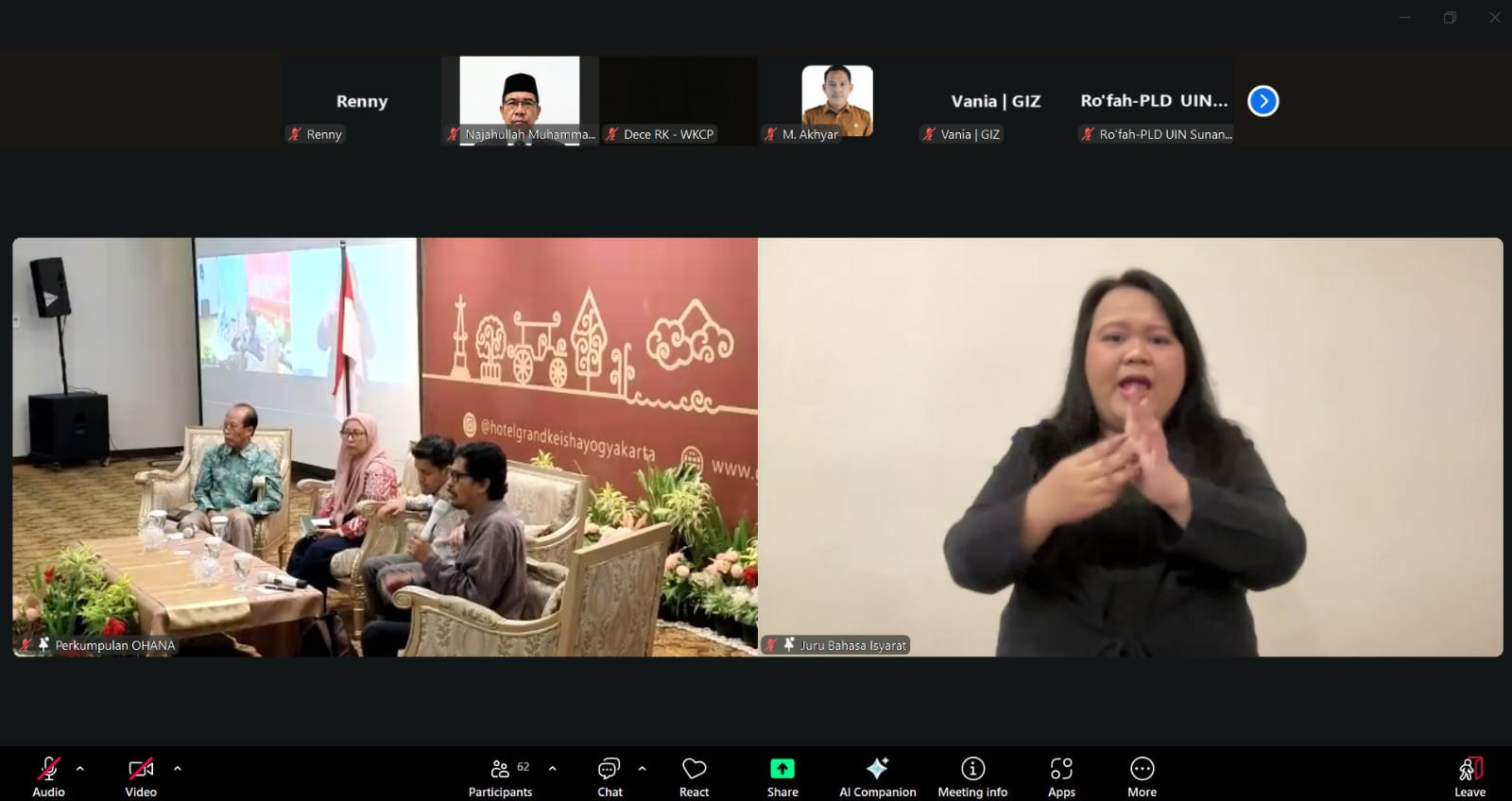



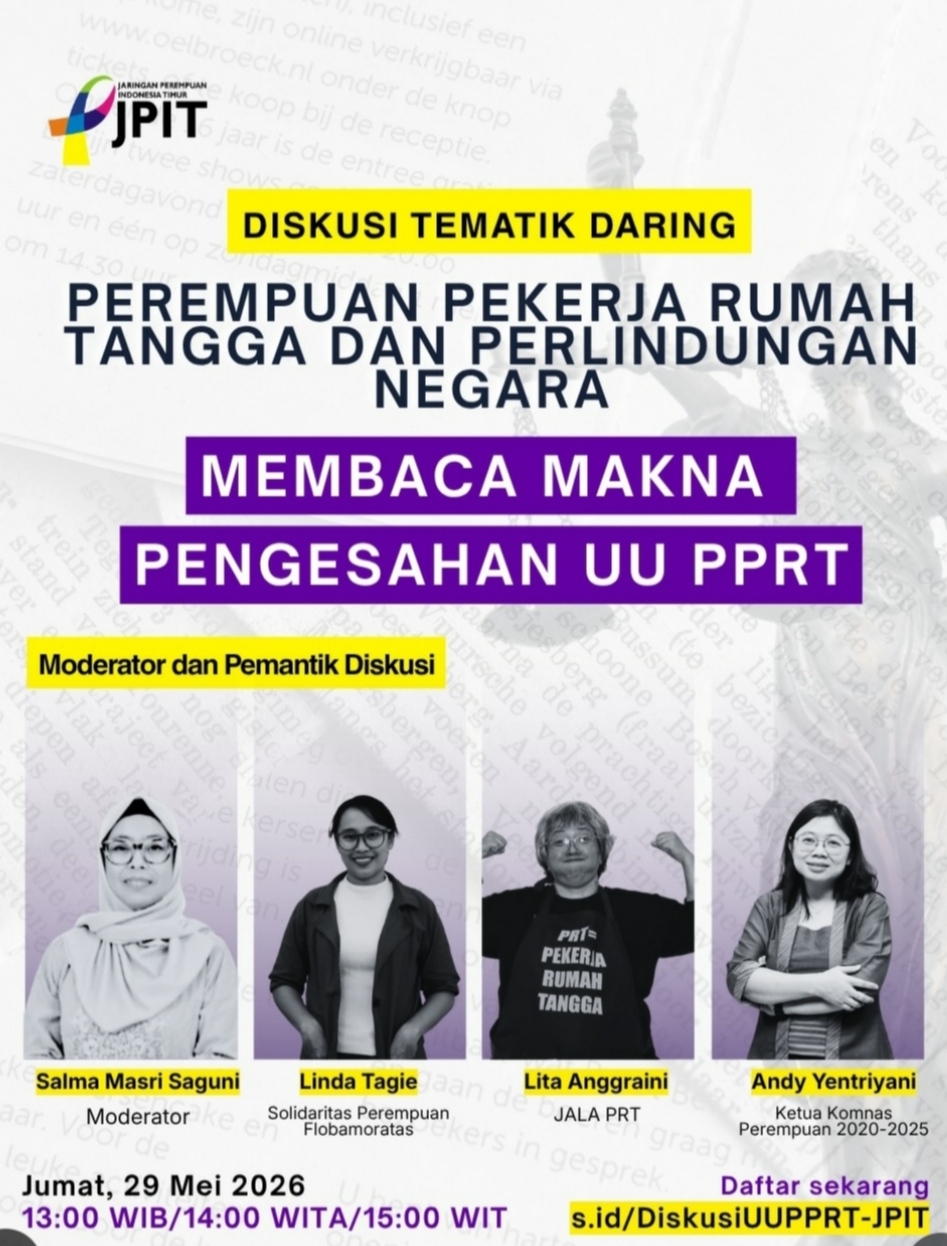

The struggle of domestic workers could not be separated from gender, social classes, and layers of identity inherent in women. In a discussion organised by Jaringan Perempuan Indonesia Timur (JPIT) on Friday (29/5), women activist Linda Tagie highlighted that the majority of domestic workers were women who lived on a crossroad featuring their vulnerability – from economic status, culture, and religion, to power relations in the household and in community.
For Linda, the position of domestic workers to date was very personal and very closed. They cleaned the house, cooked, washed, cared for children and elderly, and performed a number of nursing duties that were often labelled as “women’s natural work”. For this reason, their work was often viewed as non-professional work that required no legal protection and recognition.
The vulnerability became bigger as most domestic workers worked without written contract, not registered for social security, and difficult to get protection when they experienced violence or violation of their rights. This situation showed that the problem they faced was not simply a relationship issue between men and women, but also power relations amongst social groups, including amongst women themselves.
Linda also asked participants to look at the history of women through feminist perspective or herstory. She saw that colonialism and feudalism left a legacy of job division that placed women as primary carers. That pattern continued, even when women entered modern workplace.
Amidst the limitation, women domestic workers showed their political resilience born out of their real-life experience and collective movement. The long struggle for over two decades that culminated in the law on domestic workers was clear evidence that change could emerge in the most private domain. For Linda, the struggle was not simply social recognition of the profession, but also acts to overhaul system that oppressed women and to create fair justice.
Linda added that domestic workers were often viewed simply as people who helped with the domestic works in other people’s houses. Yet, in the feminist political perspective, their role(s) were larger. Women domestic workers were the ones that reproduced social productivity and people’s economy.
In this view, domestic workers allowed a variety of public activities to proceed. They took over caring, nursing, and managing the household in order to support daily life. Without their work in private domain, professional workers, officials, business people, and political actors would not be able to perform their activities optimally in public domain.
In addition to being the support system to social life, domestic workers also contributed to the economy. Despite their often-low wage, they moved the household economy and the community. Their identity was never singular. Most were women who were often children, mothers, wives, or main income earners for their family.
Yet, this vital contribution was not accompanied with sufficient protection. Many domestic workers faced low wages, physical, psychological and sexual violence, and economic exploitation. In East Nusa Tenggara, the situation was even worse as they faced limited access to education, infrastructure, and information which forced women to go int domestic workers out of their vulnerability.
Linda noted that poverty was not the only factor that led women to become domestic workers. Many women migrated dues to violence at home, cultural discrimination, and limited access to resources. In such situation, domestic work seemed to be the most accessible option.
For that reason, domestic workers’ struggle was not over the top. They demanded recognition for their dignity and their value that contributed to social, economic, and political life. The implementation of the law would constitute a vital step to ensure that hardly-noticed care work needed proper recognition and protection.
Monitoring the Implementation of the Law on Domestic Workers: from Professional Recognition to State’s Responsibility
The ratification of the law on domestic workers was vital momentum in the long struggle by domestic workers in Indonesia. Yet, Andy Yentriyani, who was also the resource person, believed that the real challenge started after the law was ratified. Effective implementation would determine whether protection for domestic workers could truly be implemented or it was just a legal promise on paper.
In the discussion organised by JPIT, Andy asked participants to look at the law critically and optimistically. She believed that the law brought fundamental change in paradigm. For years, people considered domestic work as informal work that required no specific skills and was natural part of women’s work. This led to domestic workers being seen as non-professional workers that had rights and protection.
With the law in place, domestic work was recognised as a profession with economic and social value. This recognition was vital in order to eradicate current view that demeaned caring and domestic works as largely tasks that women did.
Andy explained that the law not only granted rights to domestic workers, but also articulated the duties of the parties involved, including employers, placement agencies, and government. One key aspect was legal certainty through clear employment agreement. For that reason, working relationship which was based on verbal agreement now had stronger basis to protect the rights and duties of both parties.
In addition, the law introduced clearer accountability. Should there be violation of workers’ rights, there would be parties to take responsibility, from employers to institutions/agencies involved in placement and supervision.
Yet, Andy reminded that there were a number of challenges. A number of protection standards articulated in the ILO’s International Convention No. 189, such as with regards to minimum wage, weekly rest time, overtime pay, and more detailed protection for reproductive rights were not fully regulated in detail in the law. For this reason, monitoring and strengthening of implementing policies were extremely vital.
He believed that the State had a big responsibility in ensuring that protection was being implemented. That responsibility included four key aspects – recognition and protection of rights, raising public awareness, law enforcement, and providing supporting facilities for domestic workers’ rights, including access to social security and protection services.
Another challenge was data collection, capacity of officials, weak law enforcement, and gaps in infrastructure which was evident in Eastern part of Indonesia. In such situation, domestic workers often worked in closed and isolated spaces that they were vulnerable to violence and exploitation.
For that reason, Andy emphasised that the implementation of the law was not only the responsibility of the State. The involvement of civil society, women’s organisations, workers’ communities, academics, media, and broader communities was critical to ensure real protection of domestic workers in day-to-day life. For Andy, the ratification of the law was not the end of the struggle, instead it was the beginning of collaboration to ensure that the dignity, rights, and protection of domestic workers were truly respected in real life.
The Law on Domestic Workers Gave Recognition and Protection to Domestic Workers
Founder of JALA PRT, Lita Anggraini explained during discussion that the Law on Domestic Workers was there to give protection and legal certainty to domestic workers and employers. With this regulation, the rights and duties of both parties were regulated clearly in order to prevent discrimination, exploitation, and various forms of harassment which domestic workers often experienced.
Lita viewed that the law was prepared on the principles of kinship, justice, welfare, and legal certainty. The law also aimed to create harmonious working relationship by placing humanity and mutual cooperation in high regard. In addition, the regulation promoted increase in knowledge, expertise, skills, and welfare of domestic workers.
The Law on Domestic Workers recognised a number of domestic works that had values, from cooking, washing, ironing, cleaning the house, child care, caring for people with special needs, driving, guarding the house, to caring for pets. Domestic workers had the rights to perform their religious prayers, to get salary, holiday allowances, humane working hours, right to take a break, holidays, and social security such as National Health Insurance (JKN) and Employment Social Security (BPJS Ketenagakerjaan).
Lita stated that the law on domestic workers would not change family culture or good practices in communities. On the contrary, the law strengthened the recognition that domestic workers were workers who had rights to be respected, protected, and to get access to State welfare programs so that they would not be left behind by development. (Ast)