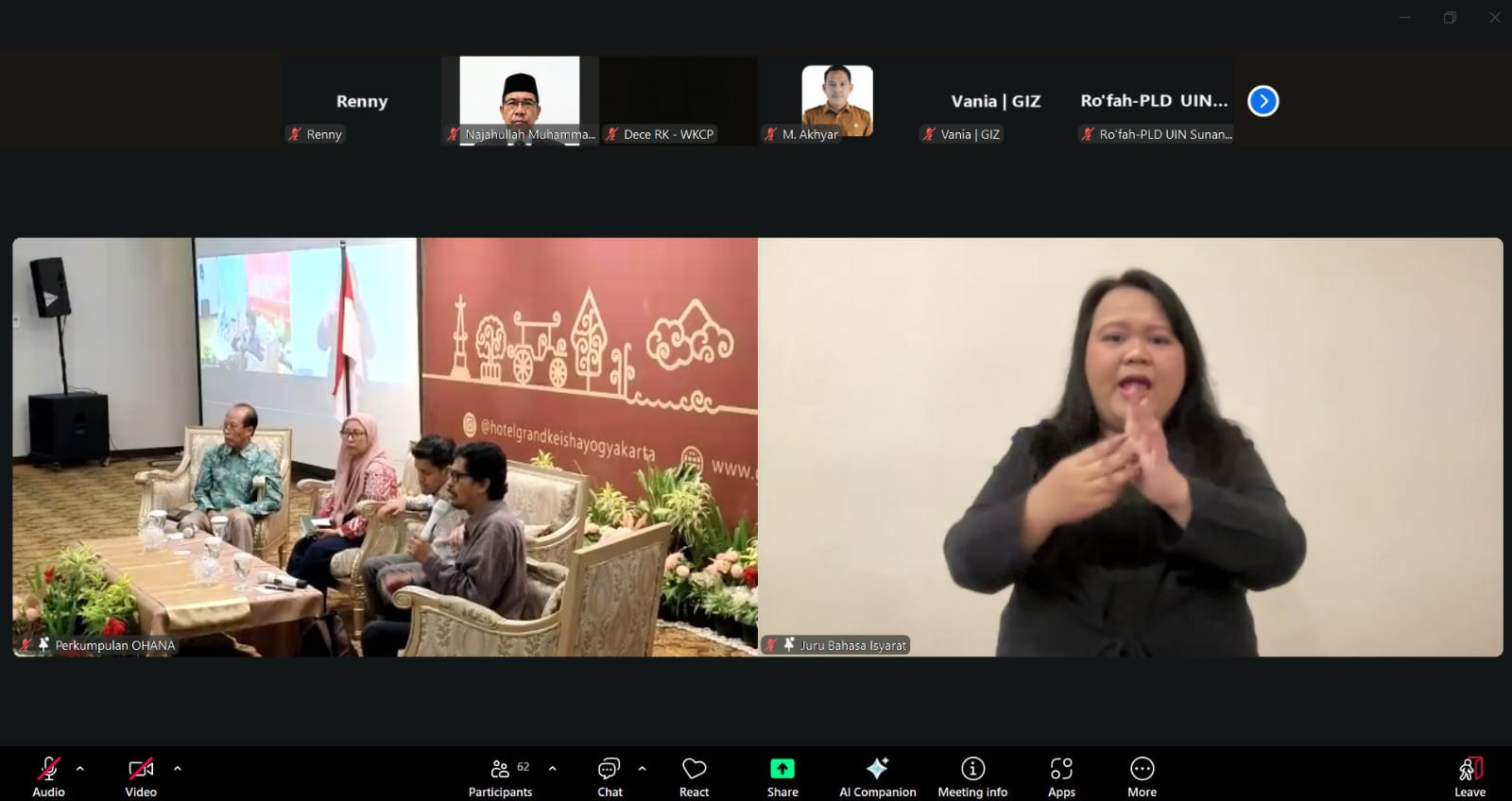





Grief is an unavoidable emotional experience in people’s lives. Yet, the way each individual person faces a loss varies and does not follow the same pattern. In a discussion about mental health and grief process, the psychologist Dinastuti explained that the five-stage grief theory introduced by Elisabeth Kübler-Ross was understood as emotional waves that came and went repetitiously. That was the opening sentence from Dwi Ariyani, the moderator from Perempuan Bumi (Earth Women) during online discussion by Perempuan Bumi on Saturday, 23/5.
A lecturer and psychologist at Unika Atmajaya, resource person Dinastuti explained that denial was when a person found it difficult to believe in the fact about losing. This was a brain mechanism to protect itself from serious emotional shock. Then, the person entered an angry phase – a feeling of injustice towards him- or herself, towards others, even towards God.
The next stage was bargaining, when a person thought “if only” as a form of trying to control the situation that had happened. Then there was deep sadness characterized by emptiness, loss of energy, to loss of motivation to do daily activities. The stage of acceptance did not mean that the person forgot the outgoing “person,” rather it was learning to live with the memory of that person.
Dinastuti stated that people needed to accept the emotion associated with grief and ensured sufficient fulfilment of basic needs such as food, sleep, and rest. Family’s, community’s, even group’s social supports were critical in the recovery process.
She stated that grief was a natural process and had no time limit. Yet, professional help was necessary when grief hindered daily activities, interfered with work performance, led to failure in people’s performing their social roles, or triggered the need to self-harm. In such a situation, the help of psychologist, counselor, or psychiatrist was vital to help with healthy emotional recovery.
In the process of recovery from grief, social supports were key factor in someone’s ability to survive a loss. Yet, not all types of support had the same mechanism. Psychologist Dinastuti explained that there were two forms of group supports in Indonesian communities - formal and informal – with equally important roles in the recovery process.
Informal support group(s) was (were) the closest support in Indonesia’s collective culture. The supports usually presented themselves naturally through prayer groups, revolving funds, hobby groups, to community organisations. The form of supports may not necessarily be in-depth conversation about grief, but may be physical presence, help in organising the house, to religious rituals and prayers. The presence of closest people made the grieving person not feel alone when dealing with the difficult moment in their life.
Meanwhile, formal support group(s) had more organized structure and was (were) designed specifically to help ith emotional recovery. Such group(s) usually had rules regarding confidentiality, regular schedule, and more specific focus, for example family of cancer survivor or community who suffered loss of family member. Dinastuti stated that formal group(s) was (were) needed because grieving was often very personal experience and therefore people who never experienced similar loss would find it difficult to understand.
She also explained that feeling of emptiness after loss was often most intense months after the incident. At the beginning, a person was in the denial phase and was busy managing the administrative aspects, hence the person did not focus on the emotional aspect. Once the social aspect became less prominent and life returned to normal, a feeling of loneliness became more prominent.
To describe such a process, Dinastuti used a metaphor of “black balls in a jar” by dr. Lois Tonkin. She said that grief was not truly diminishing. What happened instead was people going through life. With experience, relations, and new goal, the living space became wider and the grief no longer dominated a person’s life.
In the discussion, Dinastuti also paid attention to the fact that supports may not always come from immediate family members. In many instances, it was the community or unexpected people who provided the safest space for people to share their grief. She pointed to her experience of accompanying a cancer patient’s family in the hospital, where emotional relations between visitors formed spontaneously through sharing and conversation.
She also emphasized that the key focus in time of grief was not on the deceased person, but on those people left behind. For this reason, the presence of social supports, attention, and safe space to talk became vital, particularly when the supports were diminishing a few months after the loss. In such situation, communities able to listen without making any judgement could become important source of support in a person’s process of emotional recovery.
Participants were given space to share their experience about the importance of simple supports for those losing loved one. Dinastuti offered an example of a neighbor of hers who helped a woman who just lost her husband by cleaning and preparing shoes so that they were ready when needed. Such small act was meaningful because it helped the grieving woman avoid da-to-day tasks through practical acts while dealing with the emotional aspects of grieving.
The discussion also highlighted that a feeling of loss often would not appear on the first few days after death. Initially, family was often preoccupied with the funeral, interacting with mourners, and moved automatically into denial phase. Yet, a few weeks or months after, when people returned to day-to-day regular activities, the feeling of void became more and more prominent. At that point, the support system became vital.
A number of participants acknowledged that they needed space to be heard without being judged or given advice. Presence of support friends, communities, or groups who had an understanding of similar situation would be very helpful in the grief process.
At the end of the discussion, there was an idea about the importance of establishing more specific and safe grief support group, particularly for women activists and communities. Dinastuti believed that grief was a very specific process that not all general communities would be able to serve as right space for recovery. Support groups that focused on the experience of loss could help individuals to feel understood, and at the same time make available safe space without social pressures or demands to always look strong. (Ast)