



Sexual violence continued in silence inside the seemingly respectable walls of campuses, Islamic schools, government offices, and family houses. Cases kept coming. A university student became victim to her lecturer, Islamic student experienced violence at the hands of their teachers, employees were forced by employers through work relations, and children became victims of their own family. They all showed a similar pattern that power relation made it difficult for victims to fight back and to speak, and so they chose to stay silent.
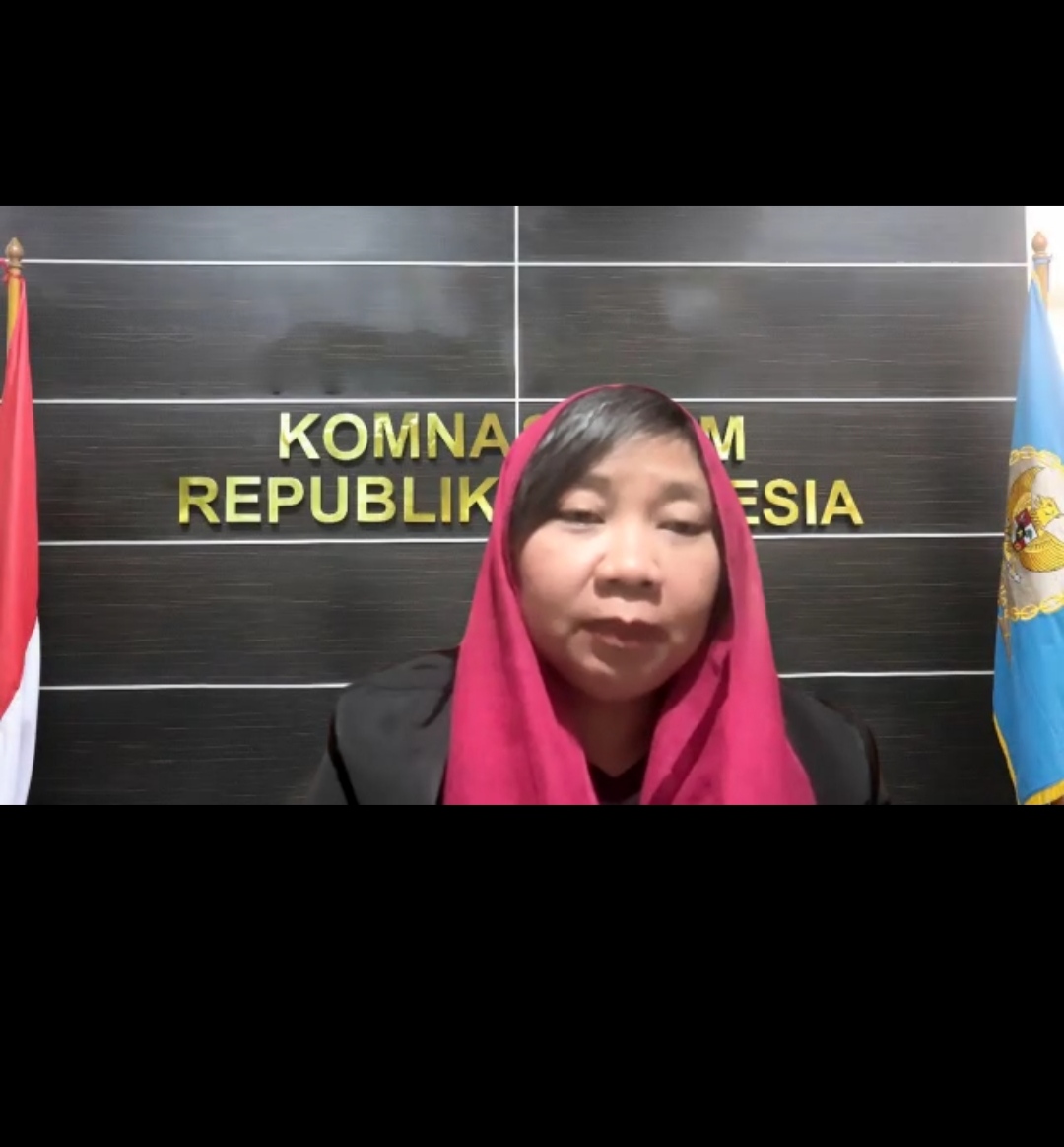
The situation was a major concern for Anis Hidayah, the chairwoman of National Human Rights Commission during a discussion with cadres of Fatayat NU Blitar, on Saturday (16/5). She said that Indonesia was in an emergency situation for sexual violence crimes. The statement had its merit. She said that everyday, people were presented with new cases of sexual violence in many social spaces, even in institutions deemed to have the moral and educational authority.
“There was a case of violence every two minutes,” she said. The number showed that violence against women was no longer sporadic, but structural rooted in Indonesian social life.
Anis featured an example of a case in a religious-based university - Universitas Nahdhatul Ulama in Blitar alleged to involve dozens of female students who were victims of sexual violence. She also competed an investigation in Pati in relations to sexual violence against tens of female students in an Islamic school Pondok Pesantren Ndolo Kusumo. The victims were female students, but also teachers and adopted children in the school.
“If we talk about human rights, one victims was more than enough,” she said.
That statement highlighted that sexual violence was not simply a matter of personal moral issue, but human rights violation. The Indonesian constitution guaranteed every citizen right to feel safe and protected from acts that demeaned human dignity. Yet, the reality showed that women, children, and other vulnerable groups continued to be targets of violence.
Anis believed that the root of the problem was closely associated with patriarchy culture, gender injustices, and discrimination against women in community. The culture created a power gap allowing perpetrators to use their position, authority, and influence to manipulate victims.
Power relation was the important key word in understanding cases of sexual violence. In campuses, for example, the relation between lecturers and female students created academic dependence. Female students needed guidance of lecturers in order to graduate, while lecturers had the authority to determine the academic process. Perpetrators often made use of this situation.
“When a female student did her thesis she had to meet the lecturer, this was a form of dependence. There was an unequal situation,” she said.
Similar power relation also happened in Islamic school between teachers and students, in offices between superiors and staff, or in household between parents and children. In many cases, victims chose silence out of fear of losing jobs, of not graduating, of being isolated, or fear of being labelled a disgrace to family.
This situation was responsible for so many cases of sexual violence to become an iceberg phenomenon. Prior to Law on Sexual Violence Crimes, victims were often reluctant to report for fear of being blamed, shamed, or untrustworthy.
“Most of the time, victims were being blamed,” said Anis.
In fact, sexual violence was not only about rape. The Law on Sexual Violence Crime widened the definition of sexual violence to include a variety of acts, including verbal harassment, non-physical harassment, forced contraception, forced sterilisation, sexual exploitation, electronic-based sexual violence, to forced marriage.
Anis explained that whistles, comments about a woman’s body, or digital messages with sexual overtone that demeaned a person’s dignity were parts of sexual violence crimes.
“Not just physical, but also non-physical,” she said.
The expanded definition became important because for many years people understood sexual violence as simply rape. This led to many victims of verbal violence or digital-based violence not realising that they experienced crimes.
UU TPKS sendiri disahkan pada 12 Mei 2022 setelah perjuangan panjang lebih dari satu dekade. Bagi kelompok masyarakat sipil dan organisasi perempuan, pengesahan undang-undang tersebut menjadi tonggak penting dalam perlindungan korban kekerasan seksual.
“The State must be present to give its commitment so that forms of sexual violence van be prevented and addressed,” said Anis.
The law stated that all cases of sexual violence had to be addressed through the court mechanism and not mediation. Victims was not supposed to be forced to marry the perpetrator in order to hide the case, as often socially practiced in many areas.
Yet, the implementation of the law faced many challenges. Law enforcement officials often justified themselves by saying that they had little evidence, while victims experienced serious trauma and fear of giving their testimony. Anis suggested that the Law on Sexual Violence Crimes already regulated that victim’s testimony can be used as evidence, confirmed by medical legal certificate, psychological assessment, and digital evidence such as electronic conversation.
“There was hardly any witnesses to sexual violence crimes,” she said.
For that reason, approach to victims had to prioritise protection and psychological recovery. Victims needed safe houses, legal accompaniment, psychological services, to protection from intimidation by perpetrators.
Anis emphasised the importance of UPTD PPA (the Sun-national Technical Implementing Unit for Women and Children Protection) as integrated services for women and children. Yet, the fact on the field showed that such facility was limited. In the discussion, a participant from Blitar mentioned psychological clinic in her locality with only one staff, while the victims were so many.
In addition, many victims and their family chose non-legal solution because they were afraid that the legal process was be long and tiring and would put a dent on family image. This was where the roles of accompaniment became crucial.
“Victims’ courage to speak was often the only way for the victims to get justice,” said Anis.
To her, accompaniment received legal protection. Law on Sexual Violence Crimes offered immunity to those who accompanied victims so that they were not easily became victim of criminalisation by perpetrators. Yet, threats and intimidation against accompaniment often happened, particularly when perpetrators had social or political power.
Anis gave an example of a case in Yogyakarta when an accompaniment from a legal aid organisation faced criminalisation after accompanying a female students who experienced sexual violence from her lecturer. In such situation, The National Human Rights Commission and Witness and Victim protection office offered protection.
The phenomenon showed that the fights against sexual violence were not just about consolidating the law. What was needed was cultural change and collective confidence to stop normalising violence.
Prevention had to start from family, schools, community organisations, to religious educational organisations. Children had to be made aware early on the boundary of the body, right to self-security, and confidence to speak when they experienced harassment.
“Education is not only for children, but for the whole family,” said Anis.
She also emphasised the importance of religious approach in promoting respects for women. Values in Islam, according to her, essentially placed women as dignified humans that demand respected, and not as object of power.
Amidst the many cases of sexual violence, people needed the courage to stop assuming that the victims brought shame. On the contrary, the perpetrators were the ones to be ashamed and punished.
As long as the victims were overwhelmed by fear, power relation would continue to work in the obscurity. And as long as people chose to remain silent presumably in order to keep the institutional image intact, sexual violence would continue to find spaces to repeat itself. (ast)