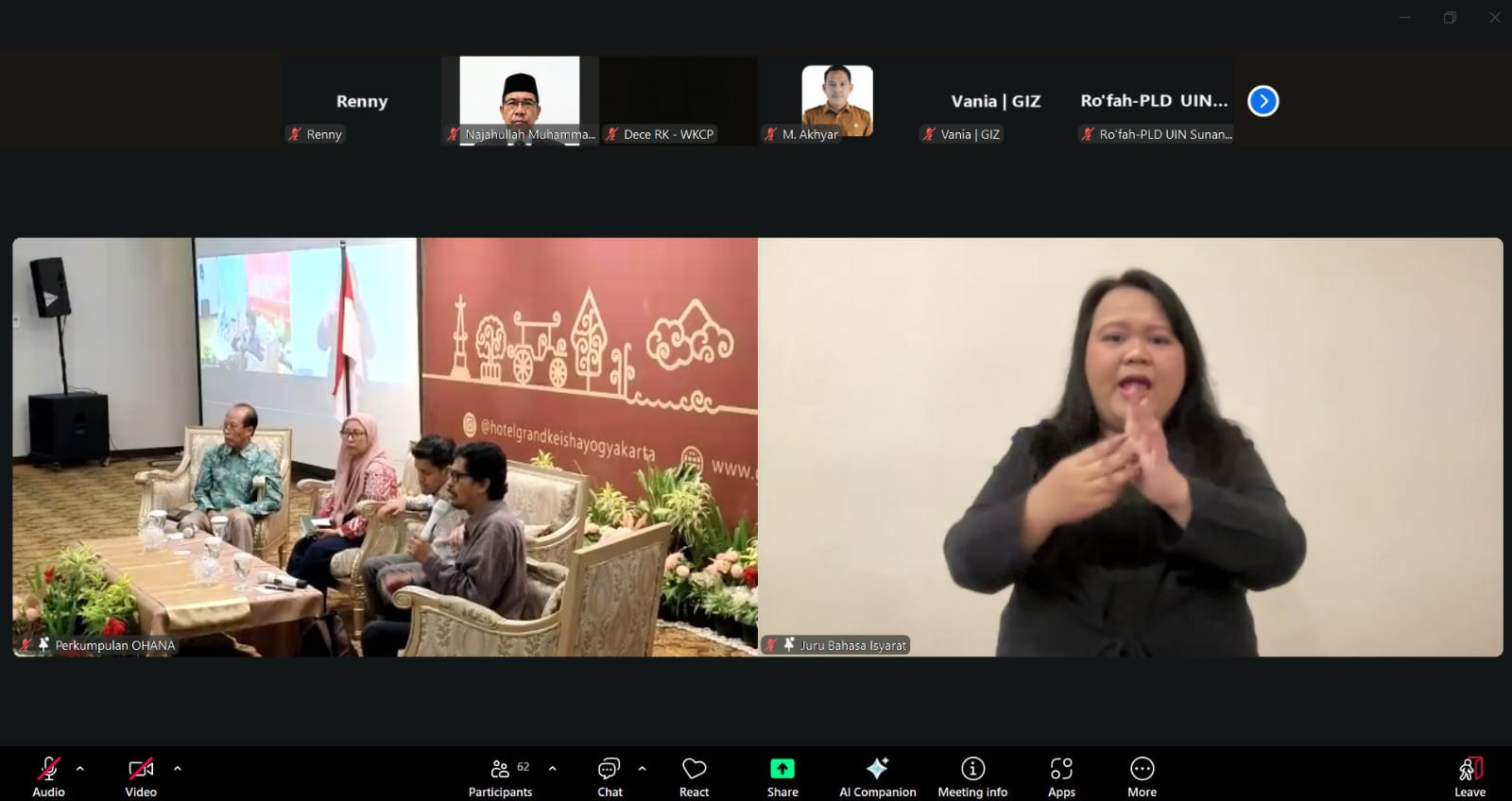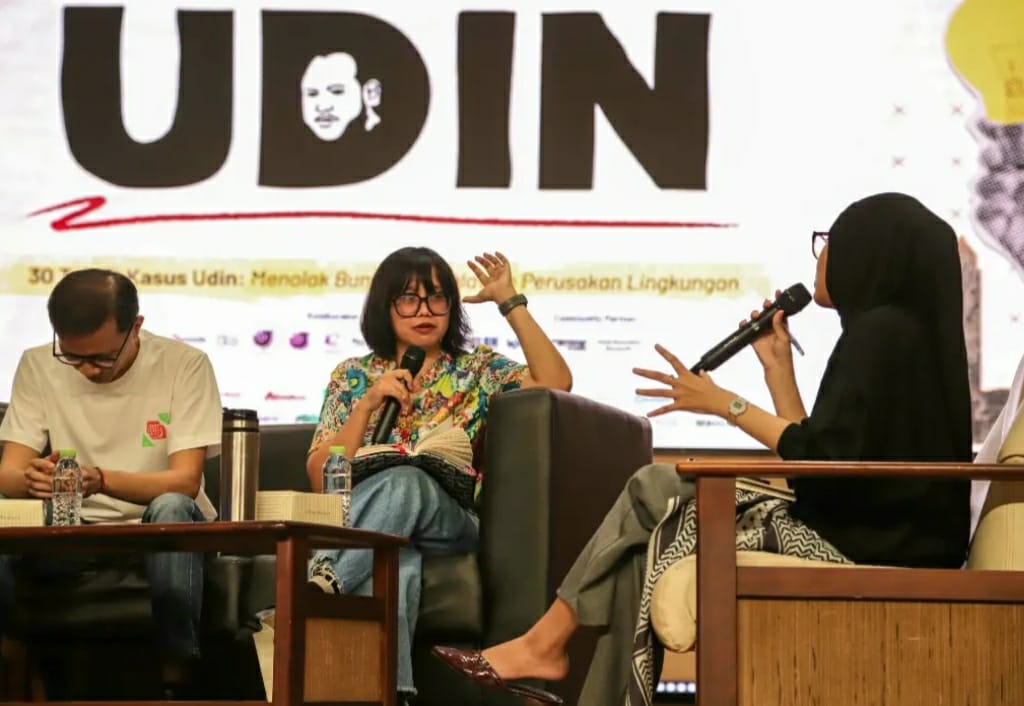



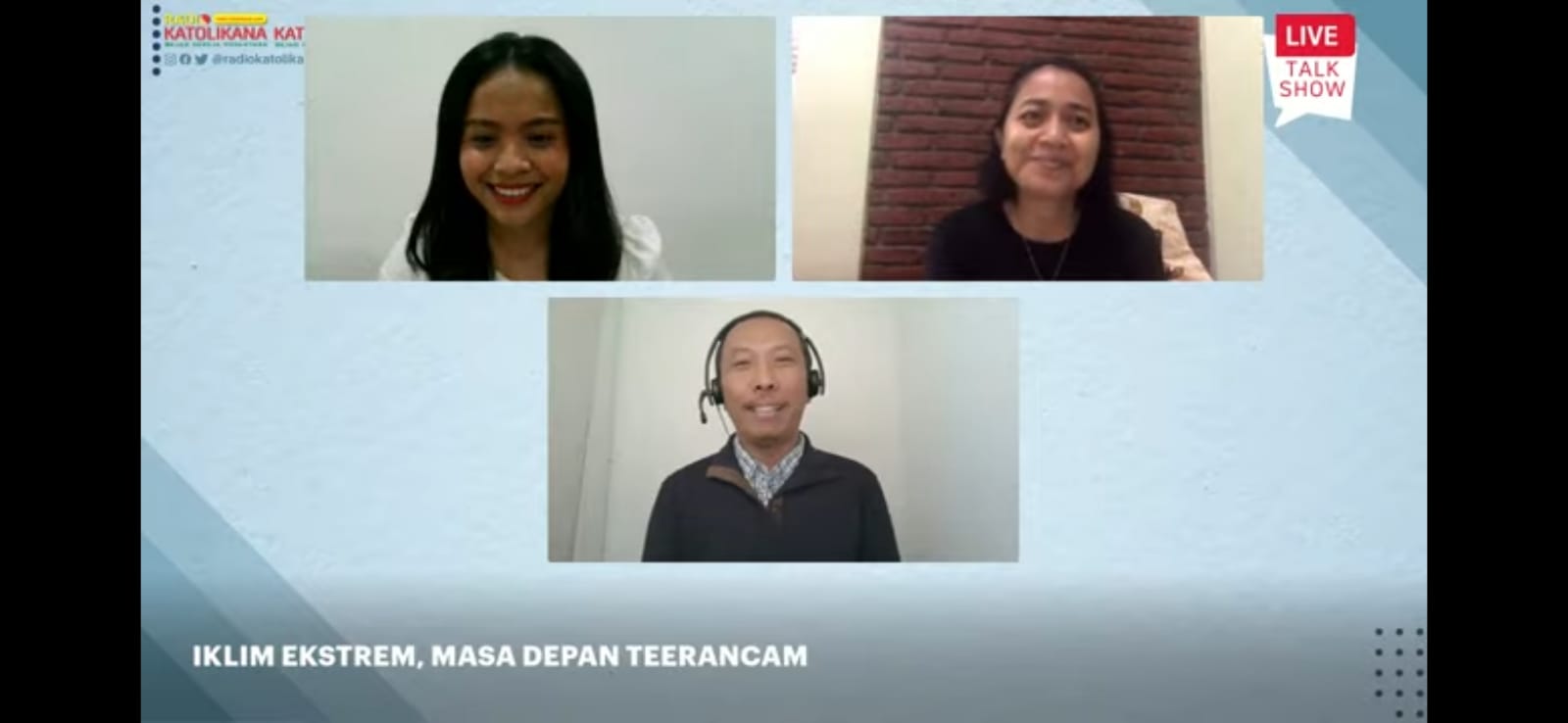

Climate change had become a major issue globally. During an international United Nations’ meeting, the Secretary General of the United Nations highlighted three major crises – climate change, critical air and soil pollution, and biodiversity crisis. Indonesia also faced the same concerns. The Catholic community in Indonesia searched for joint solution to the climate crisis. This was expressed clearly during the opening of the speech by Budi Tjahjono in Katolikana YouTube channel regarding future threats of extreme climate, moderated by Epifania, on Monday (23/2).
Budi added that during the United Nations’Climate Change Conference in 2019, Indonesia jointly agreed just like during Paris 2015 Agreement, that there was an increase in the earth temperature of more than 1.50 before the industrial revolution. This was significant because when the earth temperature increased by 1.50 the impacts would be tremendous. The crisis was not just affecting Indonesia, as a tropical country, but the whole earth humanity. In Catholic teaching, there was articulation about caring for the earth as joint property.
Then what about the International Franciscan? Budi answered that there was very close relationship between climate crisis and human rights. From human rights perspective, Budi from Franciscan International suggested that climate change pointed the way to joint advocacy at the international level, particularly at UN level, based on the teaching of Saint Fransiskus Asissi and Santa Clara. It was not just about discussing big ideas but also reflecting it in daily lives.
Laudato Church teaching was excellent, because we did not only see the problem at global policy level but also at day-to-day level. Fransiskan in many countries always taught that everything people do must have positive impacts on the earth, the people, and the environment. He also worked with other human rights movements such as rights to healthy environment. At the UN human rights session in 2021-2022, this became a joint concern that led to acknowledgement of the rights to healthy environment. This right was recognized and became basis for actions to address climate change in many pars of the earth.
One concrete example was by looking at it from the perspective of a decision by the International Court of Justice (ICJ) in Den Haag, the Netherlands. It recognized the importance of State obligations in addressing the impacts of climate change on human rights. The International Court decided that each State had the obligation to take positive actions to address increase in temperature by more than 1.50 Celsius.
In answering the subsequent question by the host that the World Meteorological Organization (WMO) stated that 2025 was the hottest year globally, Budi provided a concrete example of works being done by his team in Solomon Island. The Island State of Solomon was not far from Papua. His team worked with the Catholic and Anglican Churches to monitor global warming. The impacts proved real, in that the sea went further inland. The Island State of Solomon faced a challenge of disappearing isles due to climate change.
The earth was becoming hotter because the land surface changed – the soil was sinking about 1 – 0.50 m. This was not a loss of land but also culture passed down by women to children and grandchildren. In Solomon, women were responsible to teach children. They used to weave Pandan bags on the coast, but now there was no more pandan and the tradition was lost from view. This was one example of the many examples of lost tradition due to climate change, which was also responsible for the melting glacier such as in Switzerland. The number of frozen rivers decreased and this led to more frequent landslides. Increase in temperature had major impacts, and the Climate Accord in Paris stated that temperature increase had to be limited to not more than 1.50.
So what did lay people need to do when they did not have any knowledge about global warming?
What they could do, according to Budi, was to read Laudato – the teaching of Fransiskus in 2015. The Laudato Church teaching was very simple and easy to understand. It was not a philosophical teaching rather it articulated a number of actions to be done. Things had to be done starting from oneself. For example, how to consume food, things and many others. The question was: Did we really need that or do we just copy other people? For example, Budi could not drive and he did not have a car. He could not ride a motorcycle either. He used to take public transport, because he used to live in Europe, so the situation was somewhat different. He rarely bought clothes because he was aware that people were conditioned to buy new things, or to consume food excessively, including using high technology excessively. “AS a young man, particularly from Indonesia, use anything with full awareness,” said Budi.
Other host, Kristen Yuliarti asked how could Franciscan spirituality be manifested in real action in climate crisis advocacy, and how to play a role there?
Accordig to Budi, the Vatican counsel articulated that each had a task and the church too had a task. We could discern many teachings easily such as the Laudato that talked to all people. Santo Fransiskus had a friend Santa Clara and they built spirituality together. “He was a warrior that embraced leprosy. That was advocacy. Santo Fransiskus was the protector of human lives. Advocacy that we did with nature, which was marginalized, critically involved dialogue. Advocacy was something that was so close to us,” said Budi.
In the Philippines, he worked with Fransiskan congregation Kapusin and other congregations in other areas such as in Batangas Island, Southwest Luzon. There was an area near Batangas where there was extraordinary bio-diversity, known as the Amazon of Southeast Asia. There were many sea animals and plants. Yet the Philippine government built oil refinery there, Liquefied Petroleum Gas (LPG) and liquid gas in Verde Island or Green Island. The impact not ony affected the surrounding areas, as the ships going in and out also created pollution. Advocacy had to be a joint endeavour with Lipa and Batangas Bishop offices, in those islands, as well as local communities and Non-Government Organization (NGO) in the Philippines.
Budi took the case to international meetings including to UN Security Council in Geneva. He also brought cases involves non-renewable fossil fuel and people’s dependence on the environment there. He conducted awareness raising and obliged the government to take actions. One action by the coalition was to ask international bank to stop investment. They finally saw that their investment had negative impacts on the community and the environment in Verde Island. The coalition approached Swiss Bak and Bank of England, to encourage them to think about the impacts and about their moral and ethical obligations when they invested. The fight was fairly long but he remained optimistic.
With regards to challenges, Budi who had a background in rural teaching and from political reform generation, and that was his strength. When he said that he was hungry, that meant that he experienced hunger in the past. When he talked about flood, he also knew how it felt to be in flood. When he talked about natural destruction, for example during soggy days, he made it into his strength. And he hoped for the future, because the current generation was extraordinary young generation. He was optimistic that Indonesia would be better.
Laudato Si mentioned ecological repentance, which led to the question what would we do as humans in order to become ecologically repentant on this earth? Budi answered that we had to do it in a variety of segments, as individuals we had to do something and the action had to be wise. We had to influence policy in such a way that the earth became better at local, national, and global levels. Today’s economic system was continuous. And companies seemed larger than States. This was dangerous as countries were the ones to take responsibility. We had to prevent the State from being overpowered by corporation. “We had to put our people in the Parliament, WE had to continually put pressures. We had to continually “bark” because this was our earth. Even if it was in dire situation, we had to fight for it. I was proud that the Catholic Church had Laudato Si, and before that there was similar thing i South America. They proposed rights of nature, that nature had a right. There had to be things we did together,” insisted Budi.
The Need for Critical Awareness for Change to Happen
Talking about climate crisis and its impacts on the people in Indonesia, would this be related to the lack of literacy in community? The campaign coordinator for Wahana Lingkungan Hidup Indonesia (WALHI), Uli Arta Siagian stated that what was unique about urban people was that they were not aware of climate crisis. They were aware of signs of changing environment. They were aware that it was difficult to get water, and that there were changes in the quantity and quality of harvest, and the obsession for mining and oil palm upstream. They were aware that when companies came, floods and landslides became more frequent.” People may not have been too aware of what climate crisis was. But they were aware that changes had happened in their environment or in weather or climate. They were aware of these changes in our climate,” said Uli.
Communities learned on their own about changes that happened. There may have been research being done. Yet, how would religious leaders see these? And what kinds of literacy would we give to the people? The next question was raised.
Uli answered that there were very few discussions about climate change in churches, or during religious ceremonies. Not many preachers or priests have the level of knowledge necessary to understand why climate crisis happened. At the same time, extractive investment contributed significantly to climate crisis. Lack of understanding made the issue disappear from Church sermons. Hence, communities had to learn directly from the information provided by activists who worked with the environmental issues. For Uli, it was critical to promote such issue and subsequent actions in Indonesia. The target would be to change the system that triggered the crisis. This was a common theme globally.
The next question was how big was the influence of climate change on disaster? Uli believed that climate crisis acted like a vicious cycle. It emerged not from an empty house but as a result of major exploitation by investors. He showed major mining extraction which to him was quite extreme. Groups such as this also destroy the forests, and started burning for steam power plants.
Uli added that our dependence on extractive activities led to ecological disasters. This was the root cause of climate crisis. The latter changes the climate situation that made it unpredictable such as extreme weather and weather anomaly. In anomaly, floods became frequent. But climate crisis would continue as long as the economic model remain extractive. He added that there should not have been terms such as natural disaster, but rather ecological disaster. People have left behind natural disaster as a term, because disaster was affected by economic and political system and overall situation of a country. “As long as we cannot change from the economic and policy model that we have now, we will always continue to pursue growth, and to make climate crisis even worse, and this would lead to increased vulnerability in our lives as we faced more weather anomalies in the future,” he said. He also said that we could not expect any policy changes particularly when we witnessed Trade Pact in the last few days between the US and Indonesia. It would be difficult to maintain our hope on the government, yet we truly needed policy revisions and this required collaboration with the government.
Uli added, we should have the awareness, we have to promote the changes ourselves, otherwise we would not be able to transfer this to the next generation hence the importance of consolidation. Everything was bound by one overarching intertest, how to create a safe house, that would be well consolidated by urging the government to change direction and change their perspective. “History has shown that bottom-up community movement to change one system would promote changes at State level. Hence we must start building political ground from the people,” said Uli.
Uli also suggested that we cannot change the system interconnectedness. The key drawback may become a challenge and this should be articulated during sermon every Sunday and not just talking about heaven and earth. (Ast)