



After more than 22 years of fight, domestic workers finally got the protection they sought, when the draft domestic workers’ protection became law. This meant that domestic workers were recognised as workers by the State. This victory came about after thousands of domestic workers, activists, media and solidarity civil society groups pushed relentlessly.
The official ratification into law was important early stage to break the chain of violence made possible by ignorance and lack of recognition.
Cited from official Indonesian Parliament Website, the Legislative Body of the Parliament had a meeting to make executive decision regarding the draft law. The Legislative Body agreed that the draft law be discussed at the plenary meeting for endorsement. The meeting took place at the Legislative Body Meeting Room in Senayan, Jakarta, on Monday night (20/4/2026). The Vice Chairperson of the Parliament, Sufmi Dasco Ahmad, led the meeting, with the Minister of Law, Supratman Andi Agtas, in attendance.
The legislative Body just finished discussing 417 List of Issues submitted by the Government to the Parliament. After the chairperson of the Legislative Body, Bob Hasan read the report of the draft law discussion, Dasco then let party representative to express their views. Each representative stated their agreement to the draft law.
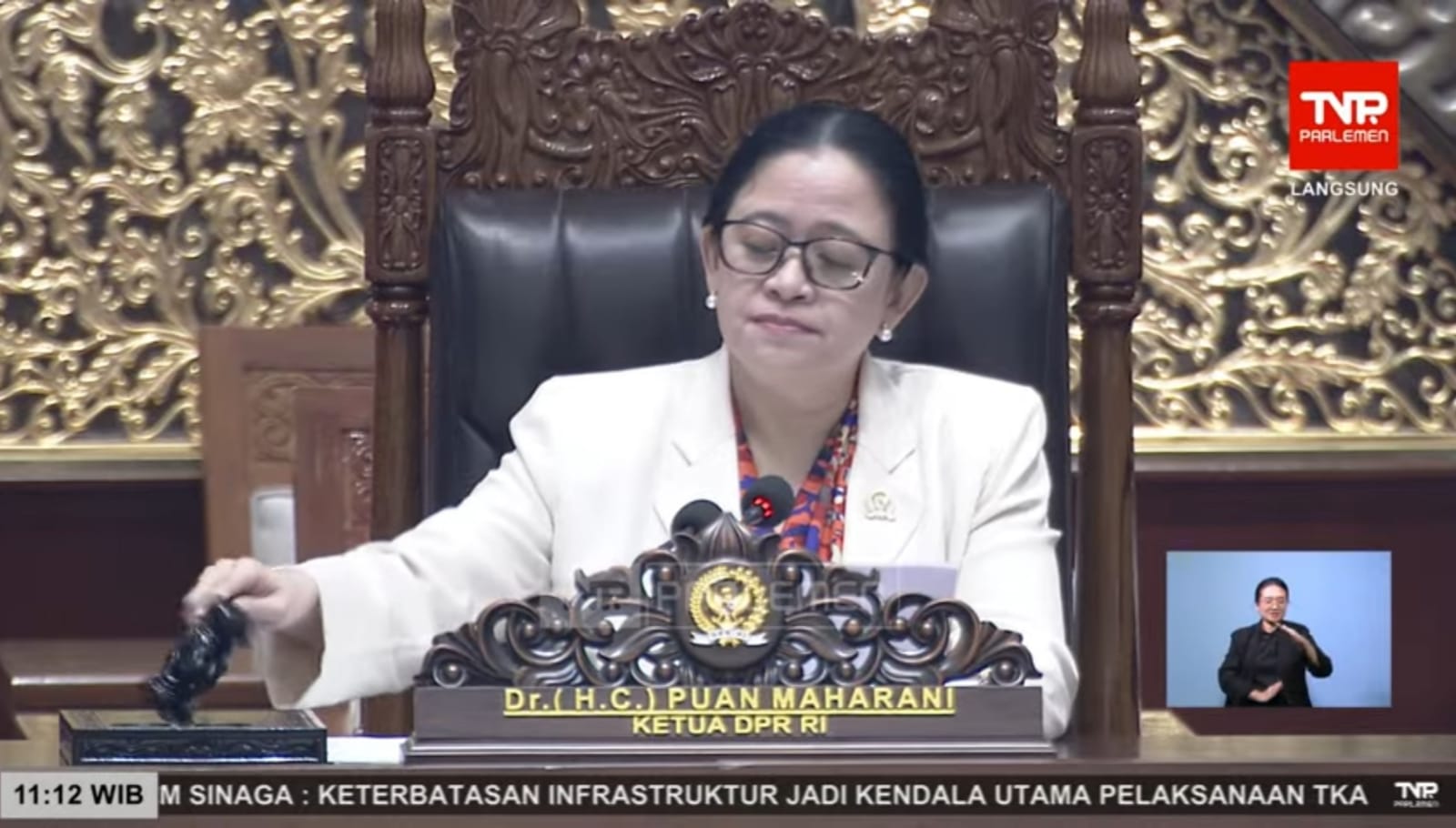
The endorsement meant that the draft law could be further deliberated in the plenary session for final endorsement. The draft law was officially discussed at the plenary meeting on Tuesday (21/4).
The policy was submitted to level-2 for endorsement into law in the plenary meeting. The chairperson of the working group on draft domestic worker protection law, and chairperson of the Legislative Body, Bob Hasan in his report mentioned that the discussion of the draft law covered all lists of issues proposed by the government.
He explained that the government proposed 409 list of issues, consisting of 261 fixed list of issues, 55 editorial issues, 23 new substantive issues, and 100 issues to be dismissed. All issues were discussed within the same day.
In the report, Bob explained a number of key issues regulated by the draft law. One issue was social protection for the domestic workers.
“One of the rights of the domestic workers as regulated in the draft law was the right to social and health security,” said Bob during the level-1 meeting.
The draft law also regulated the prohibition to cut wages by companies sending domestic workers (P3RT). “P3RT were prohibited from cutting wages,” he said.
The draft law also contained other provisions, such as recruitment mechanism for domestic workers which could be done directly and indirectly through an agent, and obligation re. vocational education and training for would-be workers.
Bob added, the result of discussion within the working group was articulated into the draft law which consisted of 12 chapters and 37 articles. “After all list of issues were discussed intensively, the draft law was endorsed by the working group fully consisting of 12 chapters and 37 articles,” he said. The submission of the working group report to the Legislative Body meant that the discussion went a step further towards legislation.
The twelve points of the draft law endorsed into law by the plenary meeting today:
First, with regards to domestic worker protection regulation was based on family relations, respect for human rights, justice, welfare, and legal certainty.
Second, recruitment of domestic workers was done directly or indirectly.
Third, anyone who helped in domestic work environment based on local custom, family relations, education, or religious background was not considered as domestic worker by the law.
Fourth, recruitment of domestic workers was indirectly done by off- and online.
Fifth, one right of the domestic workers articulated in the draft law was the right to health and social security for workers.
Sixth, would-be domestic workers got their vocational education and training, either from the national, or local governments, or companies sending them to work.
Seventh, vocational education and training were given to would-be domestic workers.
Eight, companies sending domestic workers for work were legal businesses with proper permit from the national government as outlined by law.
Ninth, companies sending domestic workers were not allowed to cut the wages of domestic workers.
Tenth, Supervision and training of domestic workers were given by the national and local governments by empowering neighbourhood officials in the prevention of violence against domestic workers.
Eleventh, When the law applied, each person under 1 years of age or a married person who worked as domestic worker before this law was passed was given exception and the person’s rights as domestic worker should be respected.
Twelfth, the implementing regulation should be decided no later than one year after the law as formally adopted. (ast)