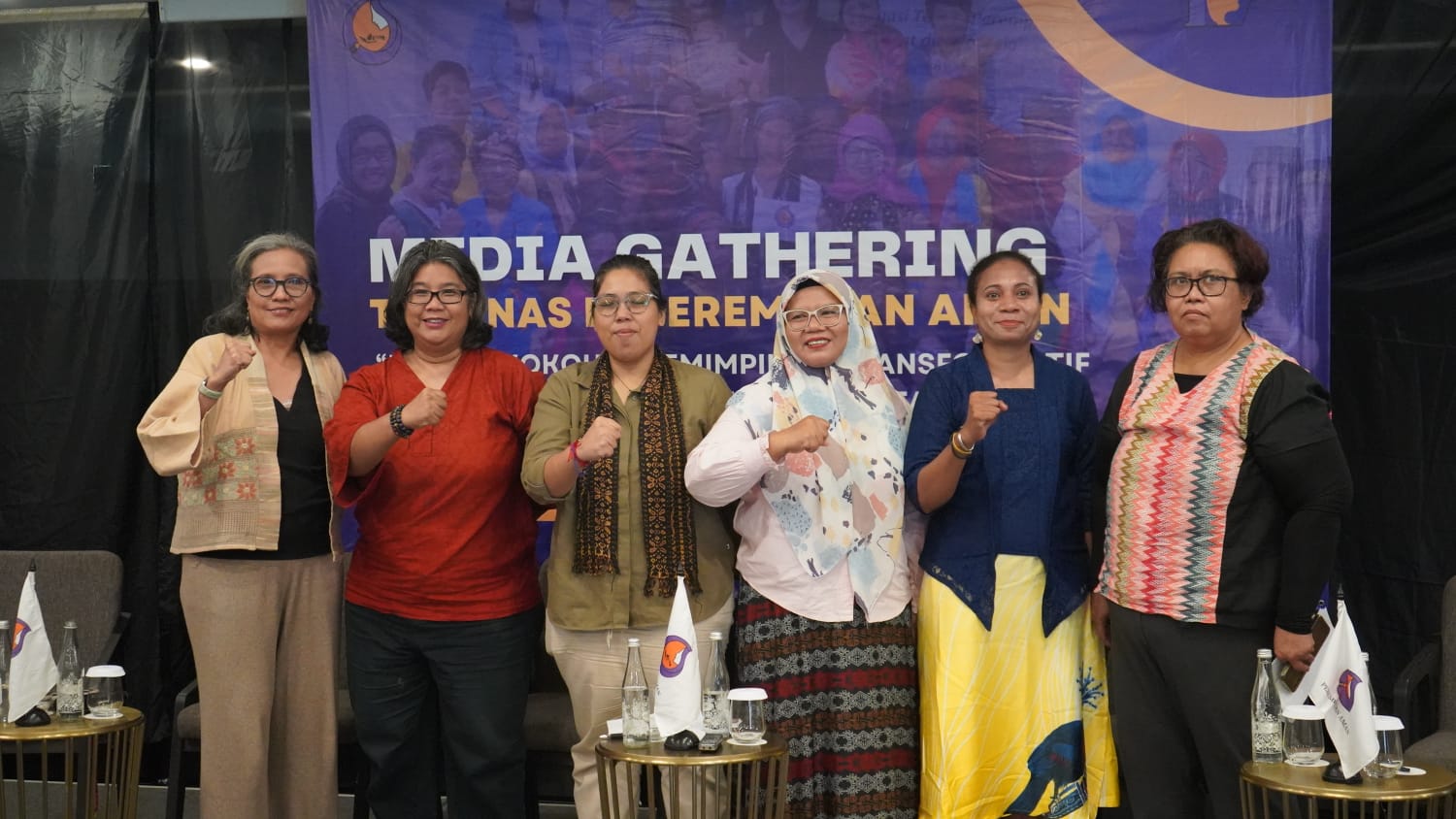



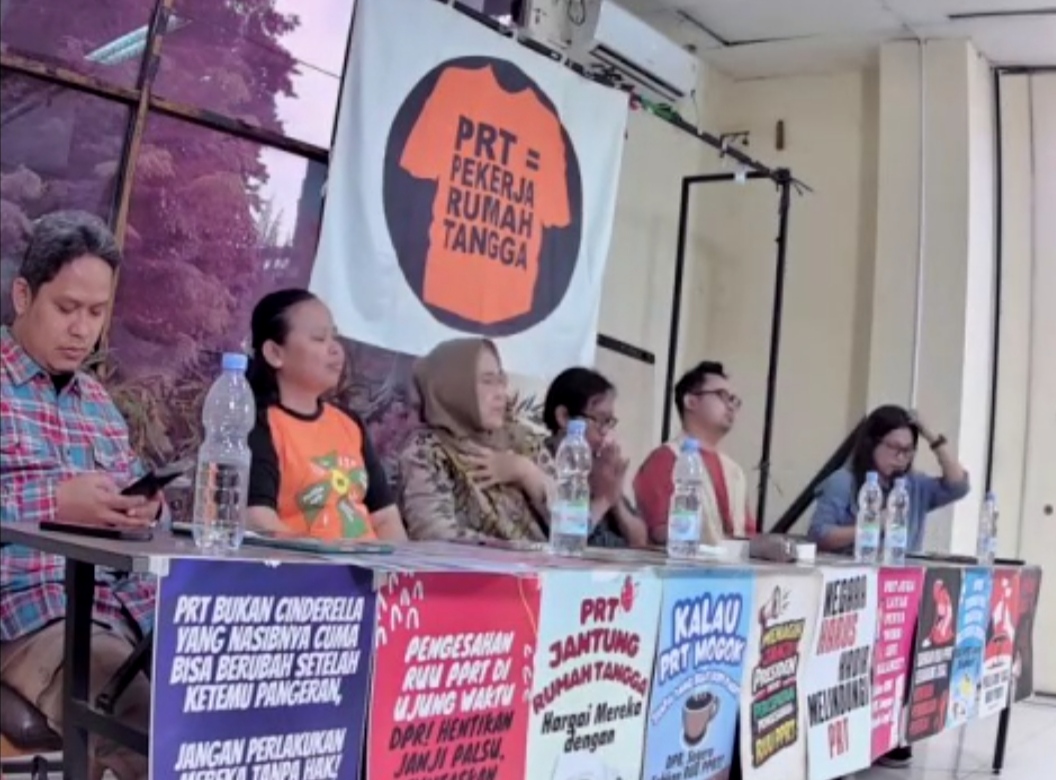

The coordinator of Civil Society Coalition for Draft Domestic Worker Protection Law Ratification, Eva Sundari, stated that on the eve of Kartini Day, it was ironic that the draft domestic worker protection law was not ratified yet, as there had to be respect and appreciation to women in a variety of sectors, as human resources. Domestic workers’ contribution was highly critical, but the State ignored it not only procedurally but also in terms of its management. This was because there was no certainty where the position of the draft law was at this moment in time, whether it was still at the parliament or at the government. The polemic was revealed during a press conference on Wednesday (15/4).
According to Eva, other than management issue, the issue of commitment was central because there was bitter experience, the draft was ready and issued by the legislative body, ended up stalled for 3.5 years. Then, there was presidential letter for 1.5 years, and the draft was stalled with the reason being the funds were used to address poverty in Indonesian families. The economy then slowed down. “There is no State appreciation, and the Parliament postponed twice despite the initiative. The issue then was did the people in authority had the courage to protect the people or not,” said Eva.
The coordinator for Jala PRT, Lita Anggraeni monitored the development associated with the draft law initiative. Lita thought that after the initiative, then there should be presidential letter which appointed government representative from which ministries. Her side had checked whether the letter and the draft had been sent to the parliament, and then checked with the law and human rights ministry, and the answer was that they had not received anything. Another information suggested, the draft law was still at the parliament, from the biggest party. “This was the exact repeat of incident in 2023. We checked with Dasco (Sufmi Dasco, vice chairperson of parliament), the answer was that the draft law was in the process of waiting for the presidential letter that week. I was a bit confused, because there were two opposite information sources. We were wondering, the draft law was stalled again, by the process. As team could not be set up without presidential letter. This was contradictory, when he said that it would be finished that week, what Dasco said was that the presidential letter was already in process, we gave our appreciation, yet the government said that it did not received anything. EWE asked for transparency of the two sides, to not stall the draft law, also transparency from the government. Second, we asked the parliament to send to the president for presidential letter and vice versa, to enable discussion at level one. We were concerned that there were parties that stalled the draft law,” said Lita. She also asked journalists to check with the law ministry, the cabinet secretary, with regards to the whereabouts of the draft law. This was when all factions gave their endorsement of the subsequent process.
Kahar S. Cahyo, from Konfederasi Serikat Pekerja Indonesia (KSPI) or Indonesian Workers Union Conference stated that if true, draft domestic worker protection was at the hand of the government and waiting for Presidential Letter. If final, then it would be sent back to the Parliament. To him, this was an urgent draft law supported by many elements, not only domestic workers, but also academics, journalists, and religious scholars who never failed to show support year after year. At the same time, some laws were quickly processed. There was thus this huge gap. There were exciting updates on one hand, when it was at the hands of the President then to him, this Nation needed a commitment. “Another issue, in the process, we lost meaningful participation, because we were confused despite the fact that there was a formal requirement for meaningful participation and this had to be an important note,” said Kahar.
Ajeng Astuti from Serikat Pekerja Rumah Tangga Sapulidi (Domestic Worker Union Sapulidi) stated that her organization had fought for this draft law for 25 years, yet its fate remained unclear. Then she asked, how many more years did we need. This was despite the fact that domestic workers were important especially during the May Day this year. “Domestic workers were the primary earners in the family. Our family waited for our income. In addition, we should also mention the violence which domestic workers experienced,” explained Ajeng.
Margianta from Suara Muda Kelas Pekerja (SMKP) or Working Class Young Voices as resource person stated that women were given double responsibility for domestic work, and not well appreciated, professionally as domestic workers and as women who work in their own home. The State was never present and this issue was never considered an urgent issue. She attended a press conference with National Women’s Rights Commission and the Presidential Staff Office or Kantor Staf Presiden (KSP), the moderator said that unfortunately the domestic worker issue was not a high priority issue at high level of government. Margianta made a correction then and stated that domestic worker issue was an economic issue. The she knew that caring work was not considered integral, even when domestic workers were the foundation of it. Domestic workers were doing caring work at home but they did not get any equal protection. Employers gave them whatever salary arbitrarily. “Did they ever think that these domestic workers worked in the most vulnerable position? Economically now, the Government had become aware. Domestic workers belonged to the working class, just like other workers. If the president gave them safety net, this would have wide-ranging impacts, and the resident did not like it, and the domestic workers staged protest out of anger,” she said.
Representative of Islamic Religious Scholars, Kyai Nur Achmad from Kongres Ulama Perempuan Indonesia (KUPI), added that from KUPI viewpoint particularly Islam was a majority in Indonesia. He cited a number of verses in Alquran, the religious precept to defend the weak, to defend justice. To him, religion was there to defend those who had no power, and capital, and whose life was influenced by others, in Al-Ma’un Theology or in Alquran Surat Al-Maun. So, when domestic workers were ignored, that constituted an infringment.
In Alquran Surat An-Nahl paragraph 97, stated, “whosoever work as stipulated by the true standard, and he/she is a religious person, then that person should be given a good life.”
People who employed others must provide good life security guarantee. In the Hadist Qudsi, Allah stated, “There were three groups which I made enemies at the end of world – those who signed an agreement using my Name but those people negated it,” 1. This included employers who had work agreement with domestic workers, but denied it, then those people defied Allah, 2. Those who engaged in trades, ten they made profit from human trafficking, 3. Those who employed people and the latter had worked well yet the employers did not give them good salary.
The Hadist Recorded Saying of Prophet Mohammad) even said, “Pay your workers’ salary before their sweat dries out.”
While Dian from YLBHI stated that what had been presented by previous presenters showed the how of the draft domestic worker protection law process, but there was no certainty as to where the draft was at. So, it was important for her to say that as articulated in the constitution, the President and the Parliament had the political and moral mandate to protect Indonesian citizens, to ensure nobody was not protected by the law. Should there be any citizen who did not get protection of the law, this indicated failure on the part of the State to ensure protection to its citizens. Why the draft domestic worker protection law was critical? The domestic workers could not find work in industrial sector. As of today, they were vulnerable to death and oppression, because in today’s position, the draft was in the hands of the executive so the President had to issue a Presidential Letter. “This meant that the draft domestic worker protection law had to be discussed with the Parliament. Then there had to be appointment of relevant ministry to represent the president. We had to pay close attention to the draft domestic worker protection law, people’s participation was critical, not just in normative term, but in a meaningful way,” she said. (Ast)