




The history of women’s movement went hand in hand with struggle for human rights. It was resent in a number of forms to combat gender-based violence, fight for just living space, to protecting rights of marginalized people. Yet today, as challenged to human rights became stronger, i.e. smaller civil spaces, increasing violence against women, and pressure against human rights defenders, there was a question which we needed to reflect together: where was the direction that the women movement took and how could we protect and nurture this movement?
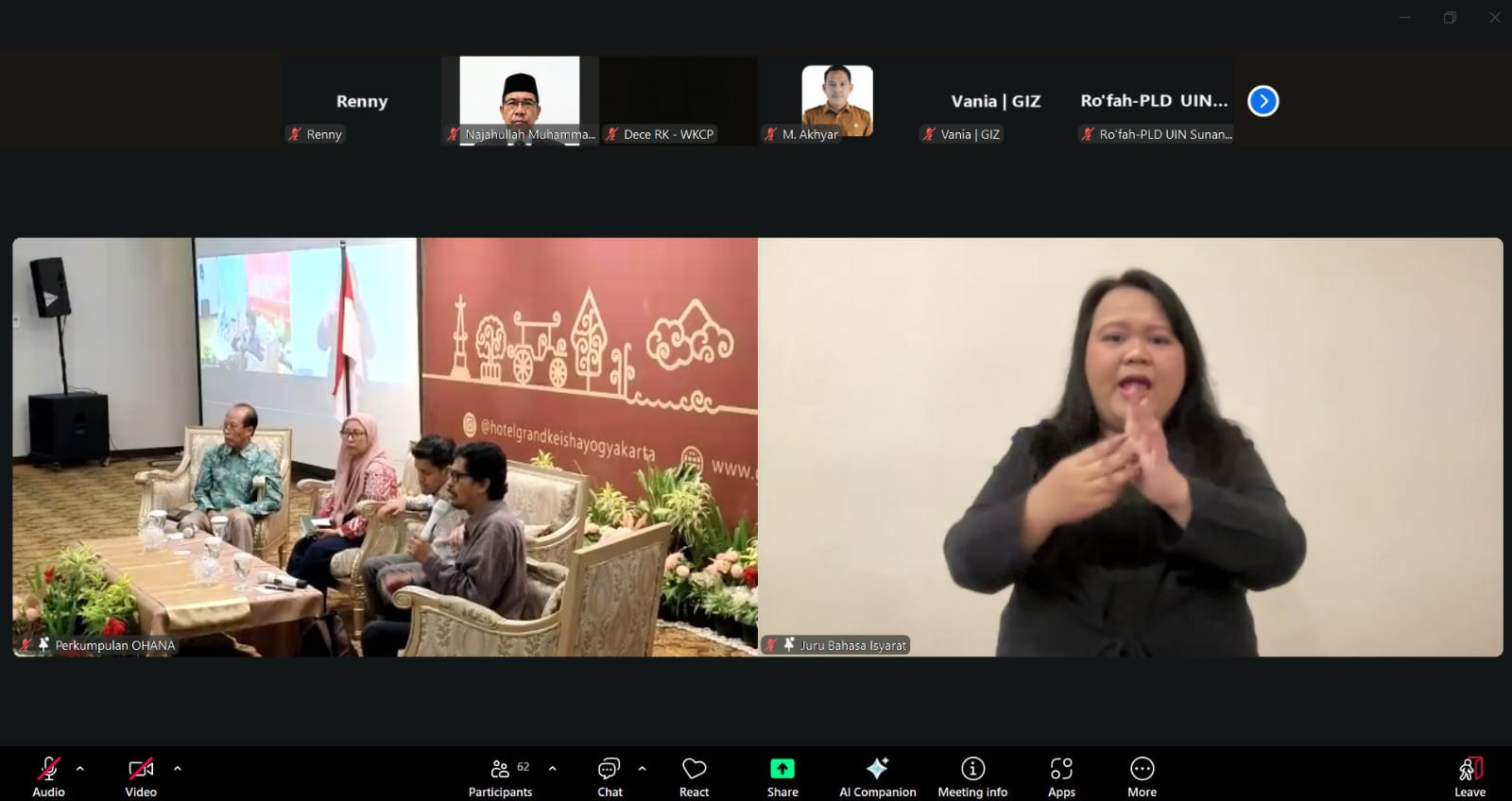
With this background, Yayasan Sheep Indonesia conducted a webinar with a theme of “Never Forget: Reading Women’s Movement Today,” on Tuesday (17/3) by inviting Ummul Paidah from Yayasan Lestari Muliaas moderator. The speakers came from a variety of organizations, such as Irene Kanalasari Inag from Solidaritas Perempuan Flobamoratas, Riandra Safitri from eQUALITA, and Dhevi Citra Ayu Ikawati from Yayasan Bambu Nusantara.
Irene Kanalasari Inag started her presentation, by explaining a number of situation with regards to women’s movement in Indonesia that was continually on the move and evolving while at the same time face attempts for elimination and destruction. Women at this point went through a long process which many people may not necessarily realized. On one hand, women’s movement seemed massive and on the move continually, yet on the other hand, it was continually pushed back, which begged a basic question about whether this movement truly became a threat to the State?
Irene also explained the history of women’s struggle not mentioned in history, where women consolidated themselves during women’s congress in Yogyakarta. Then, women not only demanded protection, but also actively fought for their rights to enter the political spaces, and to talk about class issues and imperialism. Yet, in New Order era, there was systematic domestication of women’s movement. This also happened after 1965 through political stigma, attach on women’s organizations such as Gerwani, and construction of “ibuisme” (motherhood) that placed women behind men. These values were planted in the sub-consciousness and their effects remained visible today.
Irene also explained that in the reform era, violence against women (including mass rape tragedy) showed that attempts to destroy women’s movement never stopped. To date, women faced a multitude of issues in the forms of marginalization, from representation in political spaces, minority position in the parliament, to non-recognition of women structurally. Yet, women’s struggle blossomed with increasingly intersectional approaches, that integrate environment, body, sexuality, and seizure of collective spaces in socio-political life.
Irene also related the above with the current situation, where she saw that acknowledgement of women was often symbolic, while true freedom was not fully recognized. Regimes changed, yet the way of ignorance and weakening of women remained in different forms. This showed that women’s struggle in Indonesia remained far from over. For this reason, Irene emphasized that it was important to continually build collective awareness, consolidate movement, and ensure that women were able to decide their own path in life freely. Women had to increase capacity in order to voice justice and gender equality. Yet string women also needed to take a break and take care of themselves. It was okay to take a break and relax in order to regain the energy to re-surface and to become stronger.
The session continued with the second speaker - Riandra Safitri. Riandra explained that today, there was one thing truly missing from history – violence against women. The State had the duty to protect and to fulfil the rights of victims of violence, yet the reality was that there remained many policies that were not pro-victims. Riandra explained that Indonesia was ranked 97 globally in gender gap, and was behind other ASEAN countries. This happened as there were trends of increasing case numbers from time to time.
One could see from domestic workers who often missed on legal protection, that there were stigmas regarding no equality and that violence against domestic wormers constituted private domain. It was therefore urgent to speed up the ratification of Law on Domestic Workers. The other important issue was that the elimination of subsidy for physical examination costs this year had exacerbated the issue. Physical examination was crucial evidence in proving violence. If access were to be reduced, then victim may have smaller opportunities for justice, and cases of violence may increase as protection and legal enforcement became less stringent.
Riandra also stated that it was important to encourage the State to be more present in ensuring gender justice for all, and to ensure that every victim had equal access to protection and right to recover. Women had to be able to access and to have the same opportunity for equality and gender justice.
Dhevi Citra Ayu Ikawati continued her presentation by talking about inspiring women’s leadership that promoted inclusiveness for positive changes. Dhevi explained that women were often not involved in decision making and very rarely became leaders. Yet, women in leadership were able to improve companies’ profit and survivability. This happened because women had the sensitivity and open communication skills hat provided space for decision making.
Dhevi also explained how women’s movement started with R.A. Kartini in the 19th Century. Women had good impacts on education and government, as evidenced by women’s roles in education in Indonesia, their active involvement in policy making, human rights advocacy, and women in information technology for campaign against stereotypes. Within the strategy to build strong professional networks, inclusive leadership development program, and women’s success story documentation in leadership for inspiration to combat stereotypes. The expectation was that the fight for equality was not only from and by women alone, but involved collaboration to fight for equality by using available spaces. (Renny Talitha Candra)