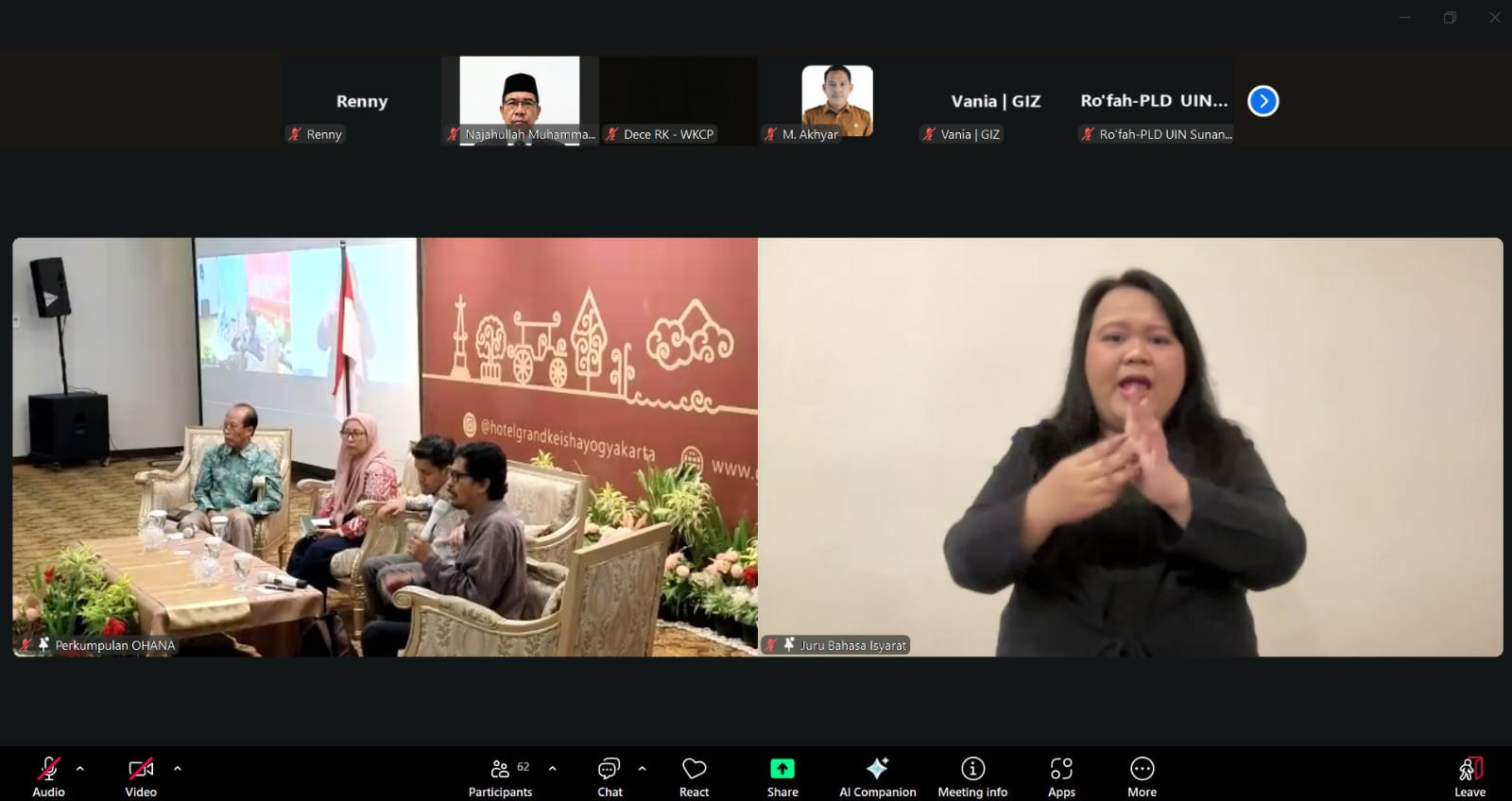



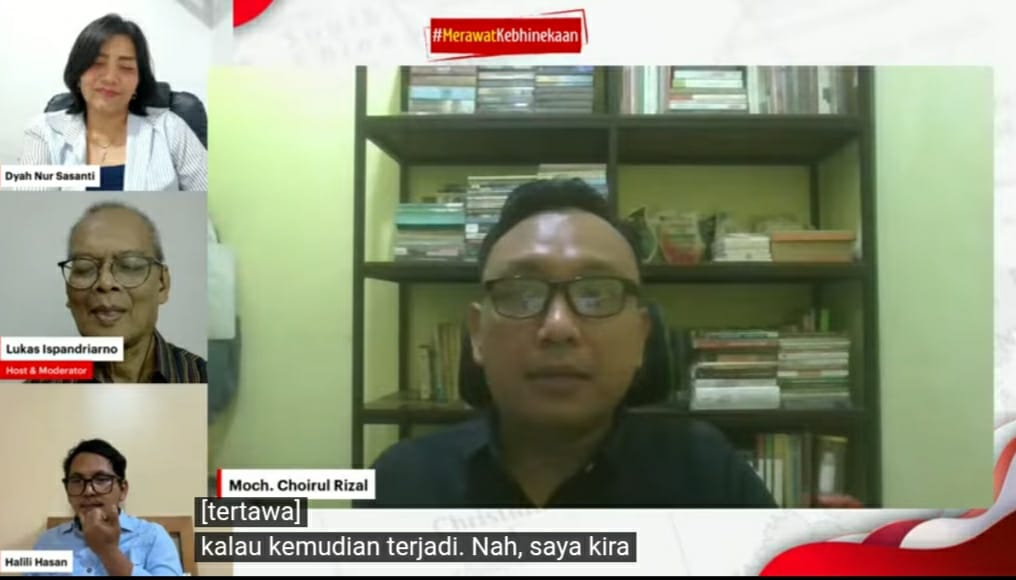

Katolikana Radio discussed the new Criminal Procedure Code in its YouTube. The host of Katolikana, Lukas Ispandriarno asserted that The 2023 Criminal Procedure Code was officially applicable this year and was supposed to embody a new spirit of diversity in religion and faith. Yet, one question arose, was it true that the Code protected minority religious faith groups? Tree resource people - Halili Hasan, Dyah Nur Sasanti, and Moch. Khorul Rizal explored the issue.
How should people look at the new Criminal Code?
An advocate and lecturer at Borobudur University, Dyah Nur Sasanti suggested that the new Criminal Procedure Code was better in addressing the question of religion (in terms of sentences, norms, and structure) when compared to the old Criminal Procedure Code. The new Criminal Procedure Code contained significant progress. If the question was “Did the new Criminal Procedure Code protected minority groups?” then we had to delve deeper.
Dyah argued that the new Criminal Procedure Code was “perfect” in terms of protecting minority groups, and was much better. But did it truly protect? The answer seemed to be not yet because there were simply many interpretations.
When the host asked whether the discriminatory stipulation had been omitted? Dyah answered that part of the discriminatory stipulation had been omitted but not 100% gone. "We were waiting anxiously, for example in one article: spreading hatred is subjective. This talked about perception and it was difficult to measure," she said.
The subsequent resource person, lecturer at UIN Syekh Wasil Kediri, Moch. Choirul Rizal suggested that he and inter-disciplinary academic colleagues wrote a book Buku Pasal 300-305 KUHP 2023 in order to establish an academic foundation regarding diversity and faith. Rizal and colleagues were interested in the history of criminal code actions in statements and remain cautious, which was the reason why they wrote Buku Pasal 300-305 KUHP 2023. The work started in November 2023 and the book was published in May 2025 and involved inter-disciplinary academics where the book had been widely discussed in campuses in Indonesia.
Rizal added that the book consisted of six chapters organized into two parts. The first part was about history and the principles regarding freedom of religion and faith. The book analysed and gave justification for the second part as well as the constitutional commitments, through policy on freedom of religion in criminal law articles, 300-305. The second part offered interpretation about a number of words or phrases by referring to the national and international human rights instruments.
Rizal expressed his hope that the law enforcement officials were able to offer clear explanation of phrases in Articles 300-305 which regulated freedom of religion and faith, in relations to vulnerable religious and faith groups so that they could enjoy a guarantee of religion and faith.
The next speaker, the executive director of Setara Institut, Halili Hasan said that there were a number of key issues to praise – the disappearing Article on religious blasphemy to norm phrases in the old Criminal Code. Article 156 A in general used to be the core of religious blasphemy in Indonesia. When we talked about the chances of discrimination in the new Criminal Code, he pointed to two key issues: the first was whether the human rights construction was comprehensive? Because when punishment was given to those people accused of religious blasphemy, the normal construction was about religious protection. Human Rights perspective was inherent in the peron, not in religion, not in institution, or organisation but in individual persons which was hlistic in normative terms, to the rights to be religous and to have faith in the new Criminal Code.
Second, we needed to learn the history of discrimination in Indonesia or at least discrimination that went on to this day which disregarded normative regulations. For example in the case of Ahmadiyah, there were a number of norms such as Governor’s Regulation, Provincial/District Regulation, City Major Regulation that were excessive in their nature because the joint ministerial decision did not make any related statements, and yet those regulations went beyond the Joint Ministerial Decision, indicating that the norms were no longer used as bases for further actions. Current practices for example revealed by Setara: 1. No Law Enforcement, 2. Re-victimisation, 3. Law Enforcement that tended to side with dominant religious majority, that law enforcement essentially neglected the minorities.
Halili added that in that context, what had been discussed became relevant. There were interpretations that needed to be clarified – re. trust in law and justice. "We hope that the new Criiminal Code is in line and not repeating the troubling issues in the old Criminal Code," said Rizal. He also looked closely into the terminology regarding Protection of Religion. In the human rights perspective, it was the people who were protected.
Dyah who had experienced harassment during religious ceremony in Arcamanik, Bandung, expressed, in relations to Article 300 – spreading hatred and enmity – the question of how we had to define hatred? What would be the definition of provocation? What was the definition of inciting/spreading hatred or enmity? "What we felt was that we were being targeted, in Arcamanik. That was how we felt," said Dyah. She argued that interpretations needed clarification with regards to discrimination because she truly felt provocative languages – as evidenced by provocative banners and incitement of the people. In the end, Arcamanik was relocated to function hall.
The next question was whether there were articles that protected religious minority groups?
Rizal answered that the 2023 Criminal Code regulating religious- and faith-related crimes, applicable from 2 January 2026 in fact, particularly Article 300 was changed in Law No. 1 Year 2026. Di point 34, re. criminal amendment, Article 300 which was in the same clause then became two clauses. What was interesting in Article 300 Clause 1 for example, was that there was no longer phrase on religious blasphemy, or there was no longer issues related to religious blasphemy in religious- and faith-criminalisation policy. The issue shifted to intolerance which was further emphasized in Article 300. The second was that Article 300 which was in the revised 2023 Criminal Code still contained phrases to indicate religious actions for religion. But Article 300 Clause 1 Law No. 1 Year 2026 no longer mentioned religion but directly point at (the) person(s). Hence, there was something special here. In legal and normative terms, the people found progressive articulation. So there was no longer actions against religion. The legal question then was, the guideline or explanation lost its value when viewed under the Law. "If we need to challenge, then our referral should be ICCPR or the Civil and Political Rights Covenant. We had to use that Covenant as part of that. WE talked earlier that the joint ministerial decision became the basis for criminalising. It was not just the joint decision, as Islamic Religious ruling (fatwa), as in the case of Tajul Muluk in Sampang, had also been used as key evidence that the case went to the Supreme Court," he said.
Rizal added that the guideline led interesting debates. Kalau KUHP sudah merumuskan begini lantas dirumuskan lagi dalam PP. Tapi kalau kemudian disandingkan dengan ICCPR akan nyambung. Buku yang ia susun, ia menafsirkan frasa, kata berbasis ICCPR. Contoh soal tempat ibadah. Ia sepakat tempat ibadah itu diregister hingga jadi tempat ibadah. Tapi ia dan kawan-kawan mengutip riset Setara Institut, bahwa itu hanya mendata saja bahwa ada sekian jumlahnya. Dan bukan berarti harus mendapat izin. Dan kalau merujuk pasal 300-305 negara sudah berupaya. "Tetapi bayangannya ke depan, kalau pertanyaan berapa lama melindungi, saya kira tidak akan banyak perubahan secara signifikan. KUHAP baru juga berpengaruh implementasi KUHP baru.Upaya implementasi KUHP baru akan sangat berkelindan dengan KUHAP" he said.
Dyah Nur Sasanti reiterated that the new Criminal Code and the new Criminal Procedure Code and even the amendments created new interpretations. She hopes there would be clarity that would be discussed in conjunction with the Criminal Code. The Joint Decision by three ministers was inferior to the Law, yet minority groups experienced that, and that was not just limited to within Arcamanik, because there were also minority Moslem groups in a number of areas.
"There is no majority in Confucianism. In today’s context, there seems to be no real significant changes. Our point is that we are diverse," argued Halili. (Ast)