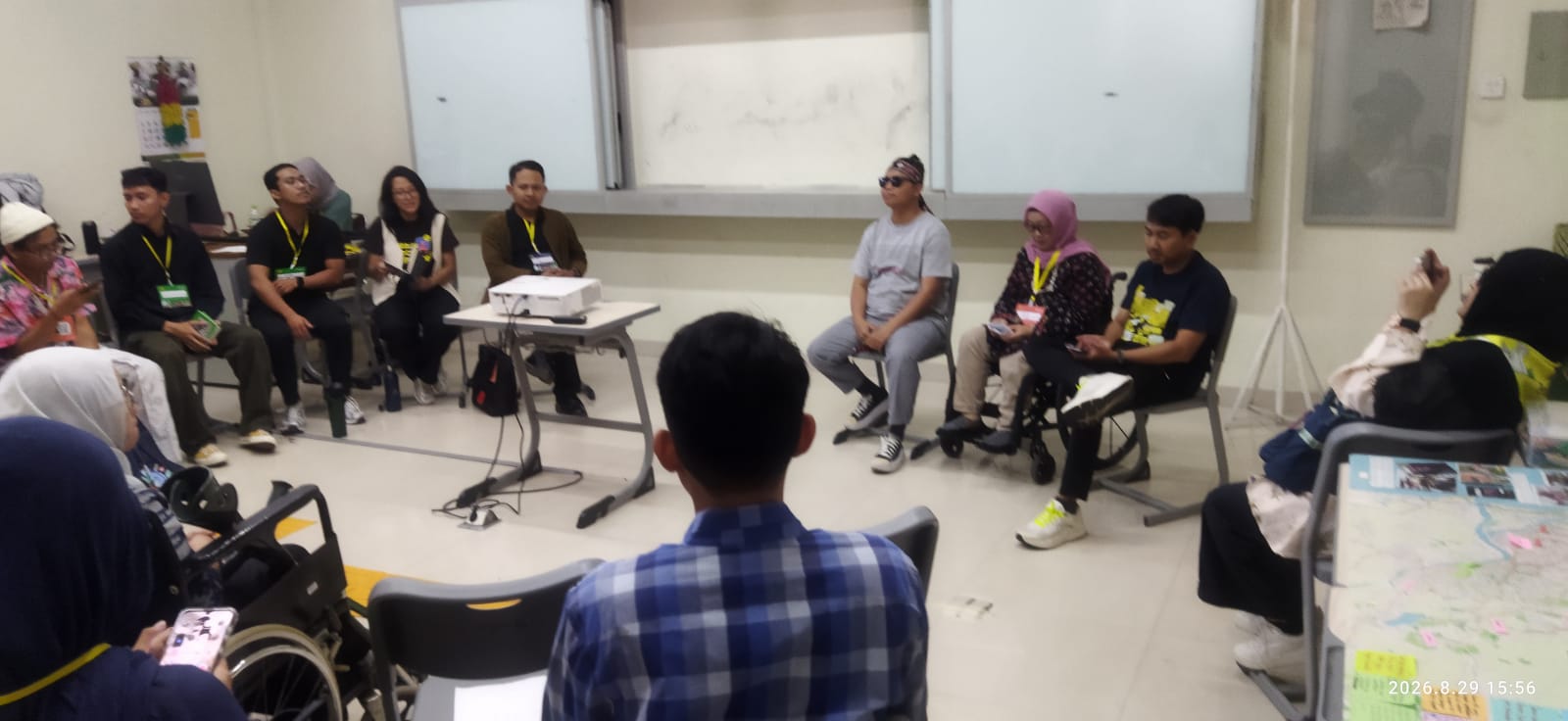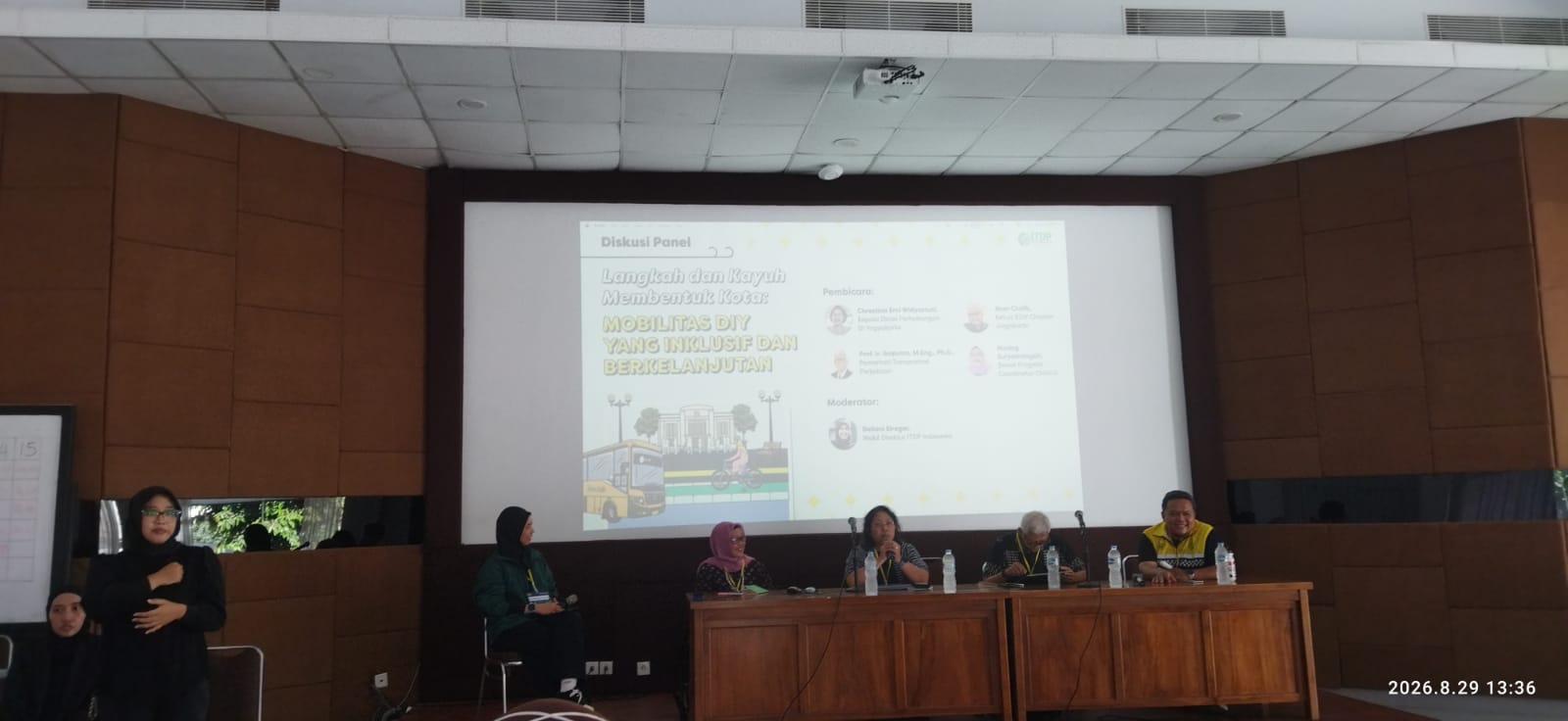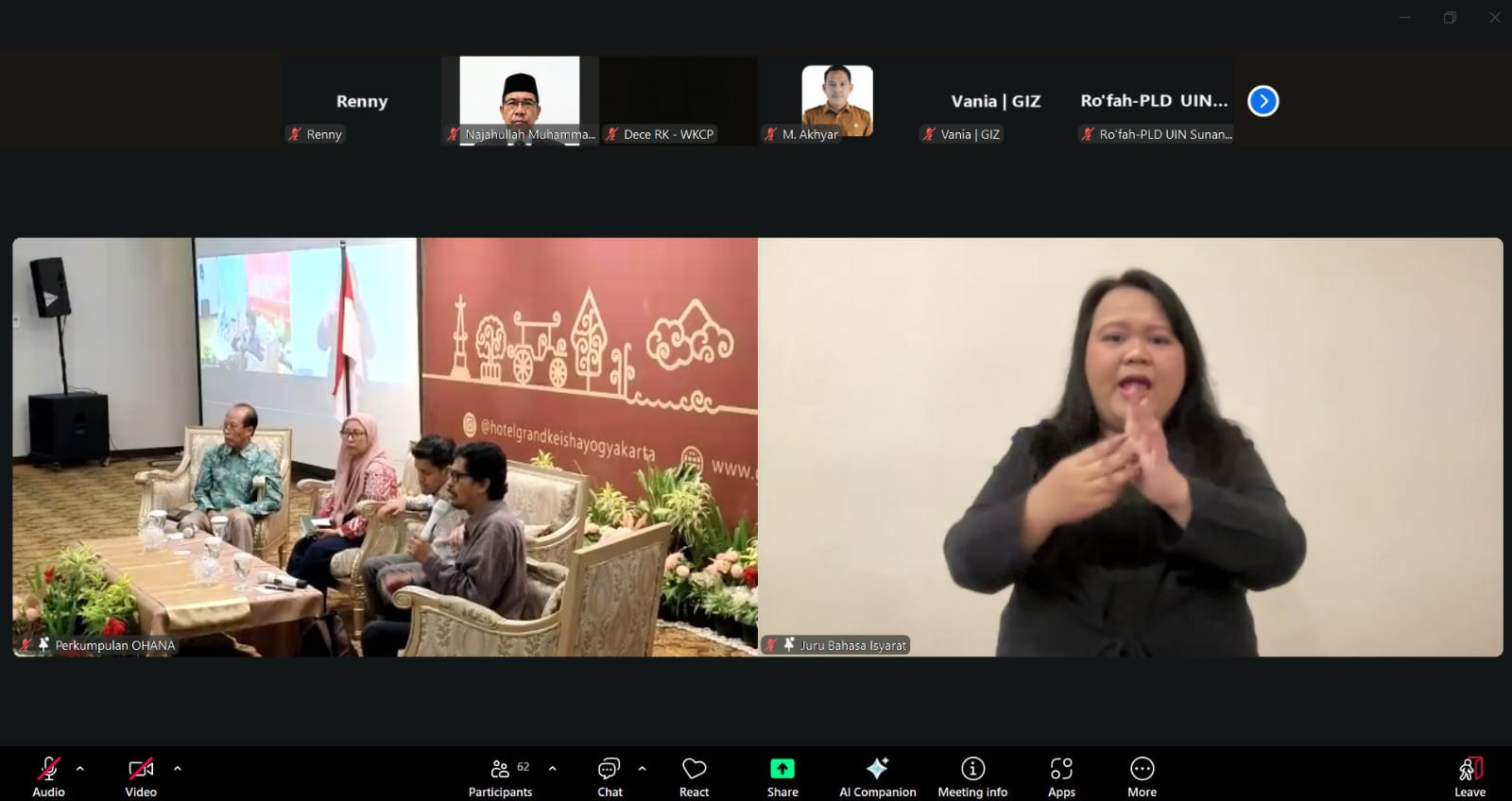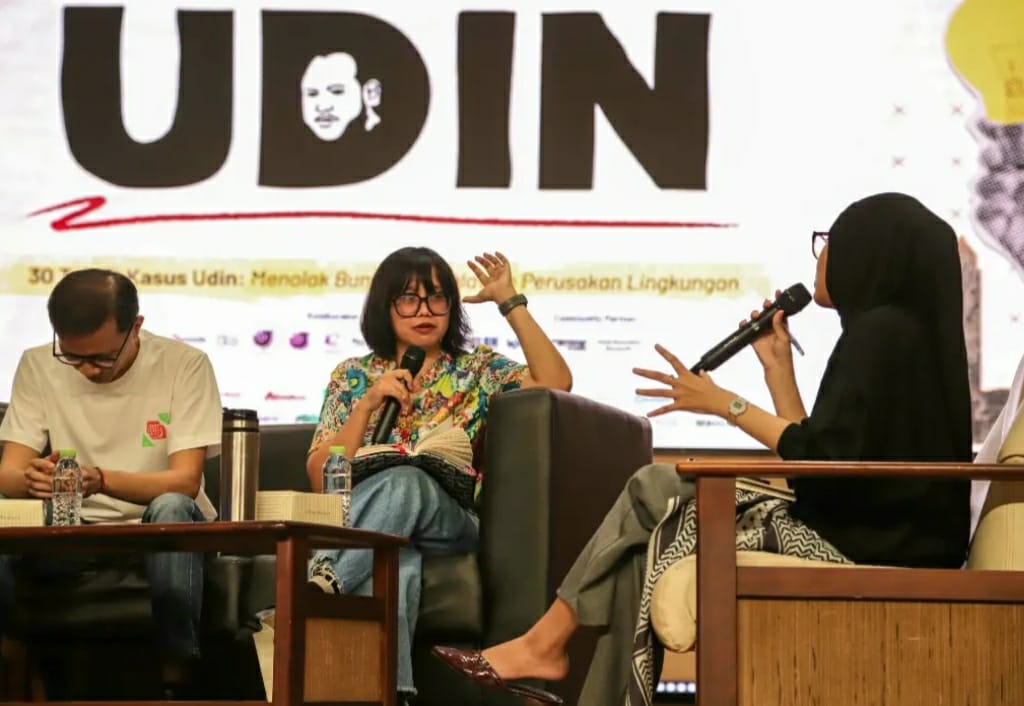



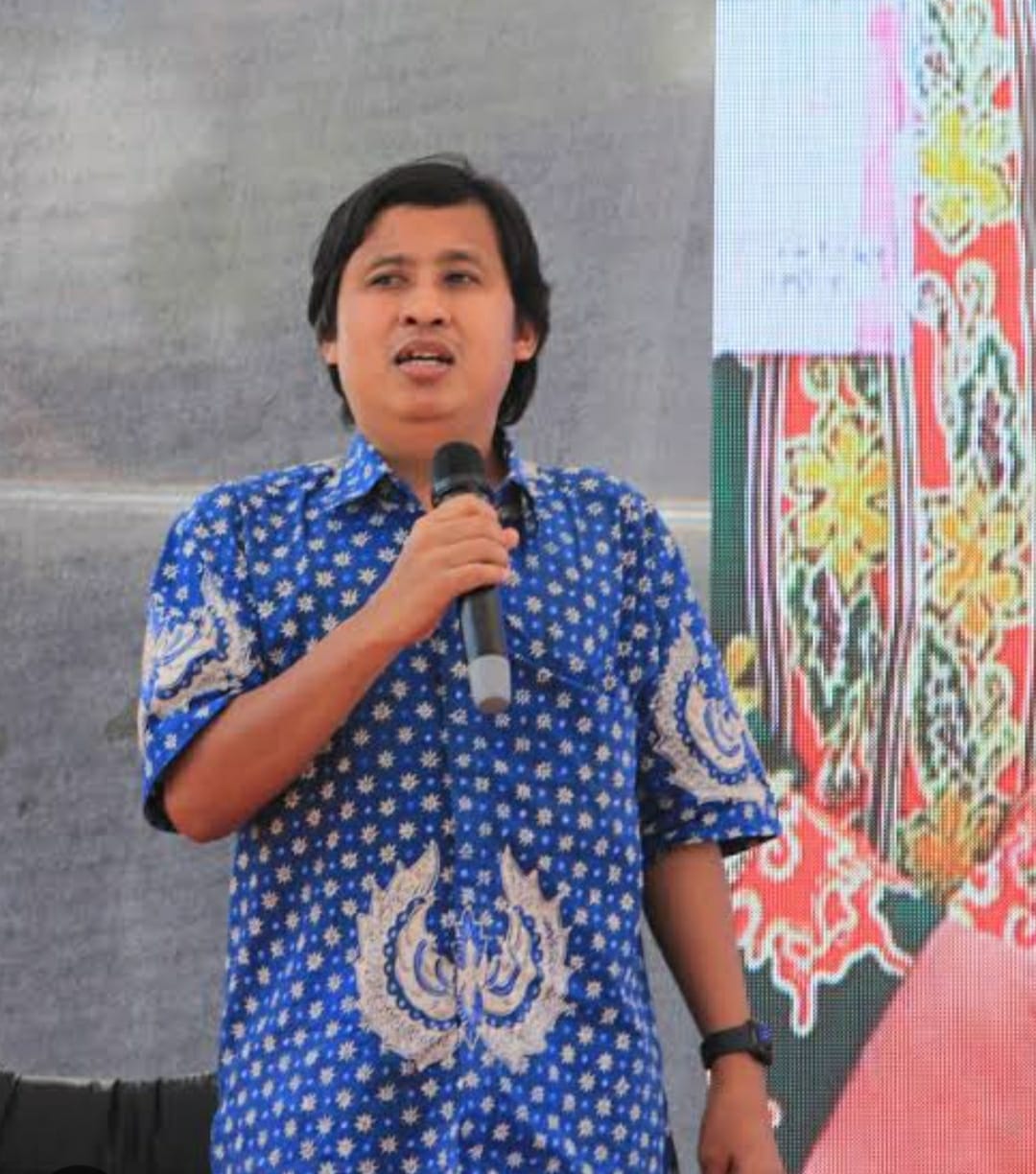

The expert witness in judicial review on Law No. 8/2016 said during a zoom meeting discussion about the widening variety of disability and treatment of invisible disability, as consequence of expanding disability understanding, as underlined in the Convention for the Rights of People with Disability or UNCRPD. For Joni, as a form of solidarity with disability movement, the most important was how all could see this as an aspiration that was critical to discuss and review.
So when Fauzi, Raisa, and other colleagues with invisible disability communicated and expressed their ideas about the judicial review , he thought this was: 1. A way to develop better instruments for the rights of people with disability, and 2. In the contect of disability as a science and as a movement, this was critical part to fully develop those variables.
Joni Yulianto wanted to start from how people perceive invisible disability. But before that, he wanted to say that there was a key mistake on the daily use of the word disability. It was problematic because not many people touched on the issue, for example a number of disability activists or those who studied disability understood the difference between impairment, disability and handicap, based on the International Classification of Functioning Disability and Health (ICF).
"What we referred to on day-to-day conversation about the physical, sensory, intelectual, dan psyco-sosial was actually impairment. That was not disability. If we referred to the definition, disability was an interaction between a loss or reduced functioning of the environment," said Joni. The CRPD and the Law said that, yet when we talked about the variety, we made common mistake because even activists talked about disability in terms of its narrower meaning, which was a shared perception error. So there was no sensory disability, no visual or hearing disability. There was no physical disability, because that was impairment. So everyone should understand. "Today, we must understand that there as a conceptual mistake in the way we think that seeped into the regulation," said Joni.
So, once we realise the mistakes, then Joni asked colleagues to see disability in law and in the CRPD with regards to the right spectrum. It is no longer about impairment but disability beyond impairment because it is an interaction between impairment and the environment and between actors and policies that would lead to barriers. That is disability. So it is not relevant to see disability in terms of physical, sensoric, and so on.
If we look broader spectrum, then in fact impairment is much broader, yet it does not talk about the cause(s) of impairment. But when the word disability is mentioned, and people categorise that as impairment, then it would be difficult to see the various types of disability itself. So it is clearly precise that our colleagues have used the term invisible disability due to chronic illnesses.
Ada variabel penyakit kronis yang menyebabkan certain impairment, certain level, at certain situation and condition. Impairment itulah yang kemudian dalam interaksinya dengan lingkungan apalagi ketika lingkungan belum bisa me-recoqnize itu menjadi sebuah hambatan yang semakin besar di berbagai aspek pendidikan, ketenagakerjaan, layanan perlindungan sosial dan sebagainya. Disitulah disabilitas terjadi dan kemudian berdampak pada hambatan partisipasi sosial yang lebih luas. Itulah sebenarnya yang menurut Joni bagaimana melihat spektrum disabilitas yang menyebabkan penyakit kronis yang kemudian dia tak tampak, karena dia ada di luar dari kategori yang selama ini dipahami dan yang pertama dan kedua serta secara fisik itu tidak bisa diidentifikasi dengan mudah.
How to respond to this disability movement?
And then, how does disability movement respond to it. For Joni, we could look at countries such as England, Australia, Germany, and many other countries that are developing theories, finding theories, developing service schemes and then recognising and ensuring that regulations are in place with regards to invisible disability. In the context of disability movement, the question is how far, as a part of minority groups with high spirit, and solidarity principles for common fight.
Advocacy becomes large when disability interest is supported by many parties and more people voice the interests of people with disability. The current situation shows disability fragmentation, larger regional fragmentation, and with progress in advocacy a question arises "Oh, there are those who want to be included in the definition of disability ".
For Joni, A critical issue is how friends with disability and activists may have a venue for an open and fluid discussion in order to find common ground for joint movement agenda. This needs to be consolidated so that, in Joni’s eyes, when we return to the spectrum of disability, there could be such development that we need to think openly in order to see it.
And the challenge is whether the policy makers are ready to accommodate such development? It may be tricky because the fact is that it is still difficult for the policy to accommodate what has been clearly visible, that ongoing advocacy is critical. For Joni, that is our joint issue to address. The issue is not about differences in opinion(s), because differences in opinion(s) can be streamlined. The biggest issues are policies, practices, programs, implementers, etc. that should be more just and more inclusive to all. That is what we need to aim in order to develop solidarity and to consolidate the movement.
There was another question for Joni with regards to asesement. The question was this invisible disability was a space where people could get certain benefits easily and so they declared themselves to be a person with disability. This assumption may be true so it is very important to develop an assessment mechanism.
Today, it was not easy for a person with disability to get a letter easily that declared the person to be a person with disability. Someone with no apparent challenges for certain interests. This person may get a letter declaring that he/she was a person with disability. Joni said that he met a few people and talked openly that they were recruited into jobs using disability declaration letter, and used specific disability form. That meant that the assessment not only looked at whether a person was a person with invisible disability or not, but it was a matter of urgency that should involve multi-disciplinary team.
Joni said that when he studies in England in 2008, there was a rigid scheme to see disability and students like himself was asked to declare that "I am a person with disability, I have an impairment that I am a person with disability, I have a visual impairment, I am totally blind and so on and so on." Then they conducted a series of assessment to see not only that it is true that I cannot see but also whether I need a support system with my learning process. It did not just involve doctors, but also psychologists and a person or people who have an expertise in disability, including people in disability organisation to be involved in that assessment.
Look, the model used in England started from the very simple thing: They started with basic questions in the Washington Group Questions (WGC), and then if expert(s) saw an indication of disability, then they moved to the next level. The expert(s) then referred the person to either a psychologist, if there was a strong indication of psychological impairment, or to an expert in growth/development associated with orthopedics. There could be three or four levels of assessment.
There were ample opportunities in Indonesia despite the lack of experts or theraphists, in a number of villages where Sigab program operated, SIGAB prepared volunteers at integrated health post with the skill to identify people with impairment and disability. And that worked well until the people identified got referral to doctors, or to psychologists and so on. "So, we could actually build such a model although this required time to accomplish. At this stage, the assessment became an urgent target to bring into reality," said Joni.
Meanwhile, another witness, Bahrul Fuad stated proudly that there were many young people with disability who showed creativity, such as Fauzi, Raissa, and Fadel. They had a logical and constructive mind, so when Fauzi asked him to be the expert witness in the judicial court, he thought it was a great opportunity to promote a public discourse on disability.
"We should not be endeared by a particular camp." Oh, this is not a return to a medical approach. " Not like that. But we are thinking clearly by reviewing a number of factors. After my discussion with Raissa, Fauzi and Fadel, and during a meeting with Sandiaga Uno, I said that I have listened to colleagues’ experience with invisible chronic disability diseases and I saw that it is true what they experienced falls into the definition in the CRPD. This is very open, very fluid and fit specific situation and context so now that we have colleagues with chronic disease, we submit a judicial review regarding the definition of physical disability that makes sense," said Bahrul.
He added that disability faced functional, environmental, and attitudinal barriers, so we should point out that they had the same rights. It is as simple as saying: "look, I experienced this Cak Fu. While I was working long hours I felbecame sick. My office did not have a facility where I could rest. Instead, there was a stigma that I was just lazy and unproductive. That was the whole issue."
With regards to the first question about the condition of invisible disability in relations to multiple discrimination, for example multiple discrimination in relations to gender and women… this refers to a woman or women who has (or have) disability, and chronic diseases at the same time. Such condition may lead to discrimination and stigma. A clear example is in women’s domstic roles – when a women, for example, experiences chronic disease , and in a patriarchal society women have dominant role(s), and people think that the woman cannot play her domestic roles maximally and this leads to discrimination. Worse, the society then conceptualises that beauty, with its constrcted categories, leave out this woman with chronic disease, and perpetuates discrimination. (Ast)