



Education is the right of all children in Indonesia. Everyone senses the constant anxiety about the zoning system implemented in the last 10-12 years. The preamble of the Constitution has clearly stated that the objective is to enlighten the life of Indonesia and paragraph 4 point 1 and paragraph 6 of the National Education Law say that the objective of education is democracy, justice and non-discrimination.
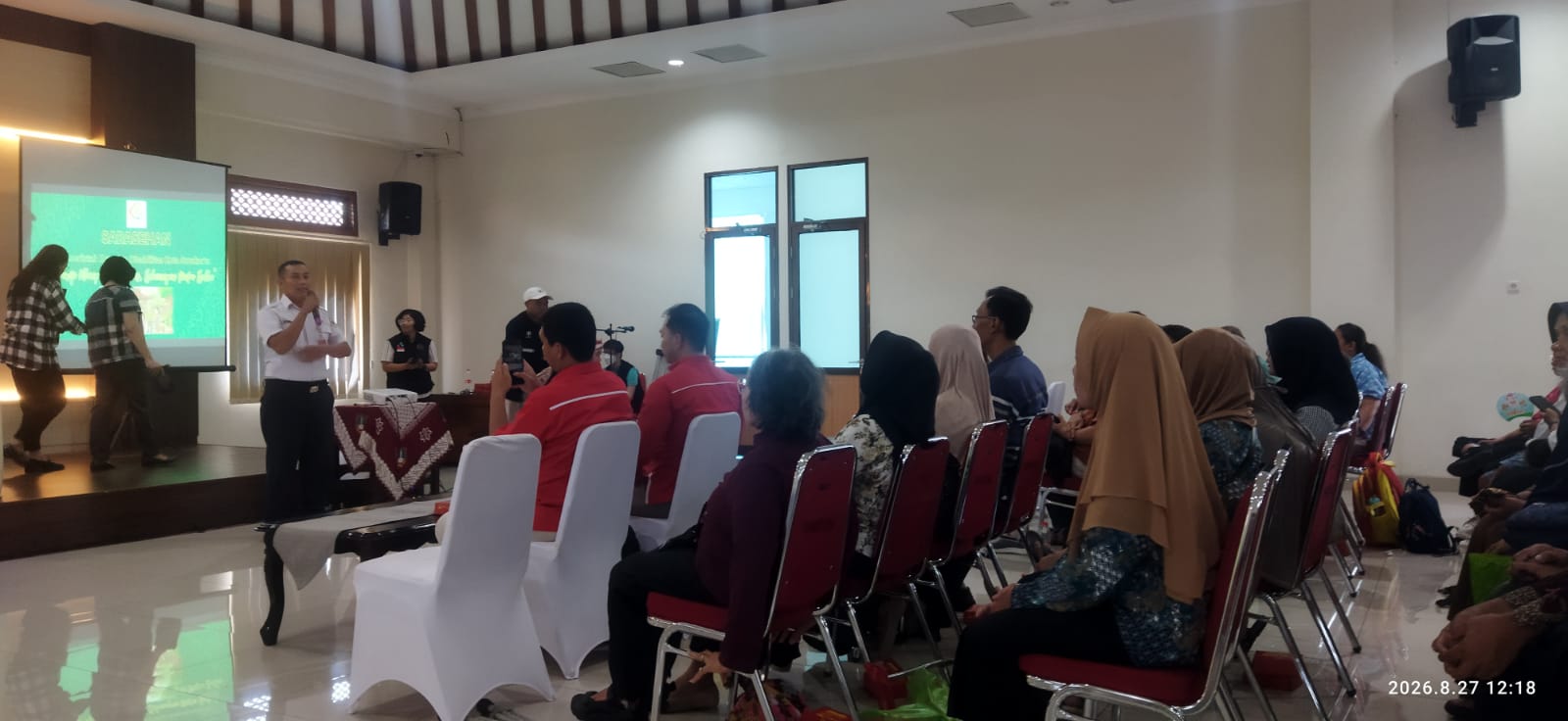
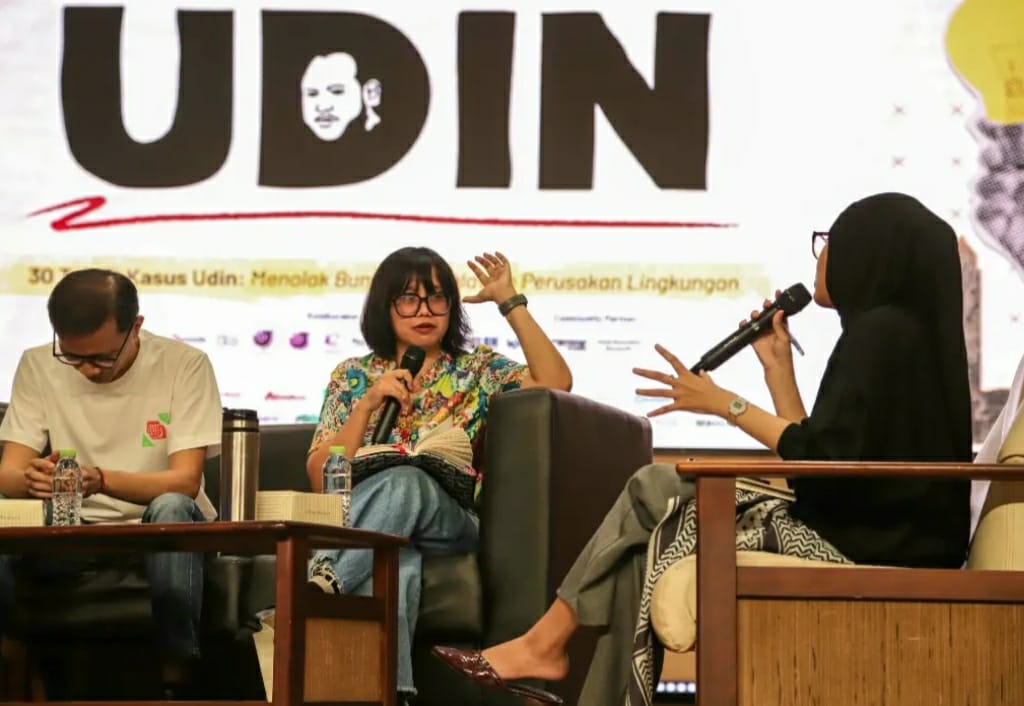
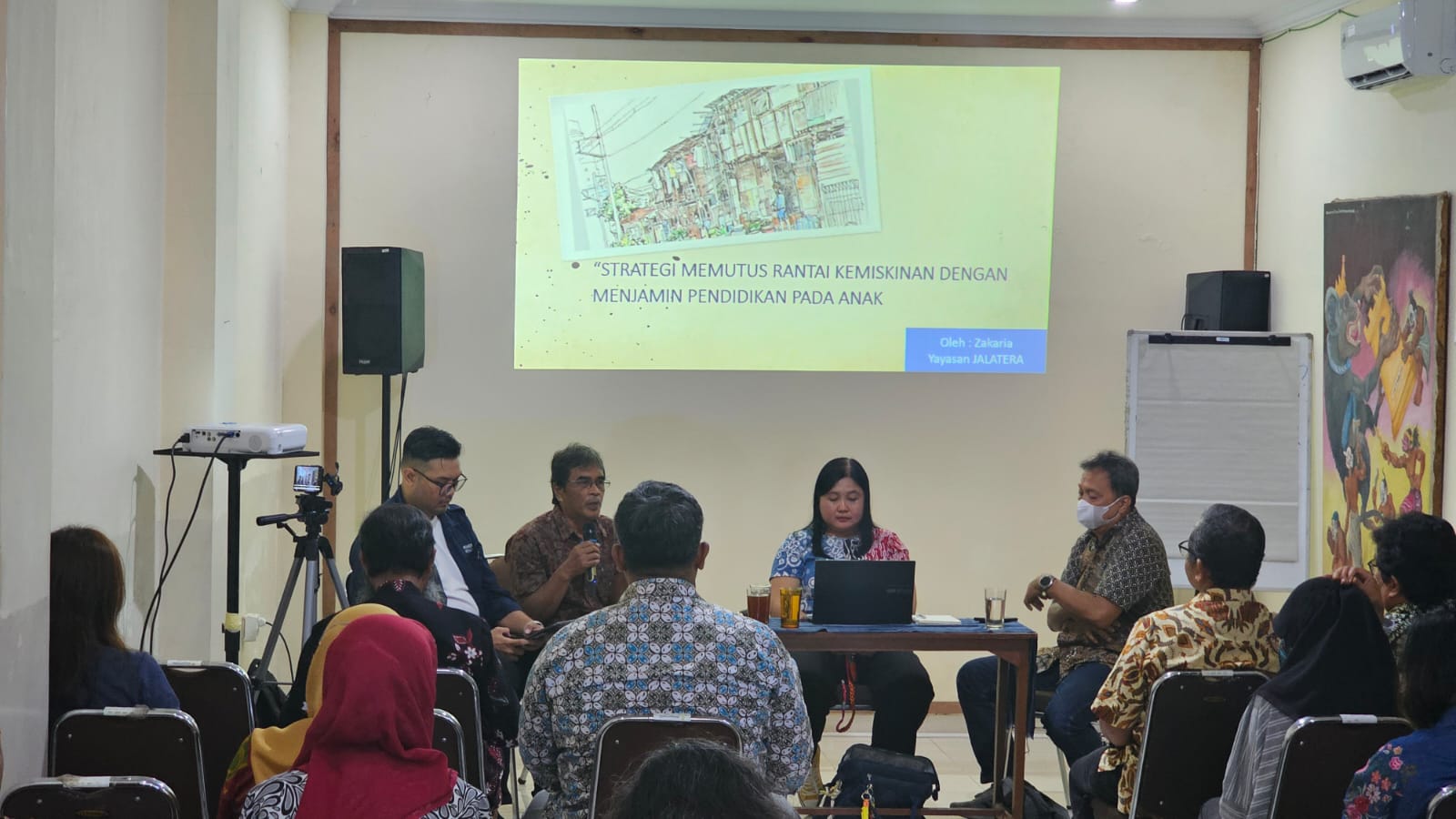
Yet, operationally, there is systemic problem with regards to the regulation used in public school to date in terms of conducting selection. The assumption is whether public schools are similar to private schools. As schools conduct selection, the technical perspective is evidently non-strategic. There is no place for sub-State governments to intervene in the school system. What may happen is that of fights over chairs. In this situation, children with lower (or vulnerable or remote) modality are disadvantaged, while there are groups of children who enjoy the advantage. "The State act as if it was neutral. But when imbalance occurs and the State is neutral, that only shows that the State is taking side," says Bukik Setiawan, an education observer during an education discussion organised by Masyarakat Peduli Pendidikan Surakarta (MPPS) on Thursday (27/11). The critical analysis is part of the celebration of 16-Day Anti-Violence against Women and Children (16 HAKtPA).
Bukik kembali menyampaikan argumentasi, mengapa perlu mengubah sistem penerimaan murid baru sebab negara mewajibkan mencerdaskan bangsa, sekolah jadi ajang mobilitas sosial, negara tidak mampu menyediakan 100% kursi murid-murid. Kalau begitu, lantas bagaimana cara mendistribusikan yang sisanya untuk mencukupkan? Jawabannya adalah afirmasi 100%.
He argues that equal opportunity is not the same as similar or equanimity. Just does not mean providing the same thing. An easy example is the Health Social Insurance Authority or Badan Penyelenggara Jaminan Sosial (BPJS) Kesehatan. People who have the financial capacity would add more insurance. The same logic should be used in education. This relates to socio-economic needs of children, including children with disability and all areas.
The above should lead to priority /P1, P2, P3 distributed by the sub-State government/offices, not schools. "Schools are similar to public hospitals. If the number of children enrolling is higher than the number of seats, then the sub-State governments can collaborate with private schools," says Bukik. He says that there is an injustice with regards to schools – they accept children of poor families and children with disability, and yet the money (i.e. the School Operational Aid or BOS) is the same. "We suggest that the BOS should be adjusted to the type of disability in children. For example, P1 is 300,000, P2 is 200,000 so that it is fair for schools. Dealing with children with disability necessitates special intervention," he says.
Pemkot Punya data e-SIK, Tinggal Jalankan
Zakaria from Jalatera says that if we want to eradicate poverty we must invest in children’s education. Poor families always live in poor neighbourhood. If children’s rights are not met, then those children are prone to poverty themselves. When the quota is limited they fight for asset. So it is better for the local government to make the decision, particularly in Solo with its e-SIK which has been adopted nation-wide. "National data may be wrong with regards to poverty rate 30%, in my district too, it is 29%. So what we need is not to define who the poor people are, but what the poor people need," says Zakaria. He agrees with the suggestion that the city government takes charge of the selection system, because Surakarta City is ready with poverty data and can become initiator on this issue. This means that the local government is bringing access closer to poor families as education problem is complex.
Zakaria explains that in 2021 the rate of children not attending school was very high, and the suggestion was for education office "to take the initiative". By improving data quality on the field, through verification and validation, then the data of children not attending school can be reduced and eliminated.
Then the question in relation to the current problem in zoning system is that there is already low expectation amongst teachers of the students, like what happens in junior high schools - SMP N 4 or SMP N 9. One school is close to Cinderejo area while the other one is in Pajang area, which in e-Sik data is a poor area. There is still strong stigma against children of poor families.
"There was Surakarta Public Health Care in the past or Pemeliharaan Kesehatan Masyarakat Surakarta (PKMS), and we found data showing that 2,000 individuals who should not have received the care, and yet they get it. What is not fair is that that took away opportunities for poorer individuals to get health care. That is totally unfair. It is even worse in education. So if there is limitation, then it should not be based on modality, the education office should work together with other government offices. If there are many children in an area, then the government should build a playground," says Zakaria. He reiterates that schools do not understand whether children are poor or not, and he agrees that the acceptance/recruitment system for new students should be done by city government, and the challenge is to get rid of stigma in the context of city government; the modality and data must be updated.
A resource person from Centre for community-based Rehabilitation Development or Pusat Pengembangan Rehabilitasi Bersumberdaya Masyarakat (PPRBM) Solo, Istini Anggoro argues that it is difficult for children with disability to access regular schools close to their house, because of the lack of specialised teachers. They have to go to schools in other areas and or to specialized schools for children with disability. In Surakarta, there are still children with disability who find it difficult to interact with other children and bee accepted by other children. The teachers only say "you must be thankful to be able to go to this school." There are also schools that are not disability-friendly with teachers having minimum capacity to understand disability. There are trainings for teachers. There is one training every year.
She makes assessment of a number of schools. Children with disability receive separate lessons, despite the fact that school is not a special school for people with disability. We know that all children should get equal education. Family support is minimal while stigma remains high, that is to say there is something in the family that remains a challenge. She says that affirmation is good because there are still so many children with disability being rejected. "Our child goes to a public school, but when it is time for sports, our child is not involved and only watches other children doing sports," she says.
The head of education office in Surakarta City, Dwi Ariyatno states in the discussion that elementary schools and junior high schools should receive children of poor families. He feels that the office has done it fair and square, but acknowledges that the office has not yet met people’s expectation. "The problem is in awareness – parents’ expectation to send children for education. They think that some of our schools lack quality. Parents choose private schools instead. The problem in new student recruitment is parents compete with each other to get a place for their children in quality schools. Even poor families compete with each other to get spots for their children in quality schools. We cannot put a limit on people’s preferences to choose. The question is how to fulfil the wish that education should fulfil parents’ expectation?" he says.
In answering question, Bukik reiterates that the State tends to be neutral despite being aware that children have different conditions. The question then is, is that just or is that the kind of justice we want? In Surakarta, it is not even adequate, so should we just let it be? Or should we delve deeper and ask which children have the risk to be left behind, when the State remains neutral? So he suggests an affirmative system, which students needs to be given more attention? Give it to the vulnerable children, and not just treat every children the same.
Zakaria says that when the State prepares regulation(s) about the rights of children with disability, we could see what the key issue is – how the State makes plans. In planning, the State does not worry about acceptance - whether this is done gradually of not – because it has to be realistic.
Istini also responds that when the design is there and the budget is there, teachers should get training in inclusion. And when parents have concerns over children with disability, then teachers must have tools and should not use their instinct. (Ast)